Central Macedonia · Museum, Exhibition & Collection
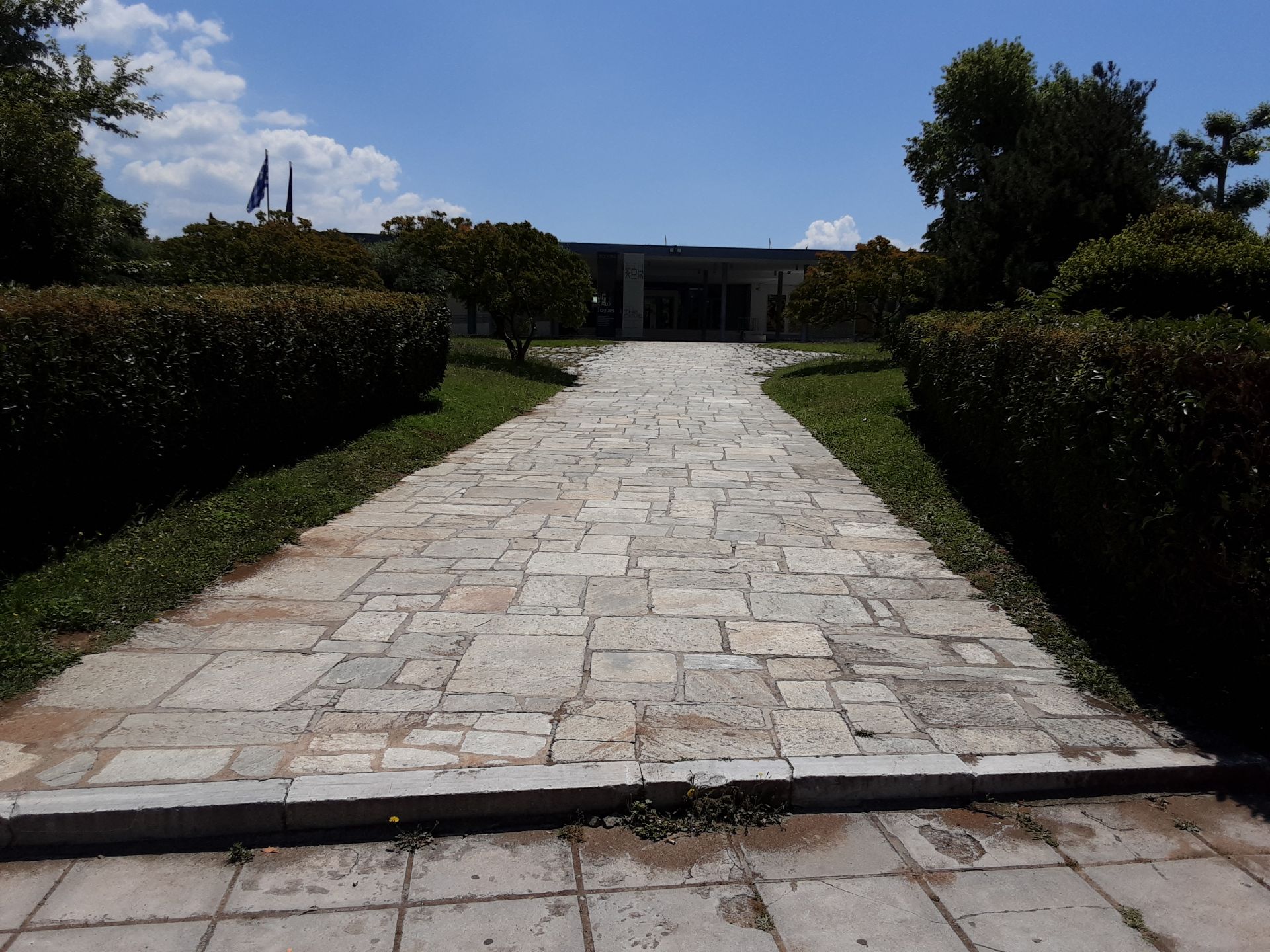
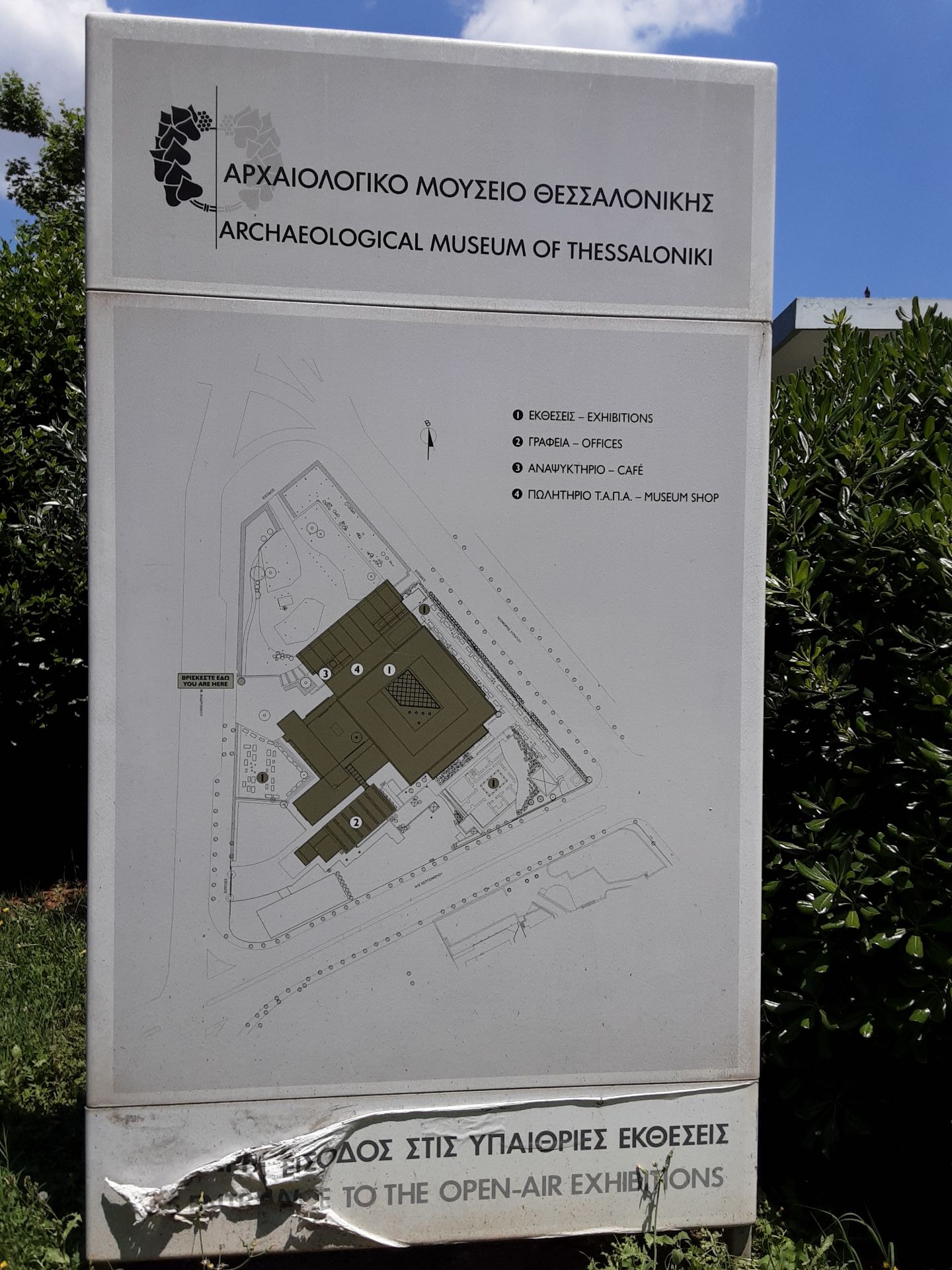
Archaeological Museum of Thessaloniki
Who we are
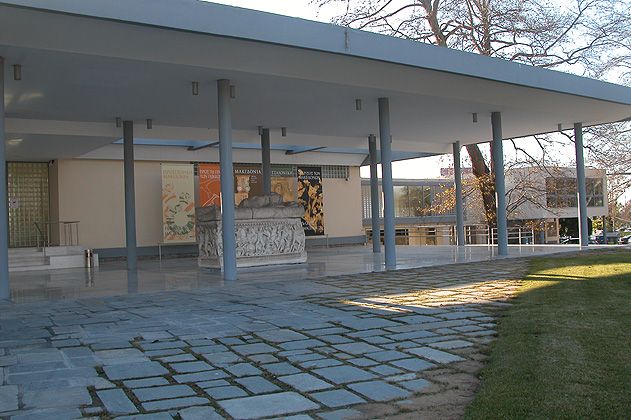
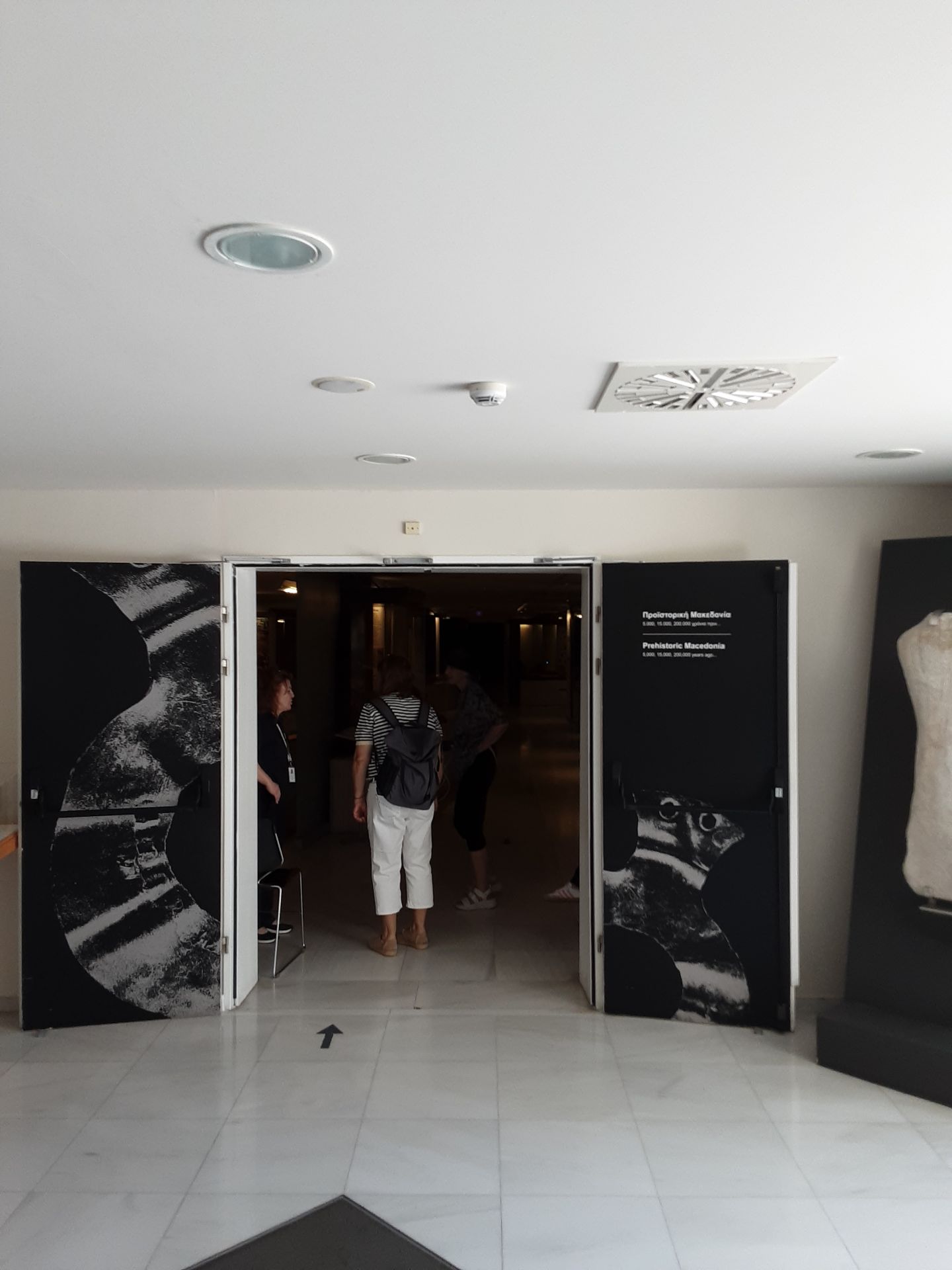
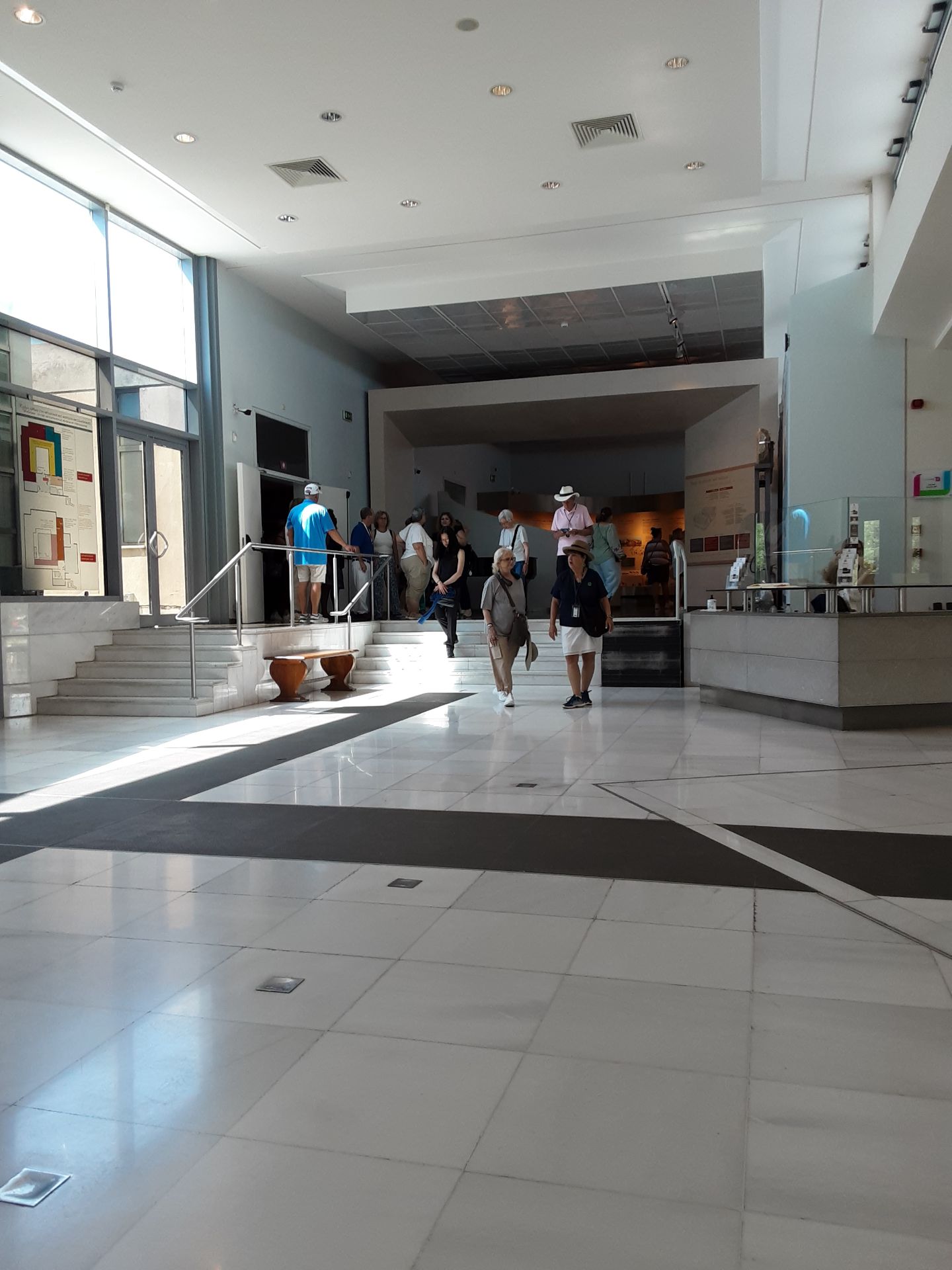
The Archaeological Museum of Thessaloniki is a state museum of the Ministry of Culture and Sports and has been an independent Service since 2001. Since 1962 it has been housed in a building by the architect Patroklos Karantinos and is designated as a listed monument of modern heritage, as it represents one of the most characteristic examples of modernism in Greece. Its collections include objects and excavation assemblages from research carried out by the Archaeological Service throughout Macedonia from 1912 to the present day. Its collections also include objects that belonged to private individuals and were donated to the AMTh. After a long period of works necessary for the reorganisation of the exhibition, storage, conservation and administration spaces, the Archaeological Museum of Thessaloniki opened its doors to the public in September 2006. During the preceding period, in addition to the building's expansion, the re-exhibition of the Museum's permanent collections was designed and carried out in a way that meets the needs of the modern visitor. Eight sections make up the Museum's exhibition proposal, through which the visitor comes into contact with the world of ancient Macedonia, its culture and its people: 1. Prehistoric Macedonia (http://odysseus.culture.gr/h/4/gh41.jsp?obj_id=23966) 2. Towards the birth of the cities (http://odysseus.culture.gr/h/4/gh41.jsp?obj_id=20765) 3. Macedonia from the 7th century BC to late antiquity (http://odysseus.culture.gr/h/4/gh41.jsp?obj_id=14463) 4. Thessaloniki, metropolis of Macedonia (http://odysseus.culture.gr/h/4/gh41.jsp?obj_id=24006) 5. The gold of the Macedonians (http://odysseus.culture.gr/h/4/gh41.jsp?obj_id=24005) 6. Field, House, Garden, Place (http://odysseus.culture.gr/h/4/gh41.jsp?obj_id=8121) 7. Memory and Stones (http://odysseus.culture.gr/h/4/gh41.jsp?obj_id=24004 8. Macedonia: from tesserae to pixels (http://odysseus.culture.gr/h/4/gh41.jsp?obj_id=24007) Our intention was to illuminate aspects of the culture that developed in Macedonia, mainly in the region of Thessaloniki and the neighbouring prefectures, from the dawn of prehistory to late antiquity, that is, the first Christian centuries. We sought to make the organisation and presentation of the exhibitions entirely human-centred, reconstructing, as far as the finds and scientific research allow, the life and everyday existence of the people who once lived in this region of Greece. For this approach to the past, an effort was made to apply the principles of modern museology, and a large team of scientists, craftsmen and administrative staff worked on it. The Archaeological Museum of Thessaloniki wishes to be a place of culture, learning, education, science and communication. To achieve these goals, it offers educational programmes, presents temporary exhibitions on themes drawn from both ancient and modern culture, promotes archaeological research and organises thematic workshops, lectures, seminars and recreational events. The Archaeological Museum of Thessaloniki provides facilities and amenities for access by people with disabilities.
The history of the Archaeological Museum of Thessaloniki follows the course of the city's modern history. The Ephorate of Antiquities "attached to the General Administration of Macedonia" was the first service to be founded, in November 1912, just fifteen days after the signing of the city's surrender to the Greek State. Until 1925 the place where the antiquities of Macedonia were gathered was the Government House (the present building of the Ministry of Macedonia and Thrace), as well as the Ottoman Idadiye School, the building that housed the Faculty of Philosophy of the Aristotle University. During the First World War, antiquities were gathered by the French Army of the Orient (Armée Française d'Orient), initially at Karabournaki and later at the Rotonda, while the finds from the investigations of the English were gathered at the White Tower. In 1925 the Yeni Mosque, the most recent mosque, of the Dönmeh, of formerly Ottoman-ruled Thessaloniki, was ceded to the Archaeological Service. The Yeni Mosque was to become the city's first museum, as is also declared by the inscription that remains on its frontispiece. In 1940 many antiquities, mainly sculptures, were buried in trenches in order to be saved from the ravages of the Second World War. The antiquities were unearthed in 1951 and were exhibited for the first time in the central hall of the Archaeological Museum (Yeni Mosque) in 1953. In 1950 a large plot was ceded at a central point of Thessaloniki, in YMCA Square, in immediate proximity to the large area where the International Fair was organised. The design of the new museum was entrusted to the eminent Greek architect Patroklos Karantinos, an important representative of modernism in Greece. The new museum was inaugurated in 1962 with every formality, together with the celebrations for the fiftieth anniversary of the liberation of Thessaloniki, with an exhibition of the impressive finds from the tombs of Derveni that had been revealed that same year. Subsequently an exhibition of sculpture was organised, from the Archaic to the Roman period, by the emeritus professor of Archaeology of the Aristotle University of Thessaloniki, Giorgos Despinis. The splendid finds of Professor Manolis Andronikos from the excavation of the royal tombs of Aigai at Vergina, which were transferred for safekeeping and conservation to the museum immediately after their discovery, necessitated the organisation of a new method of exhibition and demonstrated the need for a building extension. In 1982 a new exhibition was organised, that of the burial excavation assemblages from Sindos. The excavation and the exhibition were carried out under the supervision and curatorship of the ephor of antiquities Aikaterini Despoini. In 1985, the anniversary year for the 2,300 years since the founding of Thessaloniki, by Cassander in 315 BC, the first major exhibition dedicated to the history and archaeology of the city was held, under the curatorship of the then director of the Museum, Ioulia Vokotopoulou. In 1996 the first extensive exhibition on prehistoric Macedonia was held in the semi-basement space beneath the Vergina exhibition, in the new building by Vogiatzis of 1980, under the supervision of the then director of the Museum, Dimitris Grammenos, and the curatorship of the archaeologist Maria Pappa. In 1998, after the transfer of the finds of Aigai from the Museum to Vergina and their exhibition in the museum building that recreated the great burial tumulus of the royal tombs, an exhibition was organised at the Museum on the theme of the "Gold of the Macedonians", under the supervision of the then director Dimitris Grammenos and the curatorship of the archaeologists Bettina Tsigarida and Despoina Ignatiadou, in order to fill the "gap" left in the public's consciousness by the absence of the impressive royal grave goods. In 2002, by a relevant Presidential Decree (164/2002), the Archaeological Museum of Thessaloniki became an independent regional unit of the Ministry of Culture. The imperative need to renovate the building of Karantinos and Vogiatzis and the modern museological requirements led to the decision for a radical reconstruction of the Museum at the dawn of the 21st century. Since 2004 the Museum has been operating with new permanent exhibitions… After four years of suspension of its operation, the official inauguration of the now renovated Archaeological Museum of Thessaloniki, with five new thematic exhibitions, under the supervision of D. Grammenos and a large team of many specialities, took place in September 2006. The exhibition, entirely anthropocentric, often bypassing the thread of time, has a strong educational character. After a long period of work necessary for the reorganisation of the exhibition, storage, conservation and administration spaces, the Archaeological Museum of Thessaloniki opened its doors to the public in September 2006. In the preceding period, besides the building extension, the most important and most substantial part of our effort was also completed: the re-exhibition of the Museum's collections was designed and carried out in a manner that meets the needs of the modern visitor. Our intention was to illuminate aspects of the culture that developed in Macedonia, mainly in the region of Thessaloniki and the neighbouring prefectures, over a long period of time: from the dawn of prehistory to late antiquity, that is, the first Christian centuries.
- Managing authority
- Archaeological Museum of Thessaloniki
- Accessibility statement
- Available
General information
- Address
- Man. Andronikou 6, postal code 54621, Thessaloniki
- Opening hours
- 1 APRIL - 31 OCTOBER 09:00 - 17:00 daily and 09:00 - 22:00 on the first Thursday of each month for the months of May, June, July, August and September (for the exhibitions: Prehistoric Macedonia, Gold of the Macedonians, the open-air exhibition Memory and …Stones, and the new temporary exhibition «In the Cave: Stories from Darkness to Light». Specifically during the days of Easter, the schedule is arranged as follows: Good Friday: 12.00 - 17.00 Holy Saturday: 8.30 - 15.30 Easter Sunday: CLOSED 1 NOVEMBER - 31 MARCH 09:00 - 17:00 daily, Tuesday closed. Opening hours may change without notice. For more information and confirmation of the schedule you can call the telephone 2313 310301. Group visits are accepted only after prior telephone arrangement (Monday to Friday 09:00-11:00).
- Tickets
- Full: €10, Reduced: €5.
- Guide dogs
- Allowed
How to prepare
- You may bring your guide dog.
- An accessibility statement is available — review it before your visit.
Contact & help
- Contact
- Telephone: +30 2313 310201 and 301. Fax: +30 2310 861306. Email: amth@culture.gr School and other groups are accepted following telephone arrangement, at the telephone number 2313 310301
- Website
- http://www.amth.gr/
How to get here
The museum is located in the centre of the city and can be reached by urban public transport, by taxi and by buses, which can park outside the museum. By public transport: - The Archaeological Museum of Thessaloniki can be reached by buses 1, 3, 5, 6, 7, 10, 11, 12, 27, 28, 31, 33, 39, 58 and 83, as well as by the cultural line 50. More information on the OASTH website: http://m.oasth.gr/ - By metro, Sintrivani/Ekthesi stop, about 7 minutes on foot. By private car (nearest parking): - Thessaloniki City Hall Parking - TIF Parking - YMCA Parking A vehicle for people with disabilities can park on Man. Andronikou Street, at the level of the Museum café. In addition, there are two (2) parking spaces for vehicles of people with disabilities in the Museum staff parking area (which are available to visitors by prior telephone arrangement/agreement), with an entrance on Man. Andronikou Street.
- Accessible parking spaces: 1
- Accessible public transport
- Drop-off area
- Accessible parking
Entry / exit points (21)
-
3rd September Avenue
Outdoor infrastructure / routes- Adequately served by a dedicated boarding / alighting area suitable for people with disabilities
- No
- Does a blind guidance path lead to the entrance?
- No
- Is it preceded by an abrupt rise of more than 2 cm?
- 12
- Is it easily identifiable?
- Yes
- Is it preceded by a sidewalk with an unsuitable road–sidewalk connection for wheelchair users?
- No
- Adequately served by a dedicated accessible parking space for private vehicles
- No
- Adequately served by disability-friendly public transport
- Yes
-
Stratou Ave.
Outdoor infrastructure / routes- Is there a door?
- No
- Adequately served by a dedicated boarding / alighting area suitable for people with disabilities
- No
- Does a blind guidance path lead to the entrance?
- No
- Cross slope
- Suitable
- Longitudinal slope
- Suitable
- Clear opening
- Suitable
- Is it easily identifiable?
- Yes
- Is it preceded by a sidewalk with an unsuitable road–sidewalk connection for wheelchair users?
- Yes (explain…)
- Clear passage height
- Suitable
- Informational signage for visitors is provided outside
- Yes, but it is not accessible for people with disabilities (e.g. without Braille or raised lettering)
- Adequately served by a dedicated accessible parking space for private vehicles
- No
- It has appropriate signage providing accessibility information for the individual interior spaces
- No
- Adequately served by disability-friendly public transport
- Yes
-
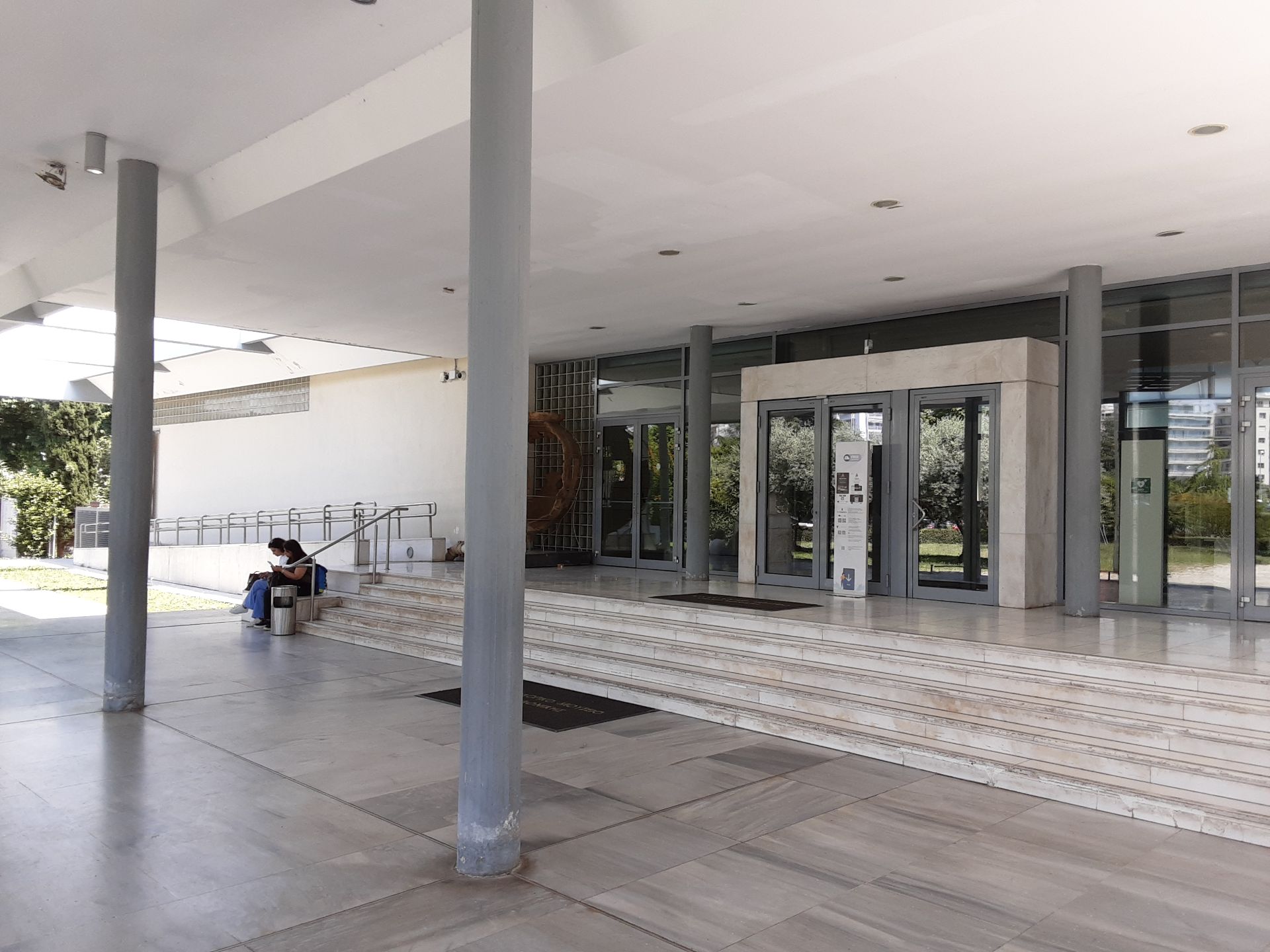
Main entrance (from the Courtyard)
Building infrastructure- Is there a door?
- One entrance and one exit
- Adequately served by a dedicated boarding / alighting area suitable for people with disabilities
- Yes
- Does a tactile guide path lead to the building?
- Yes, but issues arise
- Is it preceded by a ramp?
- Alongside as an alternative to the steps
- Preceded by a step
- Immediately before the main entrance
- Cross slope
- Suitable
- Longitudinal slope
- Suitable
- Offers adequate protection from the weather
- Covered
- Clear opening
- Suitable
- Is it easily identifiable?
- Yes
- Clear passage height
- Suitable
- Informational signage for visitors is provided outside
- No
- Adequately served by a dedicated accessible parking space for private vehicles
- Yes
- Bears suitable informational signage regarding accessibility to the building's spaces
- No
- Adequately served by disability-friendly public transport
- Yes
-
Secondary (from the corridor after the Ground Floor Foyer)
Building infrastructure- Is it preceded by a ramp?
- The ramp/corridor to the right of the reception
- Is it easily identifiable?
- No
-
From the Basement Foyer
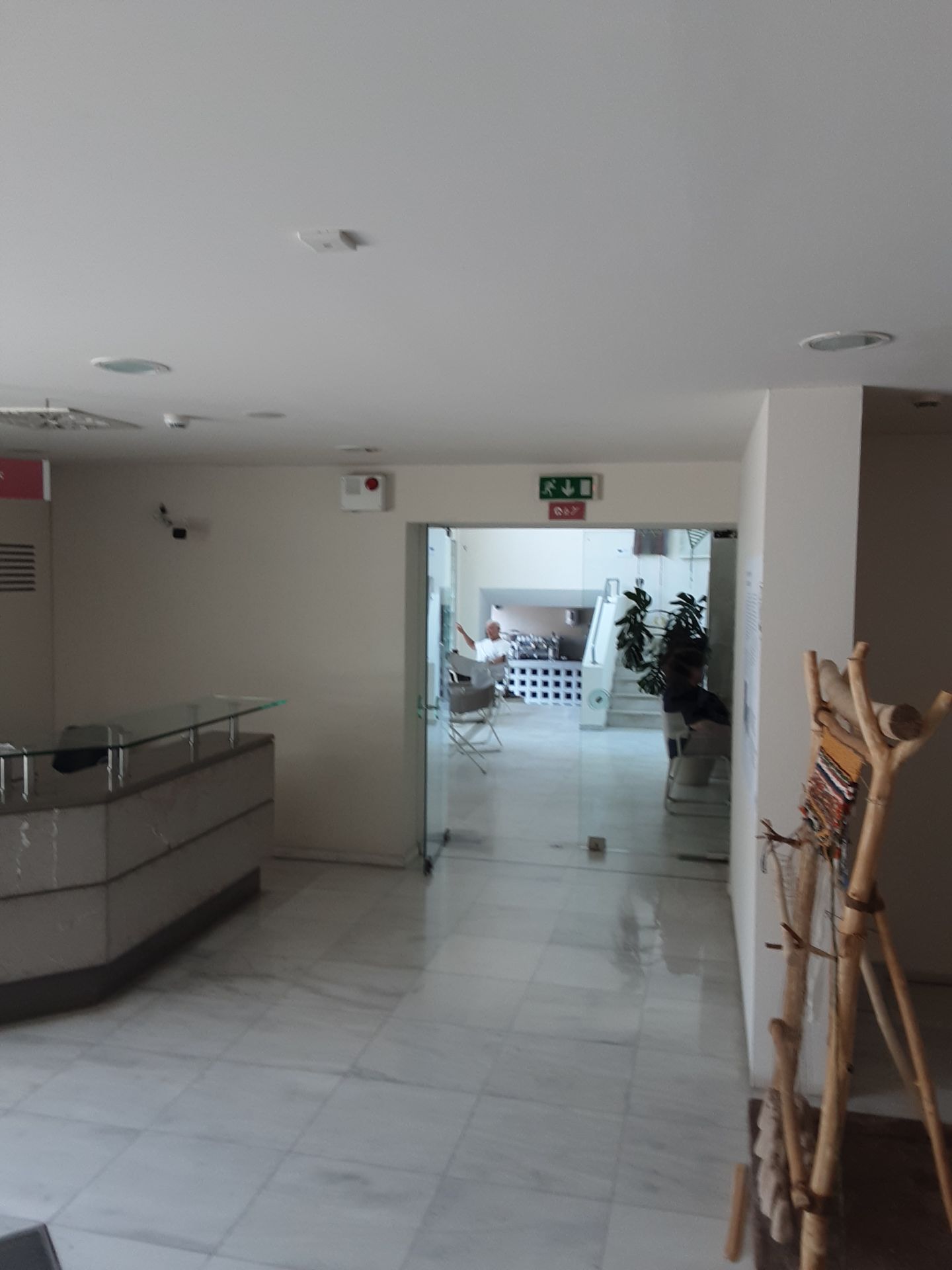
Building infrastructure- Is there a door?
- Glass door (remains open)
- Cross slope
- Suitable
- Longitudinal slope
- Suitable
- Clear opening
- Suitable
- Is it easily identifiable?
- Yes
- Clear passage height
- Suitable
- Informational signage for visitors is provided outside
- Yes, but it is not accessible for people with disabilities (e.g. without Braille or raised lettering)
- Bears suitable informational signage regarding accessibility to the building's spaces
- No
-
From the Basement Permanent Exhibition Wing
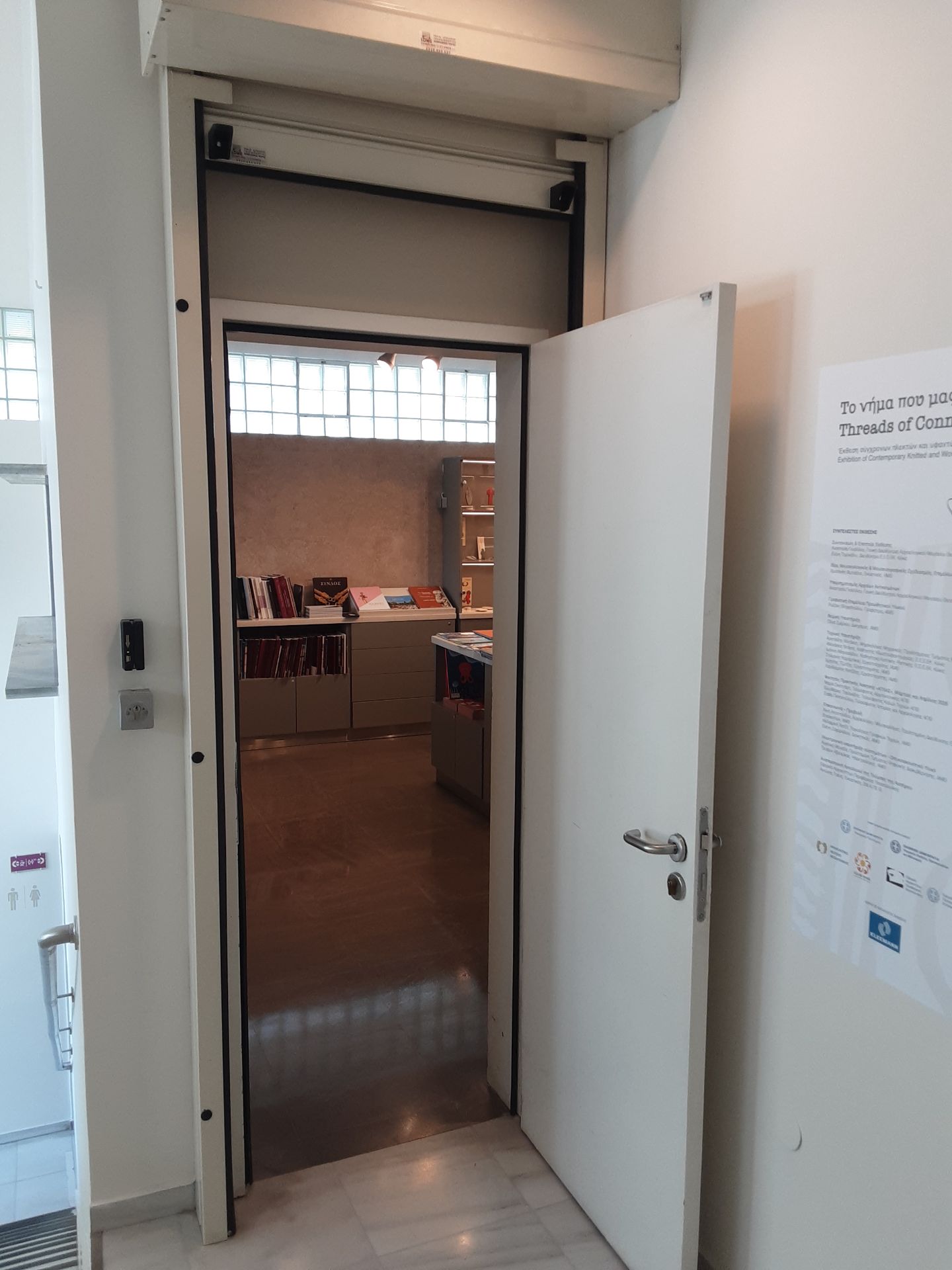
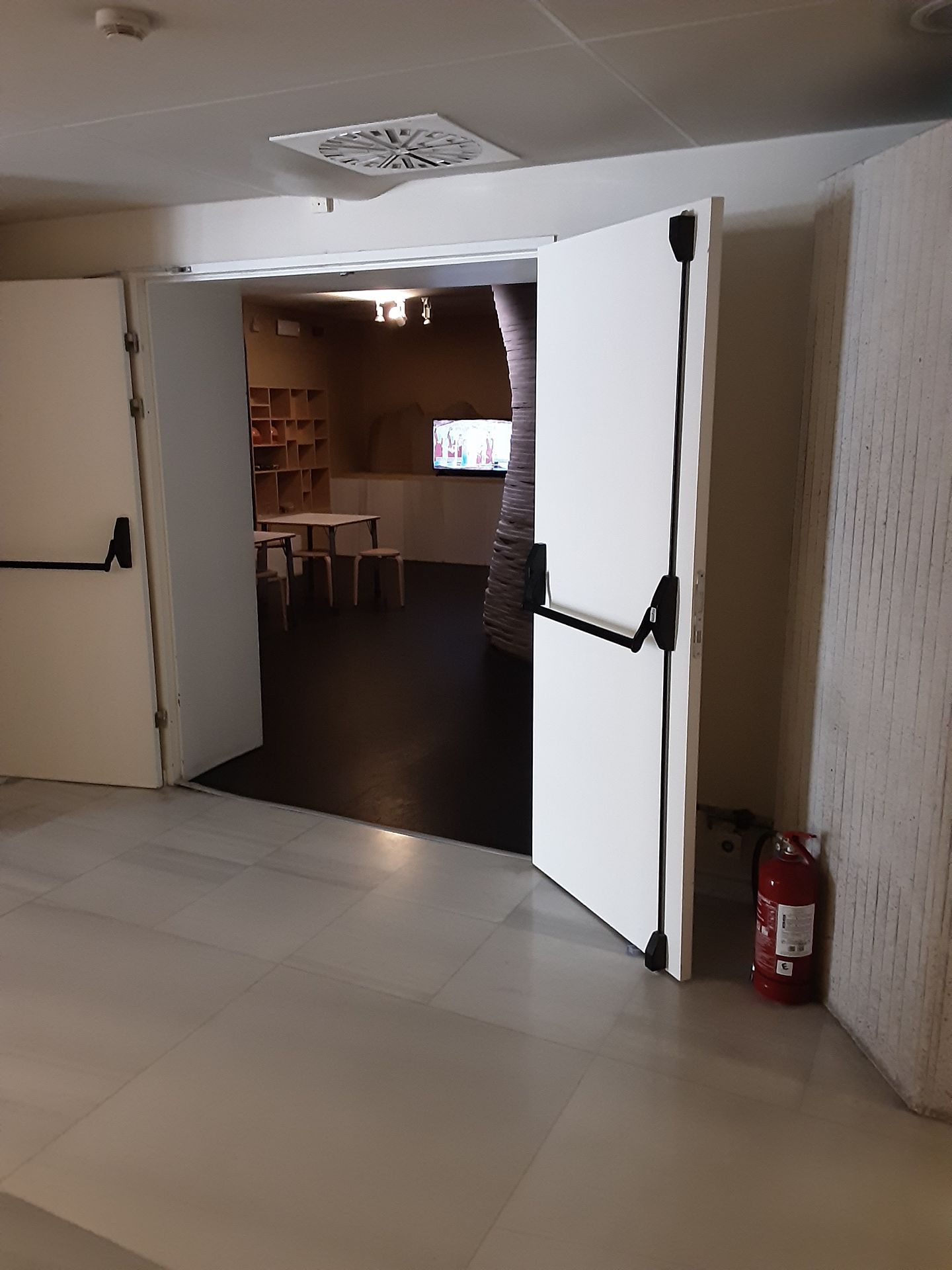
Building infrastructure- Is there a door?
- Stays open.
- Railings / parapet
- Not needed
- Cross slope
- Suitable
- Longitudinal slope
- Suitable
- Clear opening
- Suitable
- Is it easily identifiable?
- Yes
- Clear passage height
- Suitable
- Informational signage for visitors is provided outside
- No
- Bears suitable informational signage regarding accessibility to the building's spaces
- No
-
From the ground floor Foyer (stairs/elevator)
Building infrastructure- Preceded by a step
- Ramp-stairs
- Is it easily identifiable?
- Yes
-
From the atrium to the Basement (A)
Building infrastructure- Is there a door?
- Stays open when needed.
- Railings / parapet
- Not needed
- Adequately served by a dedicated boarding / alighting area suitable for people with disabilities
- Yes
- Does a tactile guide path lead to the building?
- Yes, standards-compliant
- Cross slope
- Suitable
- Longitudinal slope
- Suitable
- Offers adequate protection from the weather
- Covered
- Clear opening
- Suitable
- Is it easily identifiable?
- Yes
- Is it preceded by a sidewalk with an unsuitable road–sidewalk connection for wheelchair users?
- No
- Clear passage height
- Suitable
- Informational signage for visitors is provided outside
- No
- Adequately served by a dedicated accessible parking space for private vehicles
- Yes
- Bears suitable informational signage regarding accessibility to the building's spaces
- No
- Adequately served by disability-friendly public transport
- Yes
-
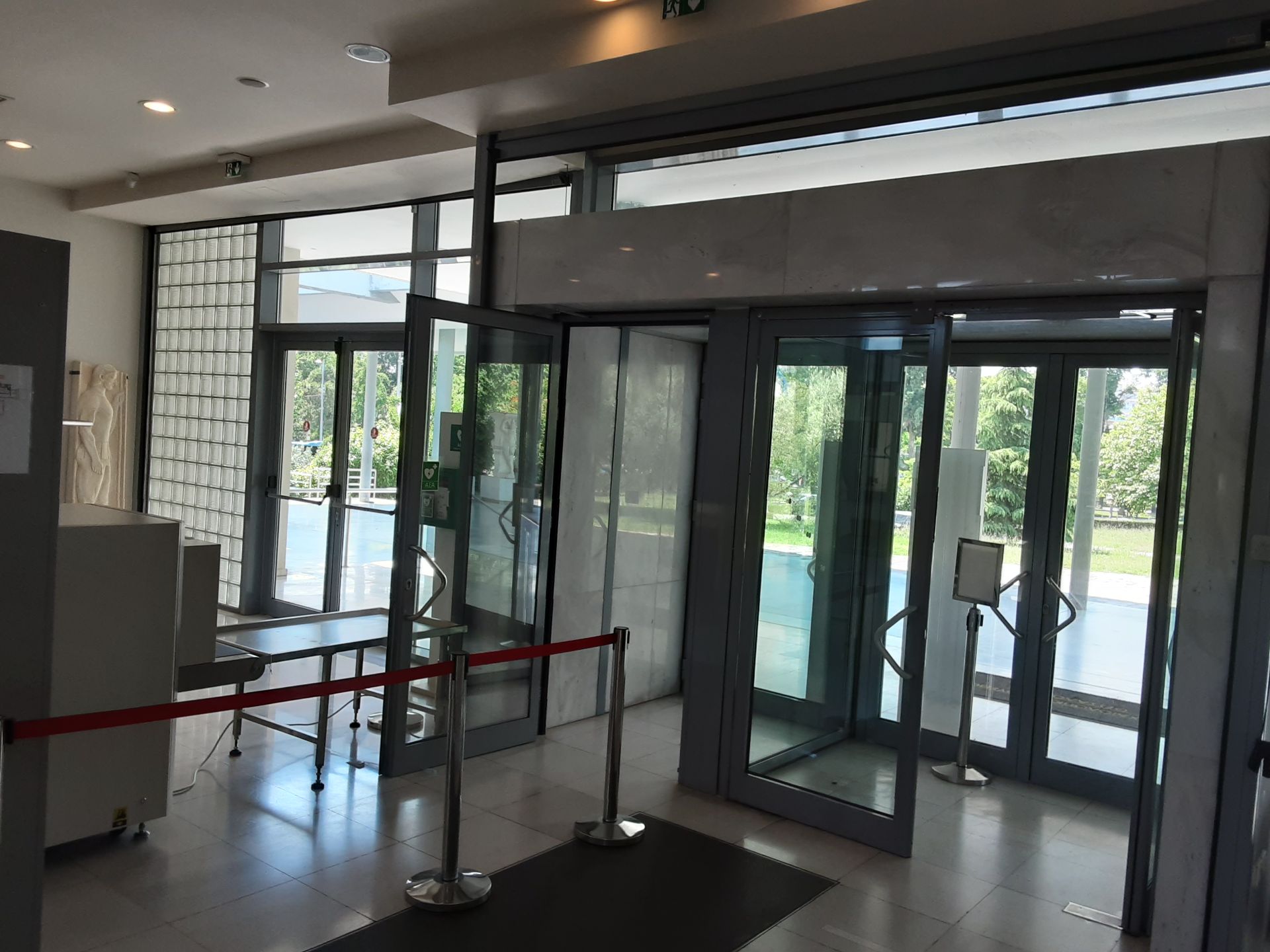
Main entrance (Basement Foyer)
Building infrastructure- Is there a door?
- Stays open
- Cross slope
- Suitable
- Longitudinal slope
- Suitable
- Clear opening
- Suitable
- Is it easily identifiable?
- Yes
- Clear passage height
- Suitable
- Informational signage for visitors is provided outside
- No
- Adequately served by a dedicated accessible parking space for private vehicles
- Yes
- Bears suitable informational signage regarding accessibility to the building's spaces
- No
-
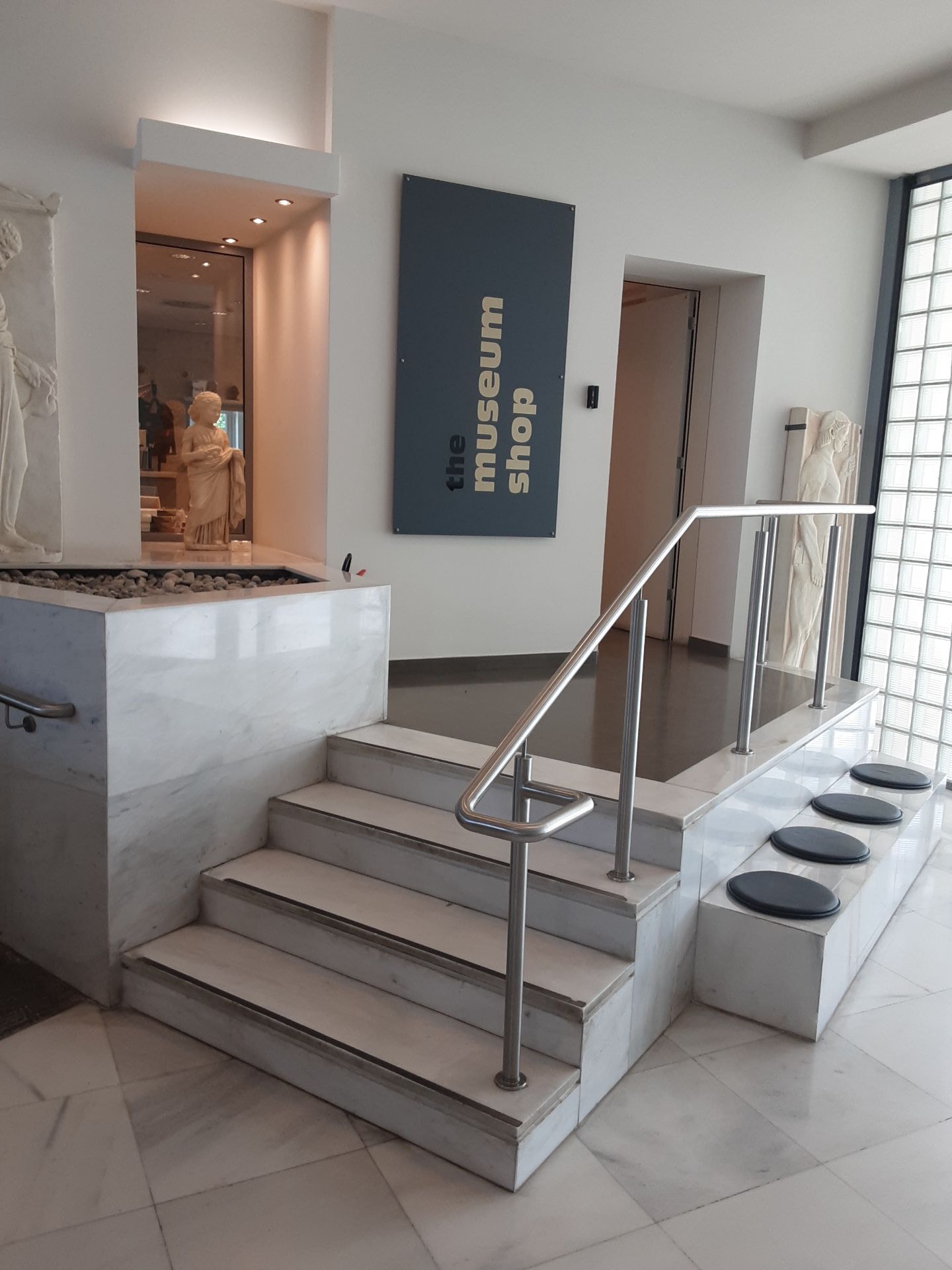
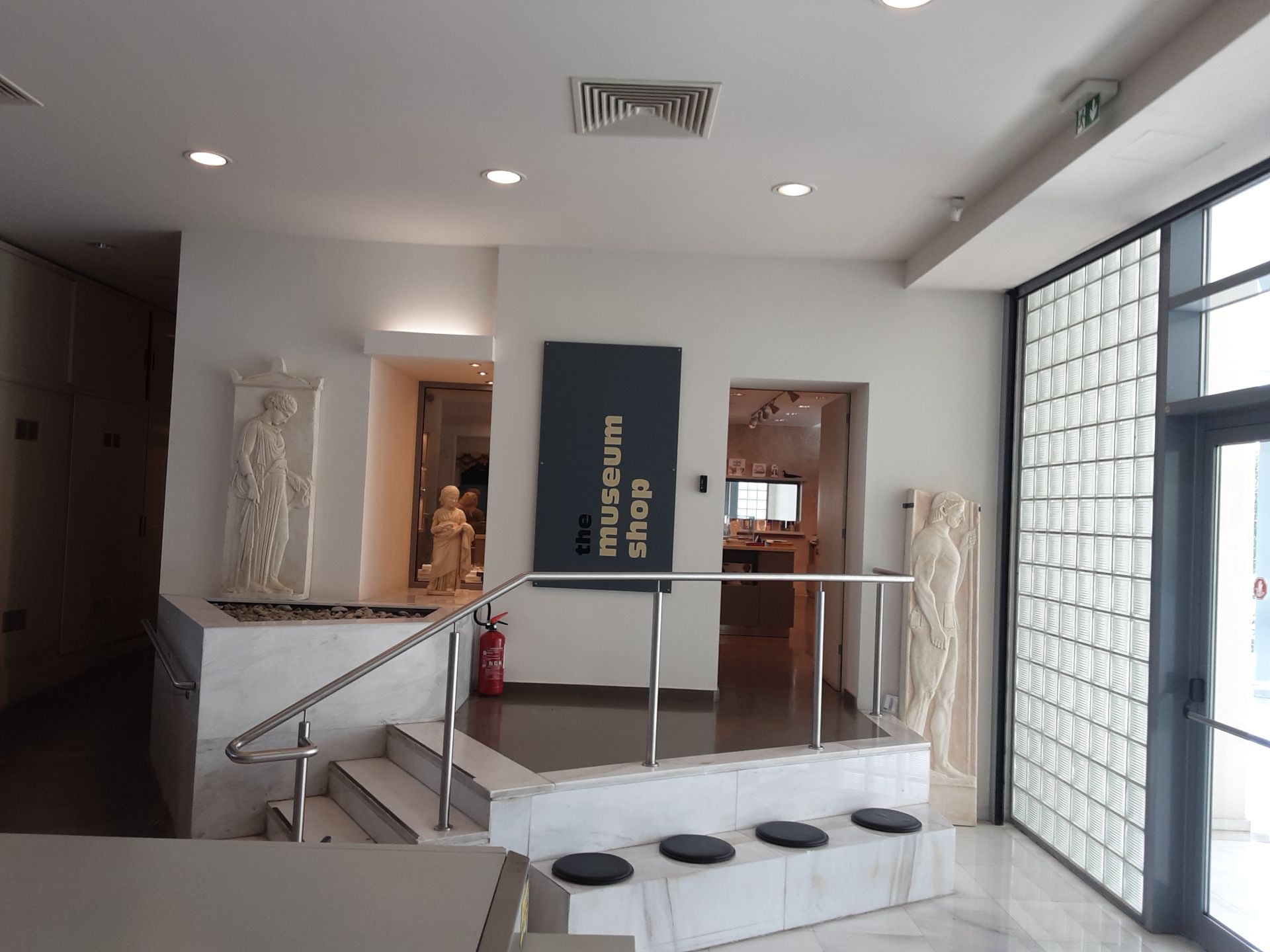
Entrance (Ground Floor Foyer)
Building infrastructure- Railings / parapet
- Needed, but not present
- Is it preceded by an elevator, platform lift or other lifting device?
- Platform lift at the entrance, next to the steps.
- Preceded by a step
- Marble steps (5 steps)
- Bears the designation "Accessible"
- Unsuitable (e.g. without the international symbol, not embossed / braille, not clearly visible / at the wrong height/position)
- Cross slope
- Suitable
- Longitudinal slope
- Suitable
- Clear opening
- Suitable
- Is it easily identifiable?
- Yes
- Clear passage height
- Suitable
- The building's entrance/exit is not the same for all visitors
- Yes (justified)
- Informational signage for visitors is provided outside
- No
- Bears suitable informational signage regarding accessibility to the building's spaces
- No
- Exit from the building facilities is at a different point than the entrance and is not as accessible as the entrance
- Yes (justified)
-
From the atrium to the Basement (B)
Building infrastructure- Is there a door?
- Remains open when needed.
- Railings / parapet
- Not needed
- Cross slope
- Suitable
- Longitudinal slope
- Suitable
- Offers adequate protection from the weather
- Covered
- Clear opening
- Suitable
- Is it easily identifiable?
- Yes
- Clear passage height
- Suitable
- Informational signage for visitors is provided outside
- No
- Bears suitable informational signage regarding accessibility to the building's spaces
- No
-
Main (from the Ground Floor Foyer)
Building infrastructure- Is there a door?
- Stays open
- Cross slope
- Suitable
- Longitudinal slope
- Suitable
- Clear opening
- Suitable
- Is it easily identifiable?
- Yes
- Clear passage height
- Suitable
- Informational signage for visitors is provided outside
- Yes, but it is not accessible for people with disabilities (e.g. without Braille or raised lettering)
- Bears suitable informational signage regarding accessibility to the building's spaces
- No
-
Auxiliary entrance (side)
Building infrastructure- Adequately served by a dedicated boarding / alighting area suitable for people with disabilities
- Yes
- Does a tactile guide path lead to the building?
- Yes, standards-compliant
- Is it preceded by a ramp?
- A small one for bridging the beveled edge
- Cross slope
- Suitable
- Longitudinal slope
- Suitable
- Offers adequate protection from the weather
- Covered
- Clear opening
- Suitable
- Is it easily identifiable?
- Yes
- Clear passage height
- Suitable
- Informational signage for visitors is provided outside
- No
- Adequately served by a dedicated accessible parking space for private vehicles
- Yes
- Bears suitable informational signage regarding accessibility to the building's spaces
- No
- Adequately served by disability-friendly public transport
- Yes
-
Exit (Ground Floor Foyer)
Building infrastructure- Is it preceded by an elevator, platform lift or other lifting device?
- Alongside the exit steps
- Preceded by a step
- Marble steps at the exit (5 steps)
- Cross slope
- Suitable
- Longitudinal slope
- Suitable
- Clear opening
- Suitable
- Is it easily identifiable?
- Yes
- Is it preceded by a sidewalk with an unsuitable road–sidewalk connection for wheelchair users?
- Yes (explain)
- Clear passage height
- Suitable
- Informational signage for visitors is provided outside
- No
- Bears suitable informational signage regarding accessibility to the building's spaces
- No
-
Entrance (from the courtyard / Stratou Ave.)
Outdoor infrastructure / routes- Is there a door?
- Remains open during operating hours
- Adequately served by a dedicated boarding / alighting area suitable for people with disabilities
- Yes
- Does a blind guidance path lead to the entrance?
- No
- Cross slope
- Suitable
- Clear opening
- Suitable
- Is it easily identifiable?
- Yes
- Is it preceded by a sidewalk with an unsuitable road–sidewalk connection for wheelchair users?
- Yes (explain…)
- Clear passage height
- Suitable
- Informational signage for visitors is provided outside
- Yes, but it is not accessible for people with disabilities (e.g. without Braille or raised lettering)
- Adequately served by a dedicated accessible parking space for private vehicles
- Yes
- It has appropriate signage providing accessibility information for the individual interior spaces
- No
- Adequately served by disability-friendly public transport
- Yes
-
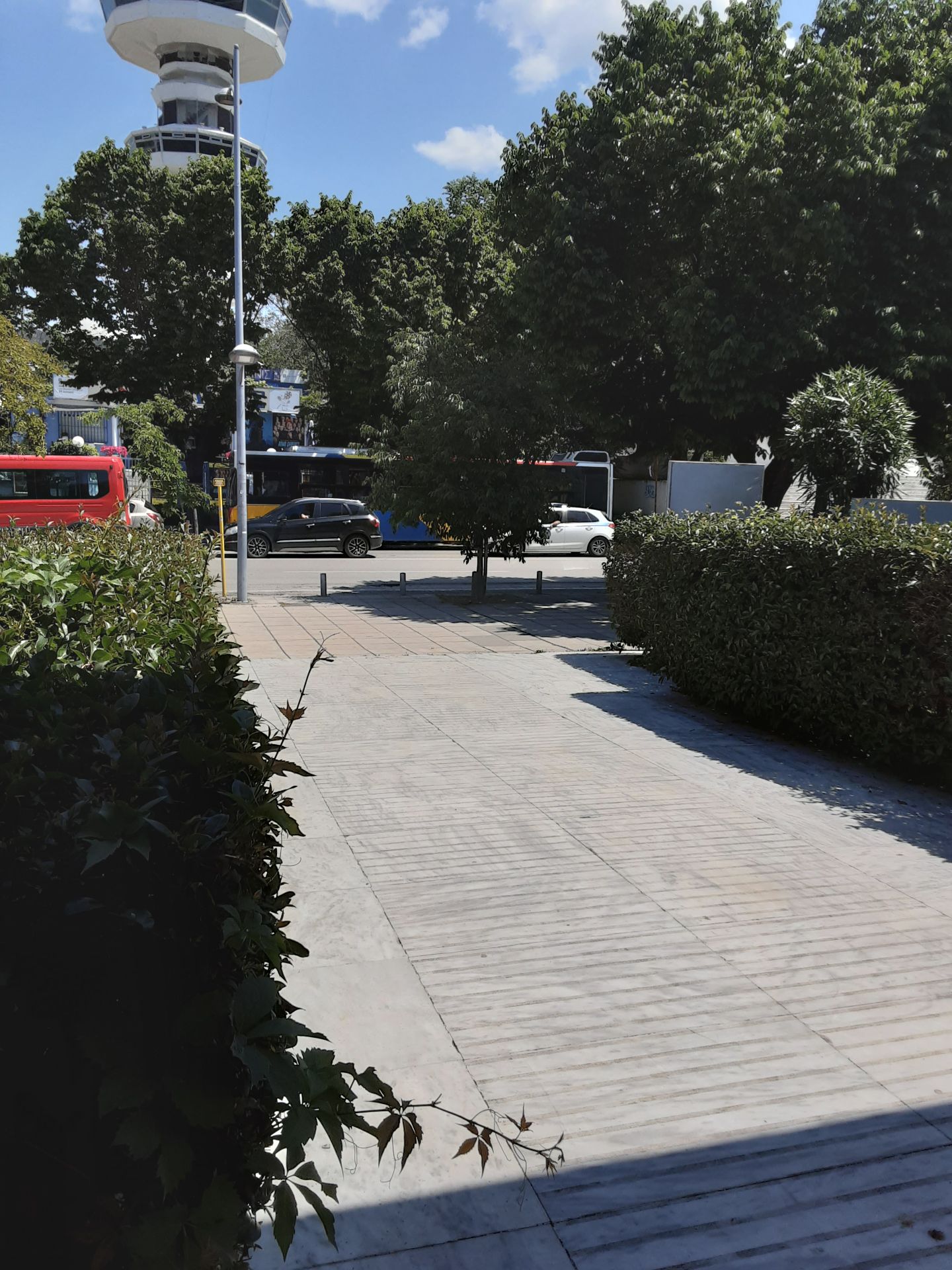
Man. Andronikou St.
Outdoor infrastructure / routes- Is there a door?
- No
- Railings / parapet
- Not needed
- Adequately served by a dedicated boarding / alighting area suitable for people with disabilities
- Yes
- Does a blind guidance path lead to the entrance?
- Yes, but issues arise
- Preceded by a step
- Toward the main entrance of the building
- Cross slope
- Suitable
- At the entrance, are there obstacles preventing wheelchair passage?
- Special barriers used to regulate visitor entry (stanchions with rope, ticket barriers, etc.)
- Longitudinal slope
- Suitable
- Clear opening
- Suitable
- Is it easily identifiable?
- Yes
- Is it preceded by a sidewalk with an unsuitable road–sidewalk connection for wheelchair users?
- Yes (explain…)
- Clear passage height
- Suitable
- Informational signage for visitors is provided outside
- No
- Adequately served by a dedicated accessible parking space for private vehicles
- Yes
- It has appropriate signage providing accessibility information for the individual interior spaces
- No
- Adequately served by disability-friendly public transport
- Yes
-
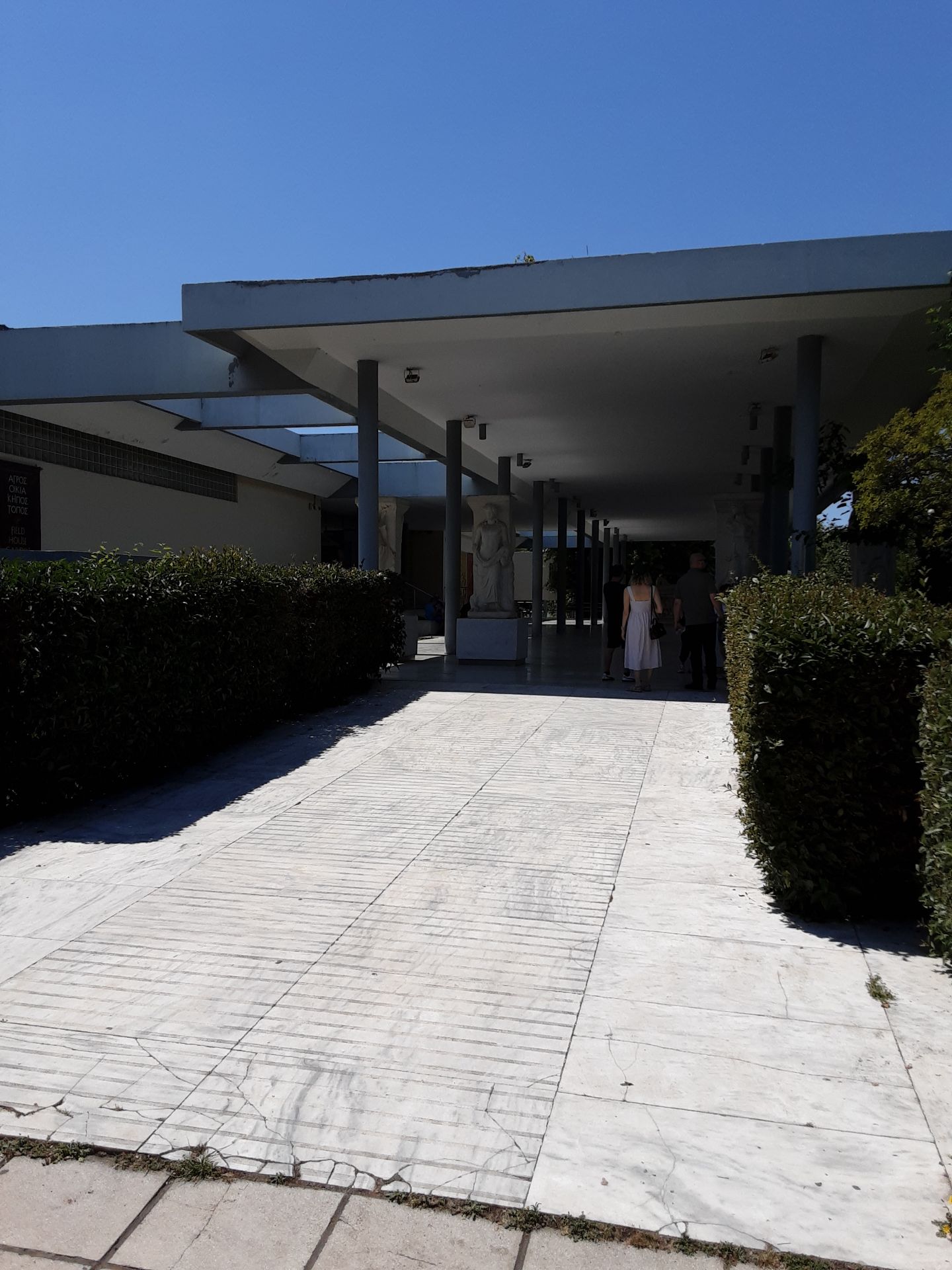
Entrance (from the courtyard / Man. Andronikou St.)
Outdoor infrastructure / routes- Is there a door?
- Stays open
- Adequately served by a dedicated boarding / alighting area suitable for people with disabilities
- Yes
- Does a blind guidance path lead to the entrance?
- Yes, standards-compliant
- Cross slope
- Suitable
- Longitudinal slope
- Unsuitable (e.g. over 5%, i.e. over 2.9 degrees)
- Clear opening
- Suitable
- Is it easily identifiable?
- Yes
- Clear passage height
- Suitable
- Informational signage for visitors is provided outside
- No
- Adequately served by a dedicated accessible parking space for private vehicles
- Yes
- It has appropriate signage providing accessibility information for the individual interior spaces
- No
- Adequately served by disability-friendly public transport
- Yes
-
From the Ground Floor Foyer (via stairs)
Building infrastructure- Cross slope
- Suitable
- Longitudinal slope
- Suitable
- Clear opening
- Suitable
- Is it easily identifiable?
- Yes
- Clear passage height
- Suitable
- Informational signage for visitors is provided outside
- Yes, but it is not accessible for people with disabilities (e.g. without Braille or raised lettering)
- Bears suitable informational signage regarding accessibility to the building's spaces
- No
- Overall, passage / use is not possible/safe for specific categories of people with disabilities
- wheelchair users
-
From the side/courtyard
Building infrastructure- Is there a door?
- But it remains open when needed.
- Adequately served by a dedicated boarding / alighting area suitable for people with disabilities
- Yes
- Does a tactile guide path lead to the building?
- No
- Cross slope
- Suitable
- Longitudinal slope
- Suitable
- Clear opening
- Suitable
- Is it easily identifiable?
- Yes
- Clear passage height
- Suitable
- Informational signage for visitors is provided outside
- No
- Adequately served by a dedicated accessible parking space for private vehicles
- Yes
- Bears suitable informational signage regarding accessibility to the building's spaces
- No
- Adequately served by disability-friendly public transport
- Yes
-
From the courtyard (exterior)
Building infrastructure- Adequately served by a dedicated boarding / alighting area suitable for people with disabilities
- Yes
- Does a tactile guide path lead to the building?
- Yes, standards-compliant
- Is it preceded by a ramp?
- Side ramp to the refreshment area
- Preceded by a step
- By marble steps
- Is it easily identifiable?
- Yes
- Is it preceded by a sidewalk with an unsuitable road–sidewalk connection for wheelchair users?
- Yes (explain)
- Adequately served by a dedicated accessible parking space for private vehicles
- Yes
- Adequately served by disability-friendly public transport
- Yes
-
Interior (through the Temporary Exhibition Wing)
Building infrastructure- Is there a door?
- Stays open
- Cross slope
- Suitable
- Longitudinal slope
- Suitable
- Clear opening
- Suitable
- Is it easily identifiable?
- Yes
- Clear passage height
- Suitable
- Informational signage for visitors is provided outside
- No
- Bears suitable informational signage regarding accessibility to the building's spaces
- No
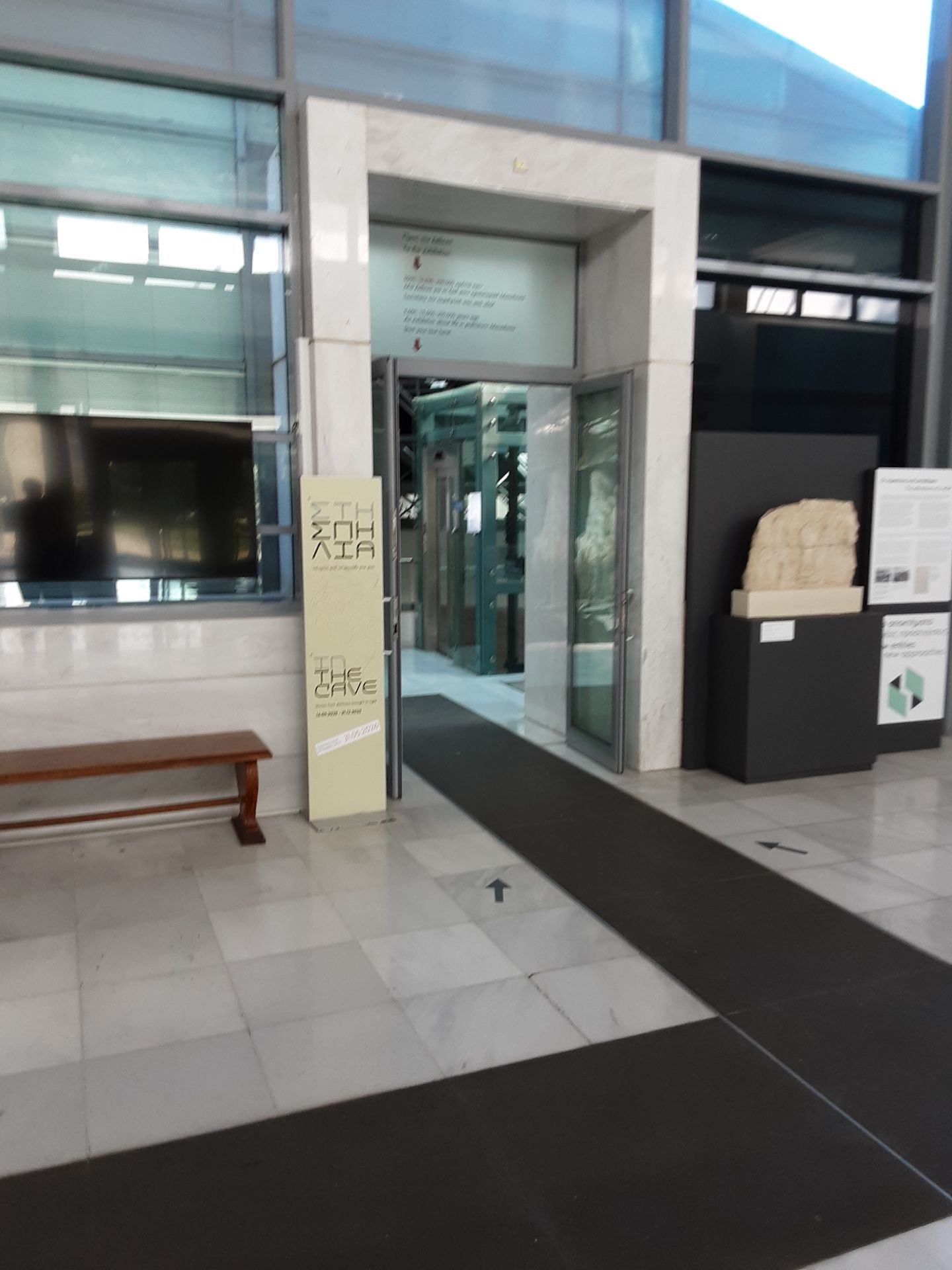
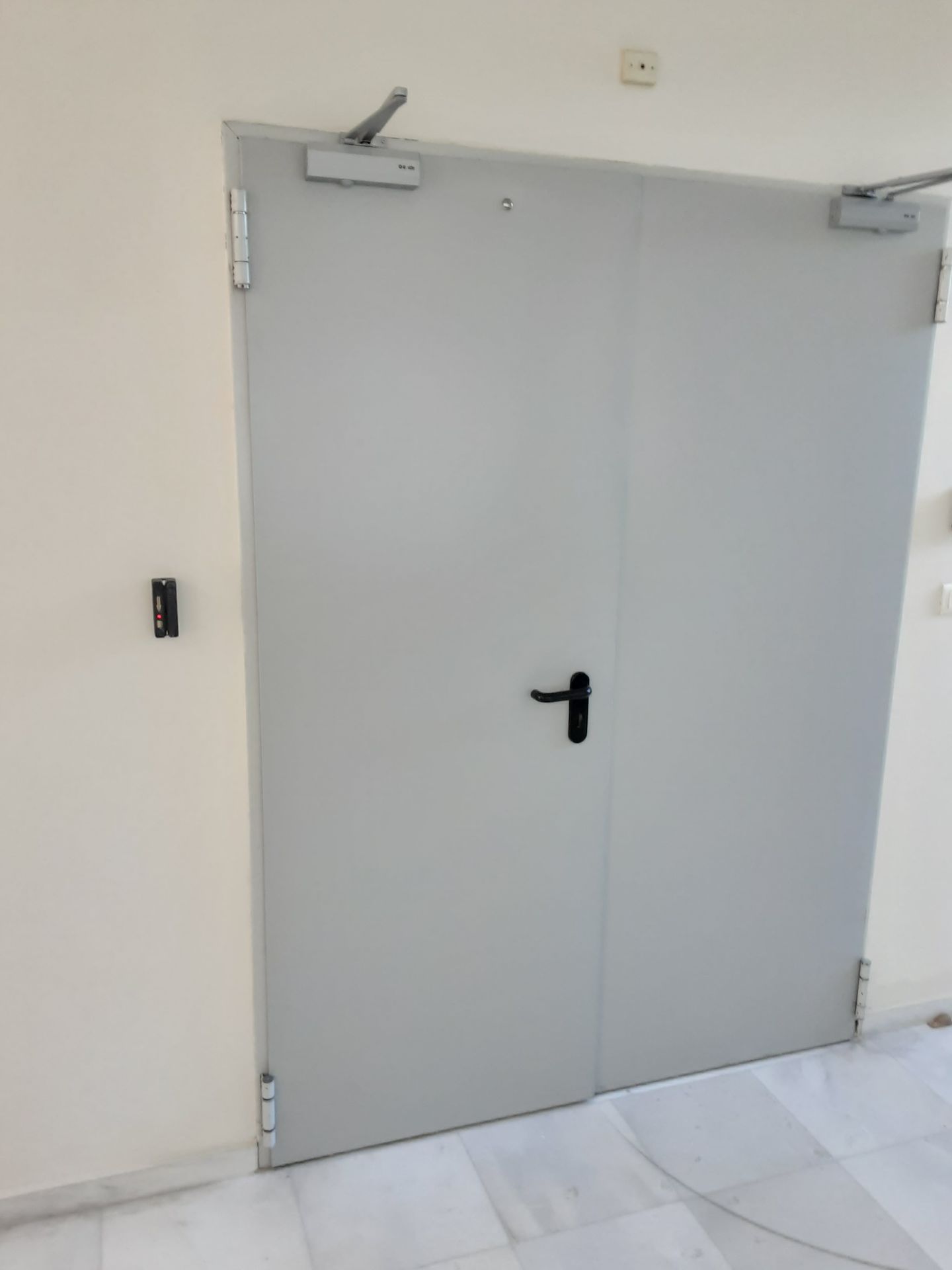
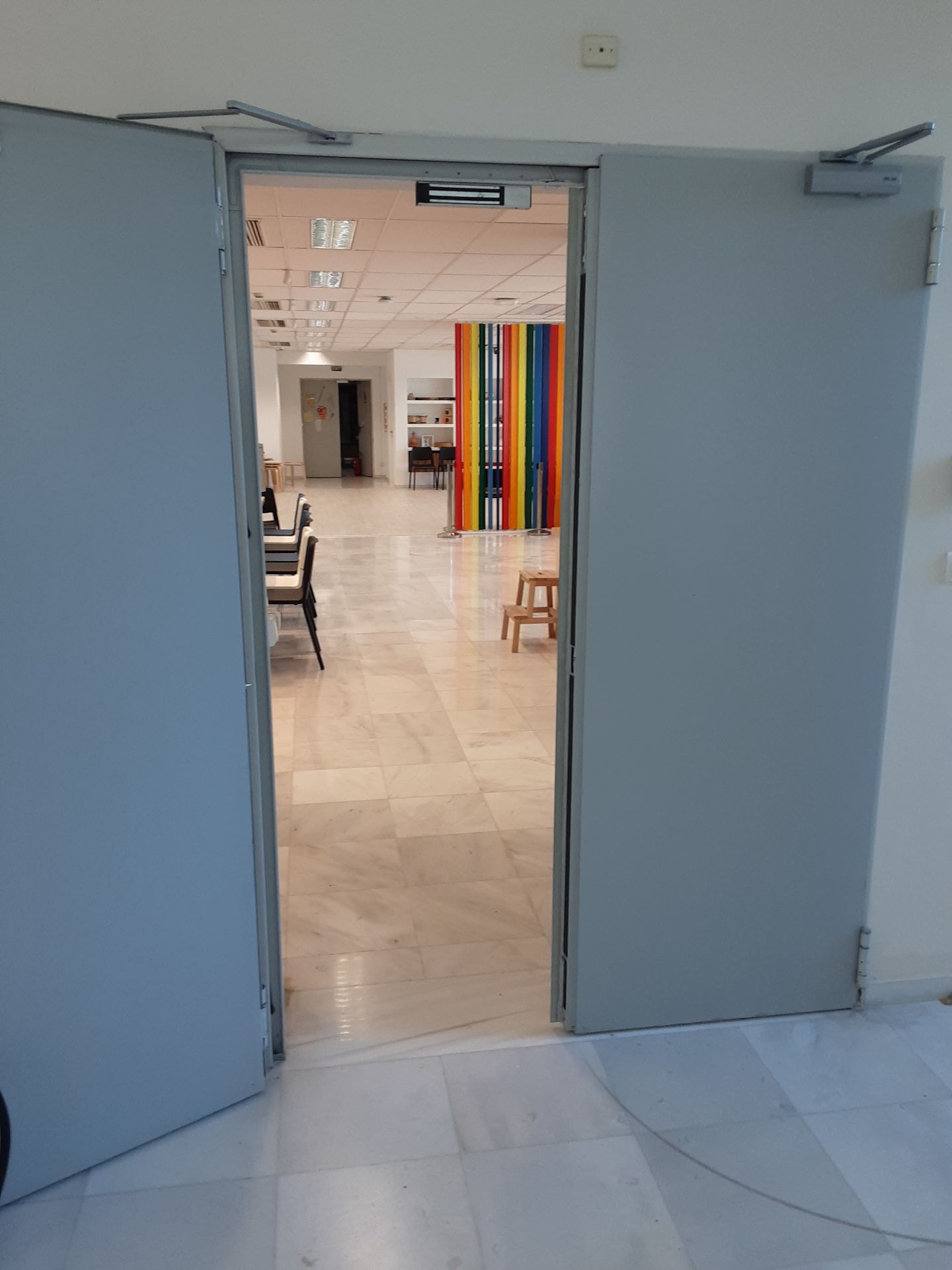
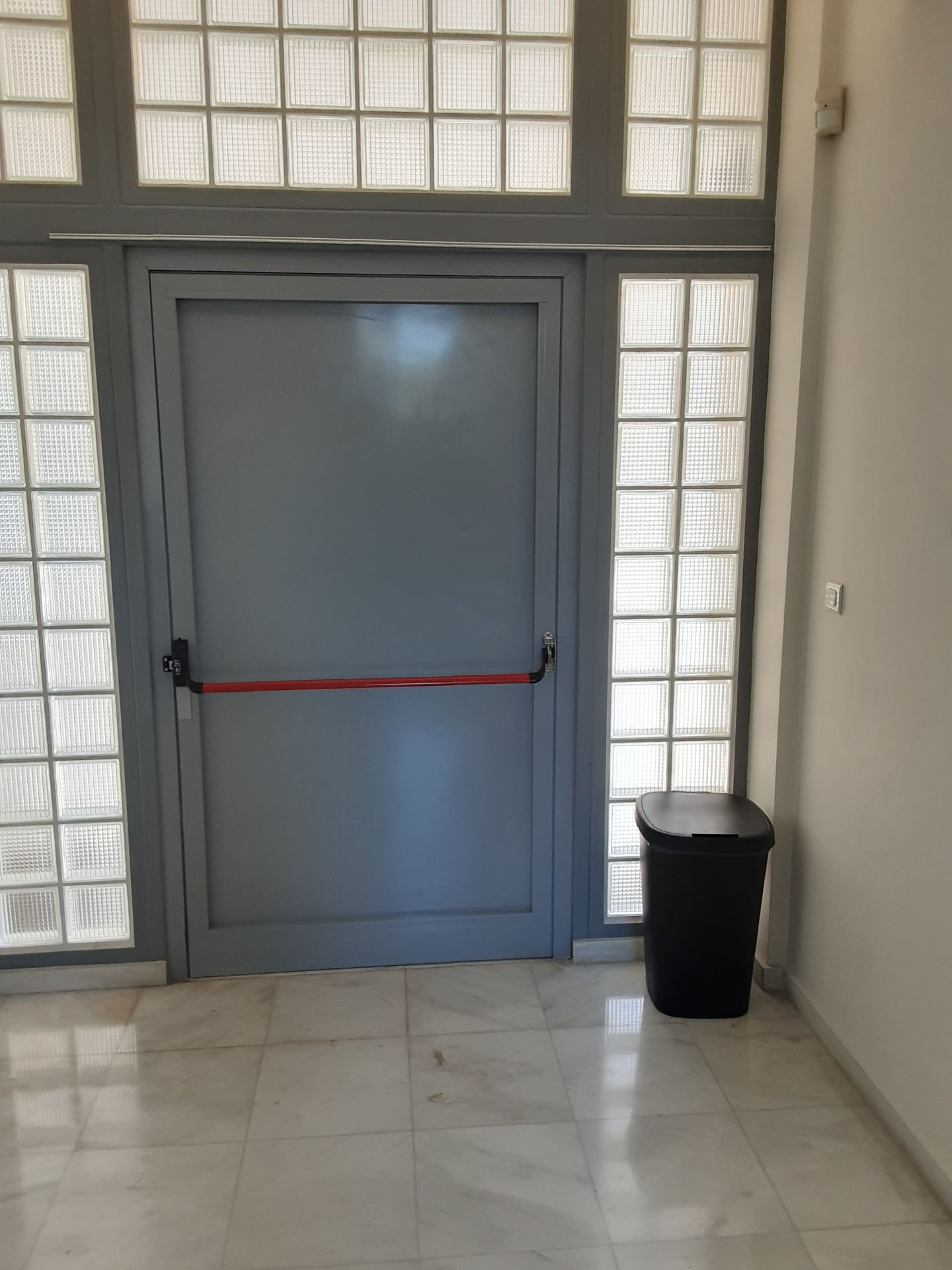
What you can see & do
Activities & facilities
- Gift shop
- Parking
- AV room
- Guided tours
- Ticket office
- Cloakroom
- Restrooms
- Café
Special facilities (7)
Outdoor area
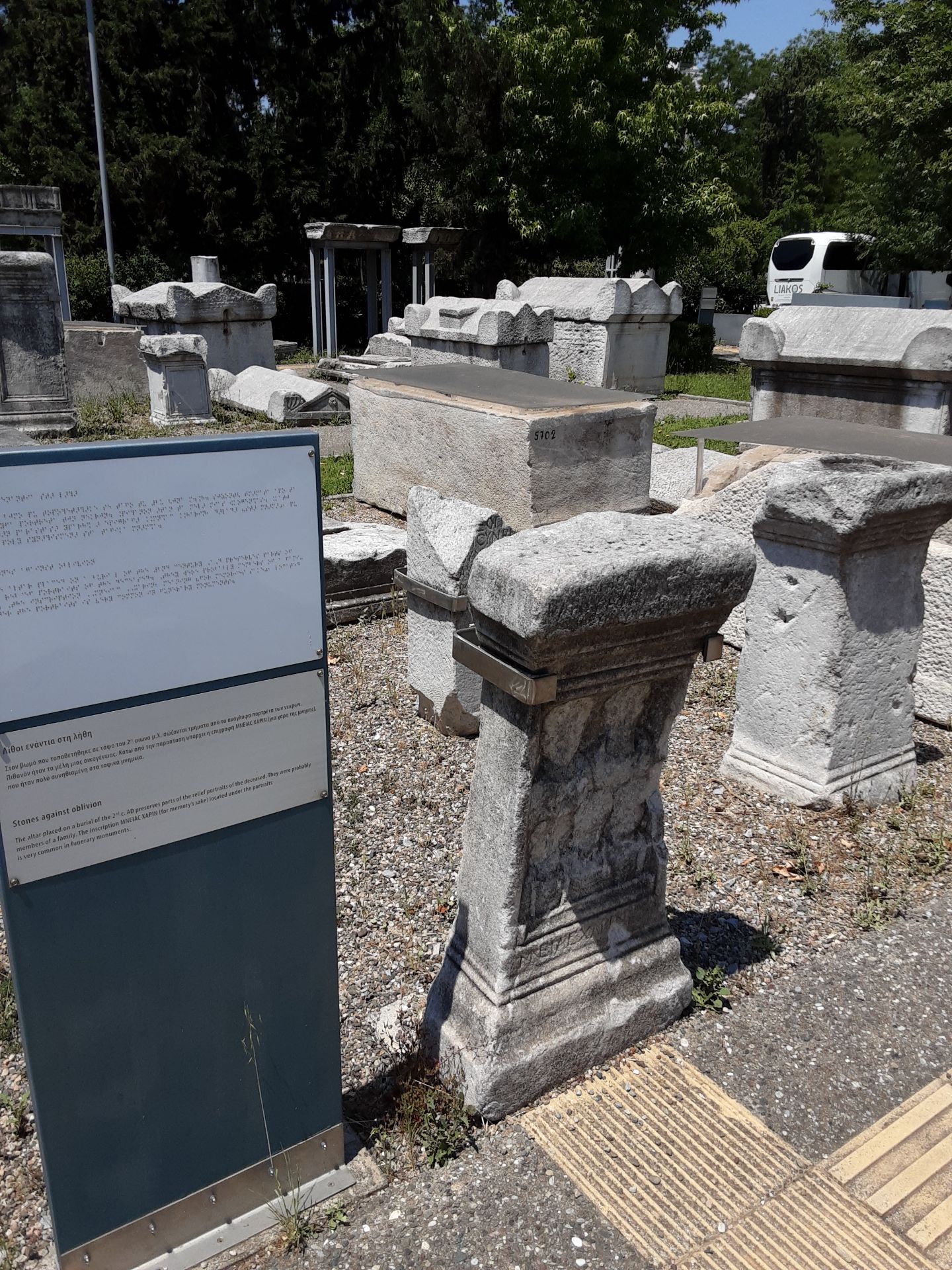
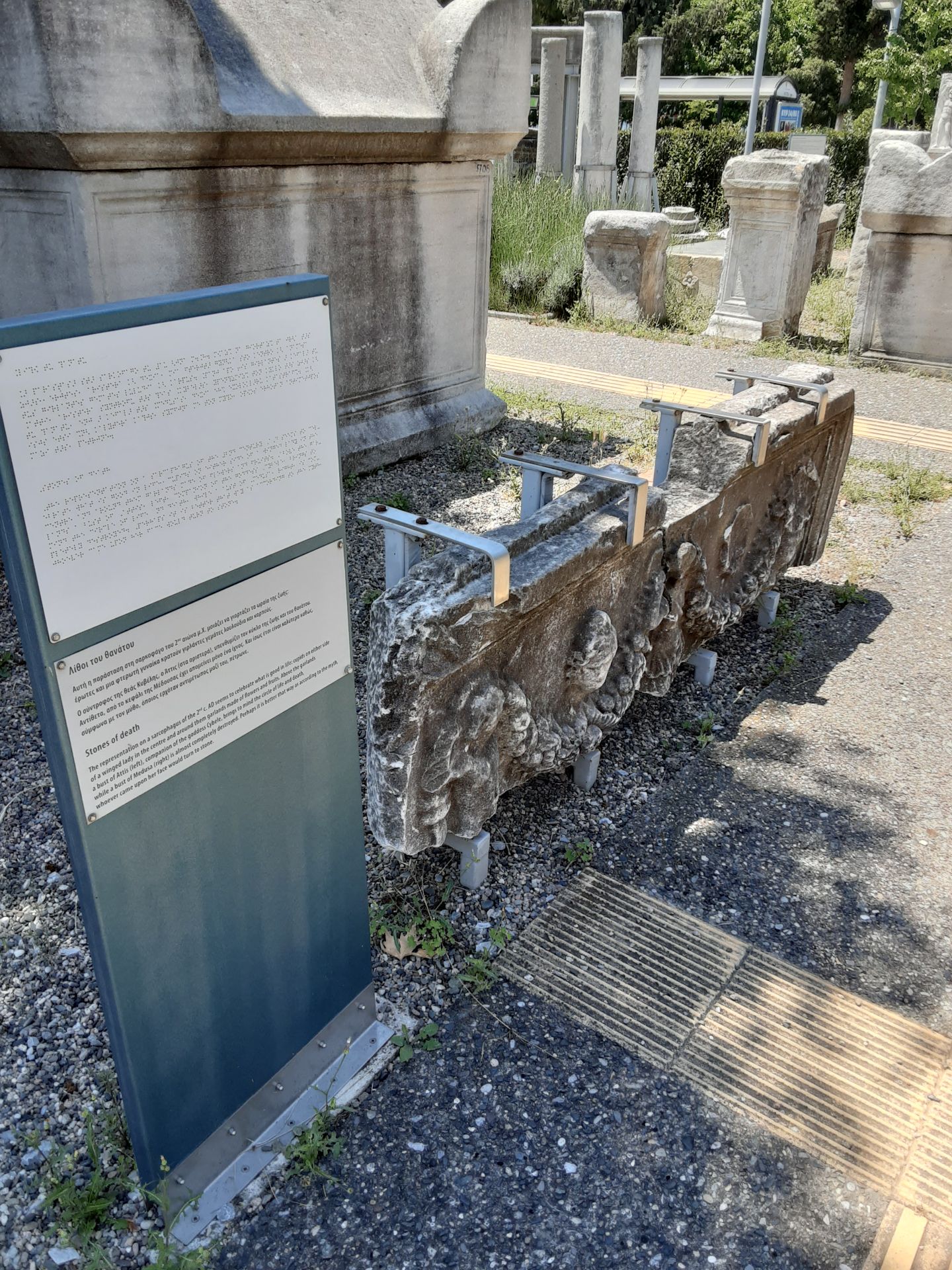
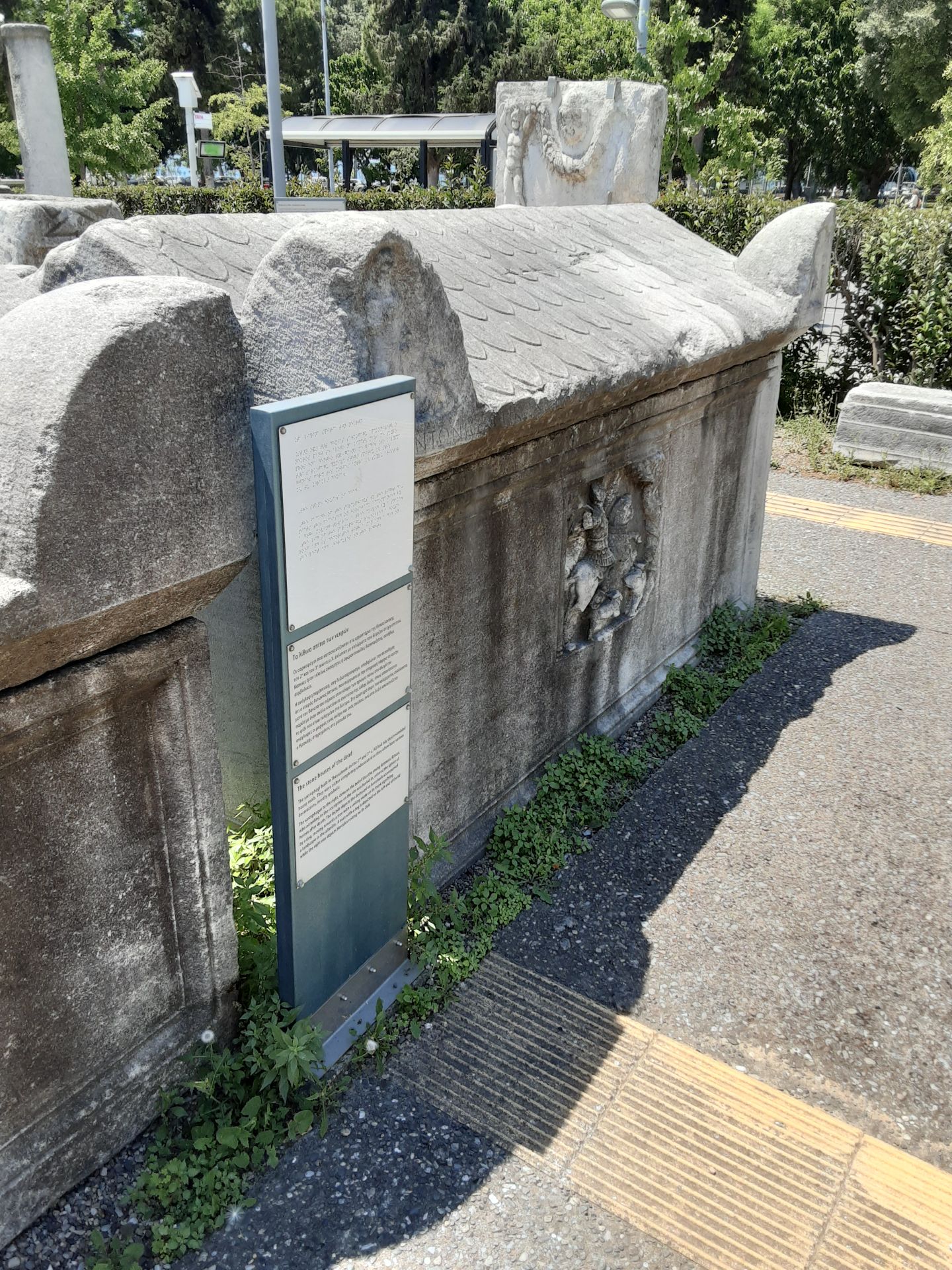
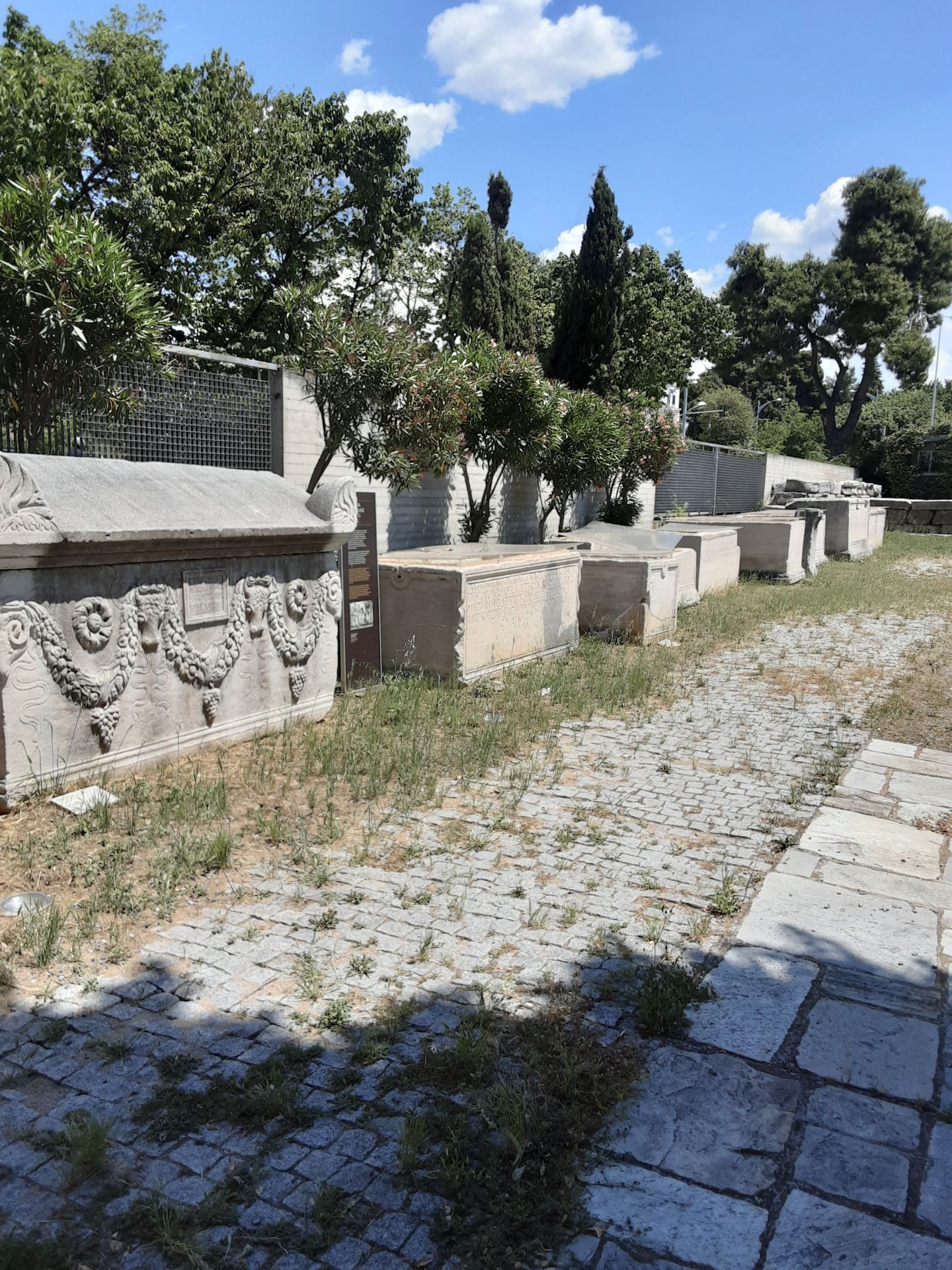
Open-air exhibition "Memory and Stones"
-
The exhibits are tactile (touching is allowed)
Beneficiaries
- Blind people with a white cane
- People with low vision
- People with other visual disabilities
- People with a guide dog
- People with intellectual
- cognitive or psychological disabilities
-
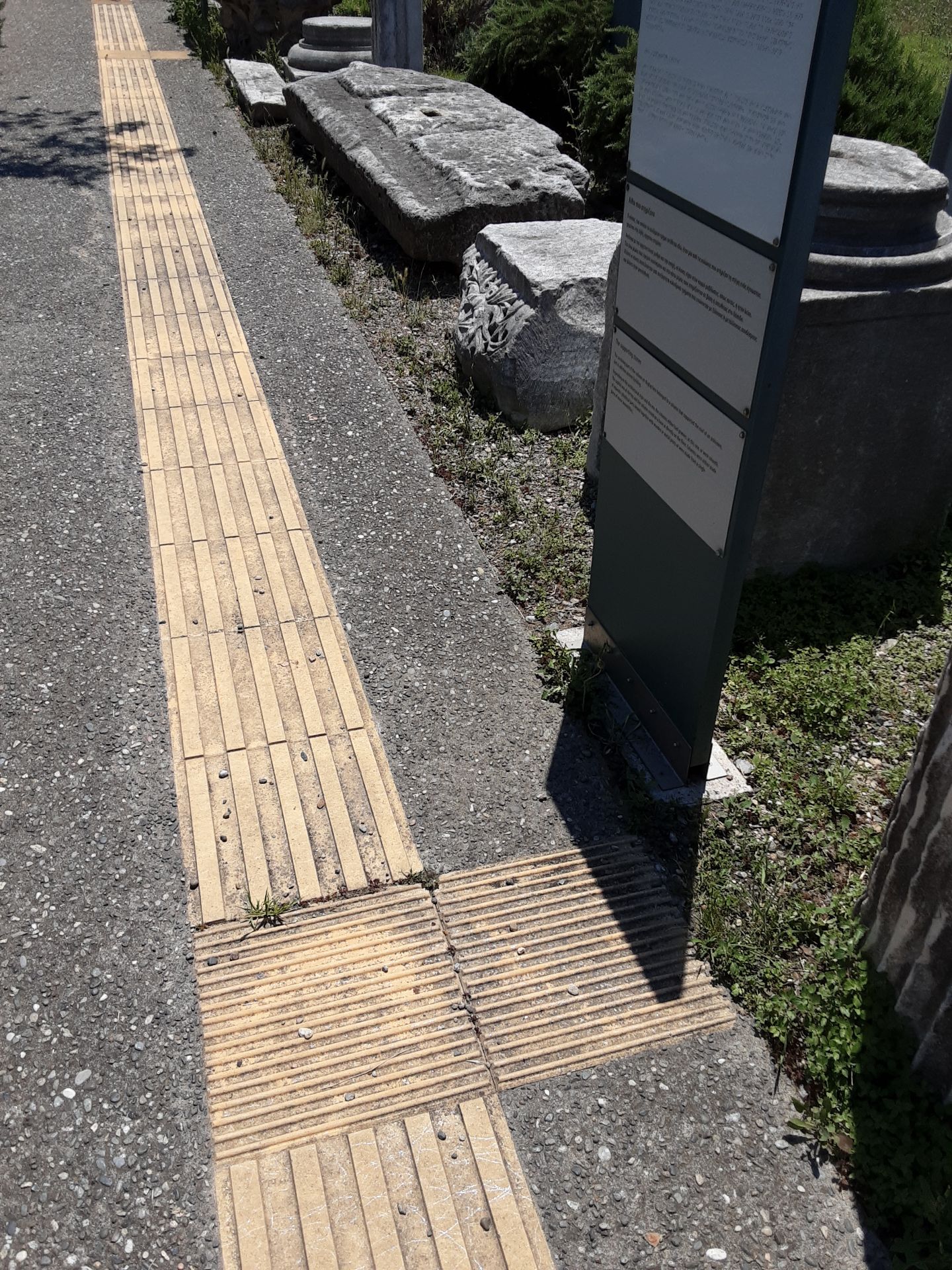
Floor tactile guide for the blind
Beneficiaries
- Blind people with white cane
- People with a guide dog
-
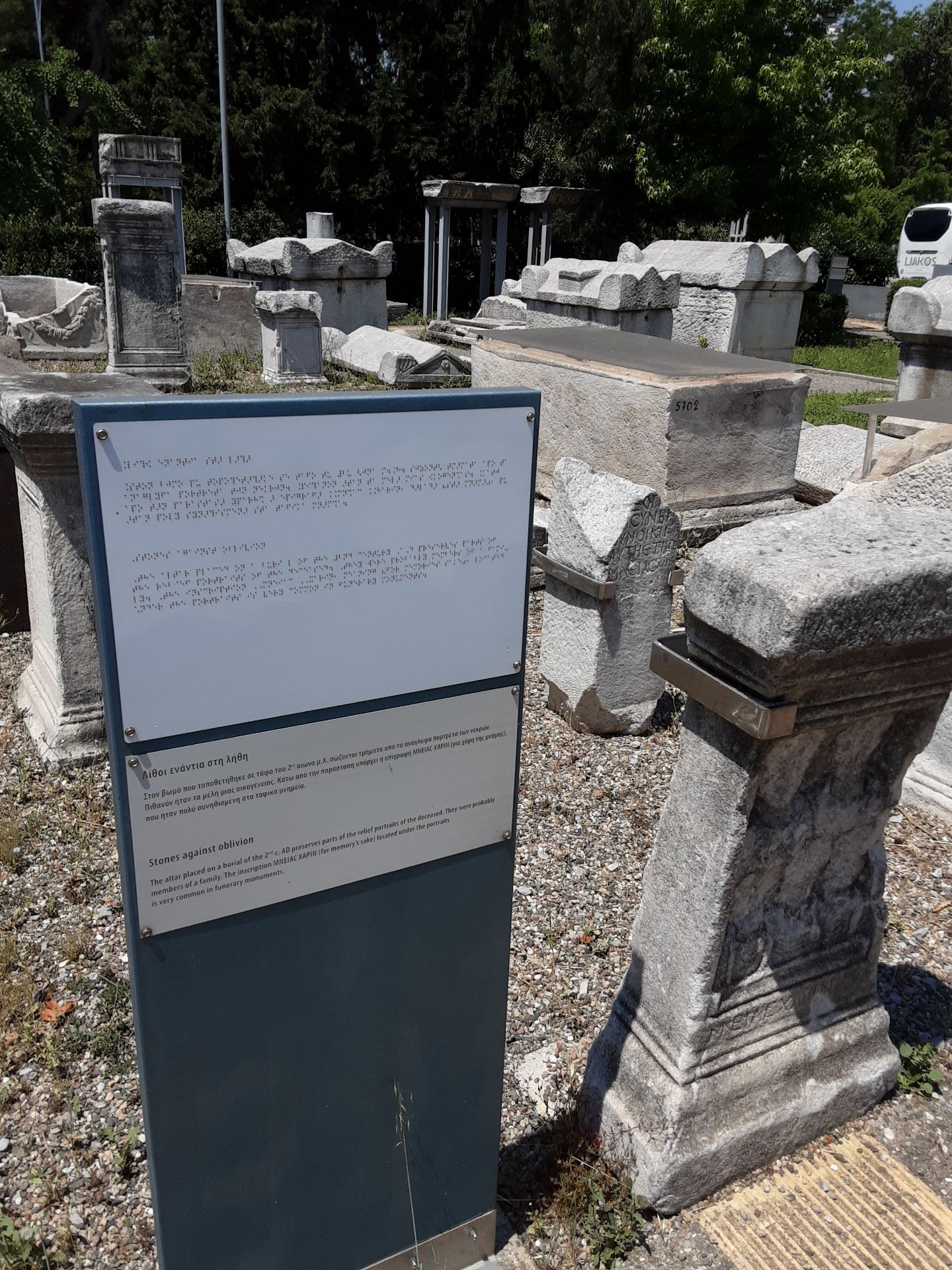
Tactile Braille labels on the exhibits
- Description
- Greek - English
Beneficiaries
- Blind people with a white cane
- People with other visual impairments
- People with a guide dog
Ticket office / Reception
Tickets / Information (Ground floor Foyer)
-
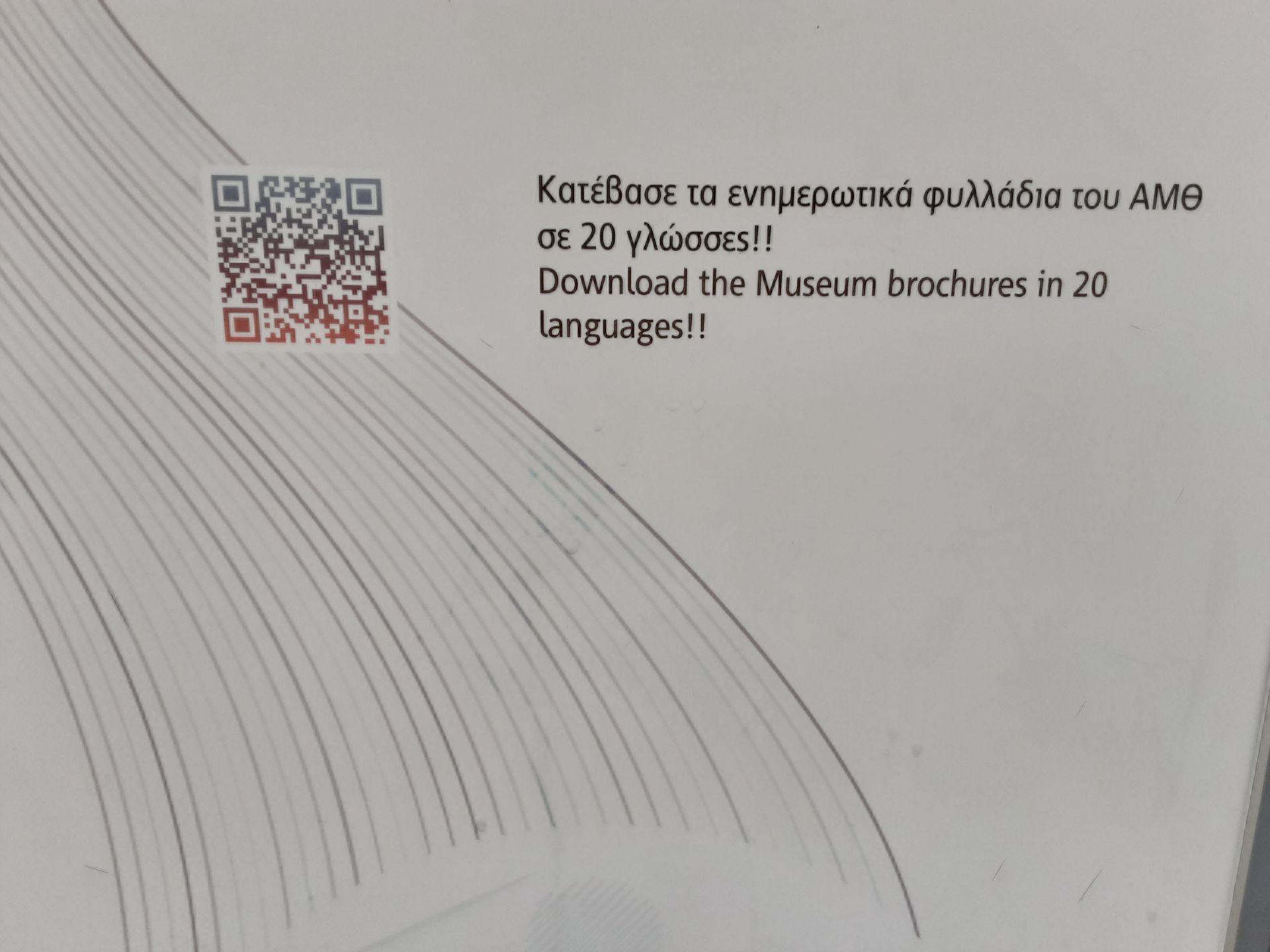
Information leaflet in 20 languages
-
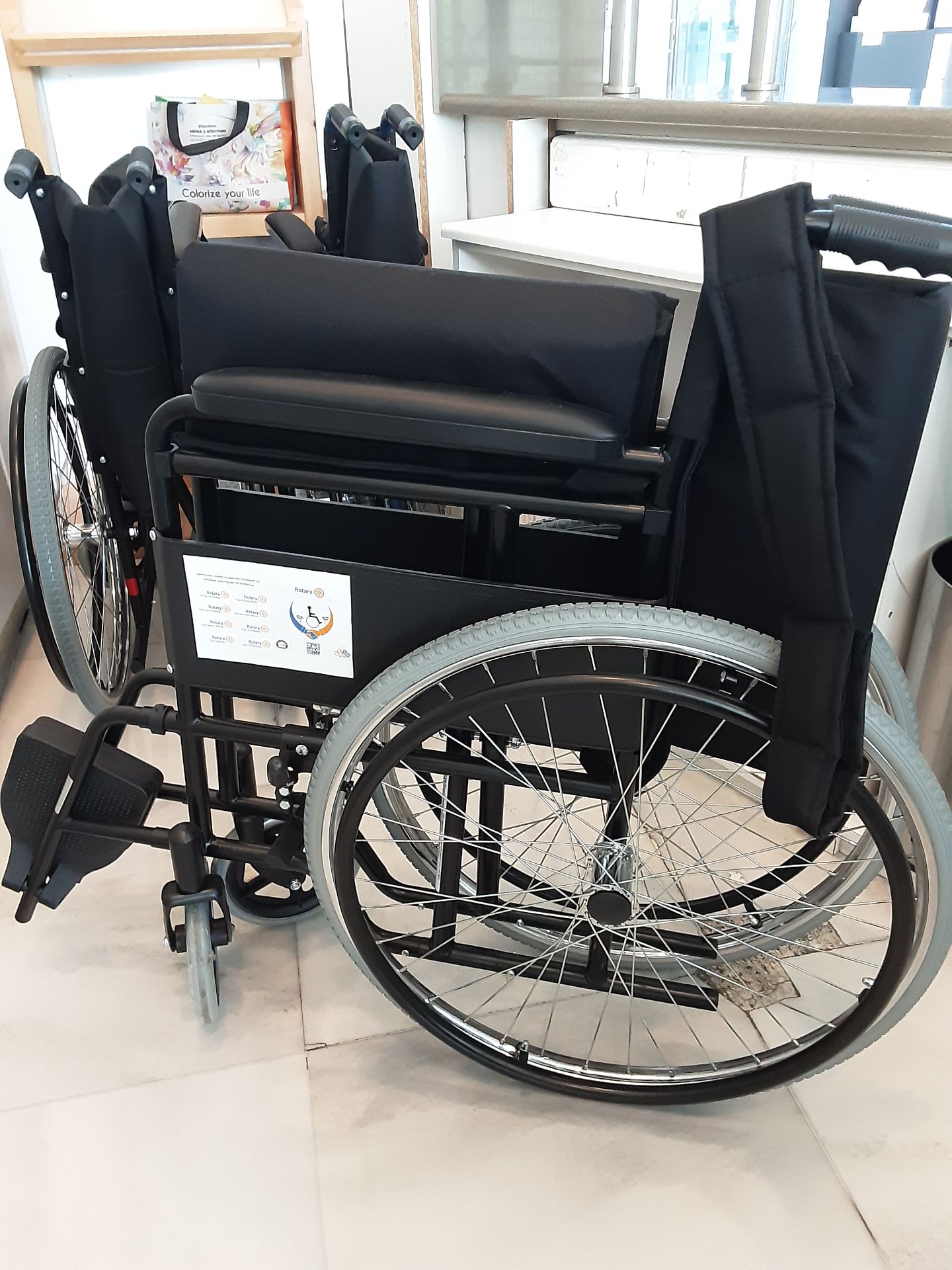
Provision of wheelchairs to visitors
- Description
- Free provision (3 seats)
Beneficiaries
- People with difficulty walking / standing for long periods
- Wheelchair users
Outdoor area
Open-air exhibition "Field, House, Garden, Place"
-
Exhibits you can touch
Beneficiaries
- Blind people with white cane
- People with low vision
- People with a guide dog
- People with other vision disabilities
- People with intellectual
- cognitive or mental disabilities
Building
Permanent Exhibition wing (Ground floor)
-
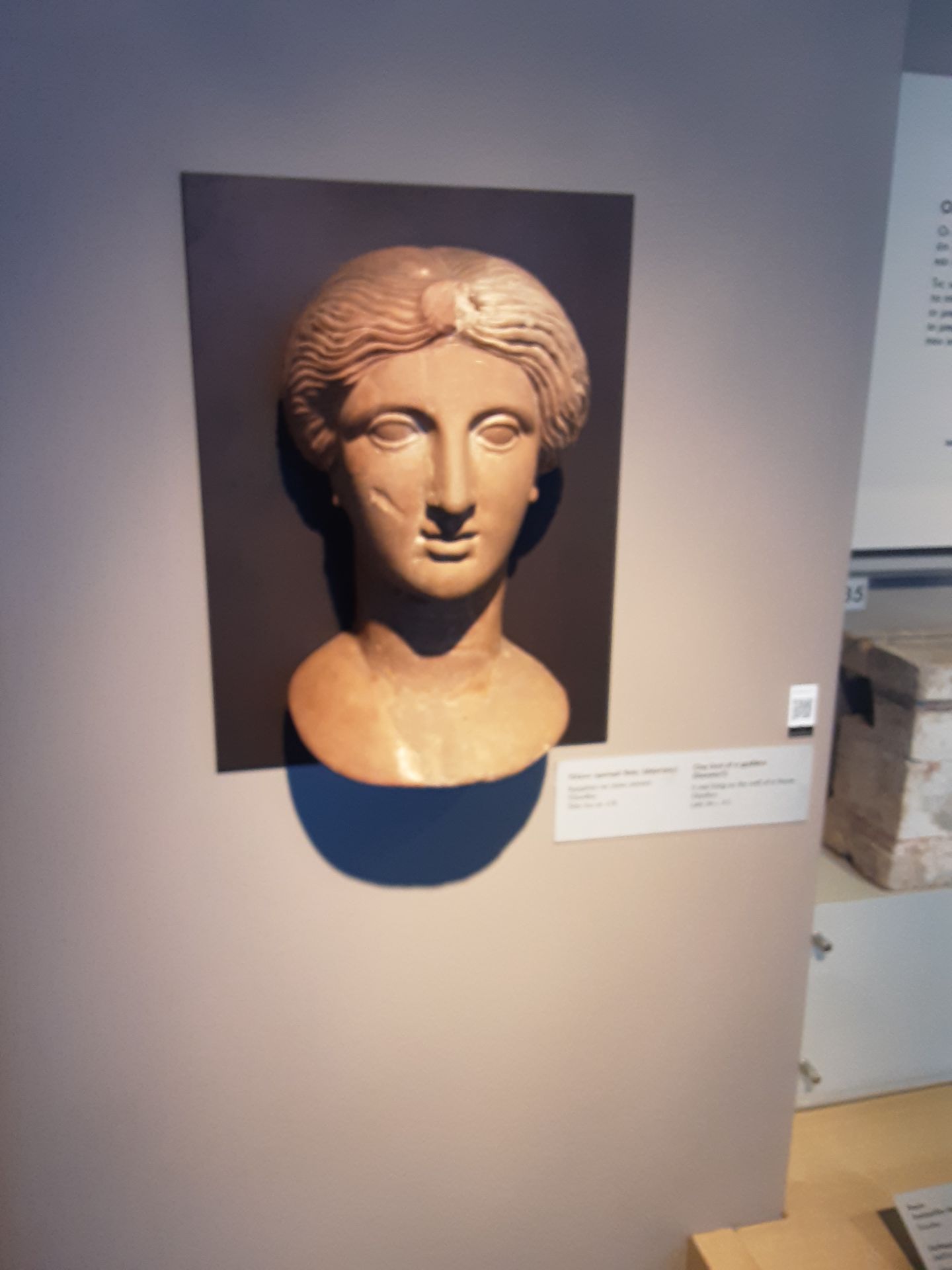
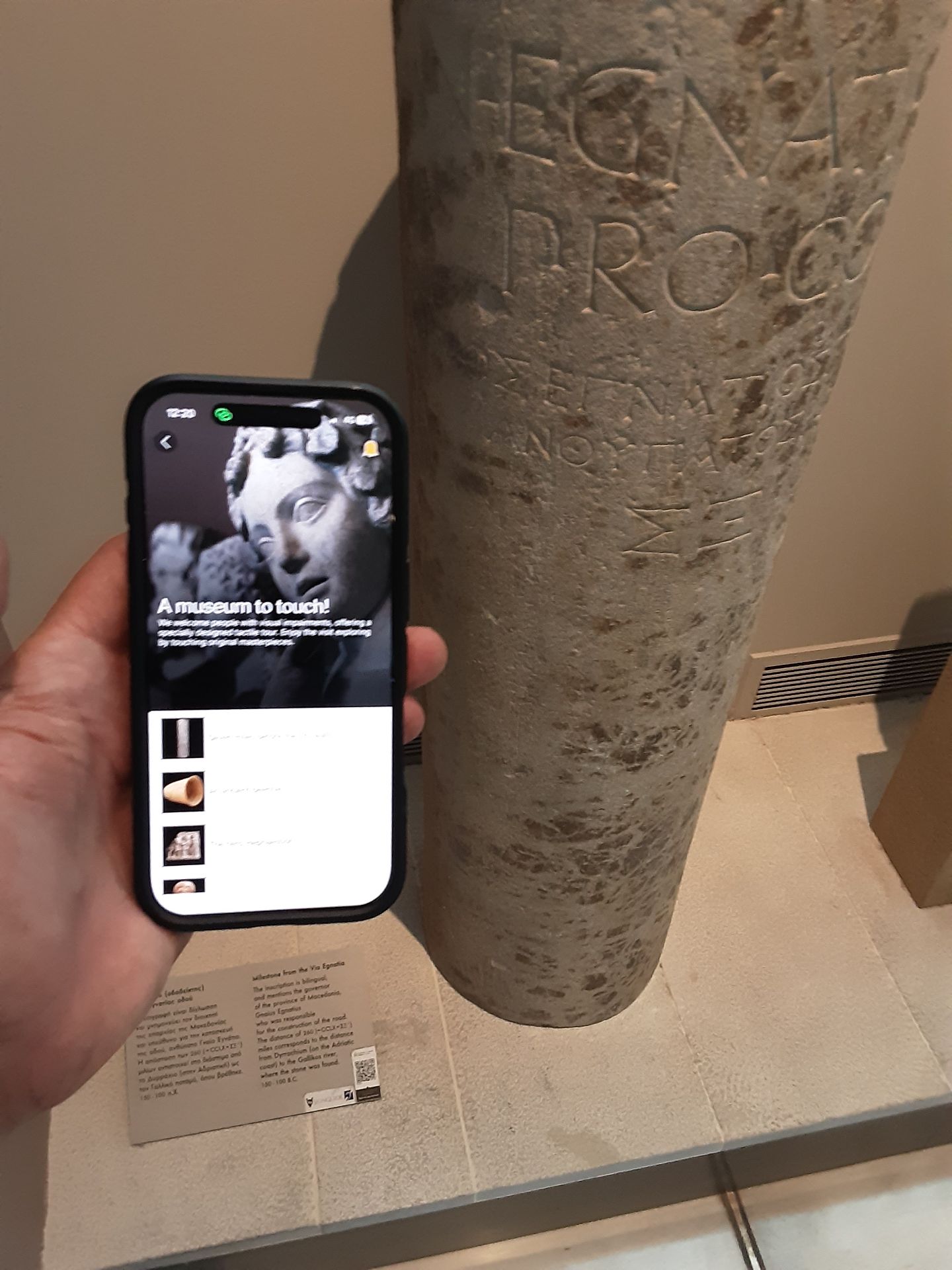
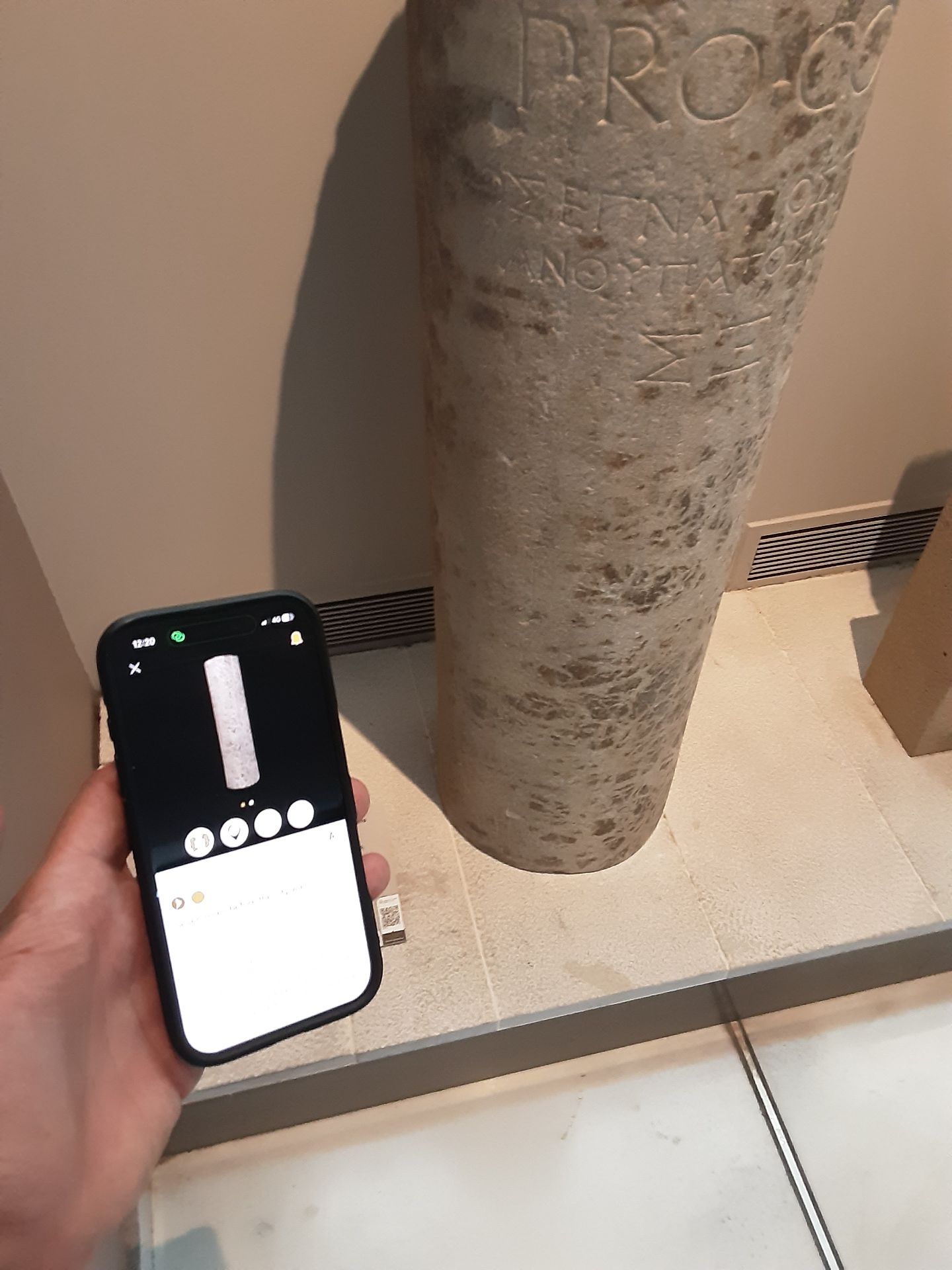
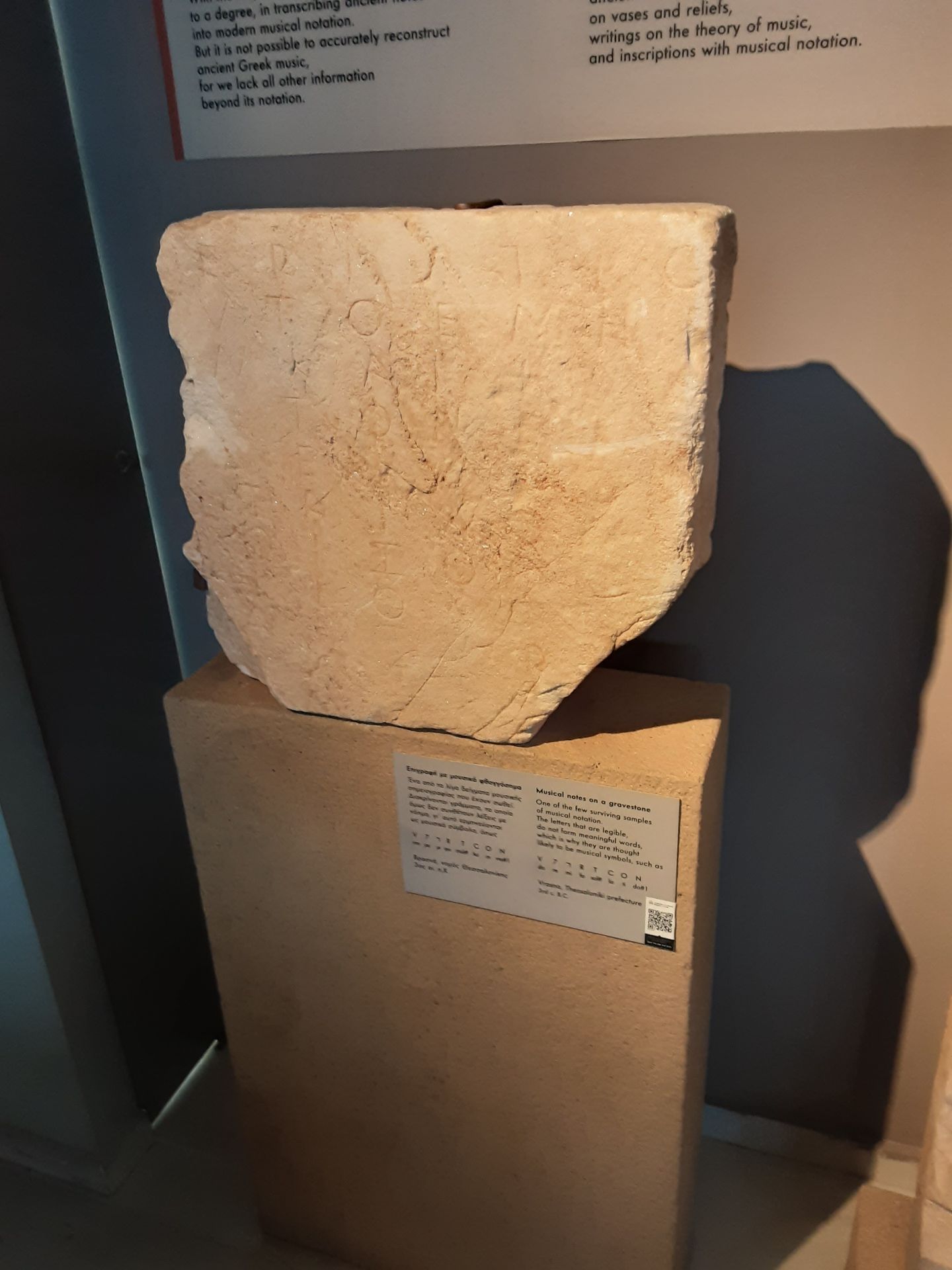
A museum to touch! Tactile exhibits for visitors with visual impairments to feel.
- Instructions / information for visitors
- Information on finding/locating them is available only through the "Museum On The Go" app, in the section "A museum to touch!".
Beneficiaries
- Blind people with a white cane
- People with other visual impairments
- People with a guide dog
What you should know
Barriers to be aware of (8)
Building
Main reception - Foyer (Ground floor)
-
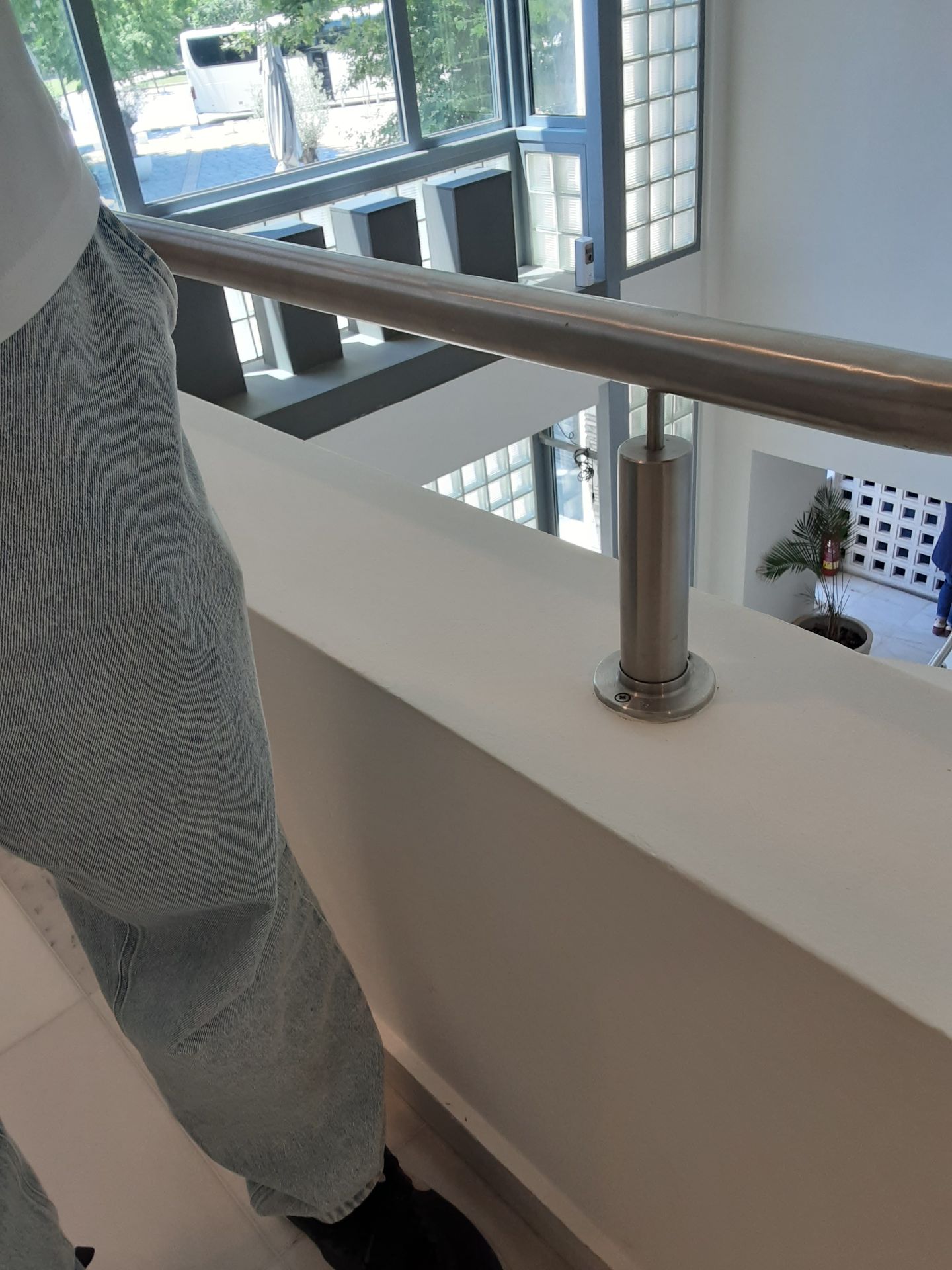
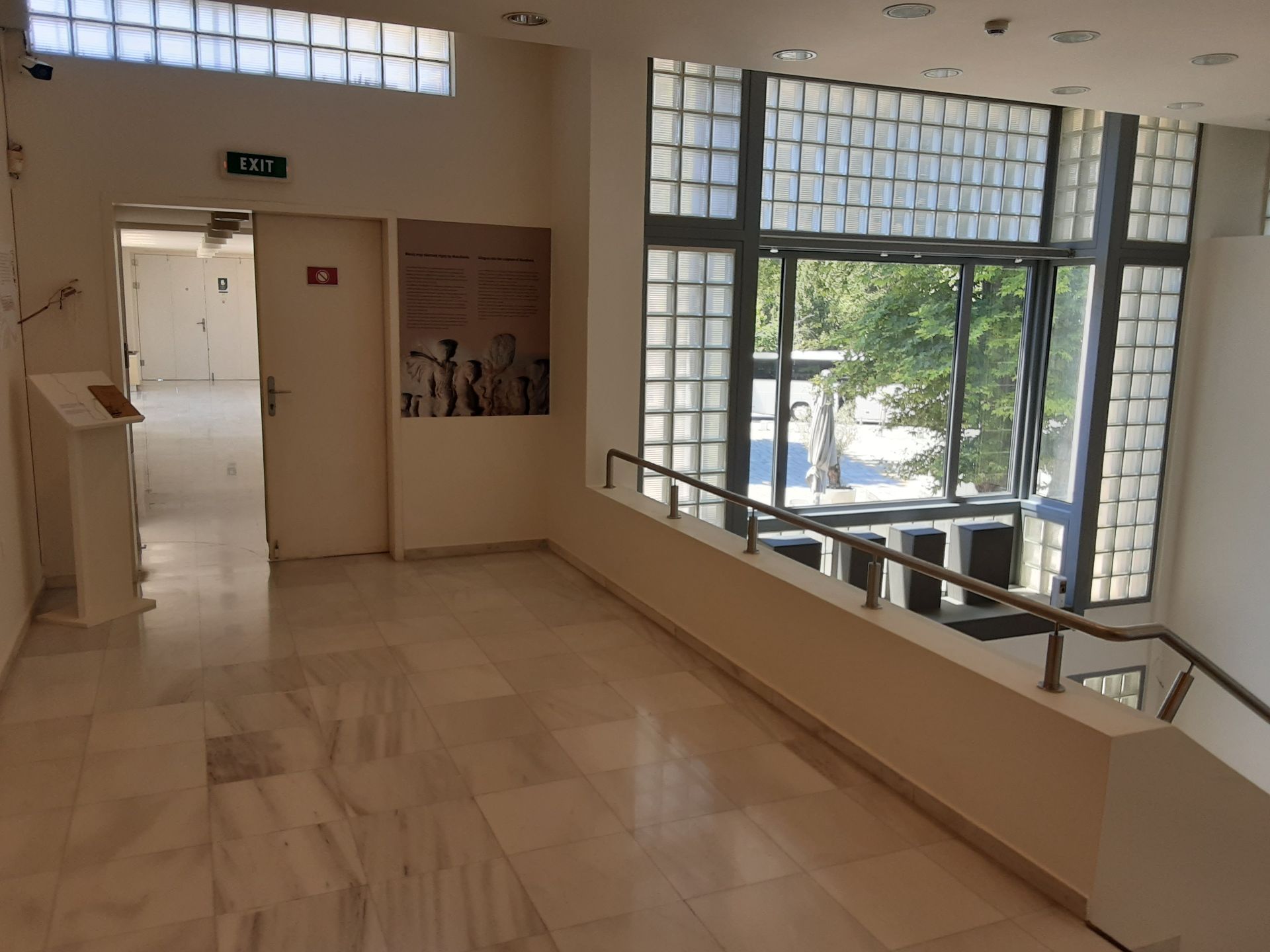
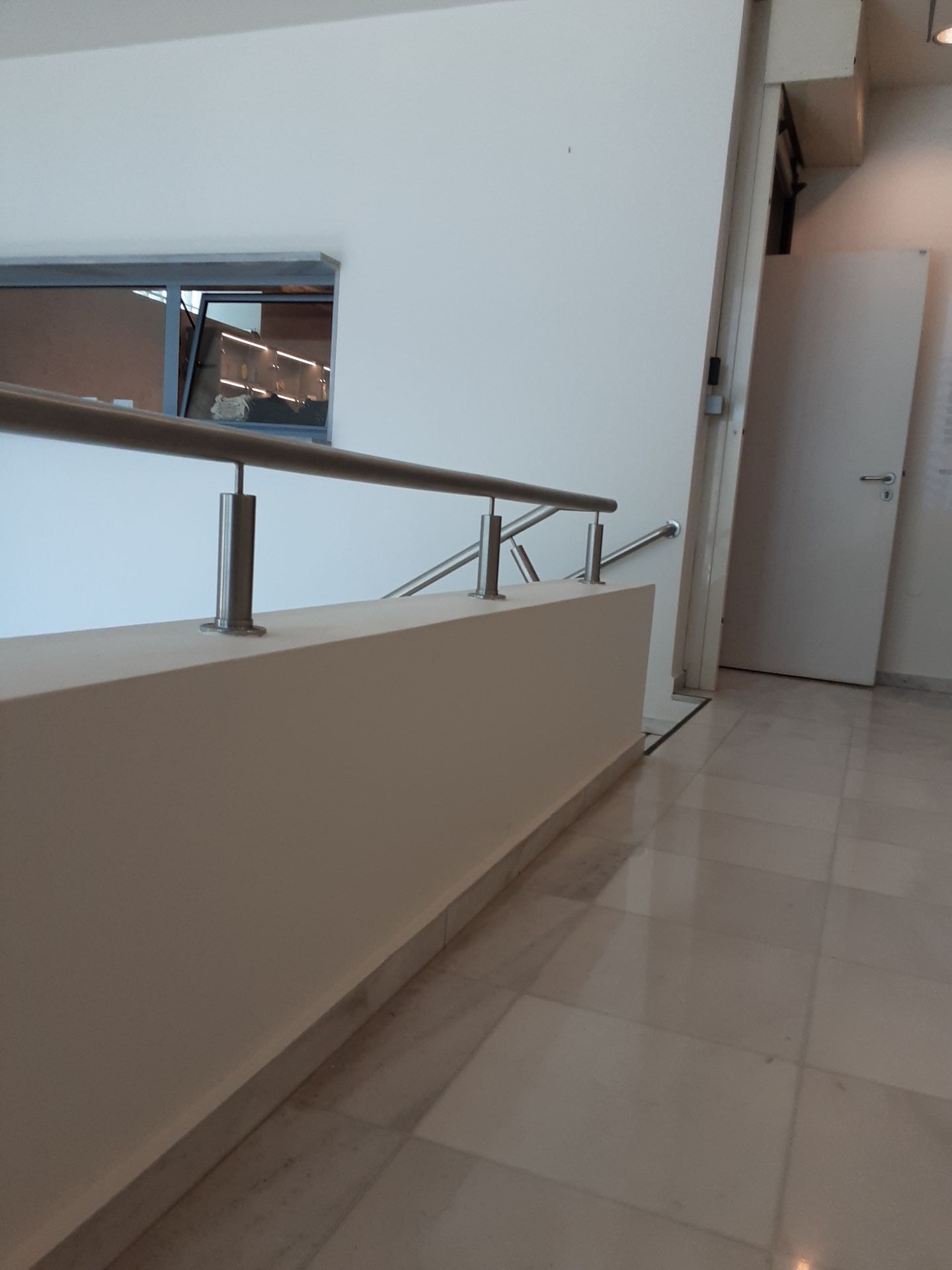
Dangerous balcony, next to the stairs leading from the ground floor to the public toilet and the refreshment area
- Type / category of obstacle
- Dangerous point (without the necessary / suitable safety railings)
Building
Permanent Exhibition wing (Ground floor)
-
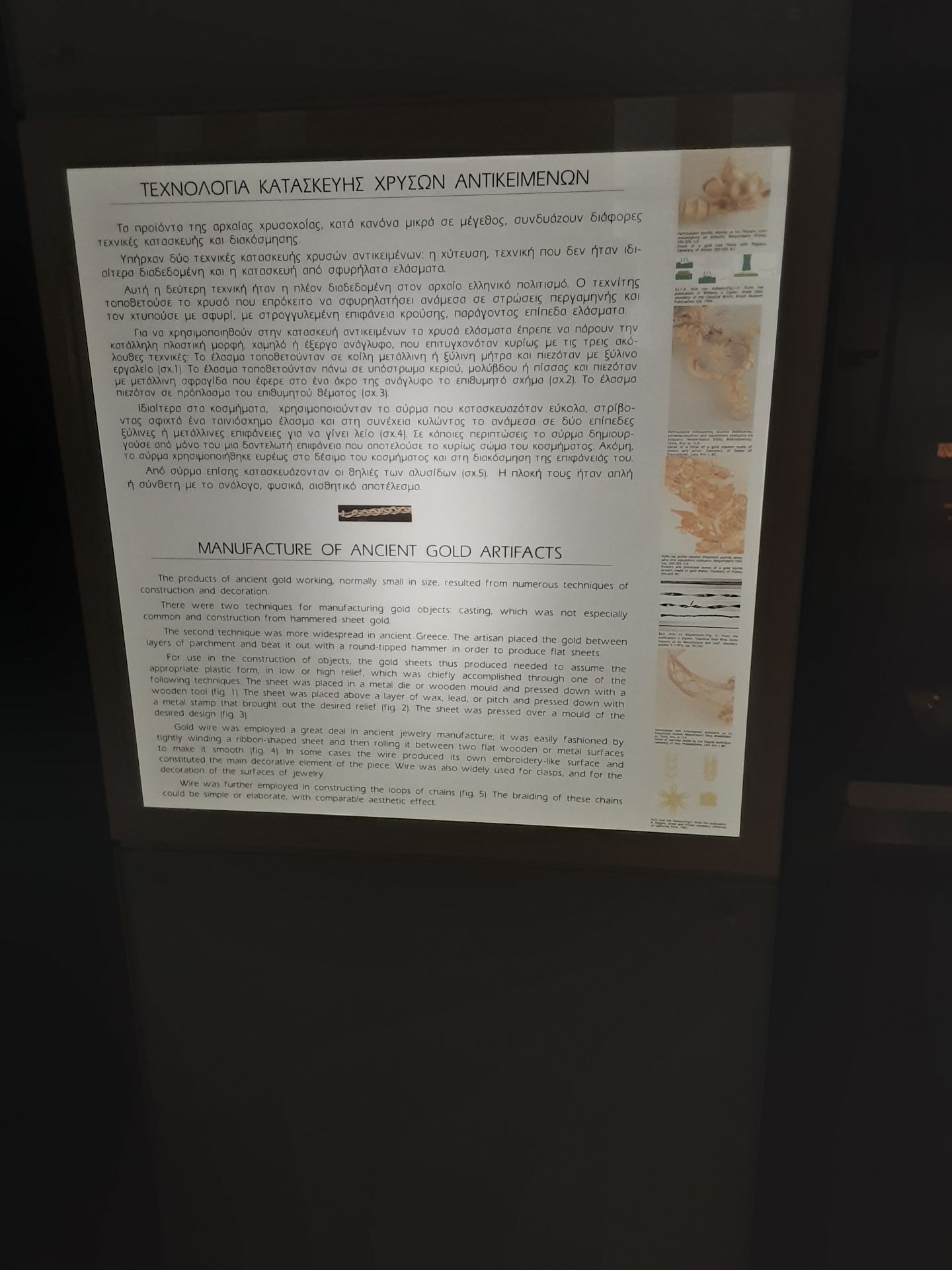
Signs/informational panels not accessible
- Type / category of obstacle
- Other
-
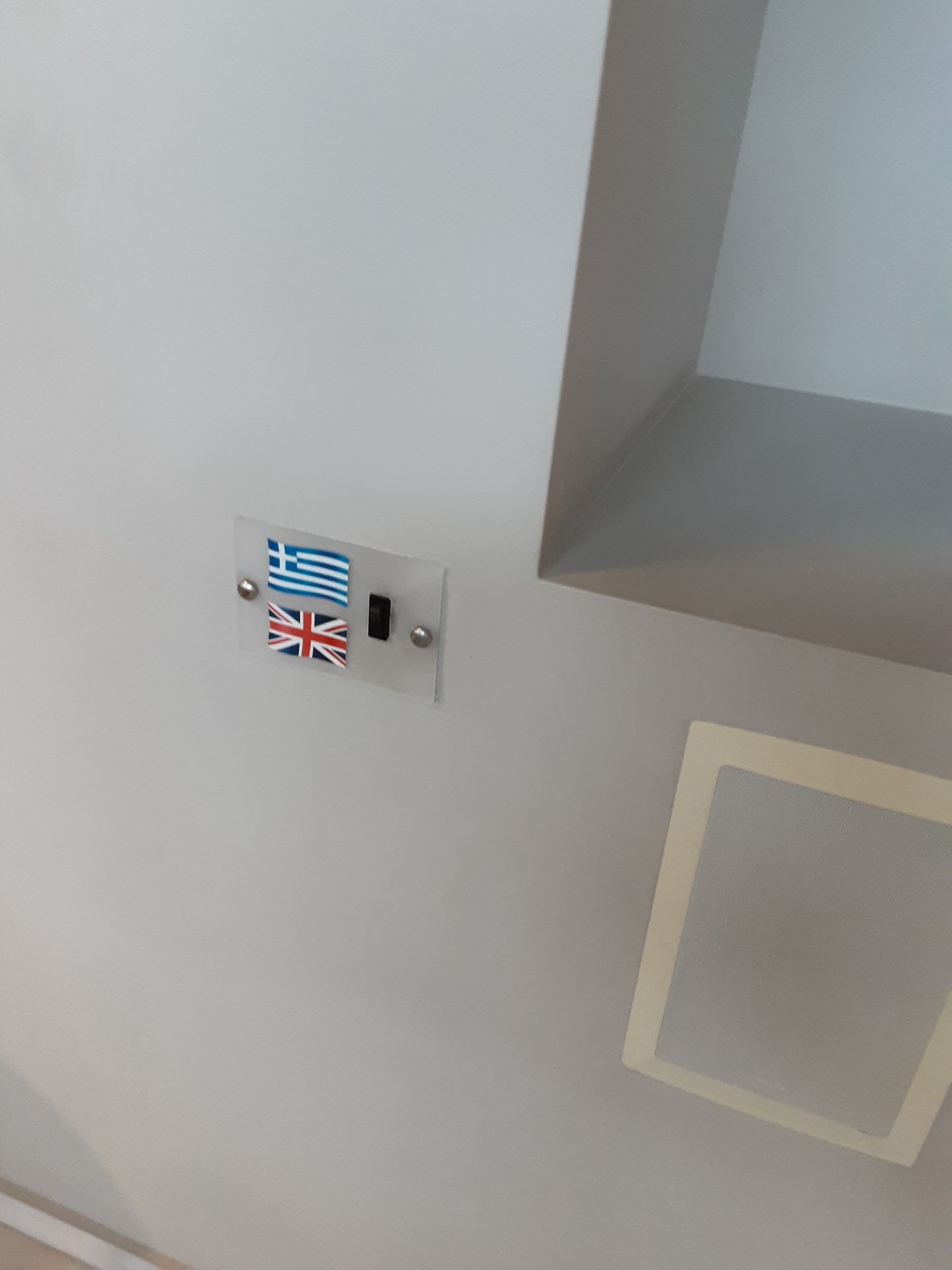
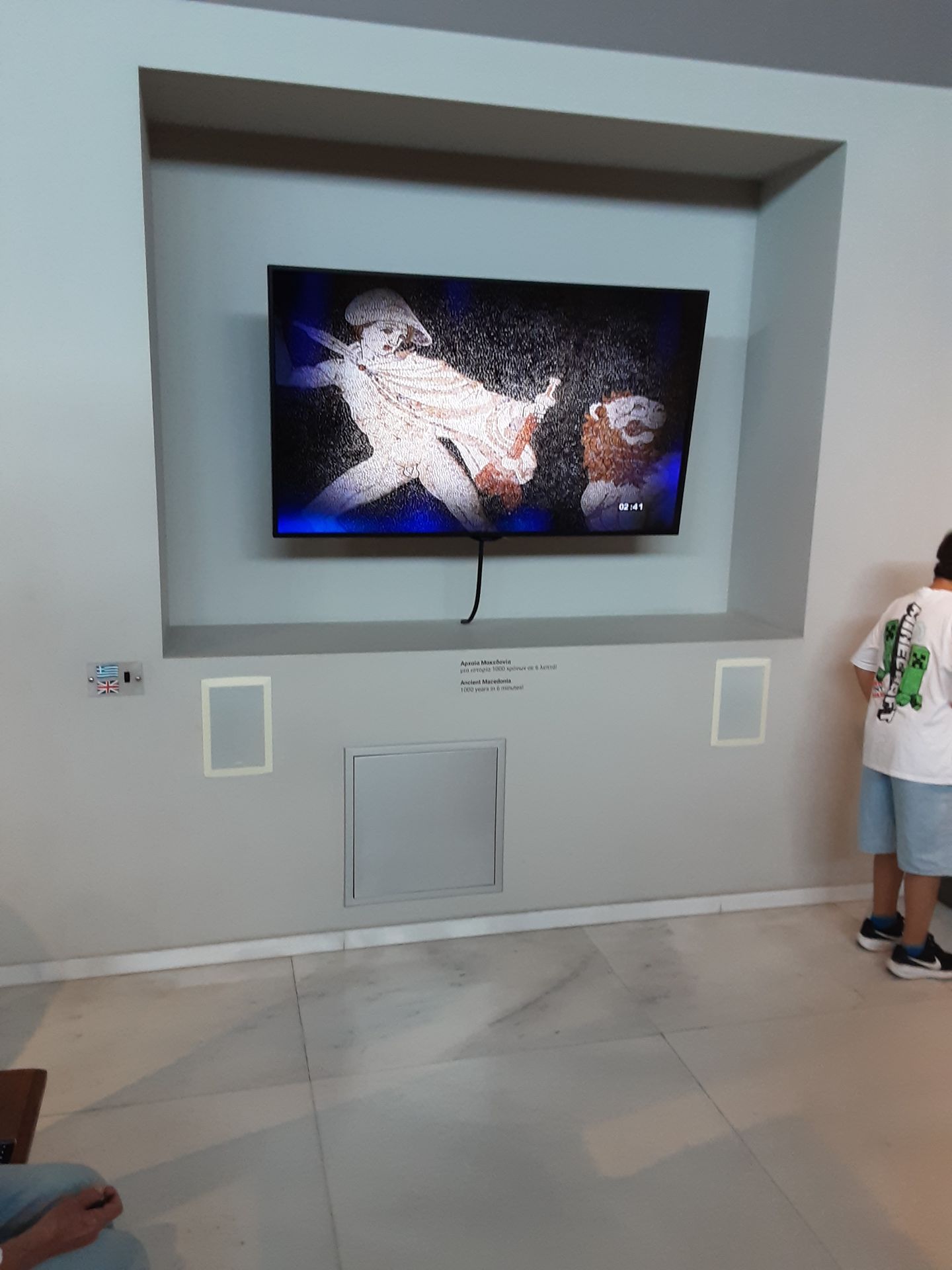
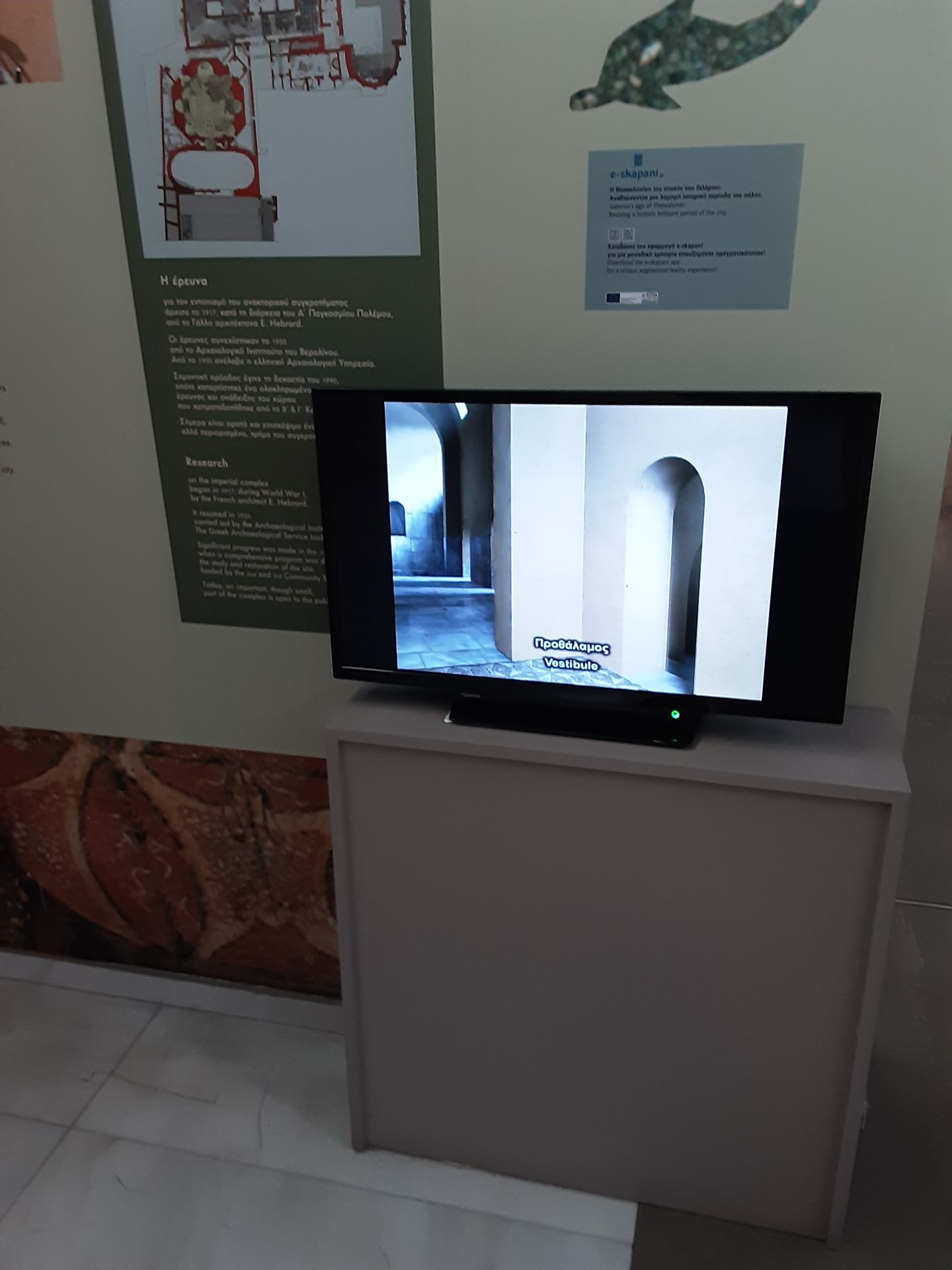
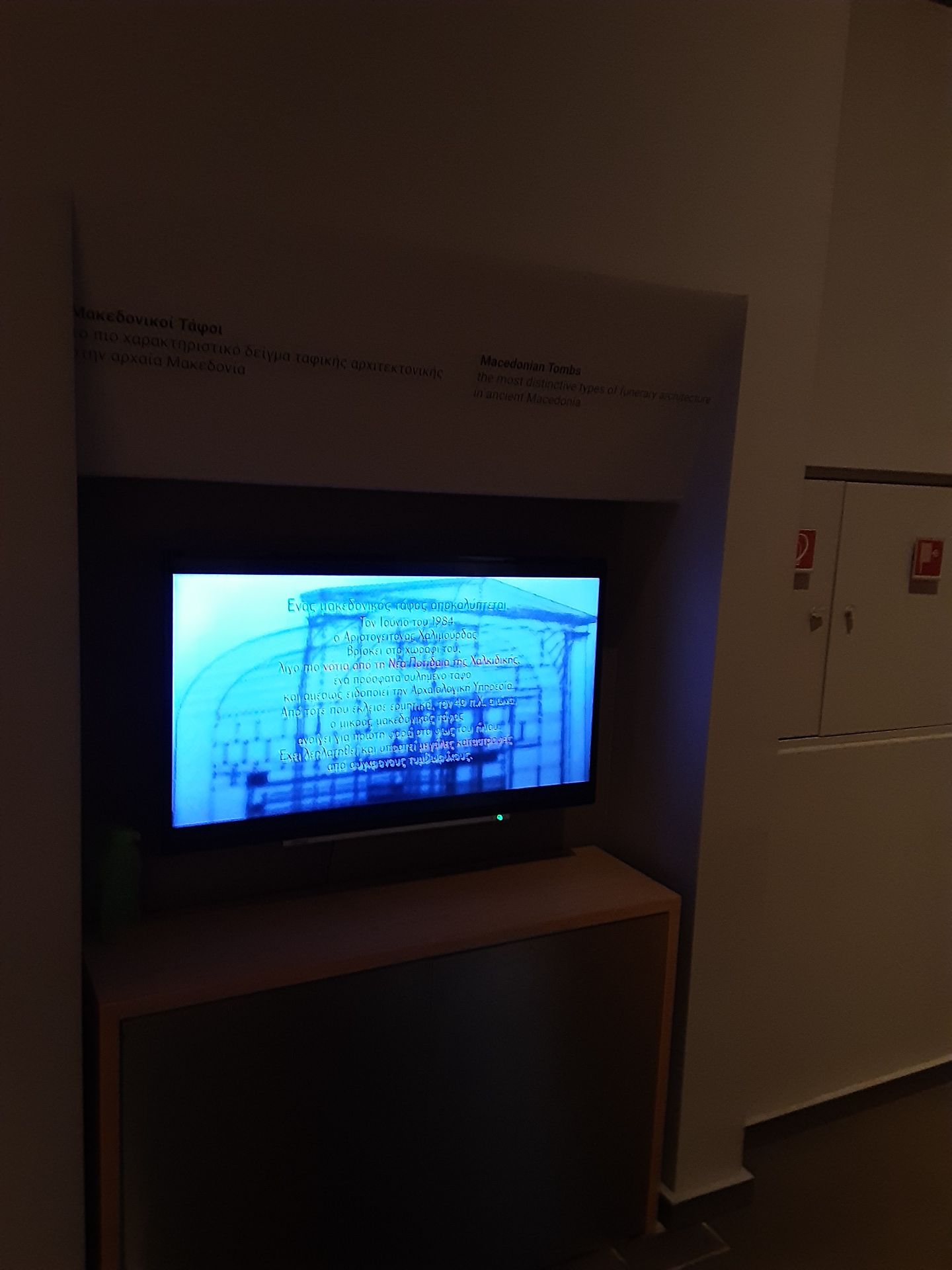
Video (EL) / audio (EN) screenings within the exhibition, without subtitles and without sign-language interpretation
- Type / category of obstacle
- Other
-
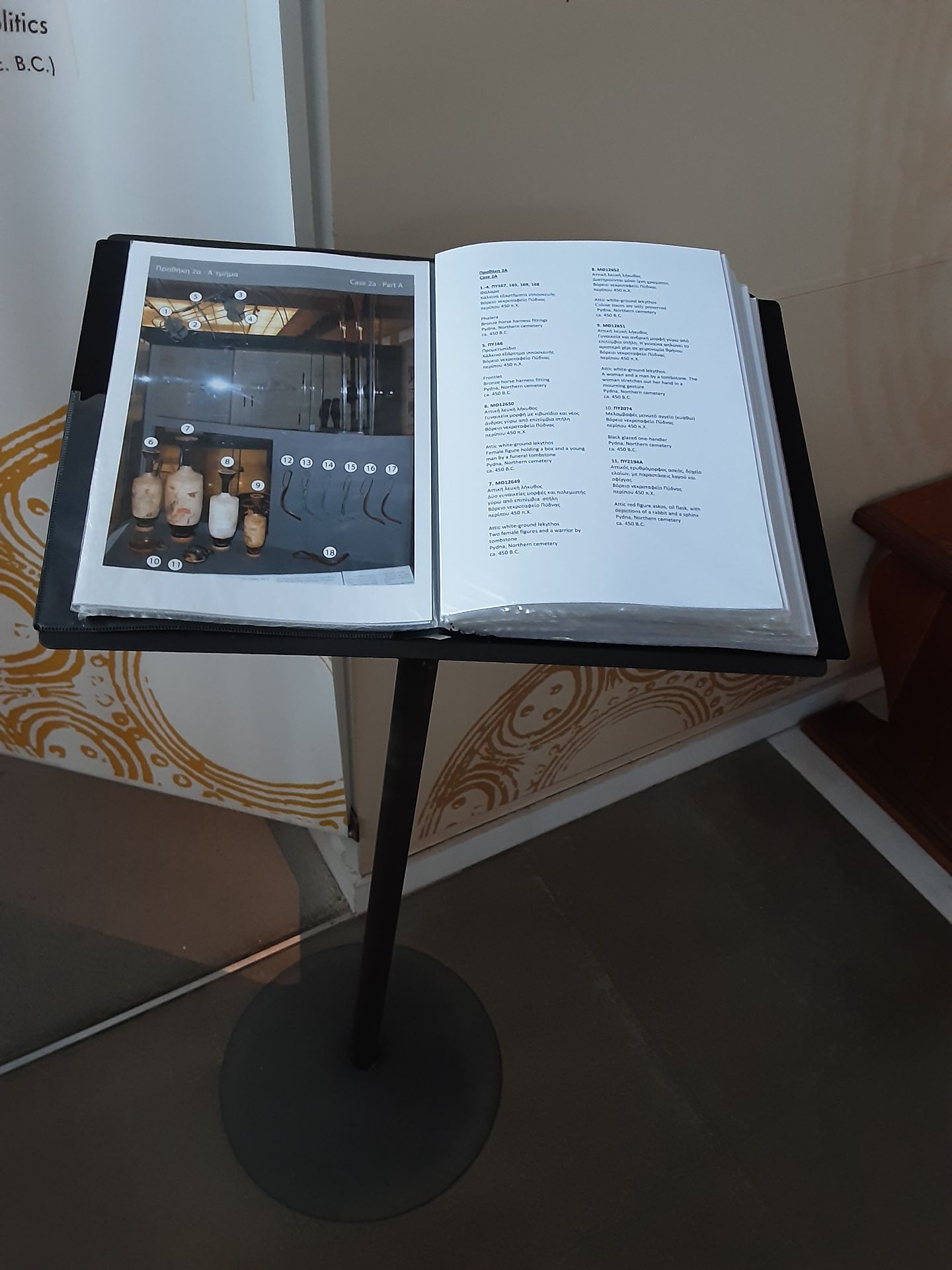
Printed index catalogues presenting the exhibits / display cases, not accessible
- Type / category of obstacle
- Other
-
Interactive touchscreens with information
- Type / category of obstacle
- Other
Outdoor area
Open-air exhibition "Field, House, Garden, Place"
-
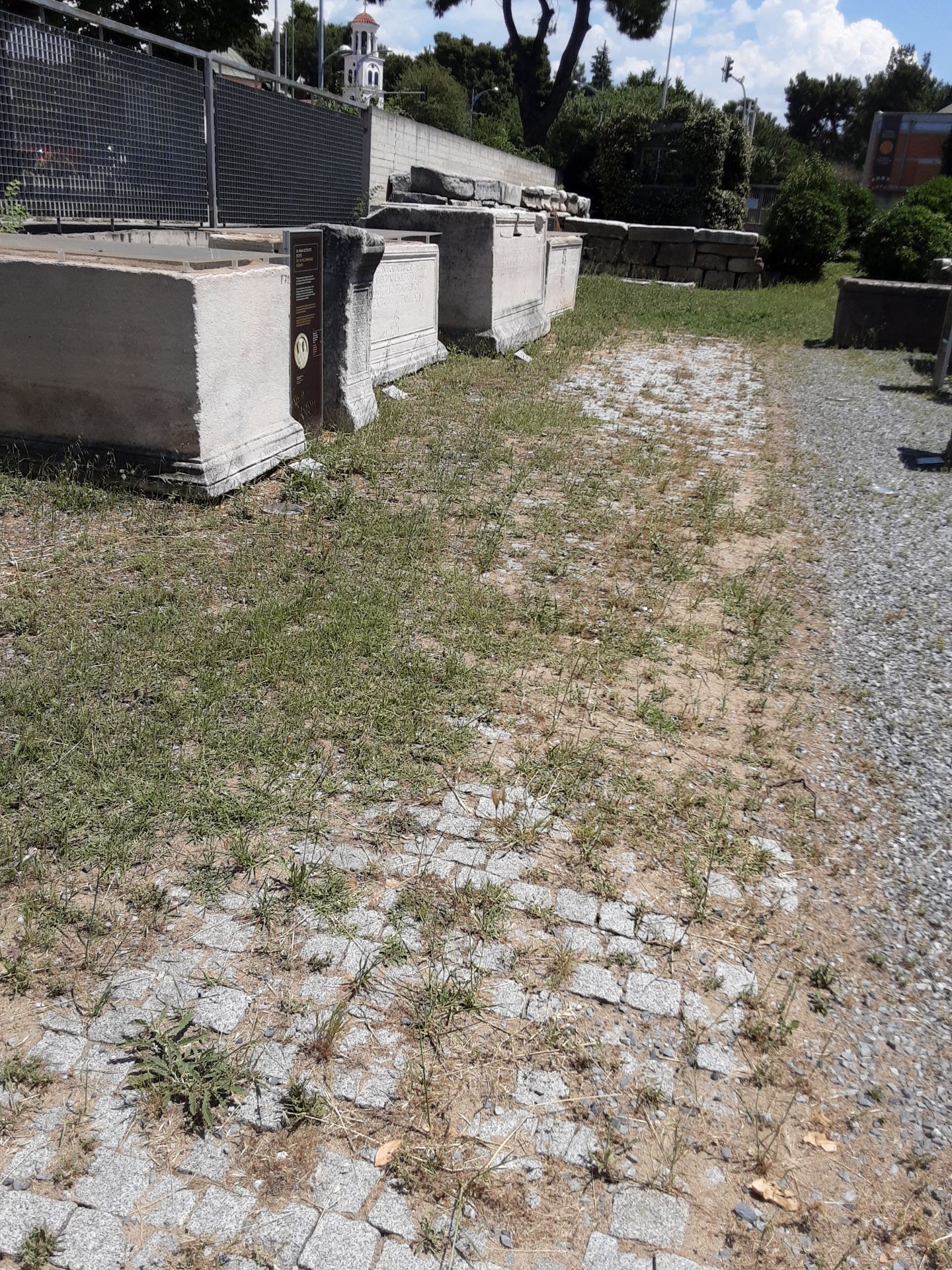
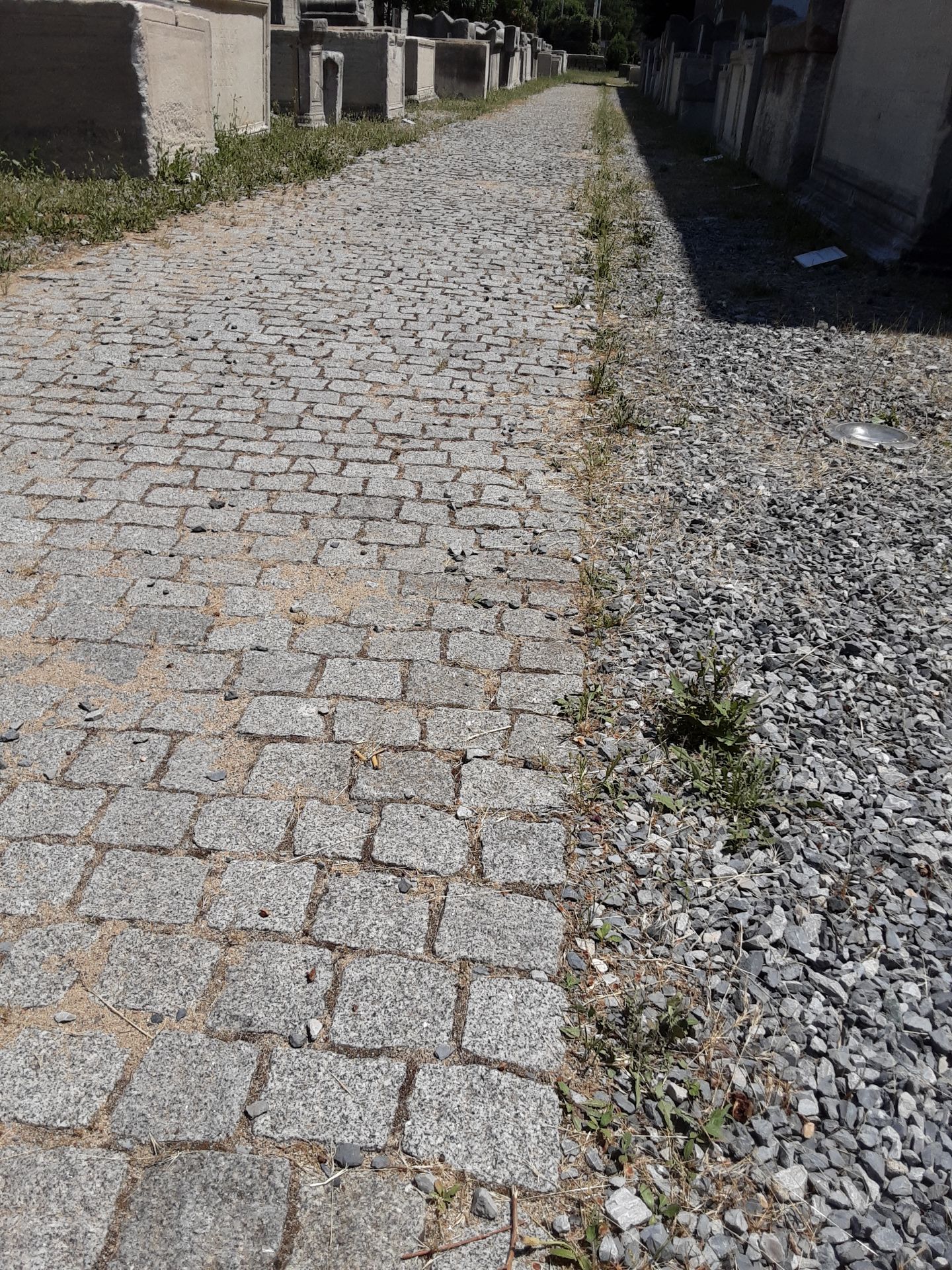
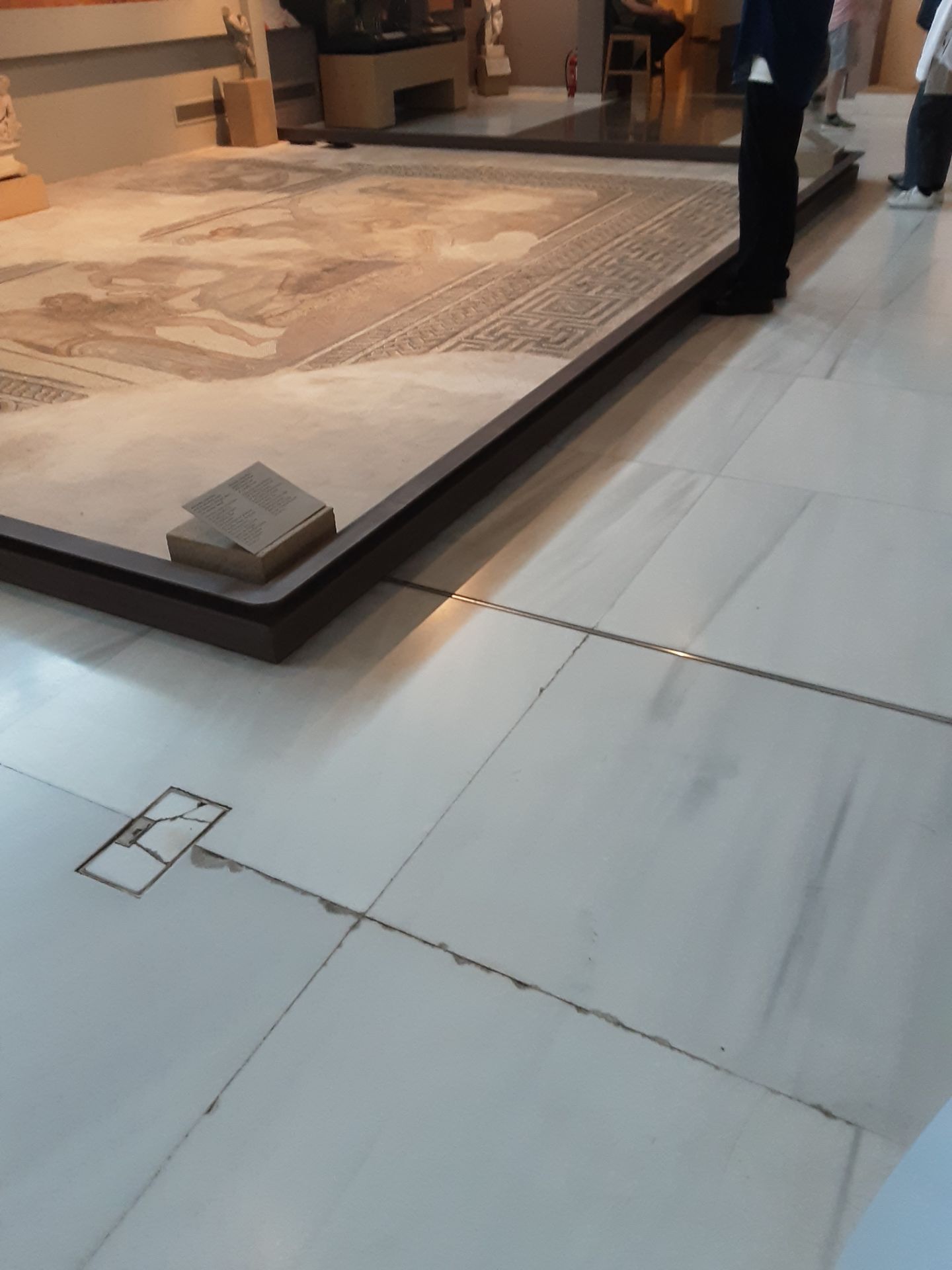
Ground irregularities, maintenance issues
- Type / category of obstacle
- Intolerable deformations (e.g., with a height greater than 2 cm and less than 4 cm, but without a bevel)
-
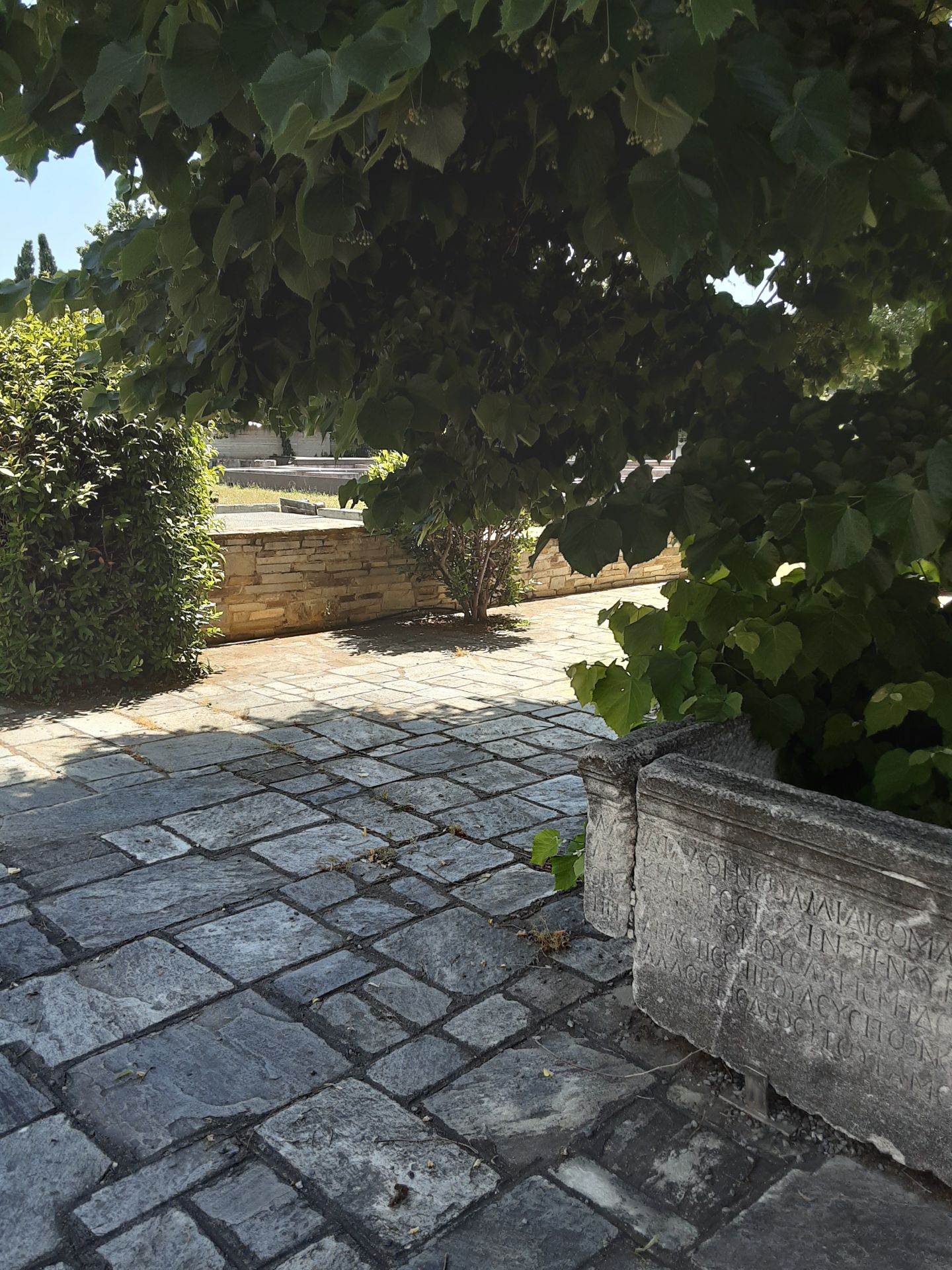
Tree branches
- Recommendations for visitors
- Greater safety with an escort
- Type / category of obstacle
- Overhead obstacles (below the minimum height of 2.2 m)
-
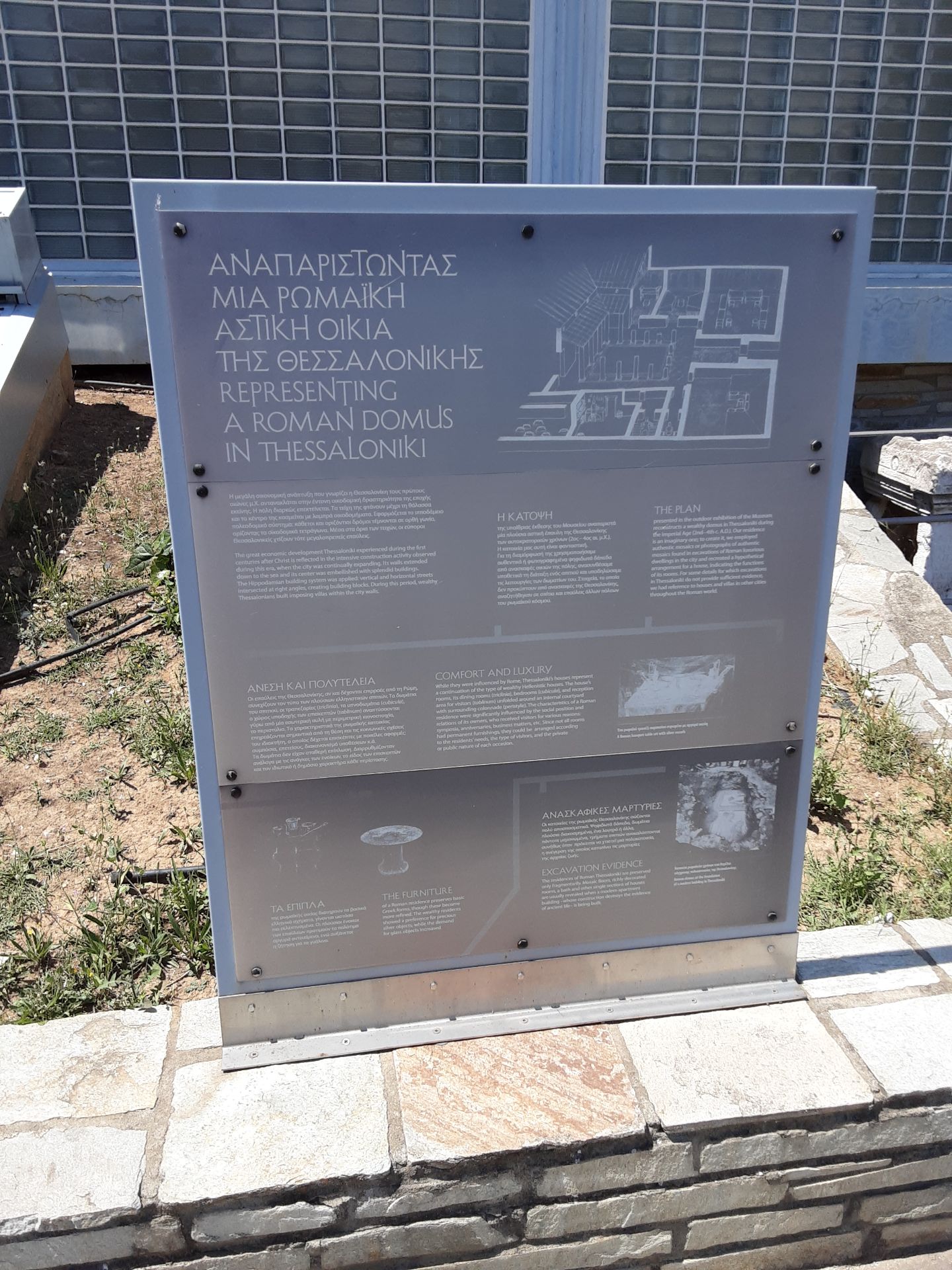
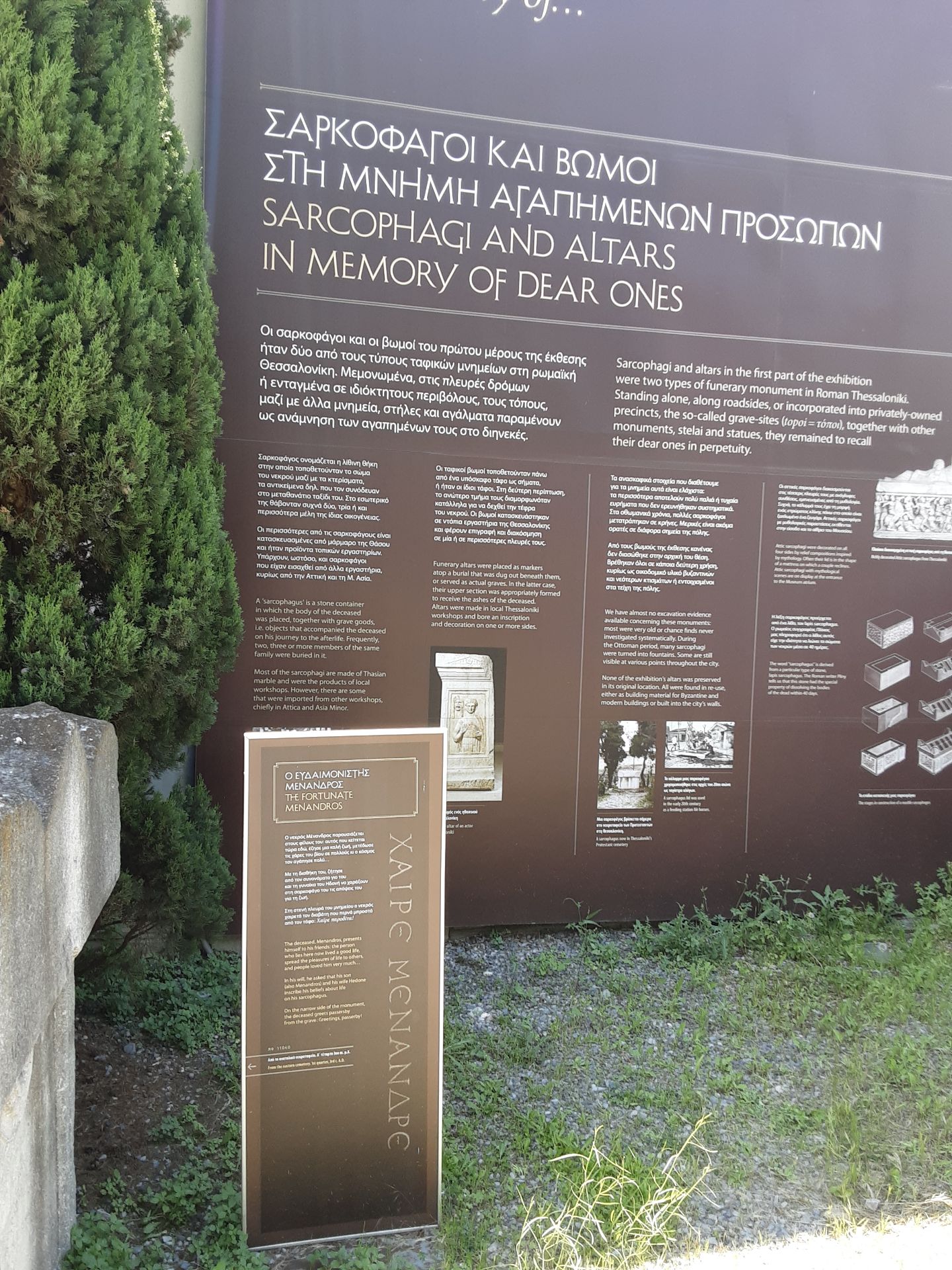
Information signs and exhibit labels not accessible to people with visual disabilities
- Type / category of obstacle
- Other
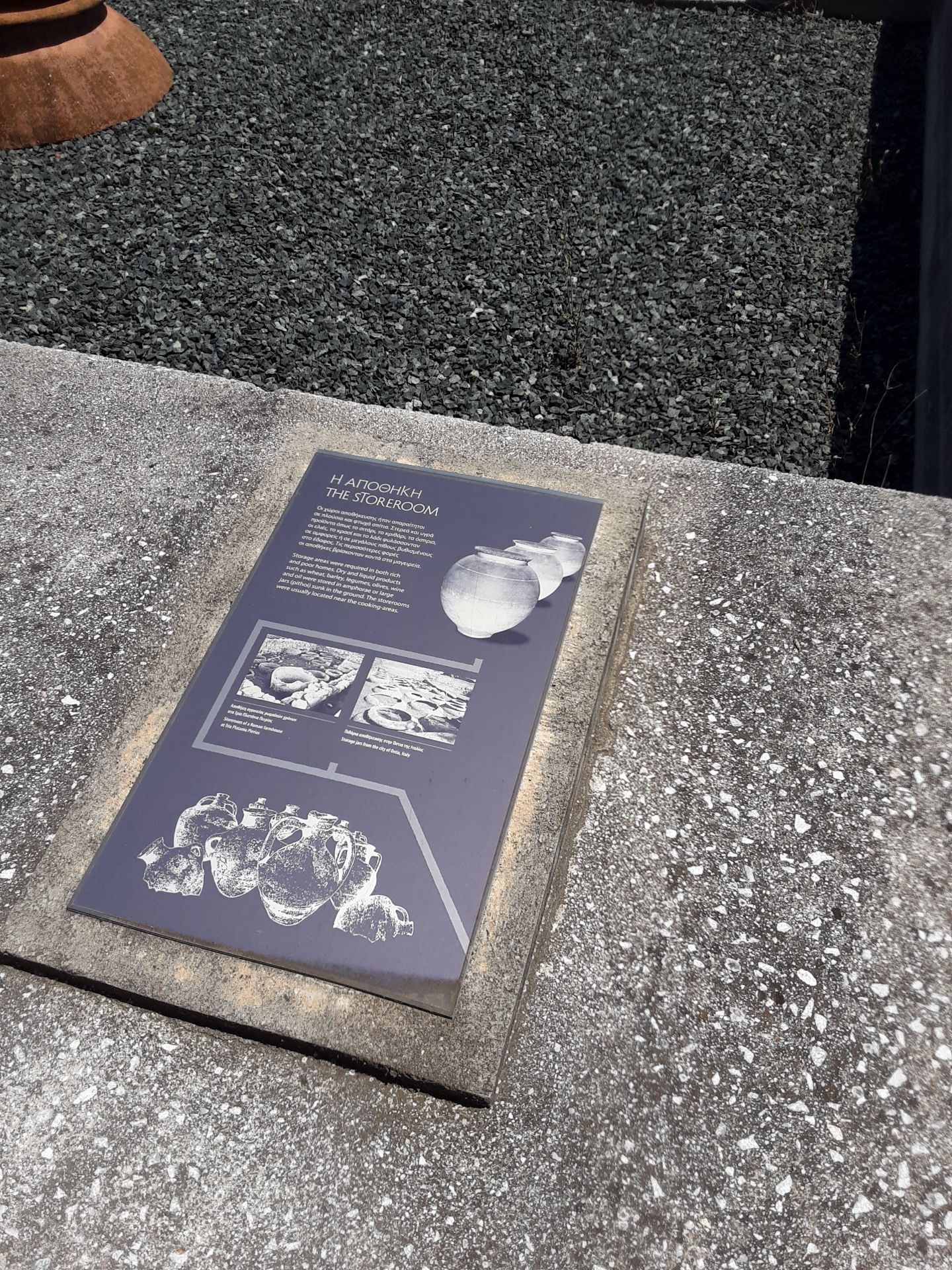
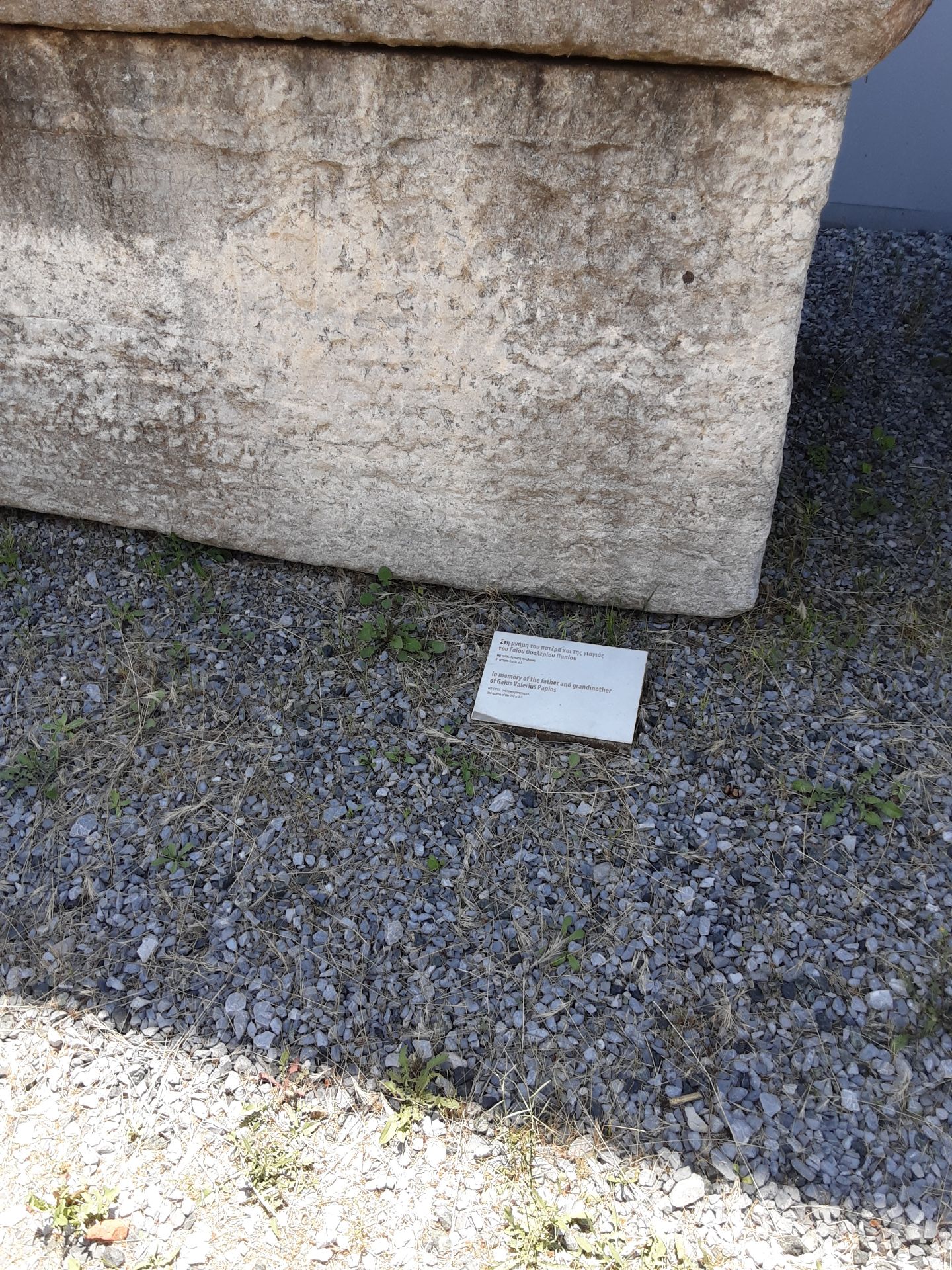
Detailed inspection data
- Accessible parking spaces: 1
- Accessible WC
- Ramp
- Accessible public transport
- Tactile guidance
- Drop-off area
- Lift / elevator
- Accessible parking
Outdoor areas
Accessible parking
Parking space for vehicles of people with disabilities
- How many visitor vehicle spaces are there in total?
- 1
- Average distance
- Less than 150m
- Routes from the parking spaces to other points
- for movement with a white cane (tactile guide for the blind, tactile markings, etc.), for movement with a wheelchair (surfaces, clear widths, ramps, etc.), for people with walking difficulty (surfaces, handrails, etc.)
- How many visitor parking spaces designated specifically for people with disabilities are there?
- 1
- Routes from the parking spaces to other points
- they have no pedestrian path markings, there is insufficient signage indicating the route to and from these points, there are lighting issues
- There are special parking spaces for vehicles of people with disabilities, but they do not comply with the specifications.
- Safe access on all sides of the vehicle (driver, passenger, luggage areas), Not protected from harsh weather conditions (canopies/windbreaks)
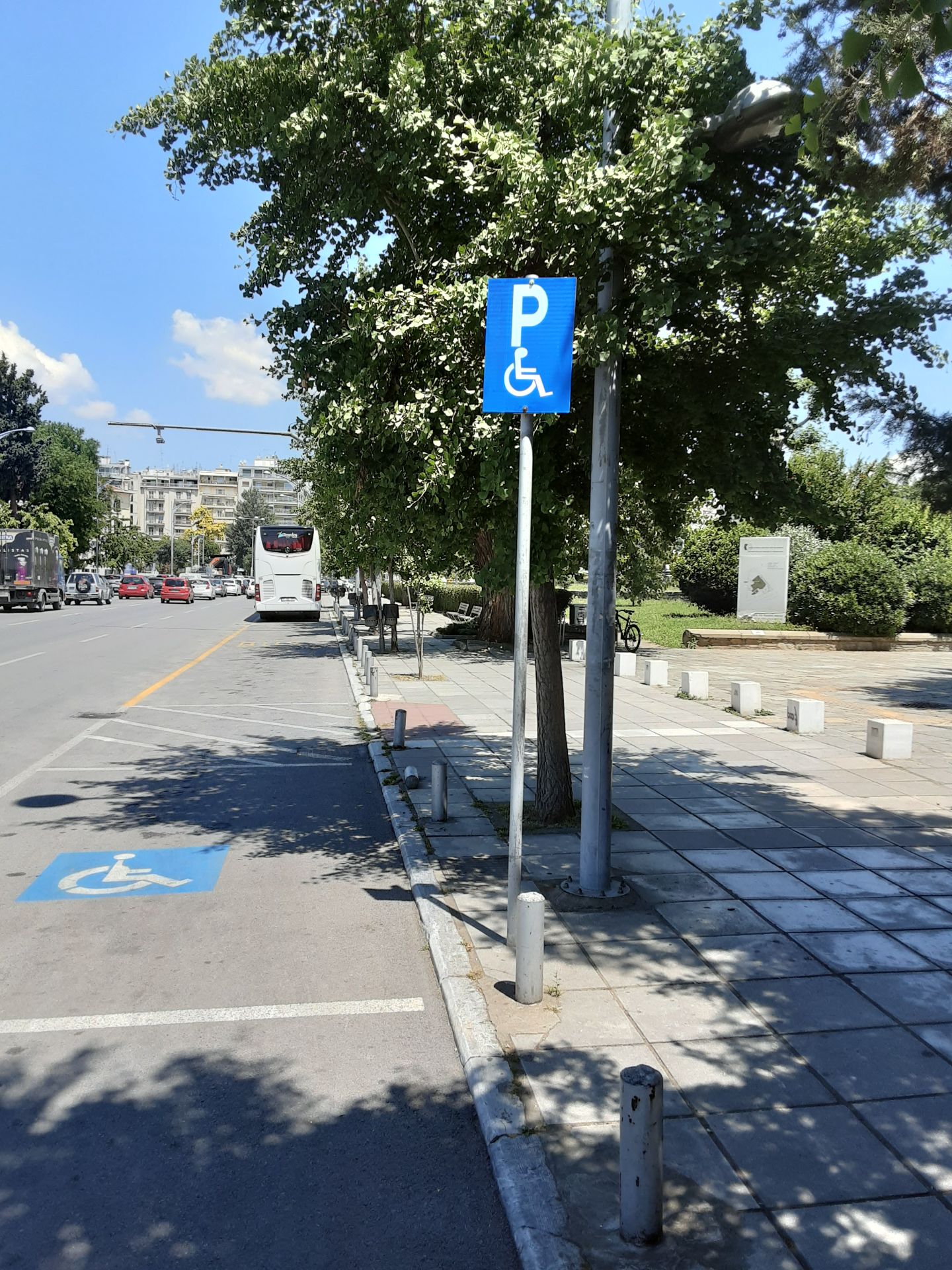
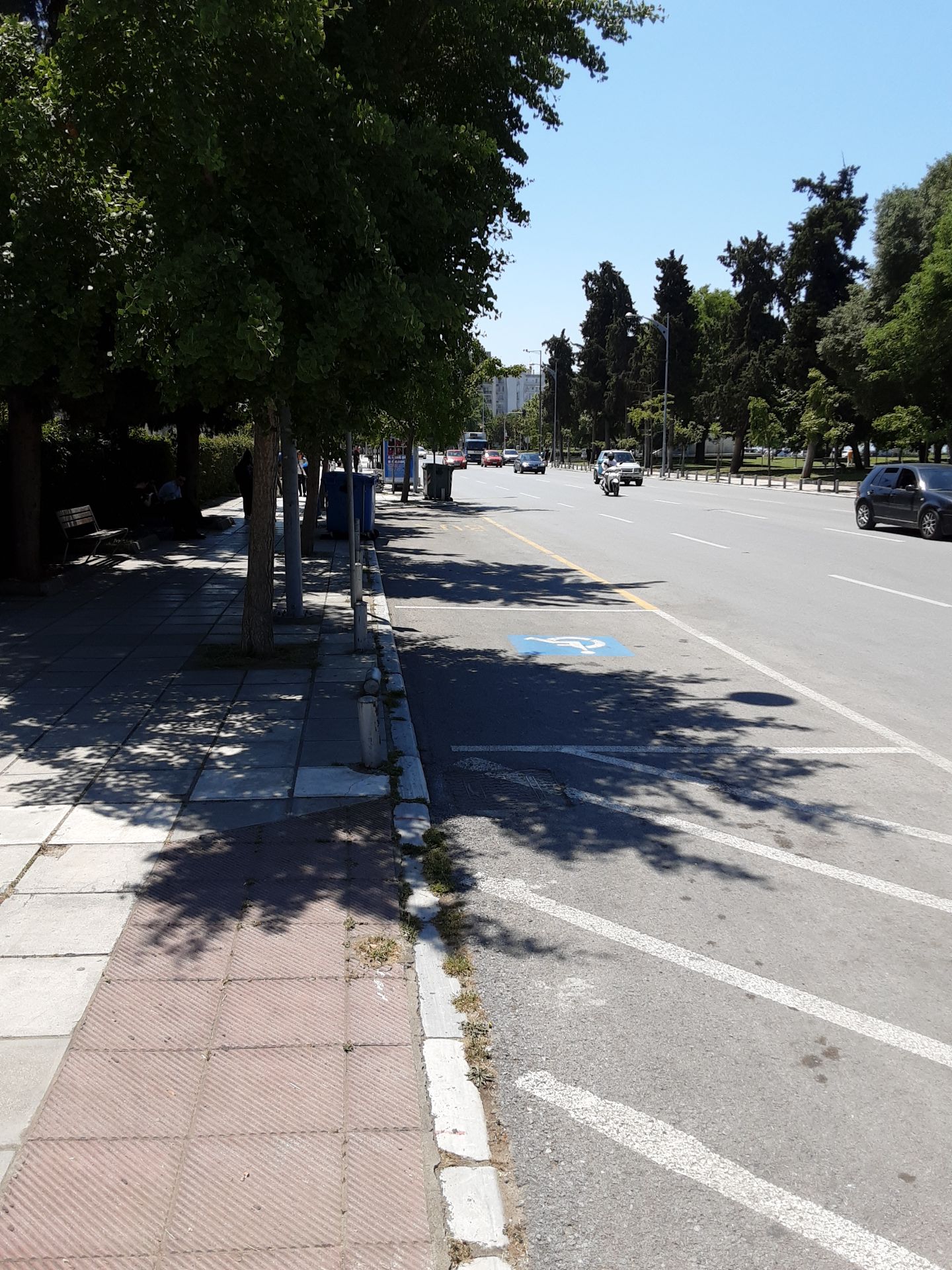
Drop-off / pick-up
Visitor boarding / alighting point
- Average distance
- Less than 150m
- Routes from these positions to other points
- for wheelchair movement (surfaces, clear widths, kerb ramps/ramps, etc.), for people with walking difficulty (surfaces, handrails, etc.), for movement with a white cane (tactile guidance path, tactile markings, etc.)
- Routes from these positions to other points
- there is insufficient signage indicating the route to and from these points, there are lighting issues, they have no pedestrian guidance path markings
- Served by accessible vehicles / public transport
- Yes
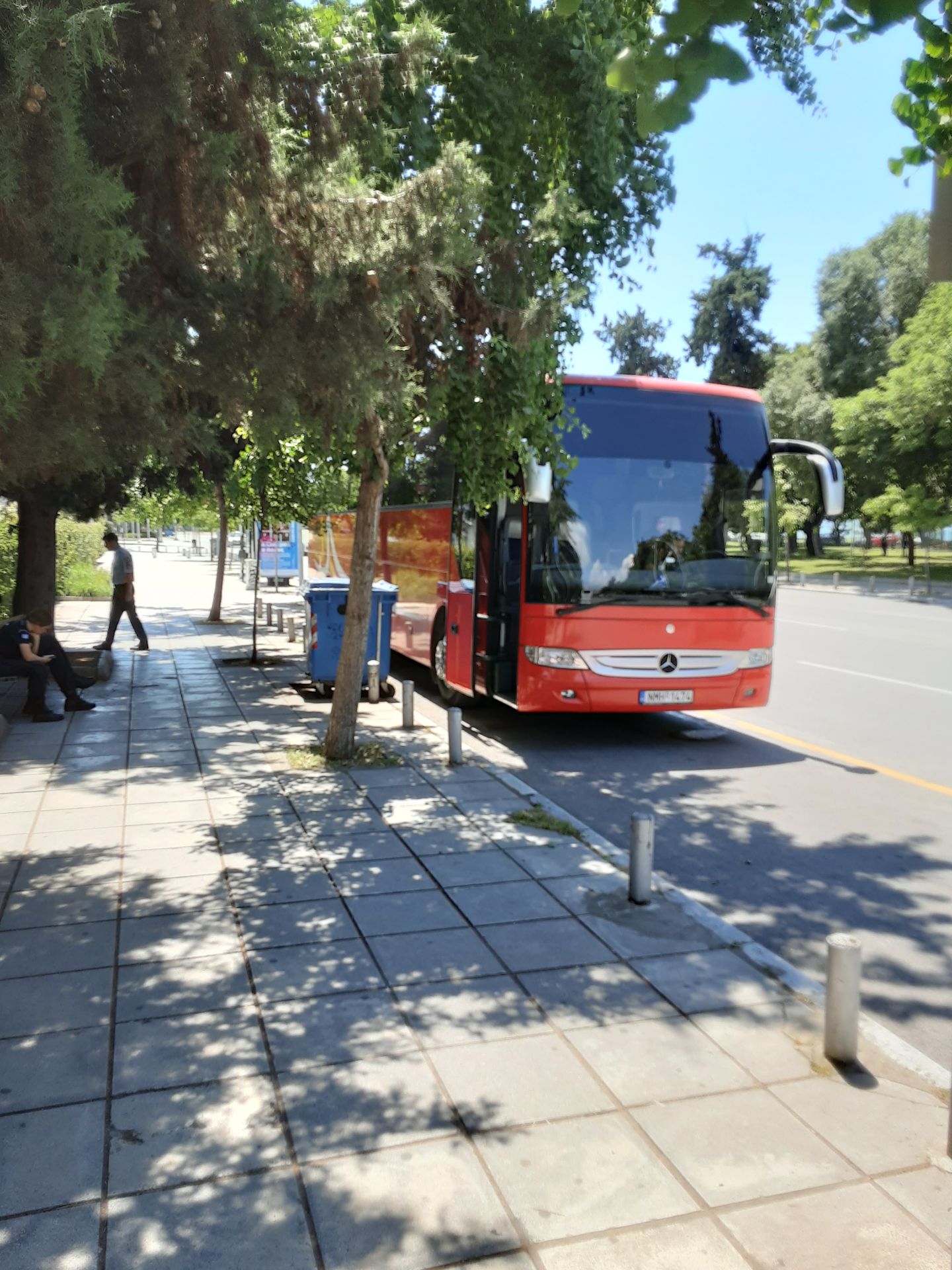
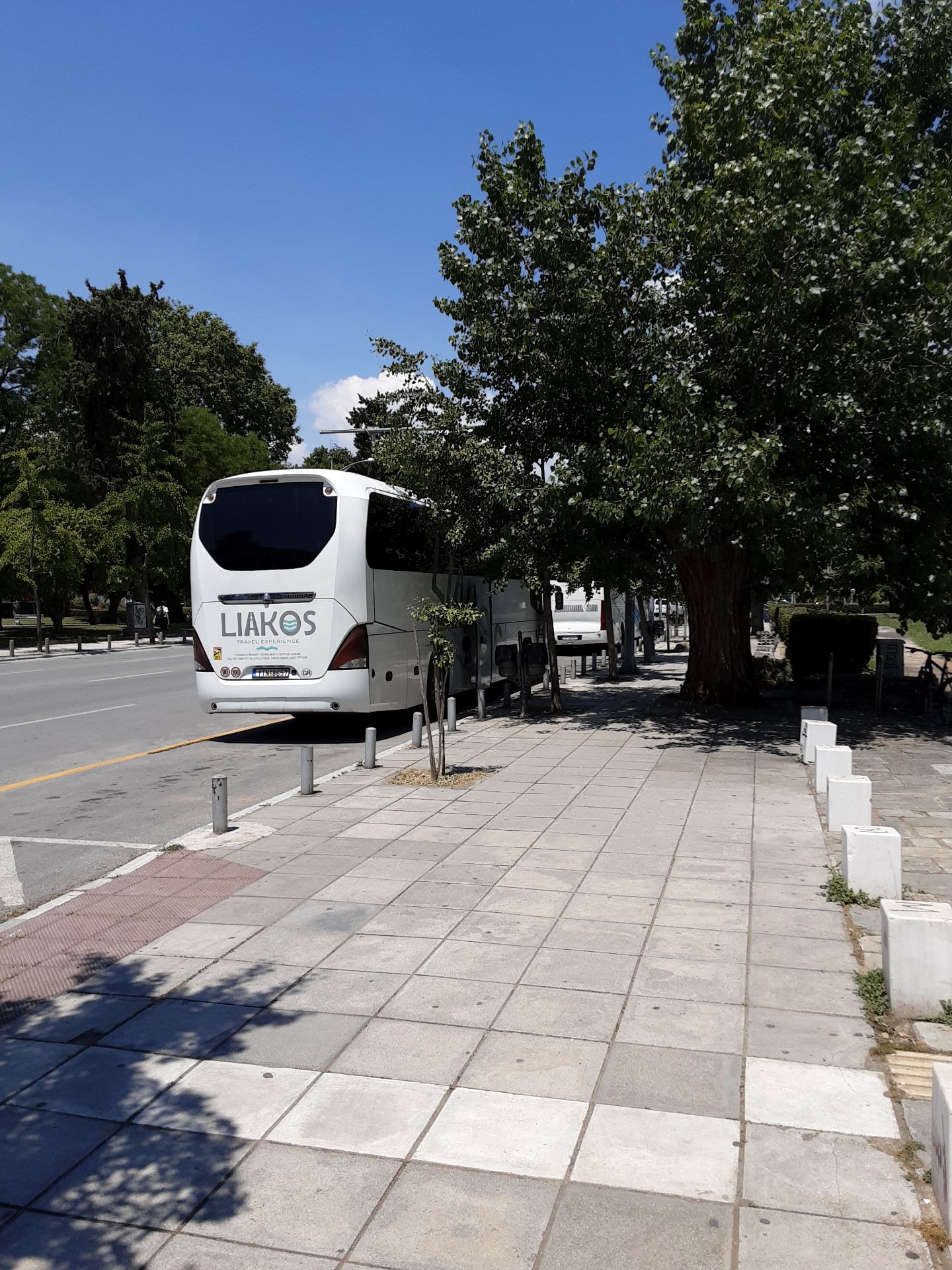
Accessible parking
Parking area for staff / guest vehicles
- There are dedicated parking spaces for vehicles of people with disabilities, but there is no additional large dedicated space for professional van-type vehicles with integrated lifts
- None at all
- How many visitor vehicle spaces are there in total?
- 25
- Average distance
- Less than 150m
- Routes from the parking spaces to other points
- for wheelchair movement (surfaces, clear widths, ramps, etc.)
- How many visitor parking spaces designated specifically for people with disabilities are there?
- 0
- Routes from the parking spaces to other points
- they have no pedestrian path markings, there is insufficient signage indicating the route to and from these points, there are lighting issues
- There are special parking spaces for vehicles of people with disabilities, but they do not comply with the specifications.
- Locating signage, Not well lit, Not protected from harsh weather conditions (canopies/windbreaks)
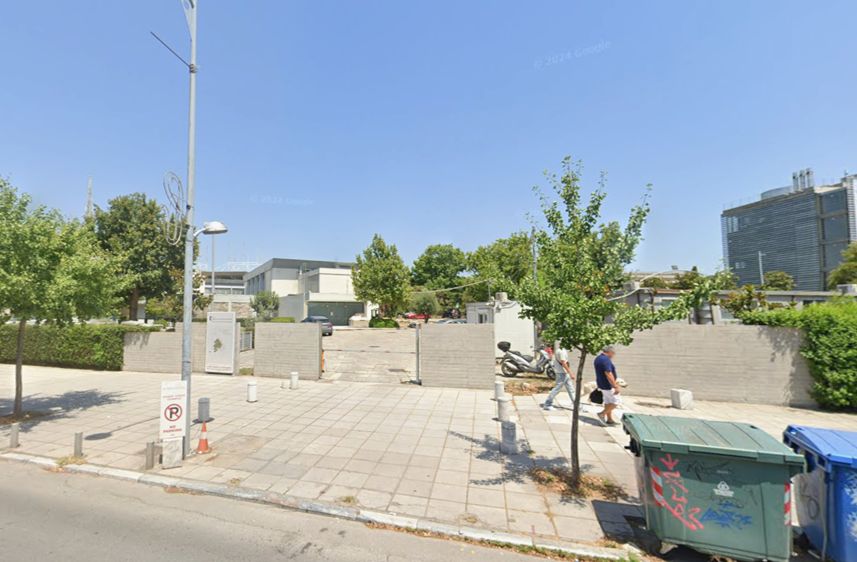
Infrastructure
Building
Temporary Exhibition wing (Basement)
- Overall, within the building there are accessible areas where staff are present and the public can communicate / interact with them
- Yes, but has no briefing or training on serving people with disabilities
- Access to toilet facilities is not an issue?
- No
- The building has toilets for the public but no accessible toilet for people with disabilities according to national specifications/guidelines
- No
- The building has toilets for people with disabilities and they are sufficient as required by law for this case, because…
- There is at least one on each floor
- Overall, noise levels inside the building are suitable at all times of use/visit
- Yes
- Generally, heating in the building is adequate at all hours of use/visit
- No
- Generally, the lighting within the building is suitable at all hours of use/visit
- Yes
- In general, air conditioning/ventilation inside the building is appropriate at all hours of use/visit
- Yes
- Is vertical access not an issue?
- Yes
- Inside the building
- No
- In general, inside the building there are sufficient/appropriate routes, emergency exits and/or other means
- Yes
- Is access to separated spaces/rooms not an issue?
- Yes
- How many separate floors/levels does it have?
- 1
- It is…
- Historic/listed building
- The areas open to the public occupy the following floors / levels
- Basement
- Overall, the corridors and circulation routes have clear widths
- Over 120 cm
- Overall, the corridors and circulation routes have suitable clear heights
- Yes
- Lighting in corridors and generally along movement routes is appropriate
- Yes
- Is there an emergency lighting system installed in the corridors and generally along the movement routes?
- No
- There are bridges in the building
- No bridging needed / present
- There is furniture and/or equipment within the 90 cm clear width
- No
- There are levels / areas without sufficient/suitable seating / rest areas for people with difficulty walking / standing for long periods
- Yes
- Suitable floor signage is used in the building
- Not needed/none
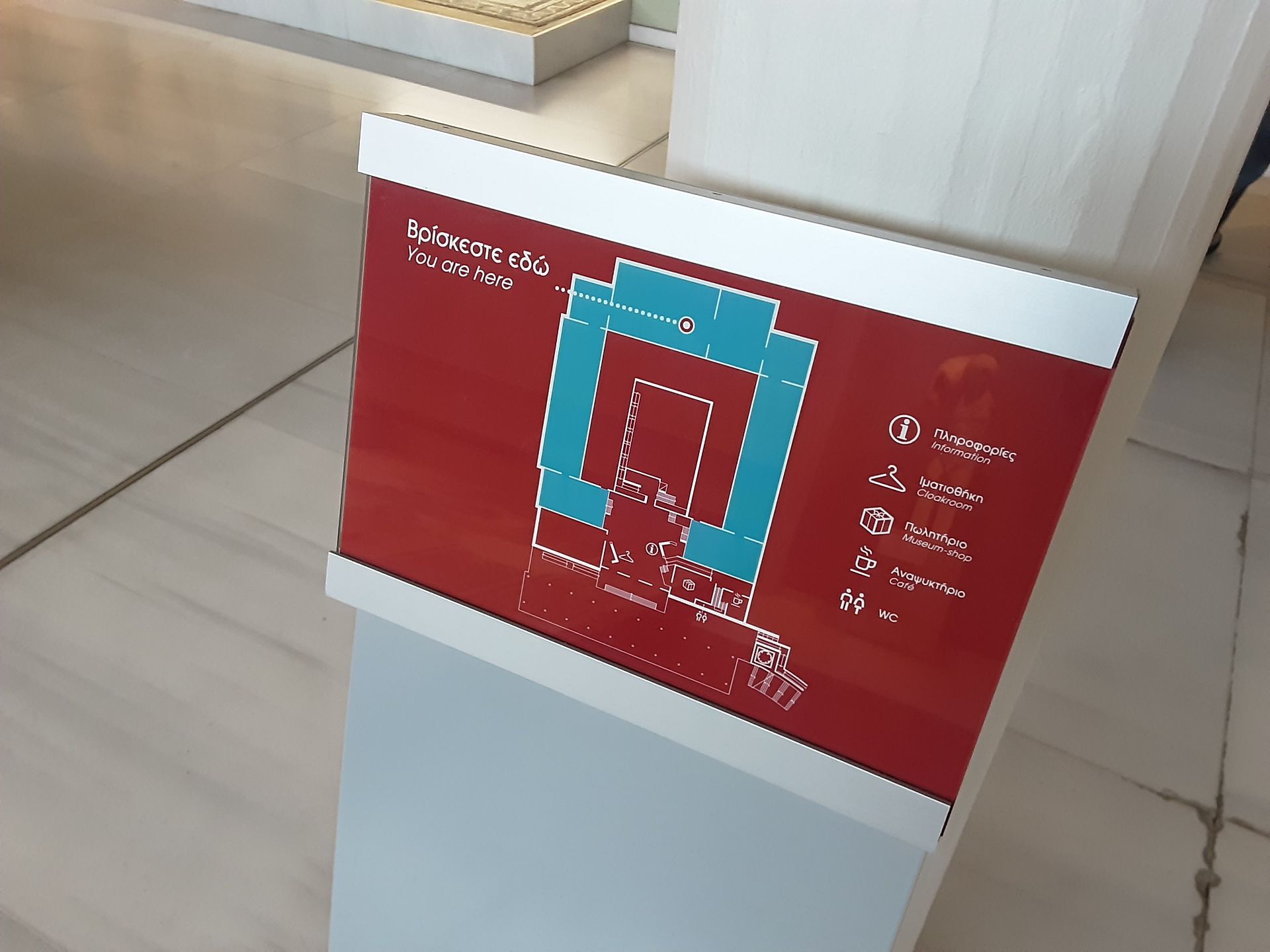
- At strategic points of the building there is a simplified floor plan or a model
- No
- In general, the choice of location and placement of signage panels within the building do not comply with the relevant specifications and create obstacles or risks for certain categories of people with disabilities
- Wheelchair users, People with visual disabilities
- Guide dogs are accepted and staff understand that they should not interact with the dog
- Yes
- An automatic guided-tour system is used and its design ensures accessibility for…
- None
- Audiovisual media are used and their design ensures accessibility for…
- None
- Is there posted and/or available informational material provided to the public?
- No
- All (small) exhibits and their labels are always placed at heights suitable also for wheelchair users (e.g., within a height zone of 75 to 135 cm)
- Yes
- There are exhibits or other objects hung on walls in a way that is dangerous for people with vision disabilities
- No
- There are areas/levels with exhibits that meet the appropriate specifications for wheelchair access
- Yes
- Exhibits are also available in tactile form for blind people
- None
- Digital stations are used
- None
- The signs, labels, exhibit captions, etc. are accompanied by equivalent alternative formats/solutions for people with visual disabilities
- No
- Educational/informational activities, screenings and/or live presentations are organized in spaces and with a design that ensures accessibility for…
- None
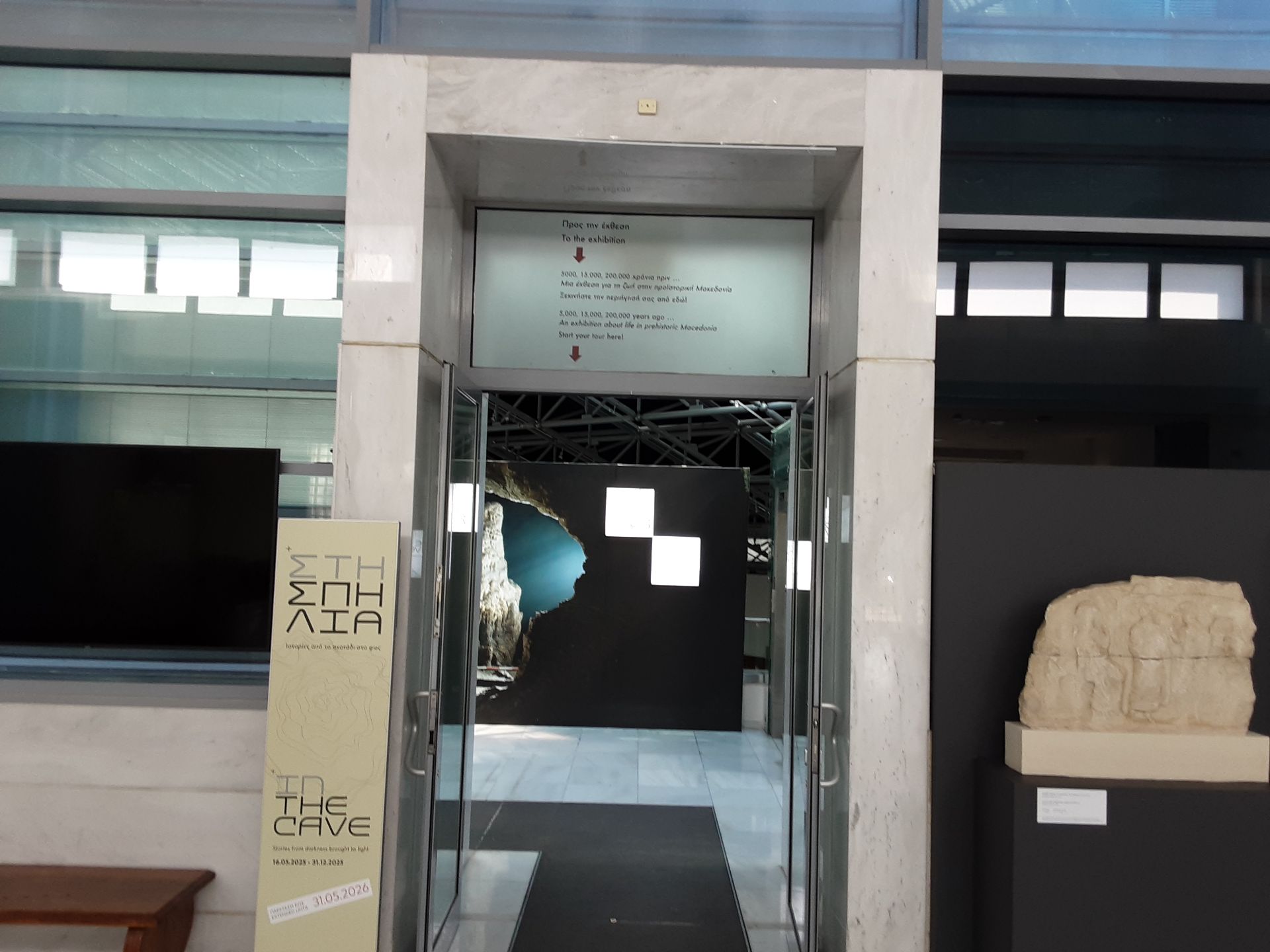
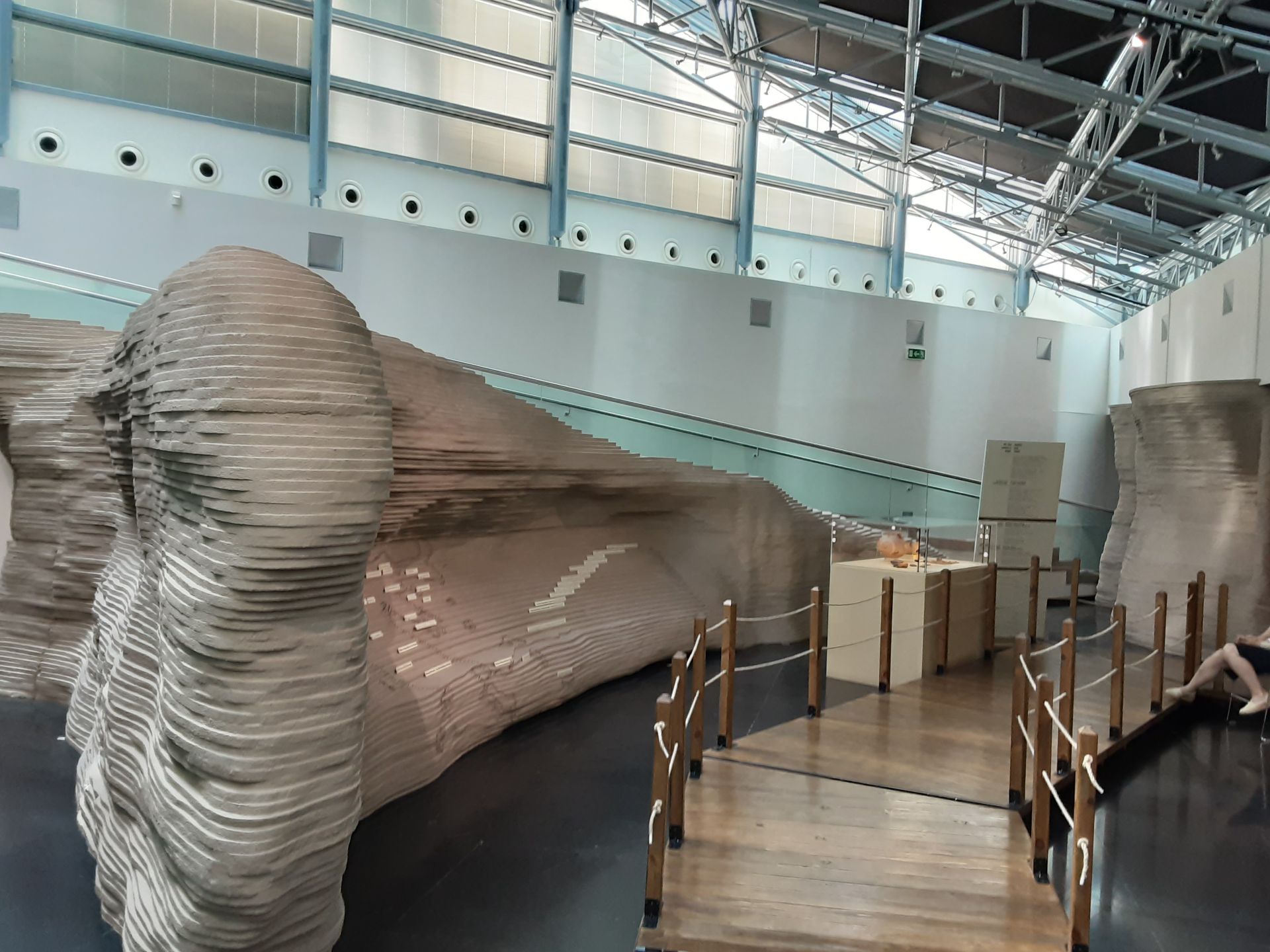
Entrance / exit
From the Basement Permanent Exhibition Wing
- Is there a door?
- Stays open.
- Railings / parapet
- Not needed
- Cross slope
- Suitable
- Longitudinal slope
- Suitable
- Clear opening
- Suitable
- Is it easily identifiable?
- Yes
- Clear passage height
- Suitable
- Informational signage for visitors is provided outside
- No
- Bears suitable informational signage regarding accessibility to the building's spaces
- No
Entrance / exit
From the ground floor Foyer (stairs/elevator)
- Preceded by a step
- Ramp-stairs
- Is it easily identifiable?
- Yes
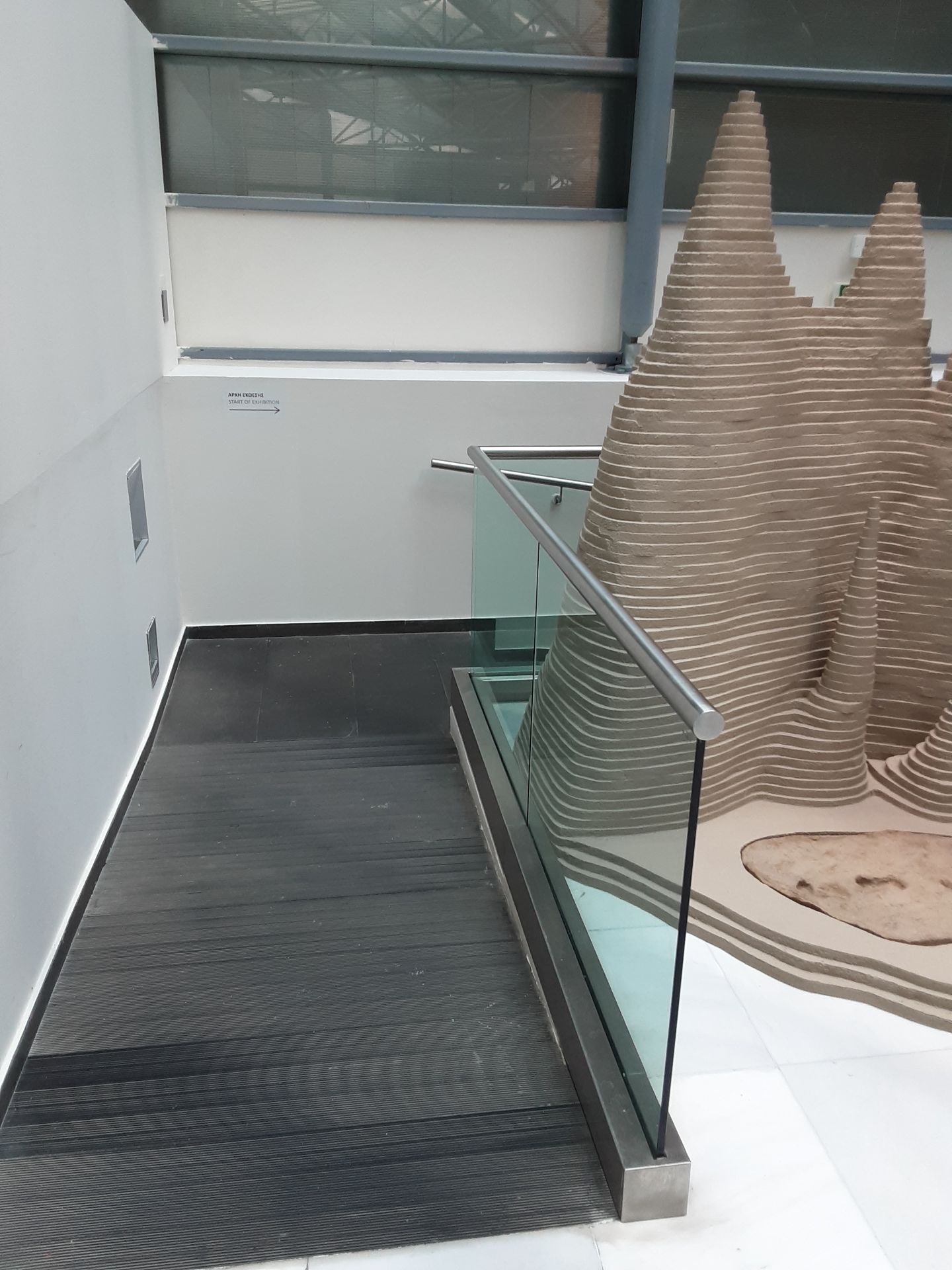
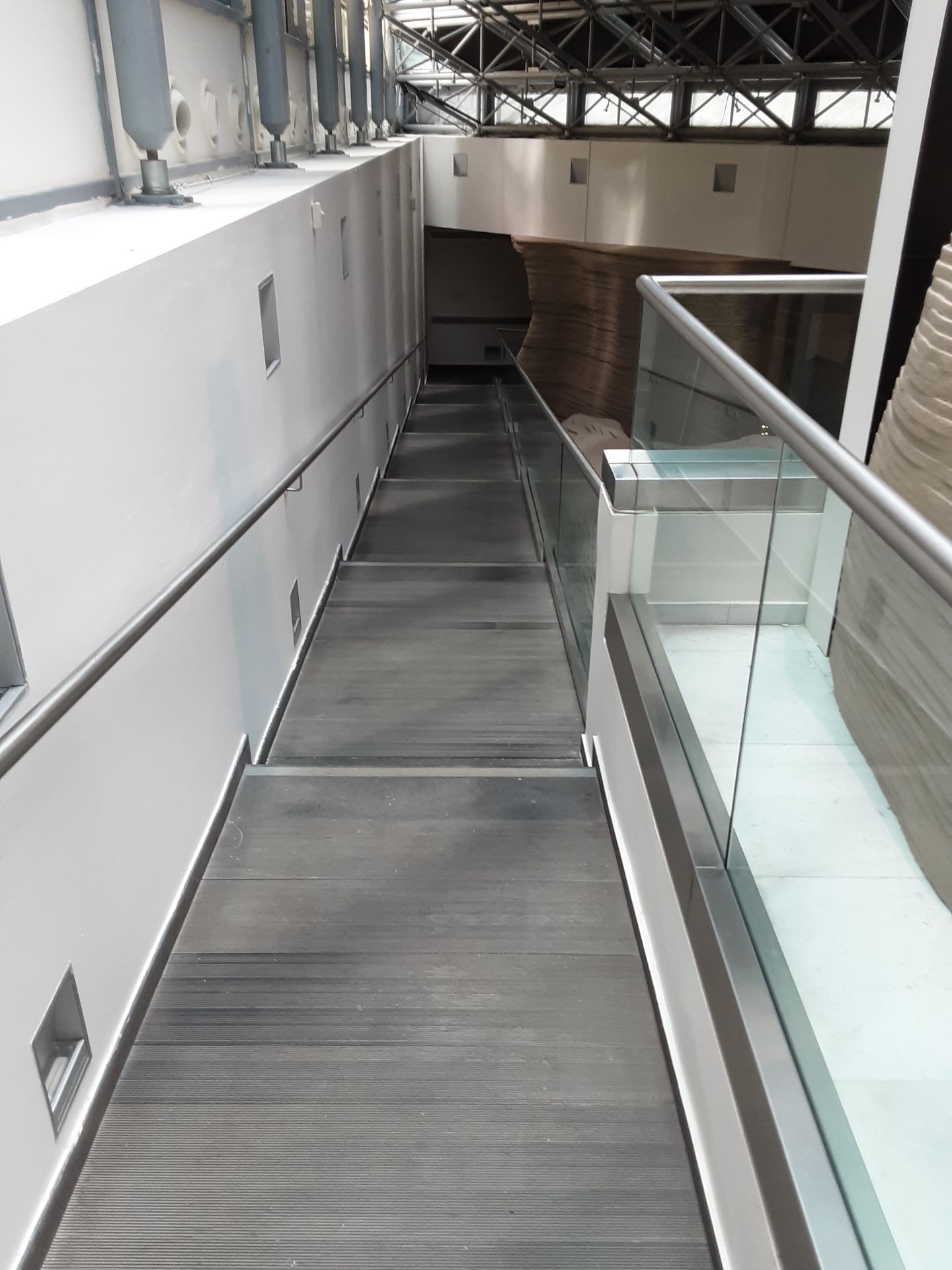
Stairs
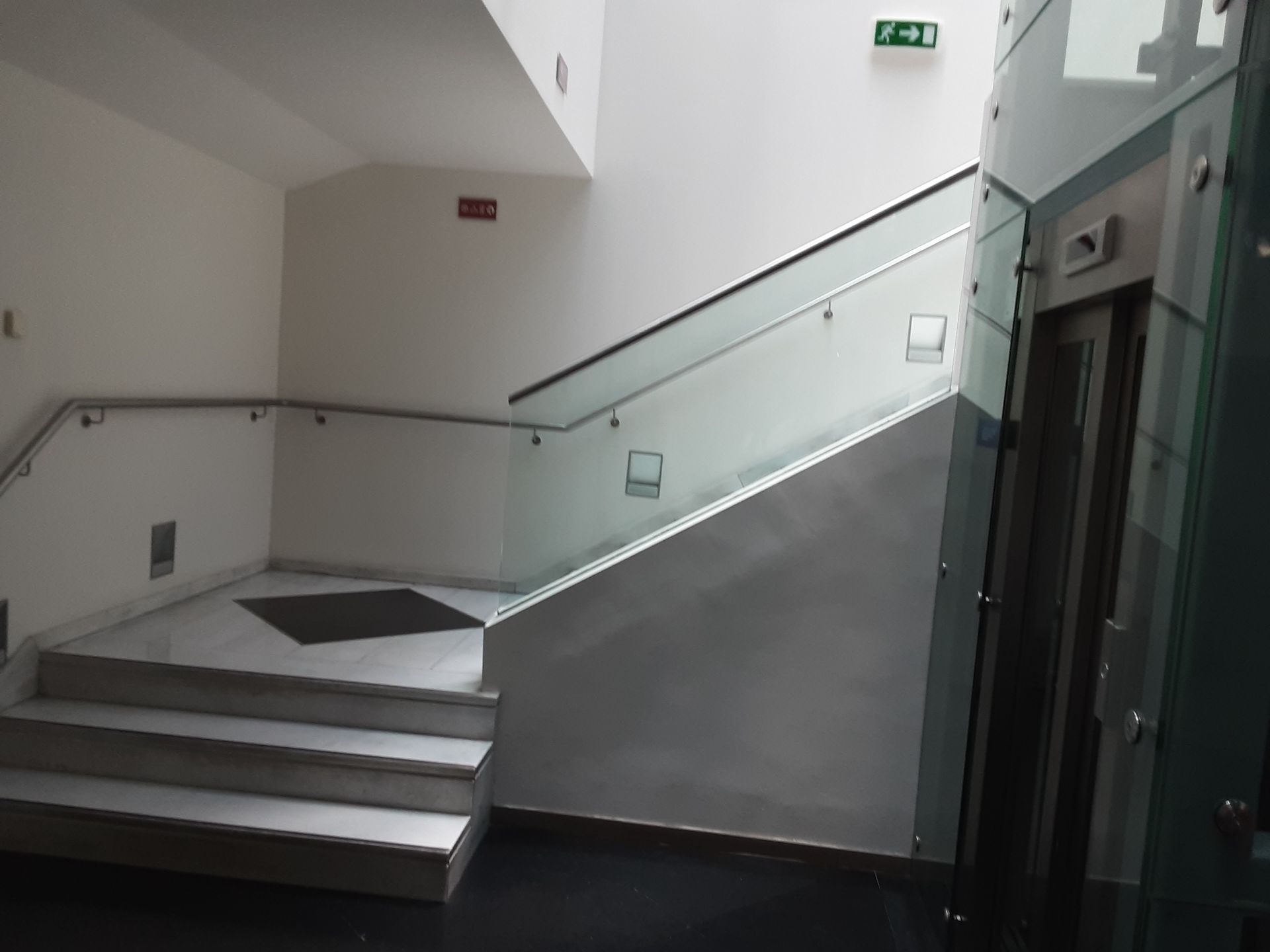
Ramp-stair to basement with 8% slope (at the entrance/exit of the temporary exhibition)
- Does it have a riser (front face)?
- Vertical
- Handles / handrails
- Present and standards-compliant
- It is a staircase with a stairlift
- No
- Is it…
- Main
- Parapets / railings
- Present and standards-compliant
- Is it interior and…
- Fixed
- Is it…
- Interior
- The (minimum) opening of the stairs is (in cm)…
- 110
- They are clearly legible
- Yes
- The (minimum) depth of the steps is (in cm)…
- 200
- The (maximum) height of the steps is (in cm)…
- 17
- The width of the stairs
- Yes
- In the case of stairways that are part of the existing network with tactile guidance paths for the blind, are there tactile warning surfaces at the start, end and changes of direction of the stairs?
- Not part of such a network
- Are the intermediate landings of adequate dimensions
- No
- The lighting is adequate
- Yes
- Are the surfaces
- Yes
- Does it have an emergency lighting system?
- Yes
- Is it easily identifiable?
- Yes
- At the stair landings, there is informational signage for visitors
- No
- Is it standards-compliant?
- No
- The depth (tread) of the steps is constant from the start to the end of the stairs
- Yes
- In the case of exposed side/rear surfaces, are these always "covered" so as not to pose a risk to people with visual impairments and white cane users?
- Yes
- The height of the steps is constant from the start to the end of the stairs
- Yes
- Is there a standards-compliant alternative for wheelchair access?
- Present and standards-compliant
- Includes conical and/or curved steps
- No
- (If available), the alternative wheelchair access is via…
- An adjacent accessible elevator or platform lift for wheelchairs
- Overall, passage / use is not possible/safe for specific categories of people with disabilities
- wheelchair users
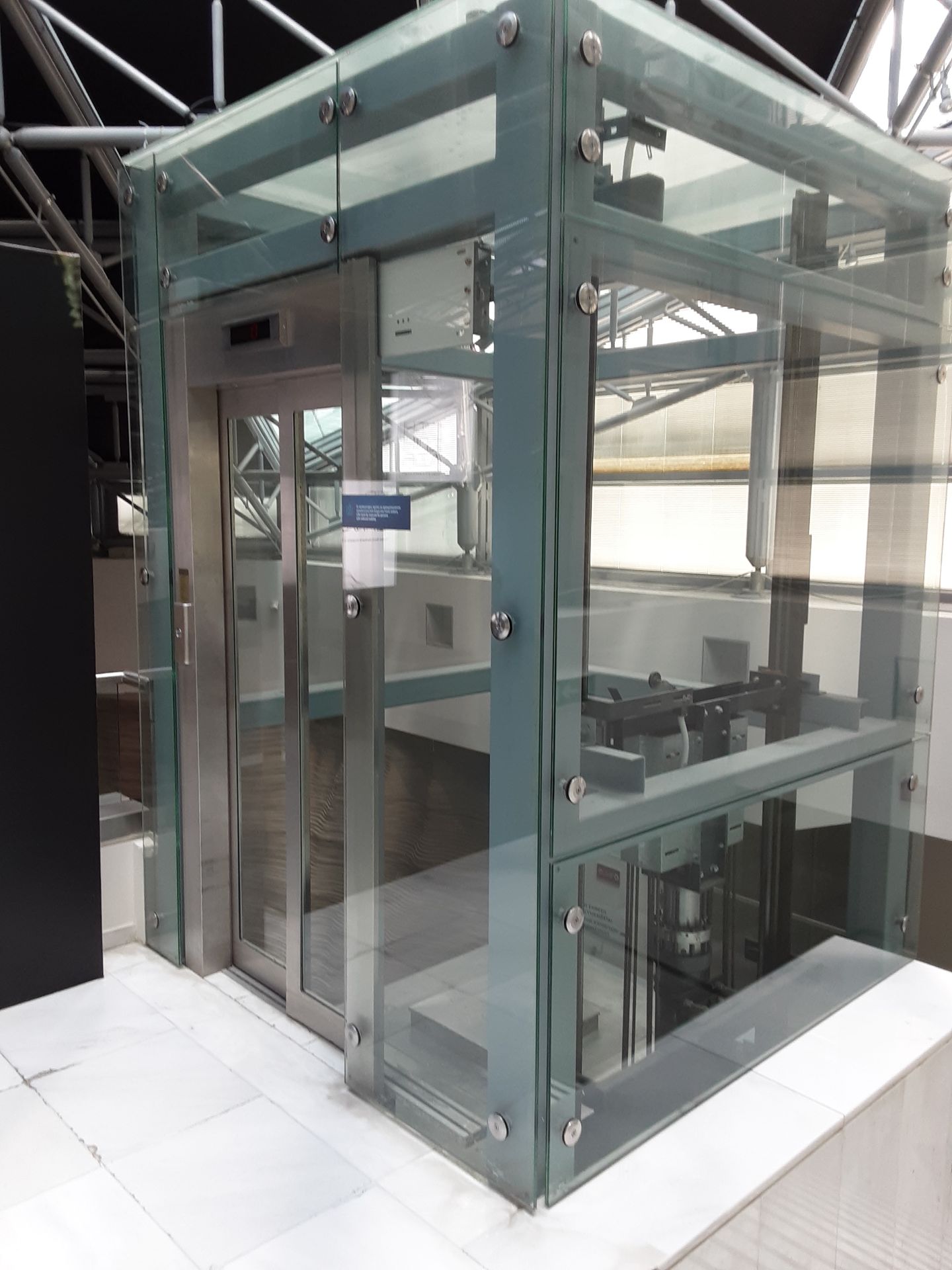
Lift / elevator
Accessible public elevator, at the entrance/exit of the temporary exhibition
Stairs
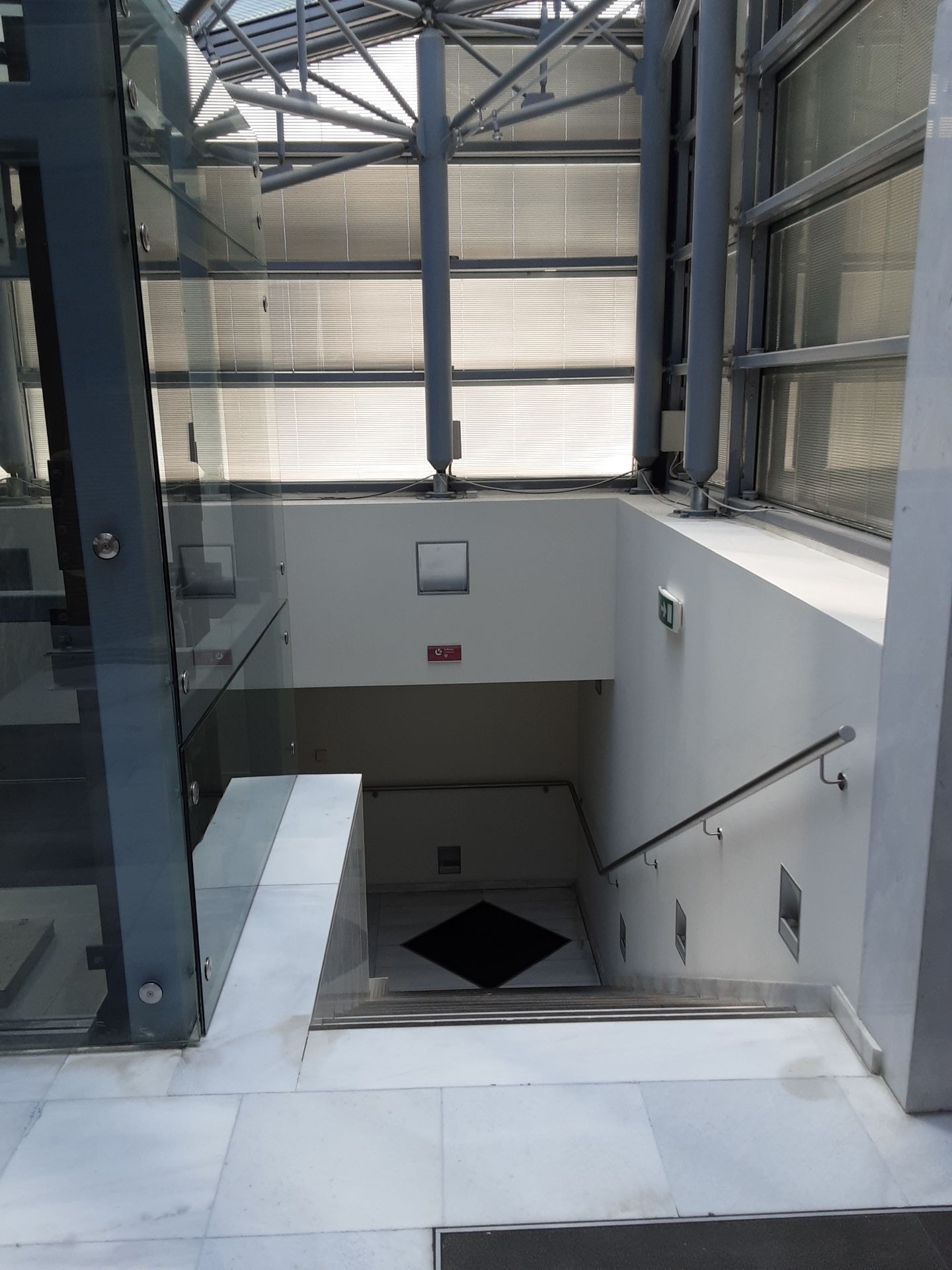
Stairs connecting ground floor and basement (14+3 steps), at the entrance/exit of the temporary exhibition
- Handles / handrails
- Present and standards-compliant
- It is a staircase with a stairlift
- No
- Is it…
- Main
- Parapets / railings
- Present and standards-compliant
- Is it interior and…
- Fixed
- Is it…
- Interior
- The (minimum) opening of the stairs is (in cm)…
- 150
- They are clearly legible
- Yes
- The (minimum) depth of the steps is (in cm)…
- 28
- The (maximum) height of the steps is (in cm)…
- 17
- The width of the stairs
- Yes
- In the case of stairways that are part of the existing network with tactile guidance paths for the blind, are there tactile warning surfaces at the start, end and changes of direction of the stairs?
- Not part of such a network
- Are the intermediate landings of adequate dimensions
- Yes
- The lighting is adequate
- Yes
- Are the surfaces
- Yes
- Does it have an emergency lighting system?
- Yes
- Is it easily identifiable?
- Yes
- At the stair landings, there is informational signage for visitors
- No
- Is it standards-compliant?
- No
- In the case of exposed side/rear surfaces, are these always "covered" so as not to pose a risk to people with visual impairments and white cane users?
- Yes
- The height of the steps is constant from the start to the end of the stairs
- Yes
- Includes conical and/or curved steps
- No
- (If available), the alternative wheelchair access is via…
- An adjacent accessible elevator or platform lift for wheelchairs
- Overall, passage / use is not possible/safe for specific categories of people with disabilities
- wheelchair users
Restroom (WC)
Public toilet and accessible toilet in the Temporary Exhibition area (Basement)
- If there is a mirror, is it suitable for use by wheelchair users
- No
- Includes..
- Space with a toilet bowl, Space with a toilet bowl and washbasin, Vestibule with washbasin(s)
- The lighting is adequate
- Yes
- The door is of type…
- Opening outward
- What type of washbasin does the toilet have?
- For exclusive use
- Are the fire alarms perceptible in all areas of the sanitary space?
- Yes, audible
- Is it easily identifiable?
- Yes
- Is it a standards-compliant accessible toilet?
- Yes, but it does not have suitable signage
- All surfaces are of non-slip, homogeneous, stable, wear-resistant material
- Yes
- Can it be used only at specific times?
- Yes (provide details)
- Is it…
- Free
- Is the space kept clean and well ventilated?
- Yes
- The controls
- No
- Is there a telephone or other emergency notification system?
- Yes
- If there is a soap dish, towel holder or hand-drying system, are they easy to use and located at suitable positions and heights for wheelchair users
- Yes
- Are there grab bars on the toilet bowl?
- Yes
- Is it…
- Interior
- Is wheelchair access ensured?
- Yes
- The clear opening of the door is
- 90
- Has suitable handles
- Yes, on one side
- Does it have an emergency lighting system?
- Yes
- Not used for other purposes
- No
- Is it a standards-compliant accessible toilet…
- Unisex
- Is it…
- Men and women separate
- Is there a clear space under the washbasin to fit a wheelchair?
- Yes
- Is it a standards-compliant accessible toilet…
- Together with other toilets / sanitary spaces
- Does it have a suitable clear opening for the intended use?
- Yes
- Outside the door there is clear level space for maneuvering a wheelchair
- Yes
- Is it…
- Entrance unobstructed
- There is free space on one side of the basin of width
- 70
Outdoor area
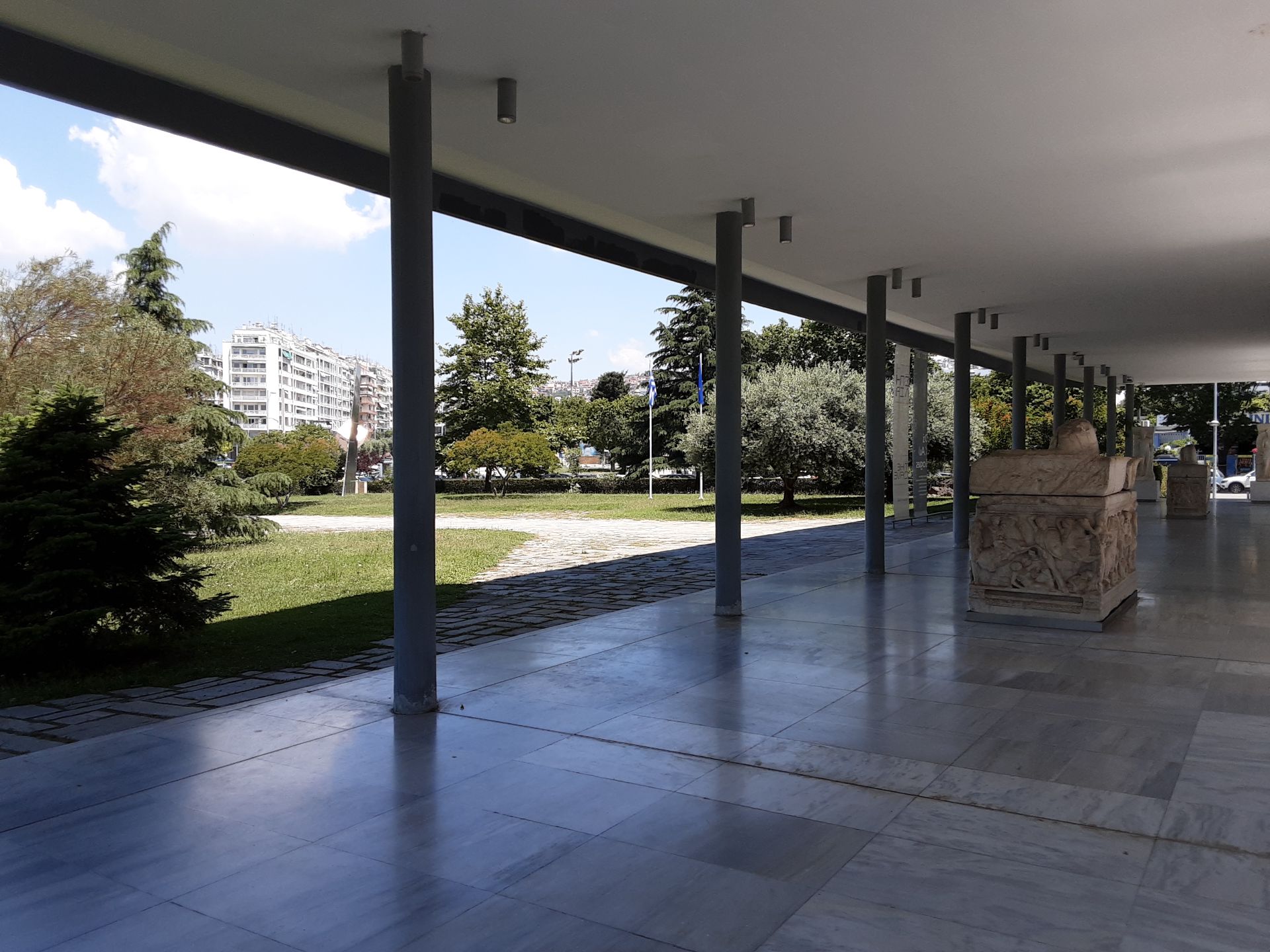
Courtyard
- In general, within the site there are visitable areas with staff that the public can contact / interact with
- No, there is none
- In general, noise levels inside the space are appropriate at all hours of use/visit
- No
- Generally, lighting in the space is adequate at all hours of use/visit
- Yes
- Generally, the temperature within the space is suitable at all hours of use/visit
- No
- Access to toilet facilities is not an issue?
- No
- Is vertical access not an issue?
- No
- Access to separated areas/zones is not an issue?
- Yes
- How many separate entrances/exits does it have?
- 3
- The areas open to the public occupy the following floors / levels
- Basement (below ground level), Ground floor (at ground level)
- Generally, the corridors and circulation routes have appropriate slopes
- No
- Overall, the corridors and circulation routes have clear widths
- Over 120 cm
- Generally, the paths are adequately maintained
- Yes
- There are obstacles
- No
- In general, the movement routes / paths are laterally delimited
- Railing/Fence, Flower beds, Low curb edging
- There are bridges in the space
- No bridging needed / present
- Generally, lighting along the circulation routes is adequate
- Yes
- Overall, the corridors and circulation routes have suitable clear heights
- Yes
- There are levels / areas without sufficient/suitable seating / rest areas for people with difficulty walking / standing for long periods
- No
- There are levels/areas with seating/rest positions for the public without provisions for a wheelchair stop
- No
- A simplified floor plan or model is available at strategic points in the space
- No
Outdoor entrance / exit
3rd September Avenue
- Adequately served by a dedicated boarding / alighting area suitable for people with disabilities
- No
- Does a blind guidance path lead to the entrance?
- No
- Is it preceded by an abrupt rise of more than 2 cm?
- 12
- Is it easily identifiable?
- Yes
- Is it preceded by a sidewalk with an unsuitable road–sidewalk connection for wheelchair users?
- No
- Adequately served by a dedicated accessible parking space for private vehicles
- No
- Adequately served by disability-friendly public transport
- Yes
Outdoor entrance / exit
Stratou Ave.
- Is there a door?
- No
- Adequately served by a dedicated boarding / alighting area suitable for people with disabilities
- No
- Does a blind guidance path lead to the entrance?
- No
- Cross slope
- Suitable
- Longitudinal slope
- Suitable
- Clear opening
- Suitable
- Is it easily identifiable?
- Yes
- Is it preceded by a sidewalk with an unsuitable road–sidewalk connection for wheelchair users?
- Yes (explain…)
- Clear passage height
- Suitable
- Informational signage for visitors is provided outside
- Yes, but it is not accessible for people with disabilities (e.g. without Braille or raised lettering)
- Adequately served by a dedicated accessible parking space for private vehicles
- No
- It has appropriate signage providing accessibility information for the individual interior spaces
- No
- Adequately served by disability-friendly public transport
- Yes
Ramp
Made of marble
- It has an appropriate handrail
- No
- Is it…
- Outdoor
- At all levels/stops…
- the ramp floor surface is at exactly the same height as the landing surface (difference <2 cm), the landing surfaces (1.5 x 1.5 m) are separate from the circulation routes, the landing surfaces are far from stairs/steps (distance > 1.5 m)
- Has standards-compliant slopes:
- 5% (2.9°) for a section up to 10 m.
- The lighting is adequate
- Yes
- All surfaces are of non-slip, homogeneous, stable, wear-resistant material
- Yes
- Is it easily identifiable?
- Yes
- Is wheelchair access ensured?
- Yes
- Is it…
- Permanent
- On all levels/stops, there is informational signage for visitors
- No
- Has a width that allows two wheelchairs to pass each other
- Yes, but without separating the two directions
- Is standards-compliant:
- Yes, but it lacks appropriate signage
- Has non-compliant cross slopes on the ramp and/or landings
- No
- In the case of exposed side/rear surfaces, are these always "covered" so as not to pose a risk to people with visual impairments and white cane users?
- Yes
- In the case of a ramp that is part of an existing network with tactile guide paths, are there tactile warning surfaces at all entry-exit points?
- Not part of such a network
Outdoor entrance / exit
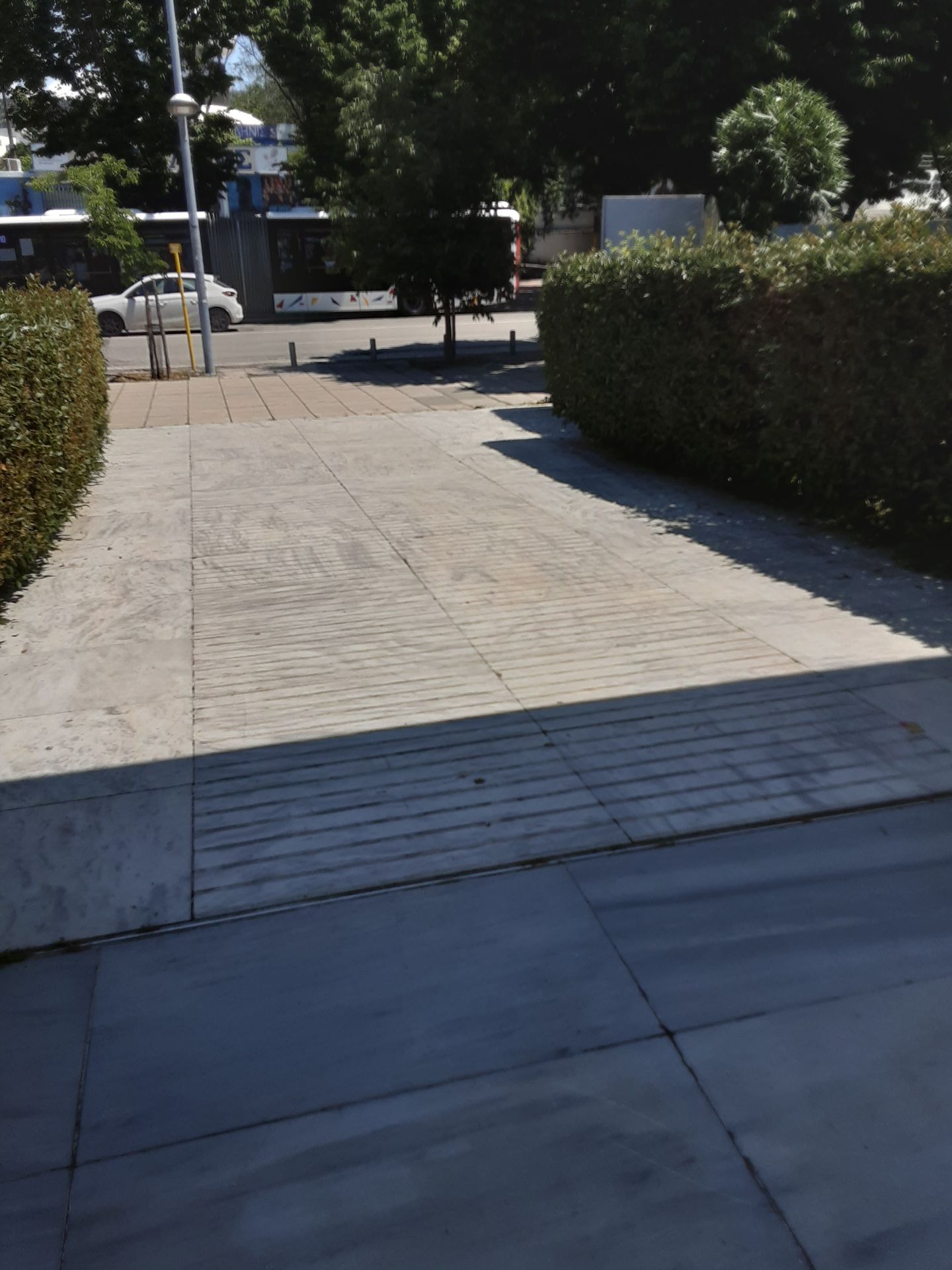
Man. Andronikou St.
- Is there a door?
- No
- Railings / parapet
- Not needed
- Adequately served by a dedicated boarding / alighting area suitable for people with disabilities
- Yes
- Does a blind guidance path lead to the entrance?
- Yes, but issues arise
- Preceded by a step
- Toward the main entrance of the building
- Cross slope
- Suitable
- At the entrance, are there obstacles preventing wheelchair passage?
- Special barriers used to regulate visitor entry (stanchions with rope, ticket barriers, etc.)
- Longitudinal slope
- Suitable
- Clear opening
- Suitable
- Is it easily identifiable?
- Yes
- Is it preceded by a sidewalk with an unsuitable road–sidewalk connection for wheelchair users?
- Yes (explain…)
- Clear passage height
- Suitable
- Informational signage for visitors is provided outside
- No
- Adequately served by a dedicated accessible parking space for private vehicles
- Yes
- It has appropriate signage providing accessibility information for the individual interior spaces
- No
- Adequately served by disability-friendly public transport
- Yes
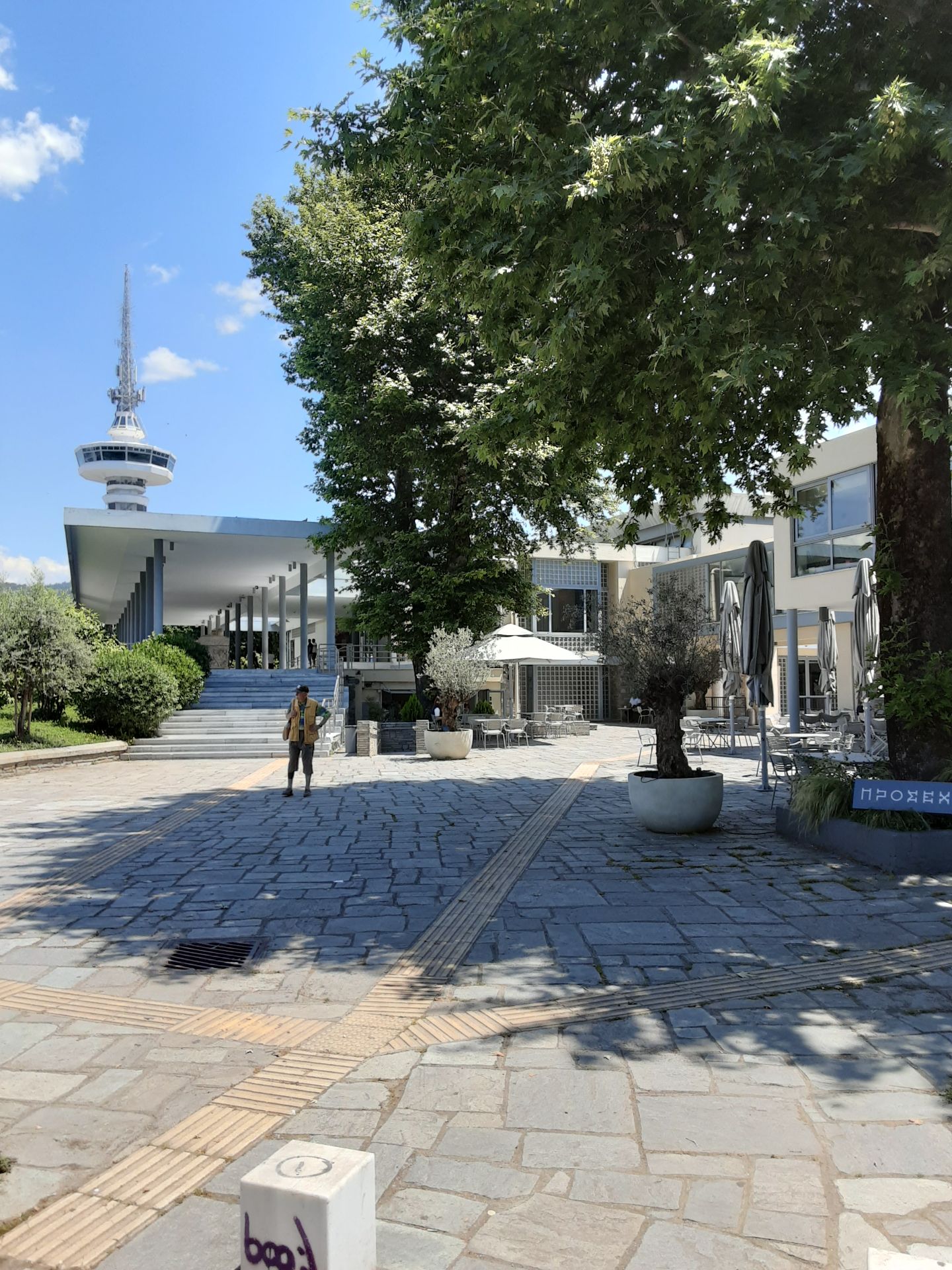
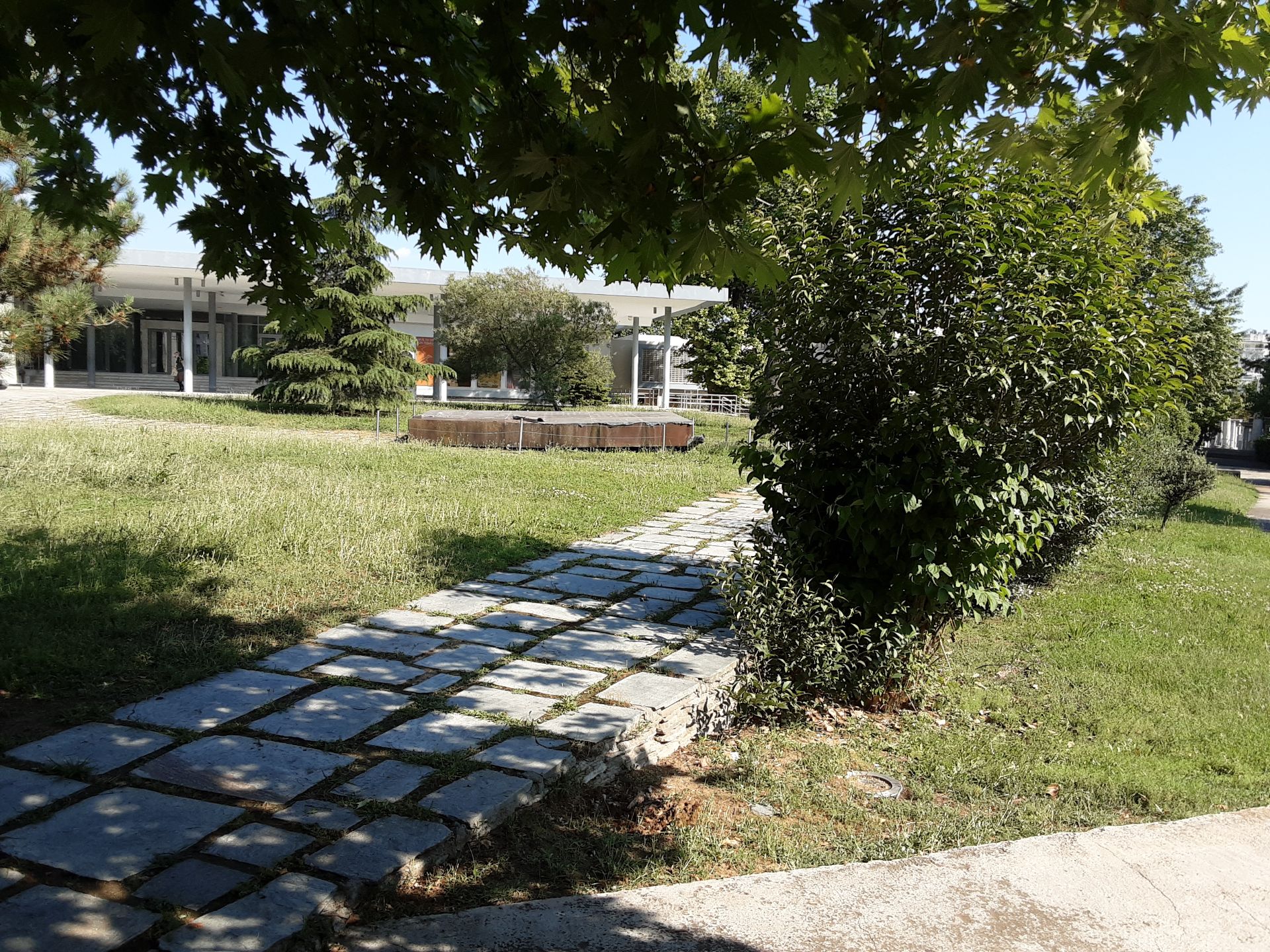
Stairs
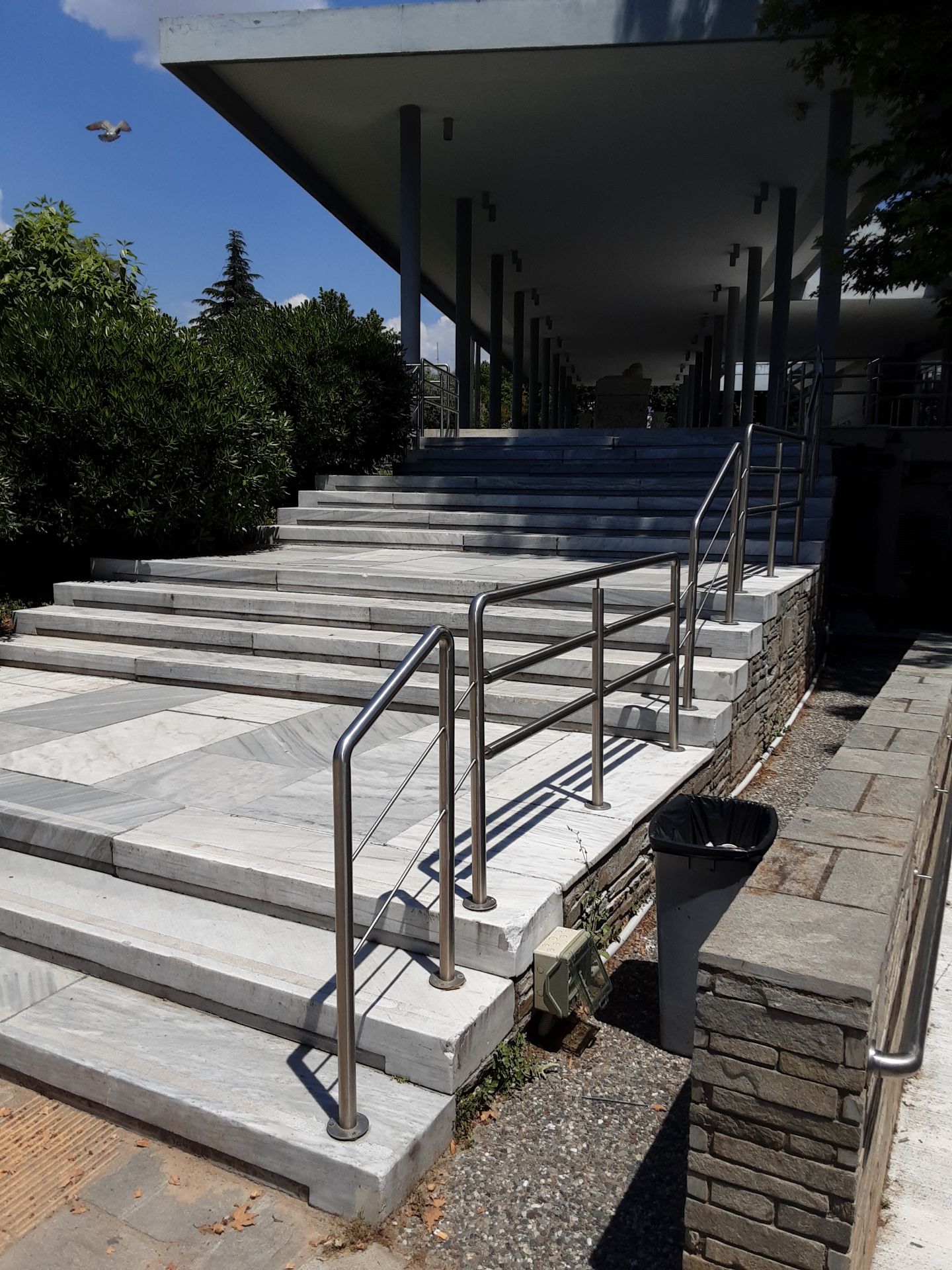
Steps from the entrance on the M. Andronikou side (3+4+4+3+1 steps)
- Does it have a riser (front face)?
- Vertical
- Handles / handrails
- Present and standards-compliant
- It is a staircase with a stairlift
- No
- Is it…
- Main
- Parapets / railings
- Present and standards-compliant
- Is it interior and…
- Fixed
- Is it…
- Outdoor
- The (minimum) opening of the stairs is (in cm)…
- 450
- They are clearly legible
- No
- The (minimum) depth of the steps is (in cm)…
- 34
- The (maximum) height of the steps is (in cm)…
- 23
- The width of the stairs
- Yes
- In the case of stairways that are part of the existing network with tactile guidance paths for the blind, are there tactile warning surfaces at the start, end and changes of direction of the stairs?
- No
- The lighting is adequate
- No
- Are the surfaces
- Yes
- Is it easily identifiable?
- Yes
- At the stair landings, there is informational signage for visitors
- No
- Is it standards-compliant?
- No
- The depth (tread) of the steps is constant from the start to the end of the stairs
- Yes
- In the case of exposed side/rear surfaces, are these always "covered" so as not to pose a risk to people with visual impairments and white cane users?
- They are not exposed
- The height of the steps is constant from the start to the end of the stairs
- Yes
- Is there a standards-compliant alternative for wheelchair access?
- Present and standards-compliant
- Includes conical and/or curved steps
- No
- (If available), the alternative wheelchair access is via…
- Side ramp
Ramp
Next to the bicycle area
- Is it…
- Outdoor
- Is it easily identifiable?
- No
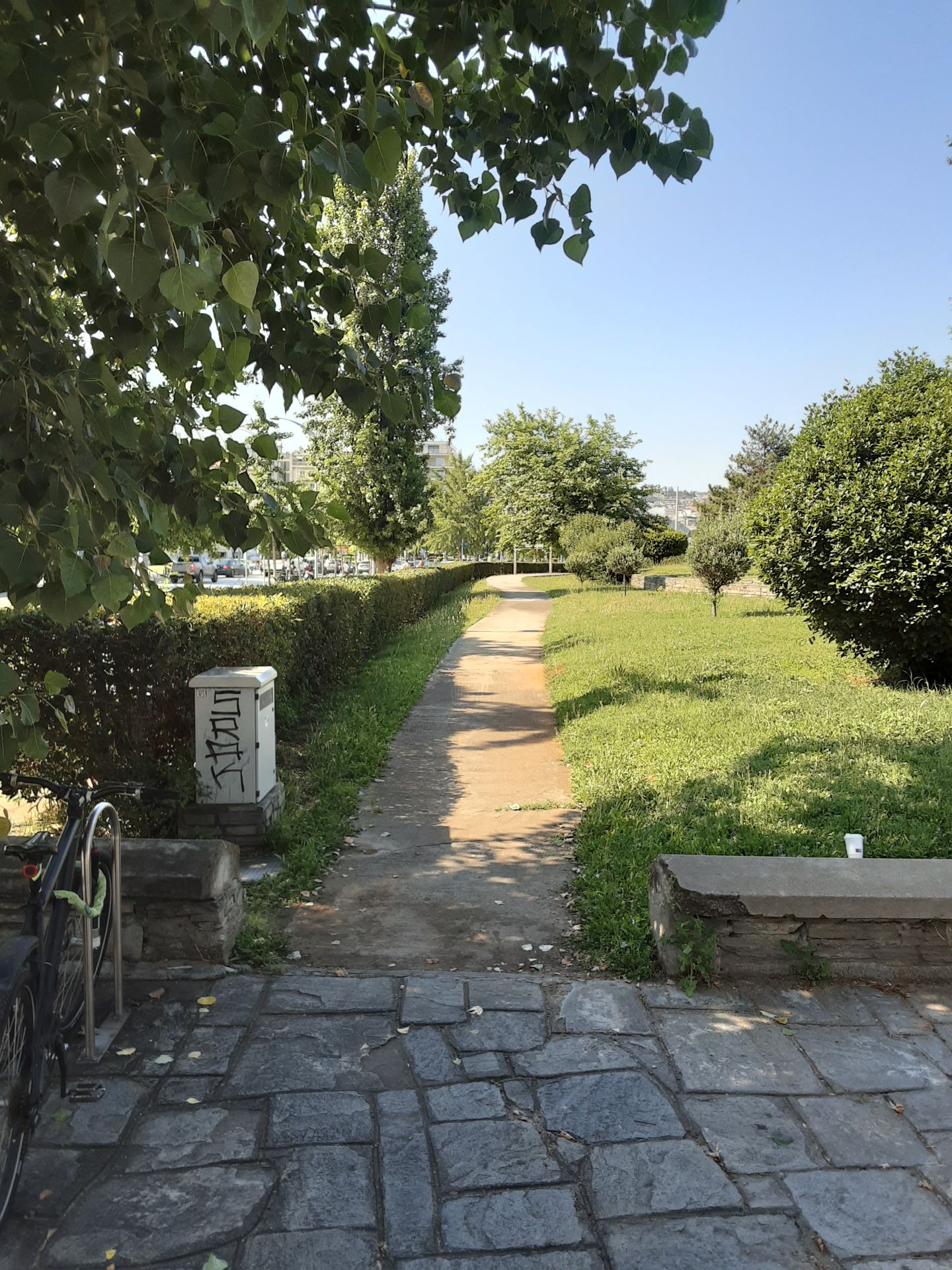
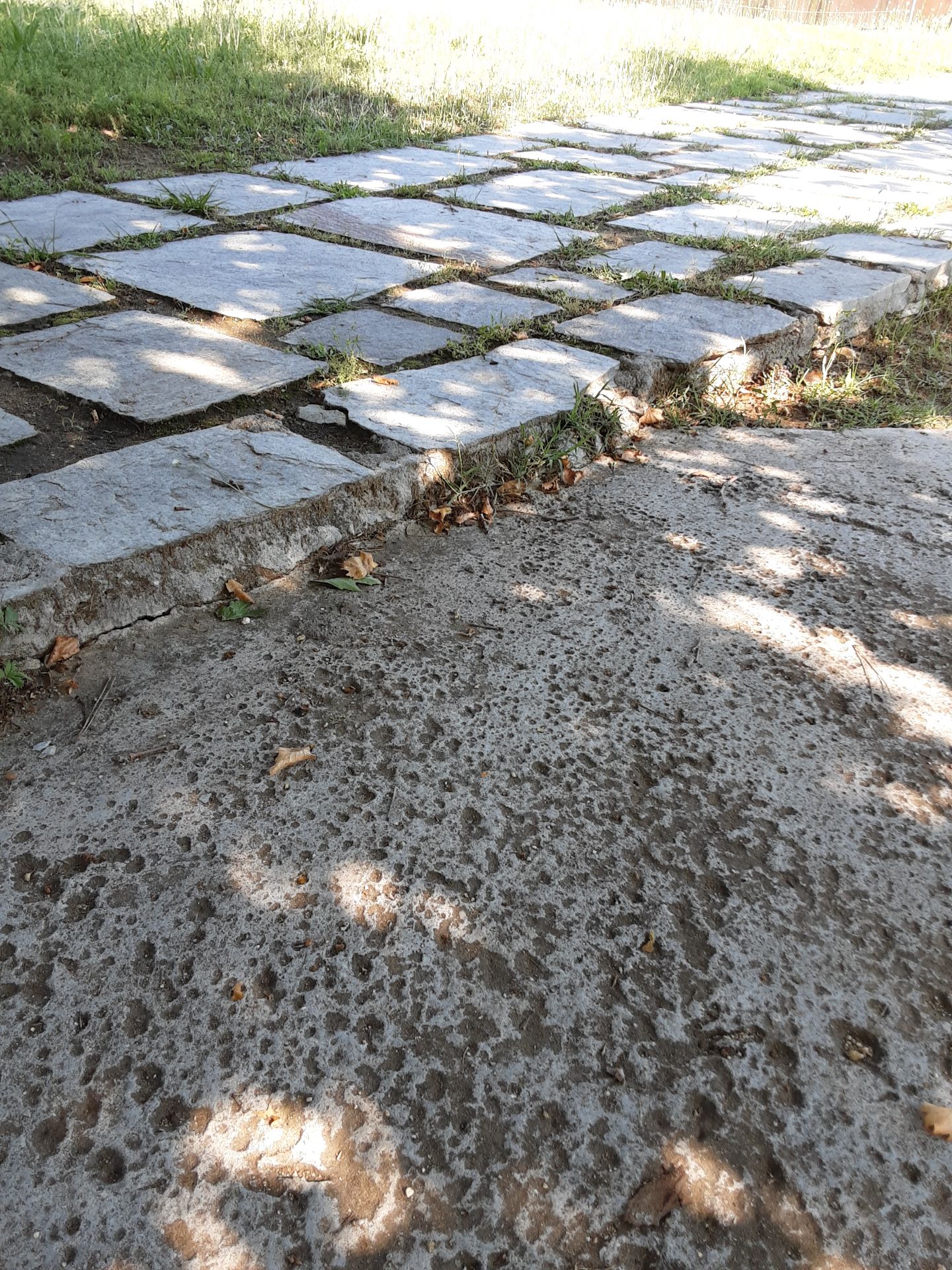
- Has non-compliant slopes
- Continuous slope of about 3% for 40 m.
- Are there obstacles that could be dangerous to trip over?
- Threshold
- Is it…
- Permanent
- Has non-compliant cross slopes on the ramp and/or landings
- No
Outdoor area
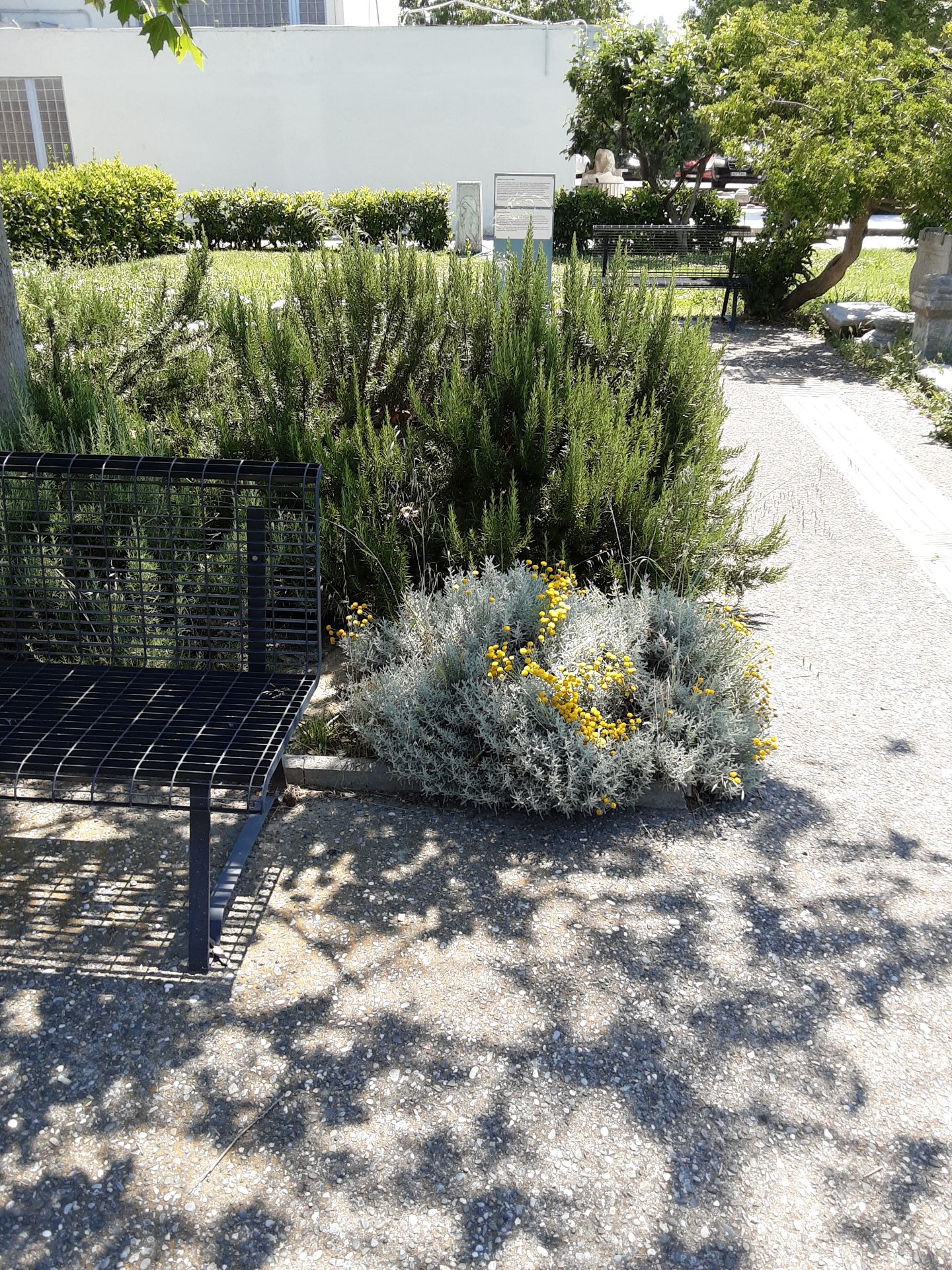
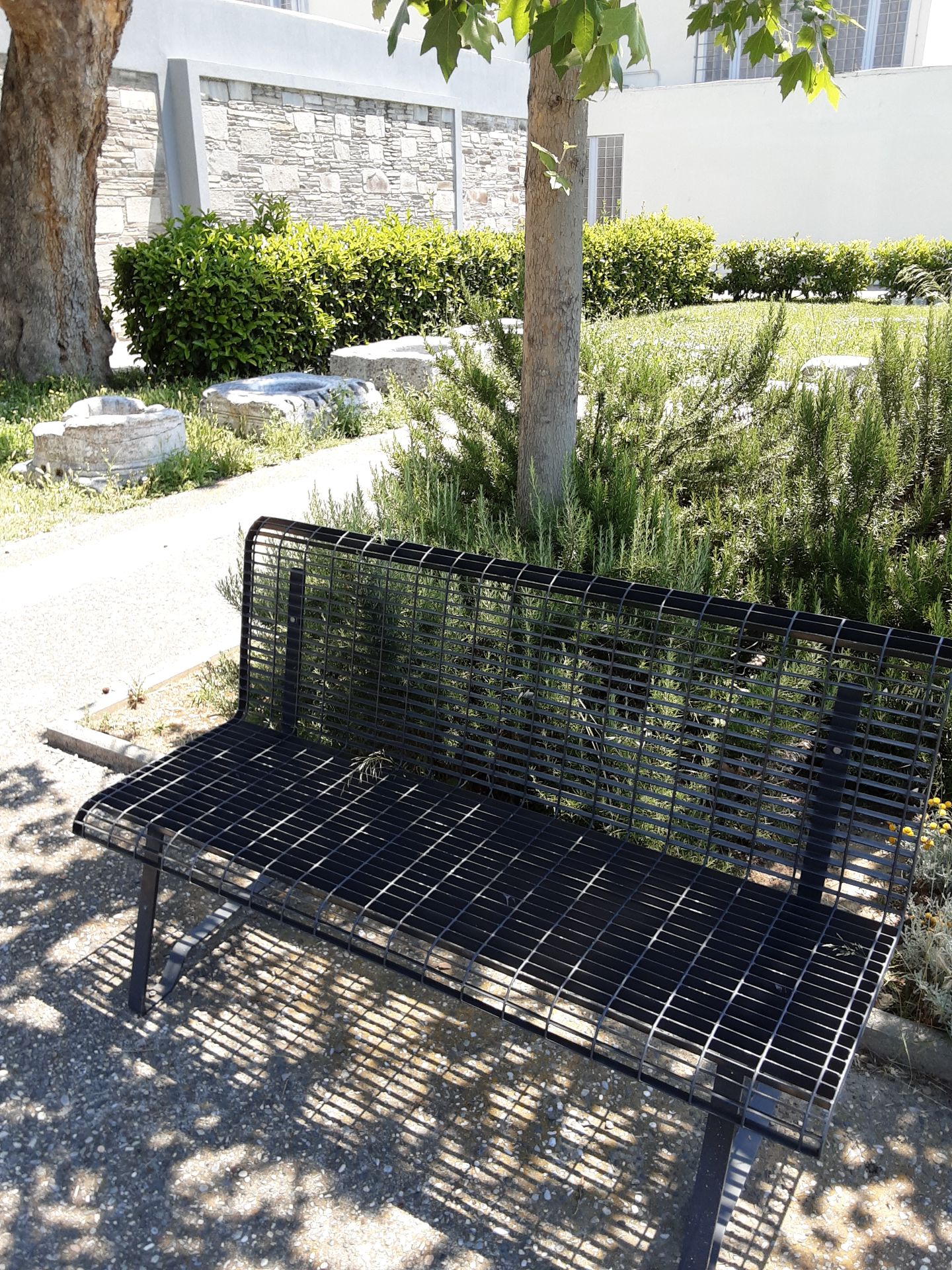
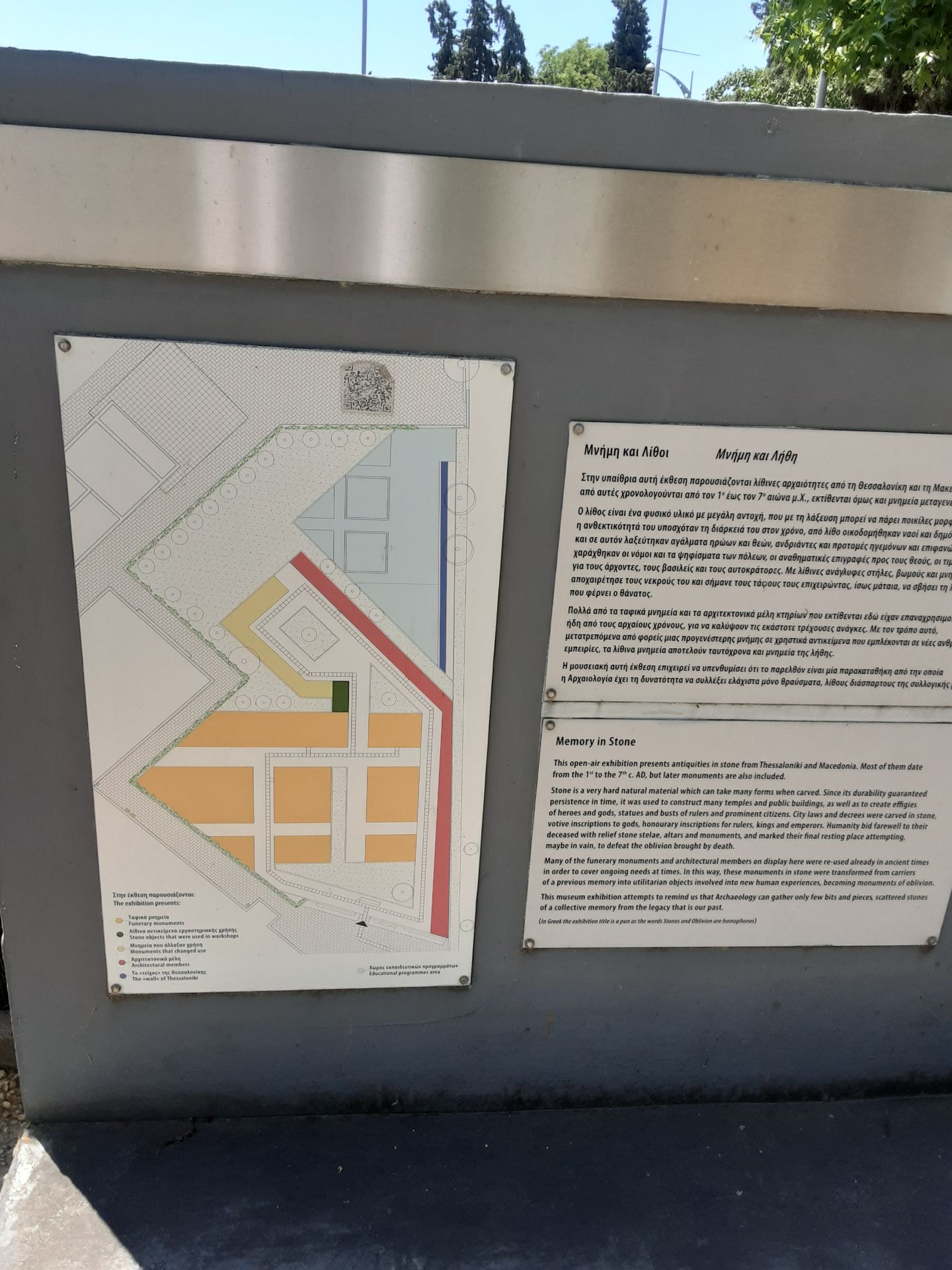
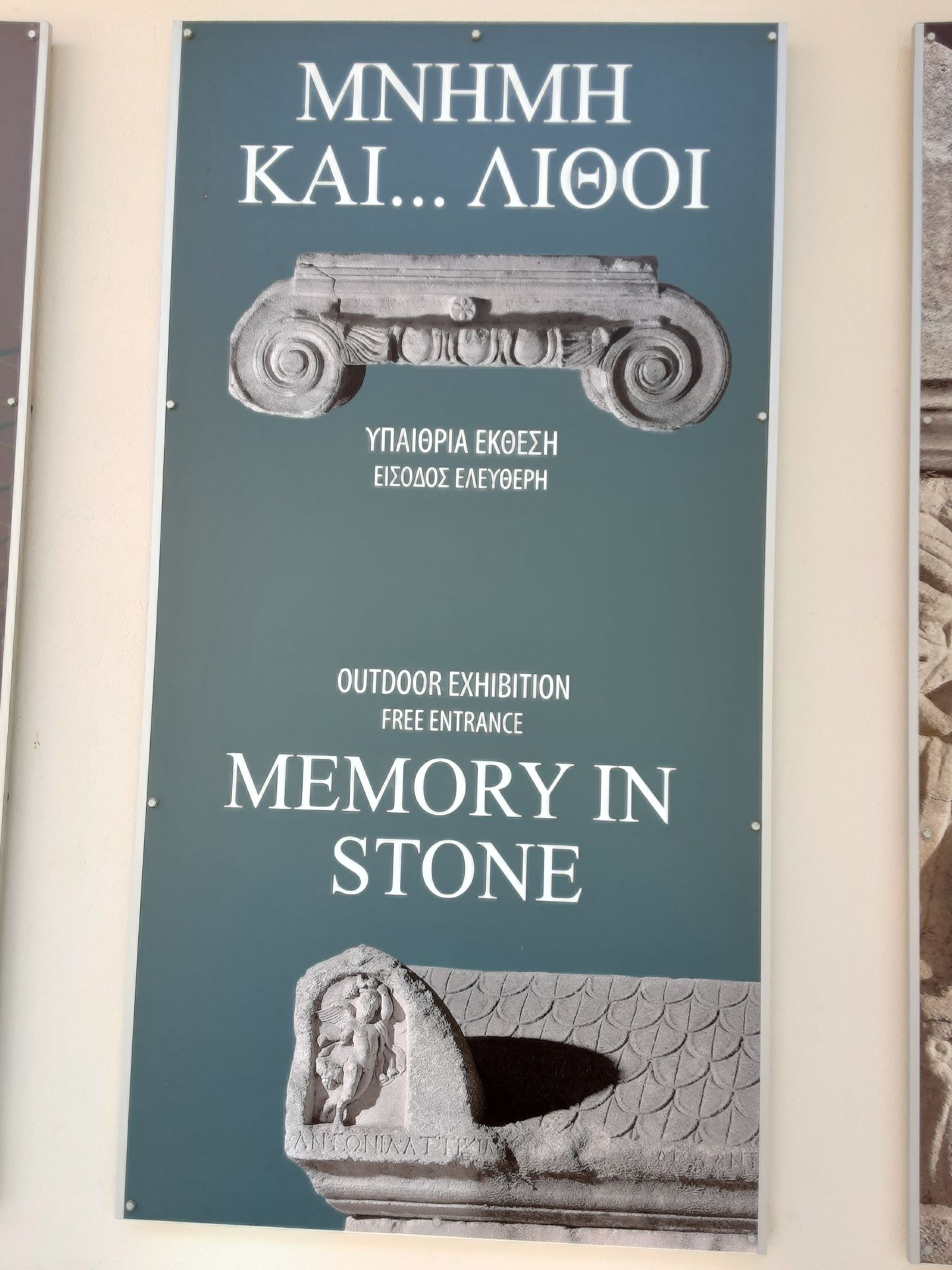
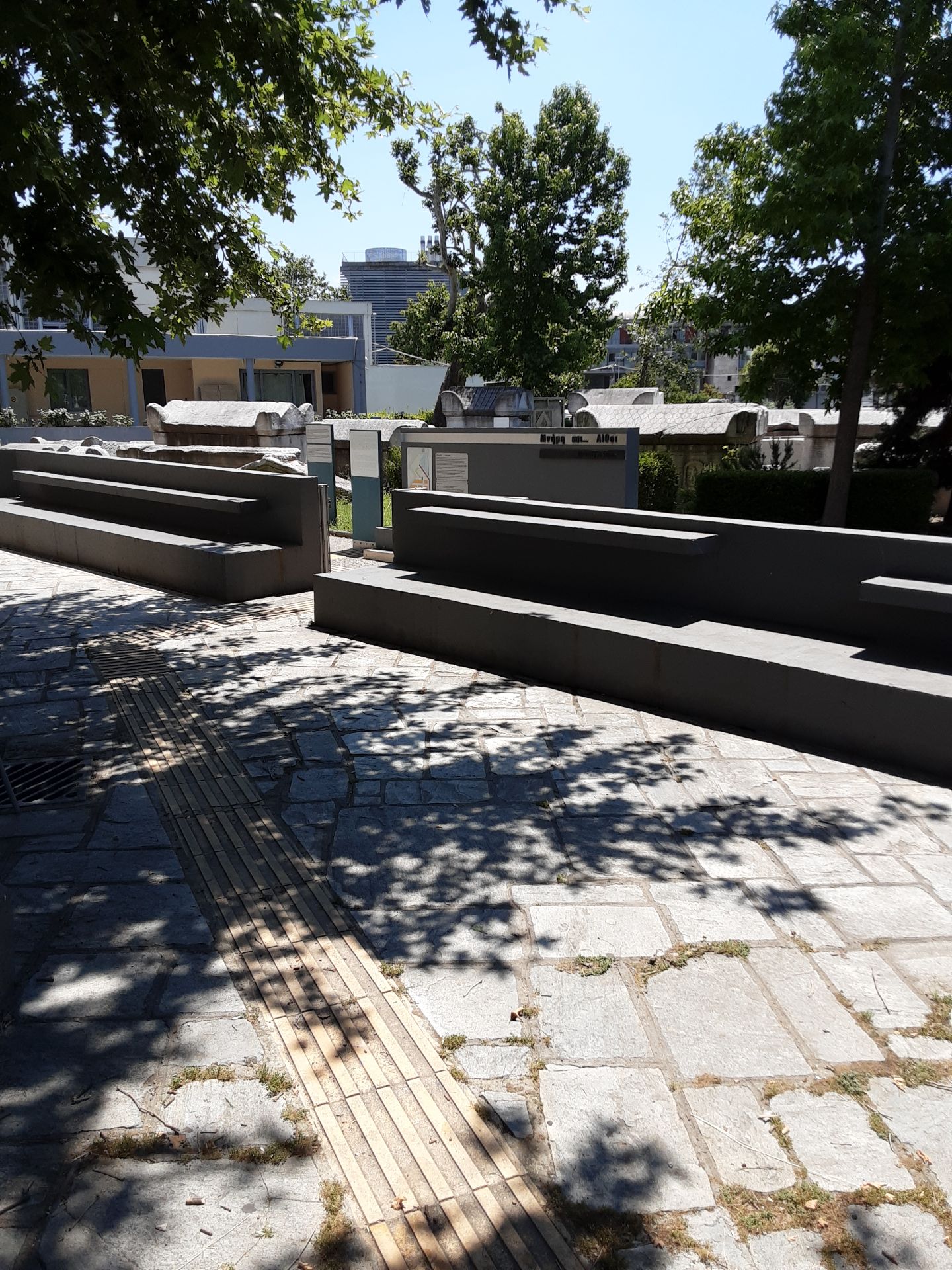
Open-air exhibition "Memory and Stones"
- In general, within the site there are visitable areas with staff that the public can contact / interact with
- No, there is none
- Generally, lighting in the space is adequate at all hours of use/visit
- Yes
- Access to toilet facilities is not an issue?
- No
- Is vertical access not an issue?
- No
- Access to separated areas/zones is not an issue?
- No
- The interventions to make the space visitable by the public were made…
- After 1985
- Guide dogs are allowed entry
- Yes
- How many separate entrances/exits does it have?
- 1
- The areas open to the public occupy the following floors / levels
- Ground floor (at ground level)
- A specific solution to assist wayfinding is installed in the space
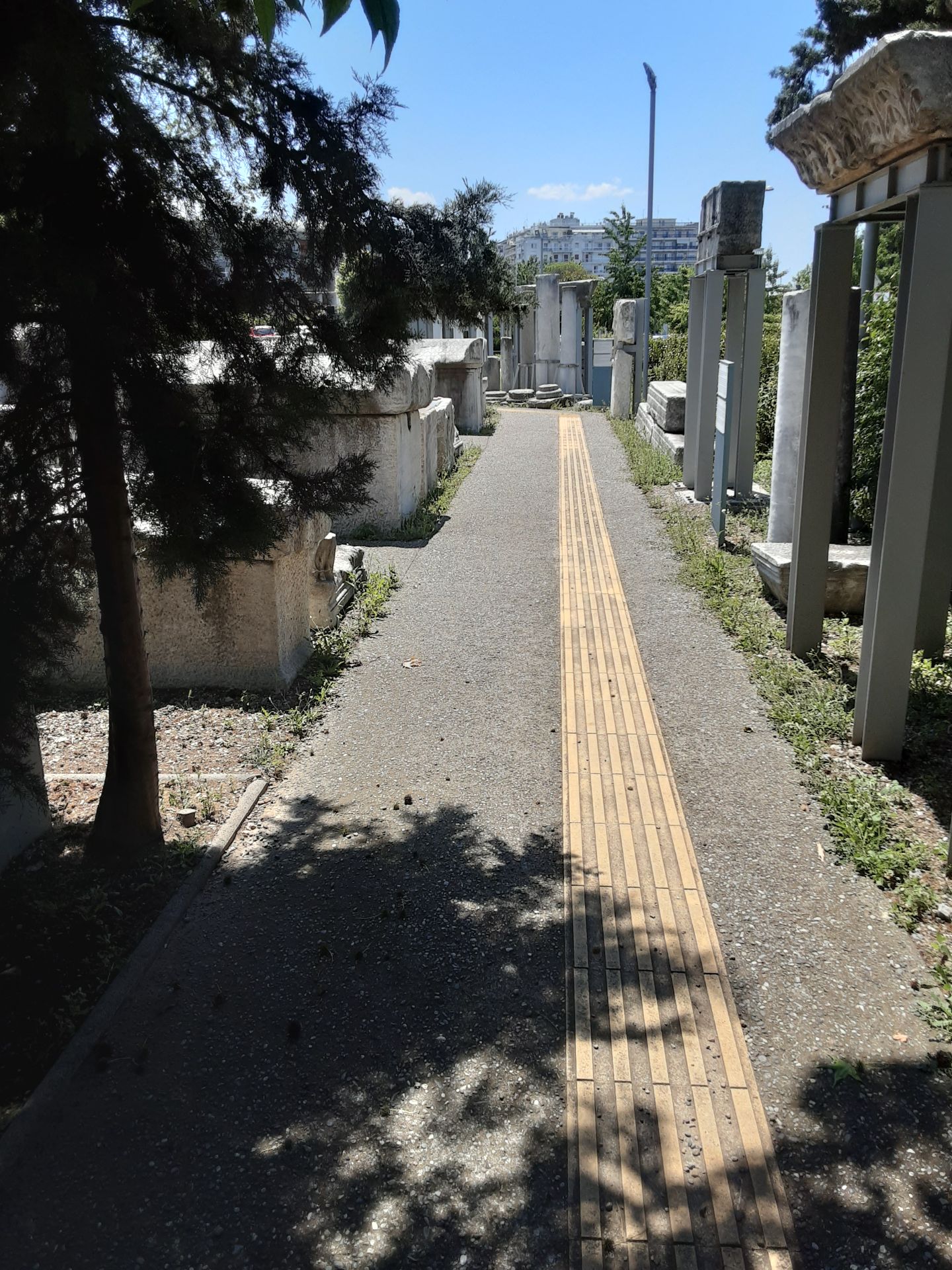
- Tactile guide paths for the blind (e.g., on the ground)
- There is a special mobility/transport service for people with disabilities
- No
- Generally, the corridors and circulation routes have appropriate slopes
- Yes
- Overall, the corridors and circulation routes have clear widths
- Over 150 cm
- Generally, the paths are adequately maintained
- No (specify…)
- There are obstacles
- Yes
- In general, the movement routes / paths are laterally delimited
- Border (low curb), Flower beds
- There are bridges in the space
- No bridging needed / present
- Generally, lighting along the circulation routes is adequate
- Yes
- Overall, the corridors and circulation routes have suitable clear heights
- Yes
- There are levels / areas without sufficient/suitable seating / rest areas for people with difficulty walking / standing for long periods
- Yes
- There are levels/areas with seating/rest positions for the public without provisions for a wheelchair stop
- Yes
- Appropriate floor signage is applied in the space
- Exists and is suitable
- Messages exist
- None
- There is important information provided to the public
- No
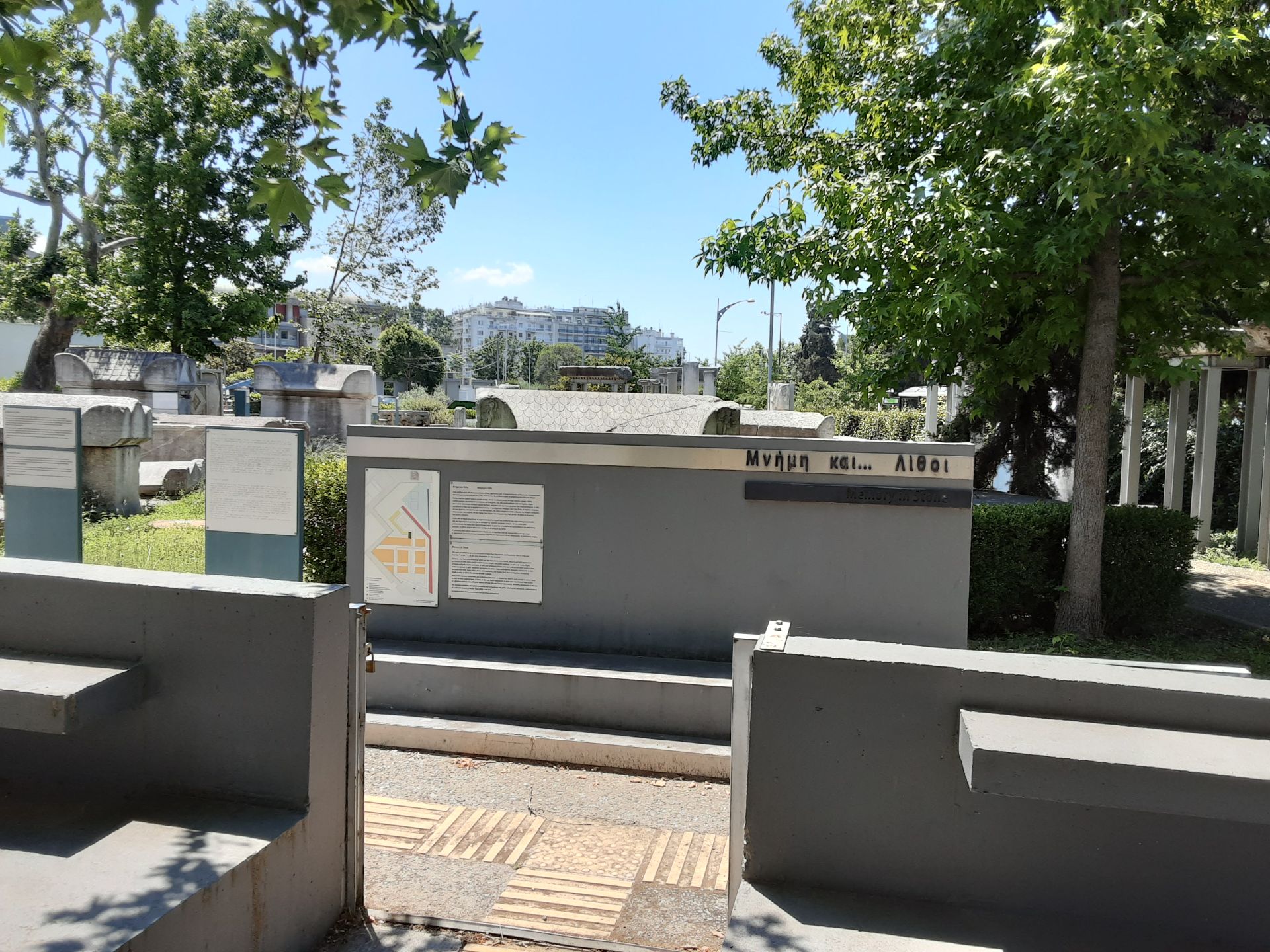
- A simplified floor plan or model is available at strategic points in the space
- Yes
- Messages exist
- None
- In general, the choice of position and placement of signage within the space do not comply with the relevant specifications and create obstacles or risks for certain categories of people with disabilities
- Wheelchair users, People with visual disabilities
- An automatic guide system is used and its design ensures accessibility for...
- None
- Guide dogs are accepted and staff understand that they should not interact with the dog
- Yes
- Audiovisual media are used and their design ensures accessibility for...
- None
- Is there posted and/or available informational material provided to the public?
- No
- All (small) exhibits and their labels are always placed at heights suitable also for wheelchair users
- Yes
- Digital stations are used
- None
- Exhibits are also available in tactile form for blind people
- There are specific originals that may be touched
- Educational/informational activities, screenings and/or live presentations are organized in spaces and with a design that ensures accessibility for...
- None
- There are exhibits or other objects hung in a way that is dangerous for people with visual disabilities
- No
- The signs, labels, exhibit captions, etc. are accompanied by equivalent alternative formats/solutions for people with visual disabilities
- Yes
- There are areas/levels with exhibits that meet the appropriate specifications for wheelchair access
- No
Special facilities (3)
Special facility
The exhibits are tactile (touching is allowed)
Beneficiaries
- Blind people with a white cane
- People with low vision
- People with other visual disabilities
- People with a guide dog
- People with intellectual
- cognitive or psychological disabilities
Special facility
Floor tactile guide for the blind
Beneficiaries
- Blind people with white cane
- People with a guide dog
Special facility
Tactile Braille labels on the exhibits
- Description
- Greek - English
Beneficiaries
- Blind people with a white cane
- People with other visual impairments
- People with a guide dog
Outdoor entrance / exit
Entrance (from the courtyard / Man. Andronikou St.)
- Is there a door?
- Stays open
- Adequately served by a dedicated boarding / alighting area suitable for people with disabilities
- Yes
- Does a blind guidance path lead to the entrance?
- Yes, standards-compliant
- Cross slope
- Suitable
- Longitudinal slope
- Unsuitable (e.g. over 5%, i.e. over 2.9 degrees)
- Clear opening
- Suitable
- Is it easily identifiable?
- Yes
- Clear passage height
- Suitable
- Informational signage for visitors is provided outside
- No
- Adequately served by a dedicated accessible parking space for private vehicles
- Yes
- It has appropriate signage providing accessibility information for the individual interior spaces
- No
- Adequately served by disability-friendly public transport
- Yes
Building
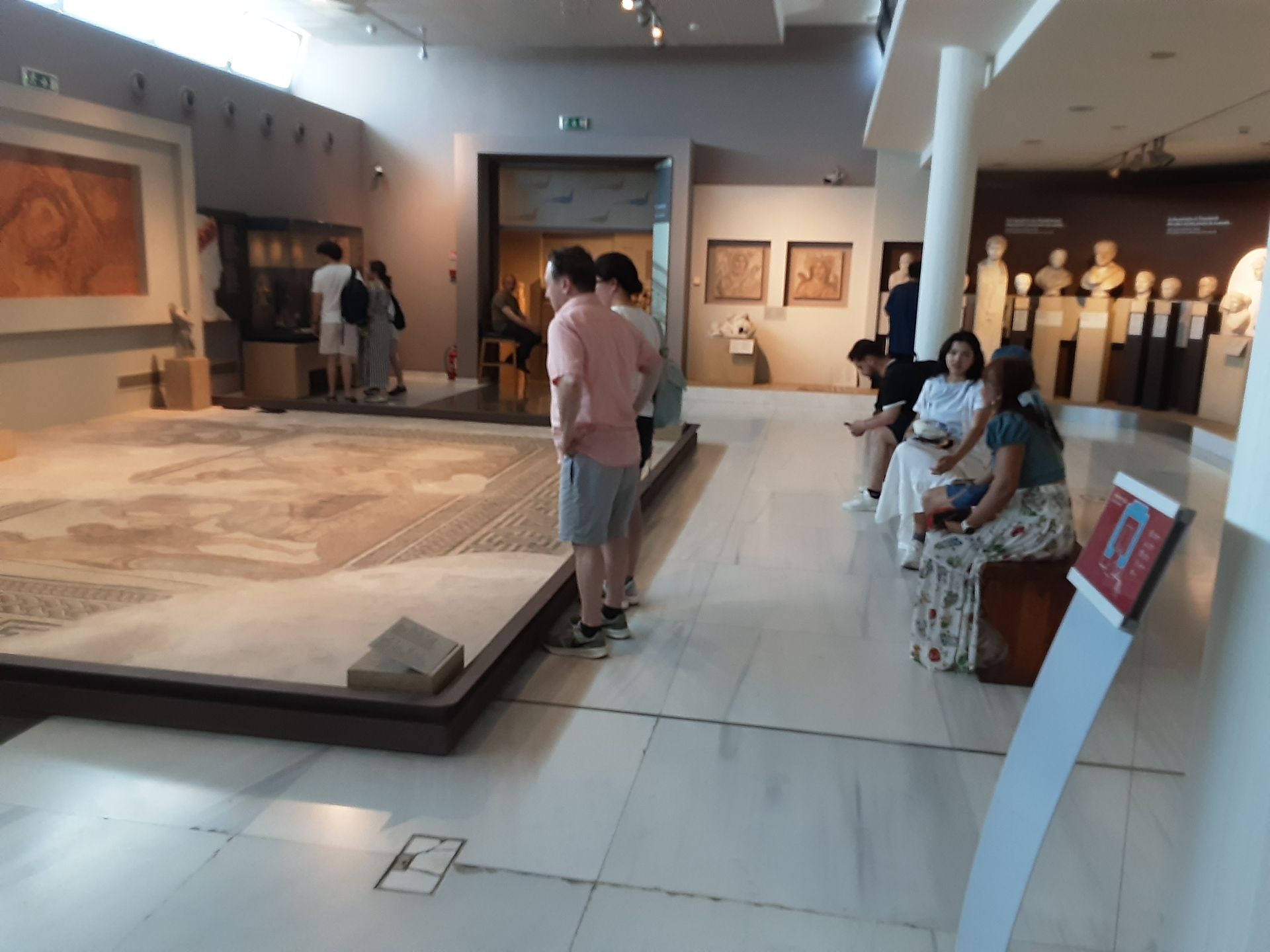
Permanent Exhibition wing (Ground floor)
- Overall, within the building there are accessible areas where staff are present and the public can communicate / interact with them
- Yes, but has no briefing or training on serving people with disabilities
- Access to toilet facilities is not an issue?
- Yes
- Overall, noise levels inside the building are suitable at all times of use/visit
- Yes
- Generally, heating in the building is adequate at all hours of use/visit
- Yes
- Generally, the lighting within the building is suitable at all hours of use/visit
- Yes
- In general, air conditioning/ventilation inside the building is appropriate at all hours of use/visit
- Yes
- Is vertical access not an issue?
- Yes
- Inside the building
- No
- In the building, vertical access by wheelchair is served only by elevators, but there is not at least one elevator of suitable specifications for evacuation in case of danger
- Yes
- In general, inside the building there are sufficient/appropriate routes, emergency exits and/or other means
- Yes
- Is access to separated spaces/rooms not an issue?
- Yes
- How many separate floors/levels does it have?
- 1
- It is…
- Historic/listed building
- The areas open to the public occupy the following floors / levels
- Ground floor
- How many separate entrances/exits does it have?
- 2
- Guide dogs are allowed entry
- Yes
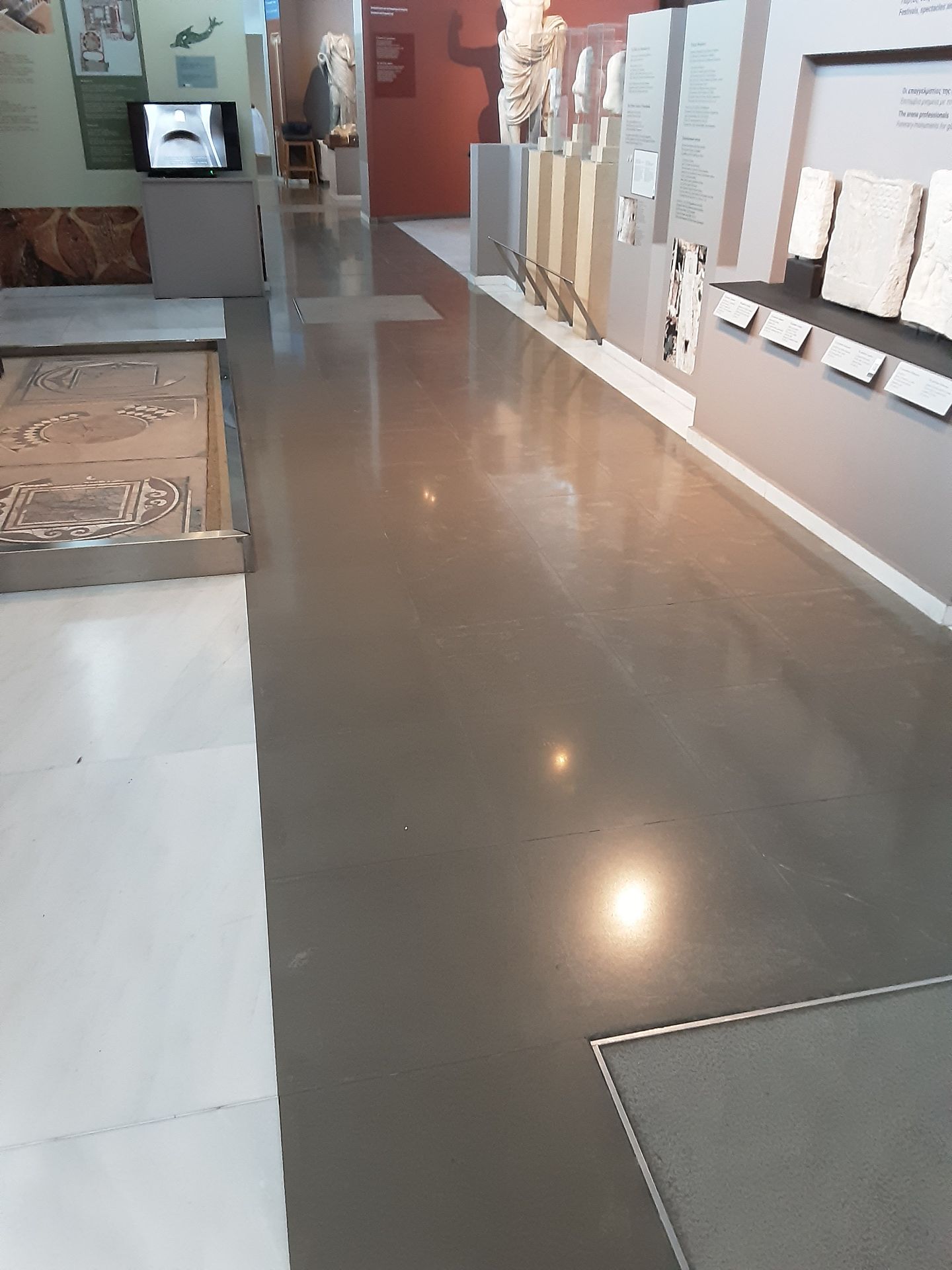
- Overall, the corridors and circulation routes have clear widths
- Over 150 cm
- Overall, the corridors and circulation routes have suitable clear heights
- Yes
- Lighting in corridors and generally along movement routes is appropriate
- Yes
- Is there an emergency lighting system installed in the corridors and generally along the movement routes?
- Yes
- There are bridges in the building
- No bridging needed / present
- There is furniture and/or equipment within the 90 cm clear width
- No
- There are levels/areas with seating/rest positions for the public without provisions for a wheelchair stop
- No
- There are levels / areas without sufficient/suitable seating / rest areas for people with difficulty walking / standing for long periods
- No
- Suitable floor signage is used in the building
- Not needed/none
- Signage is generally provided inside the building
- has insufficient lighting and/or reflections and/or unsuitable colors/contrasts, (at points accessible to people with vision problems) is not in relief/tactile forms at heights of 140-160 cm from the floor (Braille, relief symbols, relief maps, etc.), carries extensive texts in small/illegible fonts
- At strategic points of the building there is a simplified floor plan or a model
- Yes
- In general, the choice of location and placement of signage panels within the building do not comply with the relevant specifications and create obstacles or risks for certain categories of people with disabilities
- People with visual disabilities, Wheelchair users
- Guide dogs are accepted and staff understand that they should not interact with the dog
- Yes
- An automatic guided-tour system is used and its design ensures accessibility for…
- Deaf people / sign-language users
- Is there posted and/or available informational material provided to the public?
- Yes
- All (small) exhibits and their labels are always placed at heights suitable also for wheelchair users (e.g., within a height zone of 75 to 135 cm)
- Yes
- There are exhibits or other objects hung on walls in a way that is dangerous for people with vision disabilities
- No
- There are areas/levels with exhibits that meet the appropriate specifications for wheelchair access
- Yes
- Exhibits are also available in tactile form for blind people
- There are specific originals that may be touched
- Digital stations are used
- None
- The signs, labels, exhibit captions, etc. are accompanied by equivalent alternative formats/solutions for people with visual disabilities
- No
- Educational/informational activities, screenings and/or live presentations are organized in spaces and with a design that ensures accessibility for…
- Wheelchair users, People with vision disabilities, People with hearing disabilities / sign-language users
Barriers to be aware of (4)
Obstacle
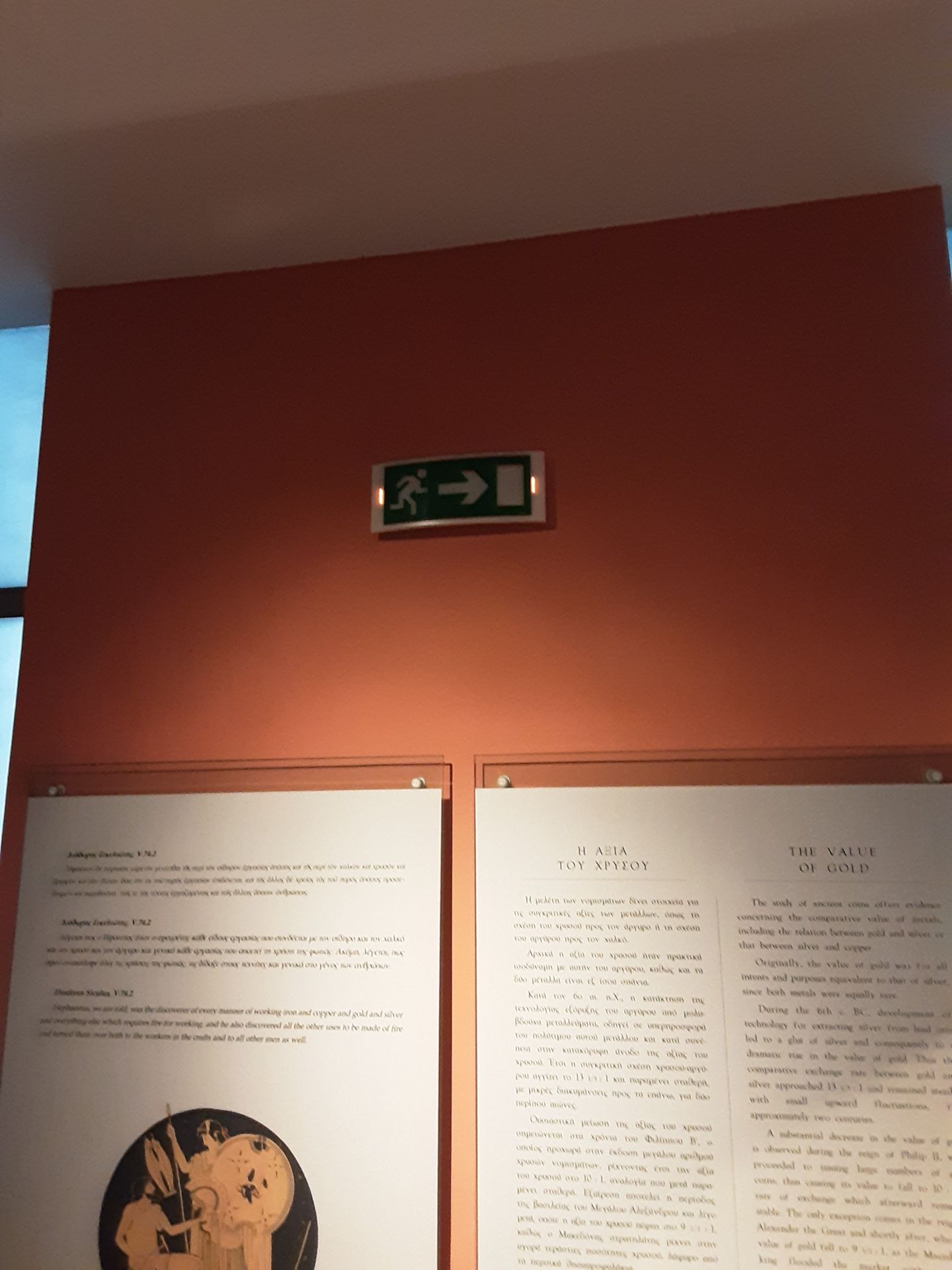
Signs/informational panels not accessible
- Type / category of obstacle
- Other
Obstacle
Video (EL) / audio (EN) screenings within the exhibition, without subtitles and without sign-language interpretation
- Type / category of obstacle
- Other
Obstacle
Printed index catalogues presenting the exhibits / display cases, not accessible
- Type / category of obstacle
- Other
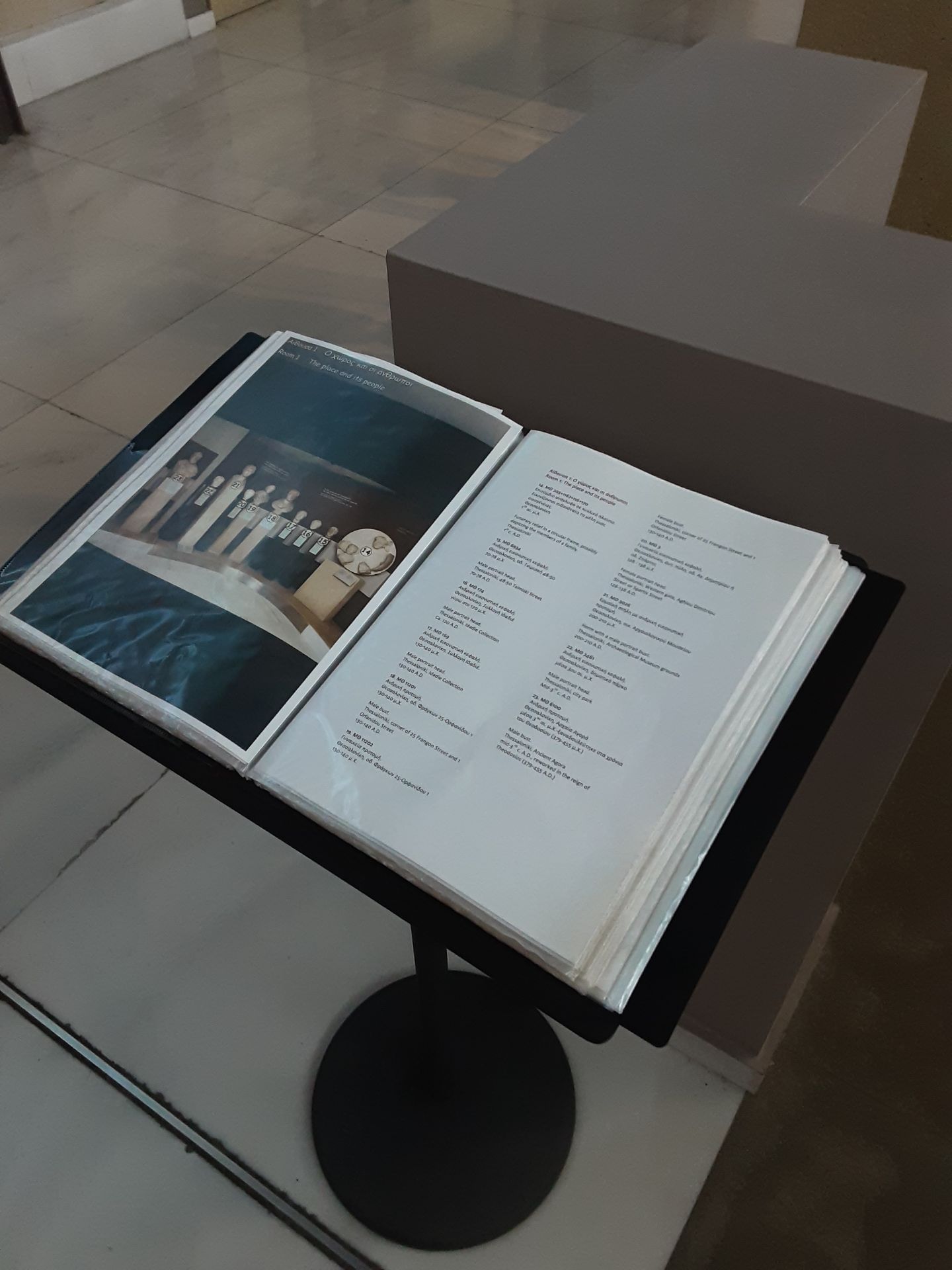
Obstacle
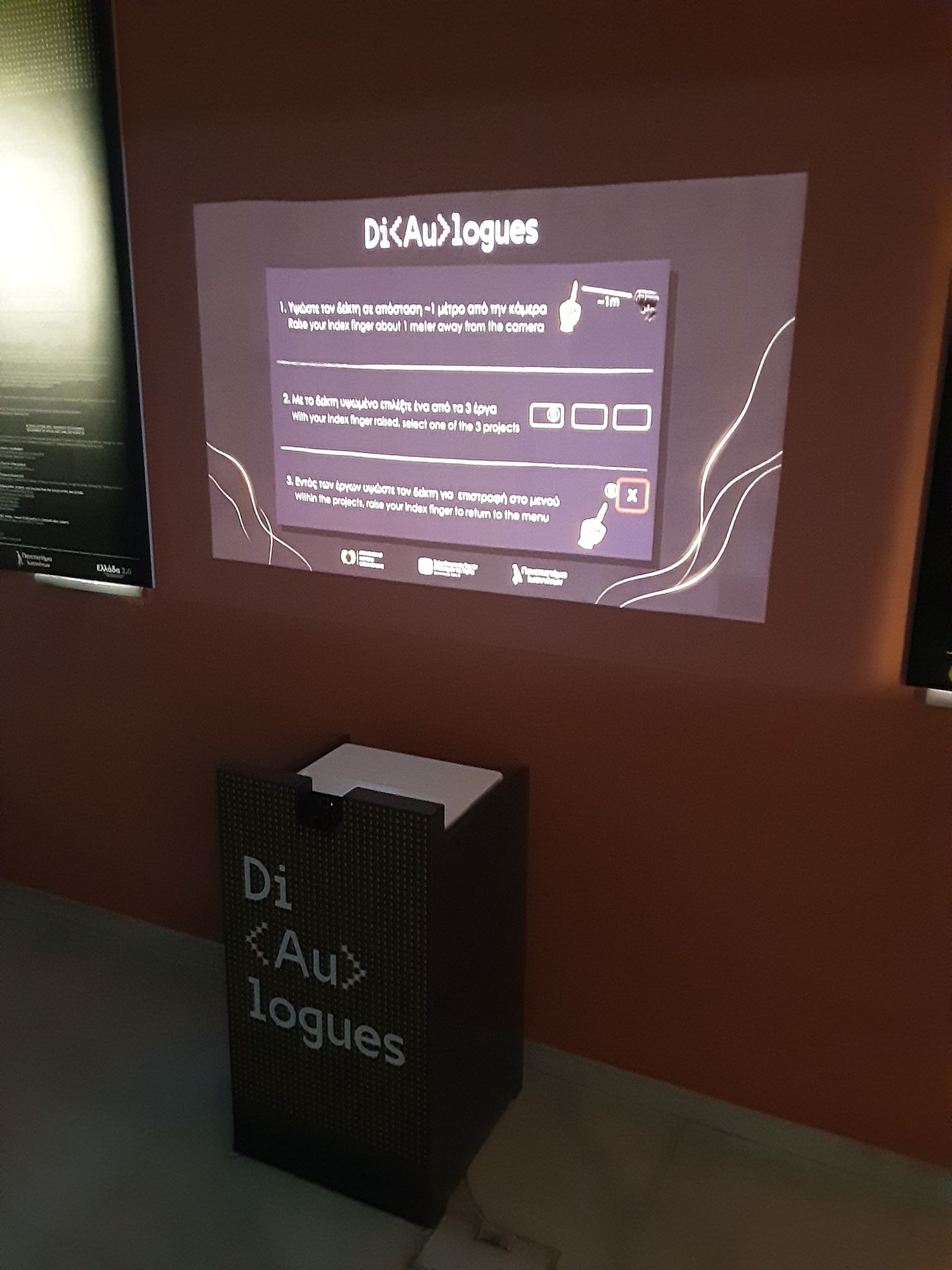
Interactive touchscreens with information
- Type / category of obstacle
- Other
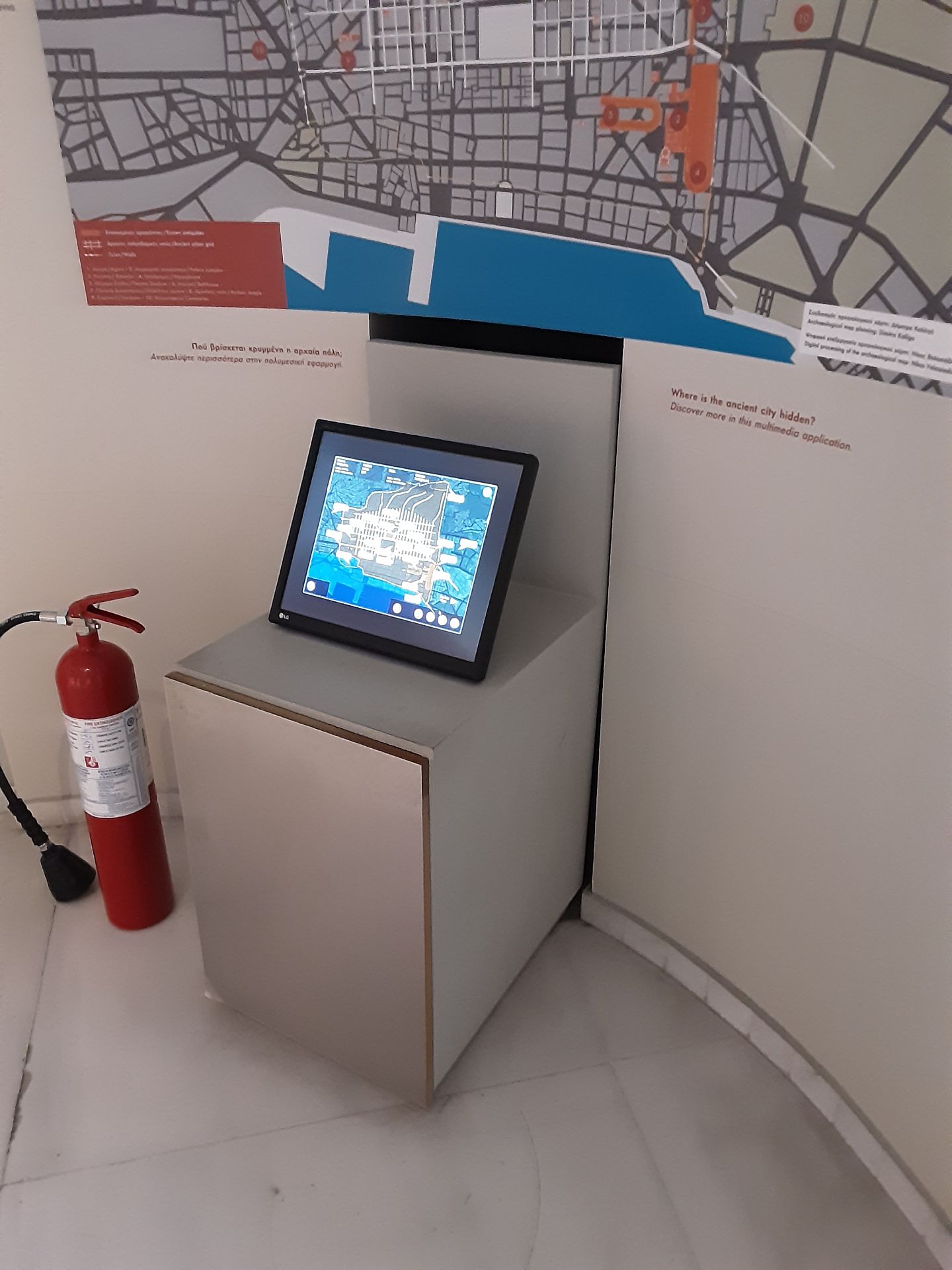
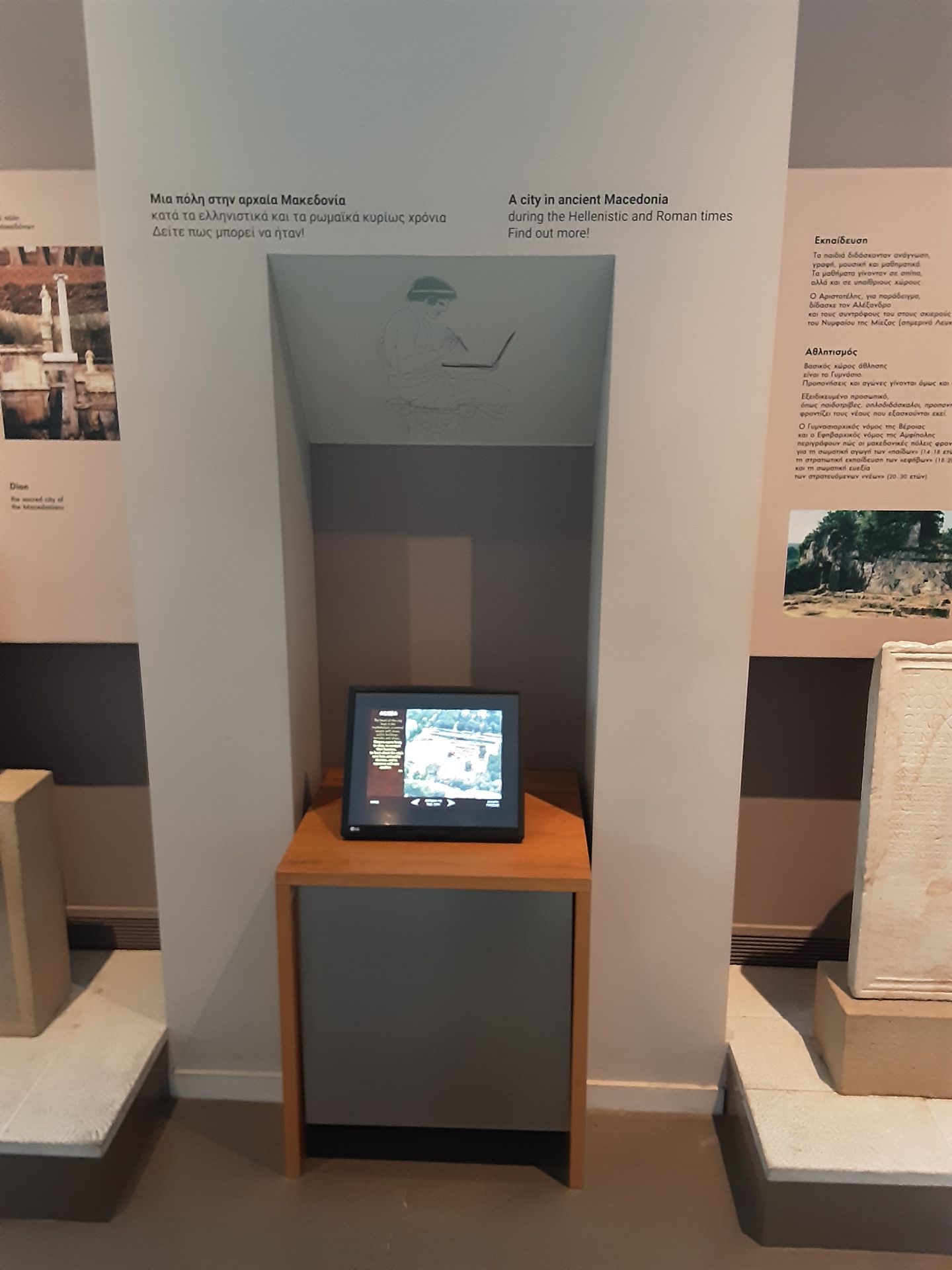
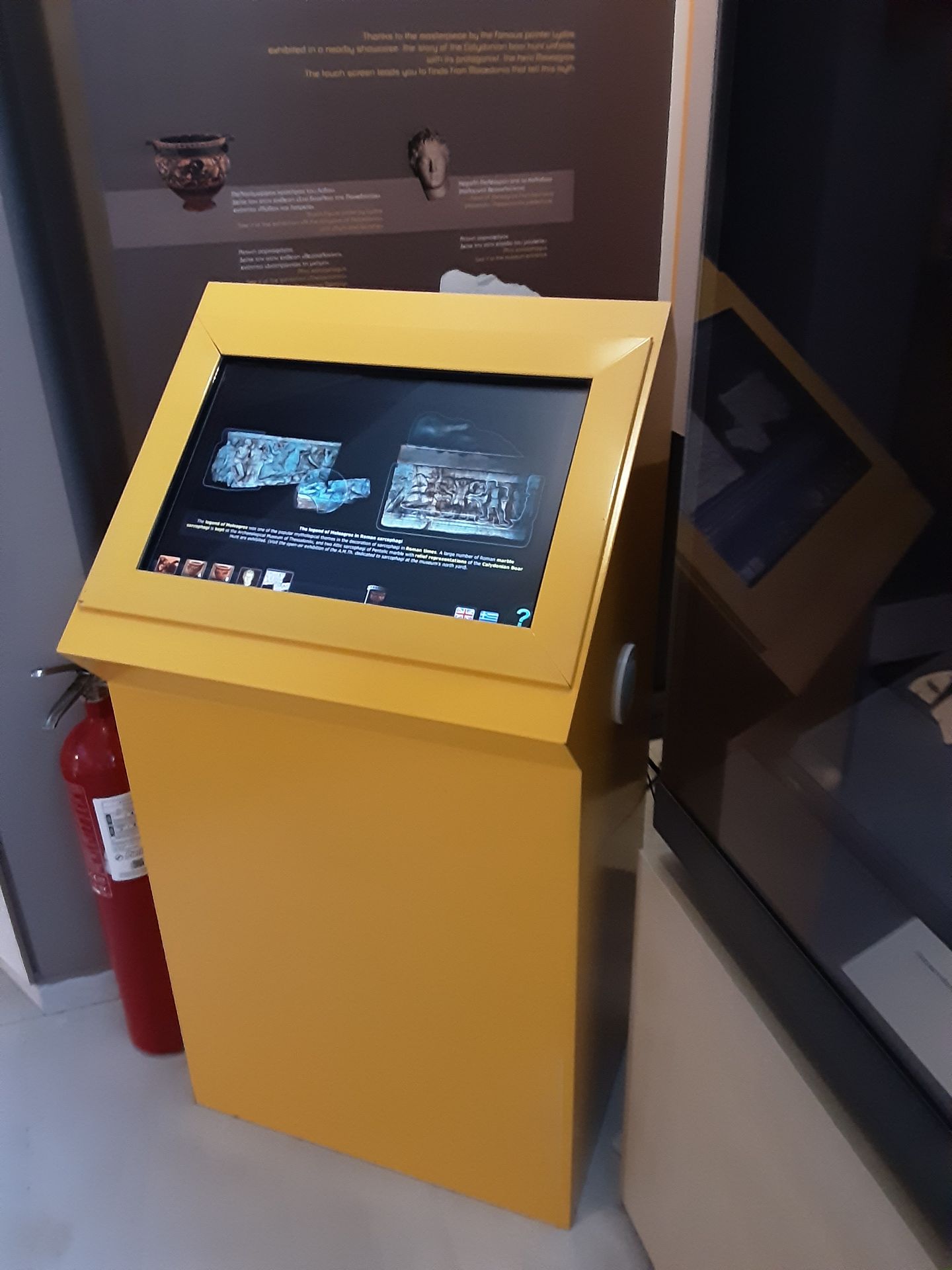
Special facilities (1)
Special facility
A museum to touch! Tactile exhibits for visitors with visual impairments to feel.
- Instructions / information for visitors
- Information on finding/locating them is available only through the "Museum On The Go" app, in the section "A museum to touch!".
Beneficiaries
- Blind people with a white cane
- People with other visual impairments
- People with a guide dog
Entrance / exit
Entrance (Ground Floor Foyer)
- Railings / parapet
- Needed, but not present
- Is it preceded by an elevator, platform lift or other lifting device?
- Platform lift at the entrance, next to the steps.
- Preceded by a step
- Marble steps (5 steps)
- Bears the designation "Accessible"
- Unsuitable (e.g. without the international symbol, not embossed / braille, not clearly visible / at the wrong height/position)
- Cross slope
- Suitable
- Longitudinal slope
- Suitable
- Clear opening
- Suitable
- Is it easily identifiable?
- Yes
- Clear passage height
- Suitable
- The building's entrance/exit is not the same for all visitors
- Yes (justified)
- Informational signage for visitors is provided outside
- No
- Bears suitable informational signage regarding accessibility to the building's spaces
- No
- Exit from the building facilities is at a different point than the entrance and is not as accessible as the entrance
- Yes (justified)
Stairs
Steps at the entrance (5 steps)
- Does it have a riser (front face)?
- Vertical
- Handles / handrails
- Present and standards-compliant
- It is a staircase with a stairlift
- No
- Is it…
- Main
- Parapets / railings
- Present and standards-compliant
- Is it interior and…
- Fixed
- Is it…
- Interior
- The (minimum) opening of the stairs is (in cm)…
- 300
- They are clearly legible
- Yes
- The (minimum) depth of the steps is (in cm)…
- 30
- The (maximum) height of the steps is (in cm)…
- 15
- The width of the stairs
- Yes
- In the case of stairways that are part of the existing network with tactile guidance paths for the blind, are there tactile warning surfaces at the start, end and changes of direction of the stairs?
- Not part of such a network
- The lighting is adequate
- Yes
- Are the surfaces
- Yes
- Does it have an emergency lighting system?
- No
- Is it easily identifiable?
- Yes
- At the stair landings, there is informational signage for visitors
- No
- Is it standards-compliant?
- No
- The depth (tread) of the steps is constant from the start to the end of the stairs
- Yes
- In the case of exposed side/rear surfaces, are these always "covered" so as not to pose a risk to people with visual impairments and white cane users?
- Yes
- The height of the steps is constant from the start to the end of the stairs
- No
- Is there a standards-compliant alternative for wheelchair access?
- Present and standards-compliant
- Includes conical and/or curved steps
- No
- (If available), the alternative wheelchair access is via…
- An adjacent accessible elevator or platform lift for wheelchairs
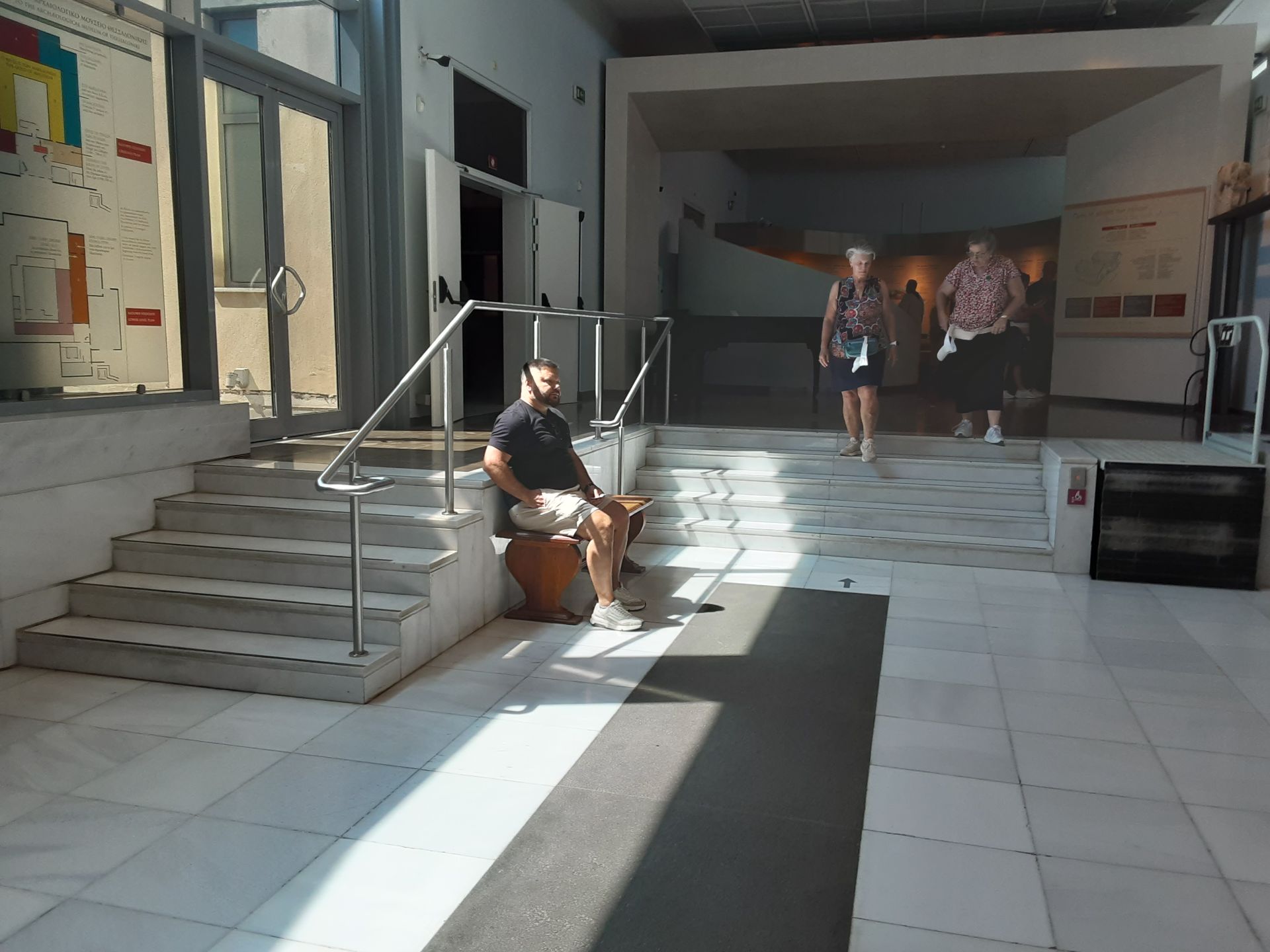
Lift / elevator
Platform lift at the entrance (350 kg max)
- The lighting is adequate
- Yes
- Has suitable handles
- Yes, on one side
- Is it…
- Main
- Is it…
- Interior
- Are the surfaces smooth, non-slip
- Yes
- All operating mechanisms
- Yes
- The operating mechanisms
- No
- Is it easily identifiable?
- Yes
- On all levels/stops, there is informational signage for visitors
- No
- Is there a standards-compliant alternative?
- None
- Does it have an emergency lighting system?
- No
- The operating mechanisms
- No
- Intended for emergency evacuation
- Yes
- In case of a platform lift
- Yes, there is supervision / operator
- At all levels/stops…
- There is no level difference (<2 cm) between the cabin and the floor surface, The landing surfaces (w > 1.1 m) are separate from the circulation routes
- In the case of exposed side/rear surfaces, are these always "covered" so as not to pose a risk to people with visual impairments and white cane users?
- Yes
- Is it accessible and standards-compliant, and is wheelchair access ensured?
- Yes
- In case of a platform lift
- Yes, and it bears suitable instructions
- In the case of an elevator/platform lift that is part of an existing network with tactile guide paths for the blind, are there tactile warning surfaces outside the door at all levels?
- Not part of such a network
- In case of a platform lift
- Works normally
- In the case of a vertical lifting platform
- No
- In the case of a vertical lifting platform
- The rise does not exceed 2 m.
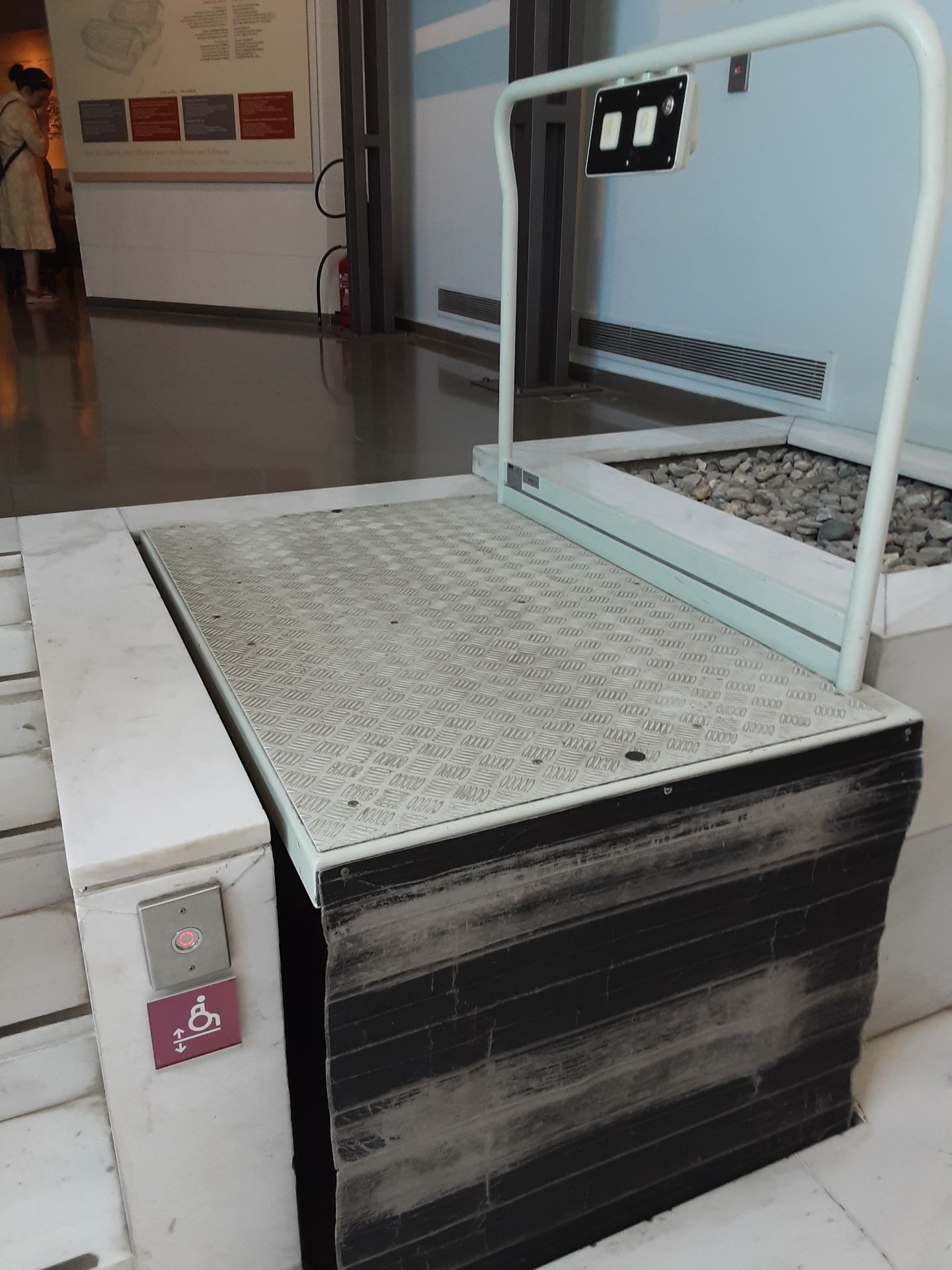
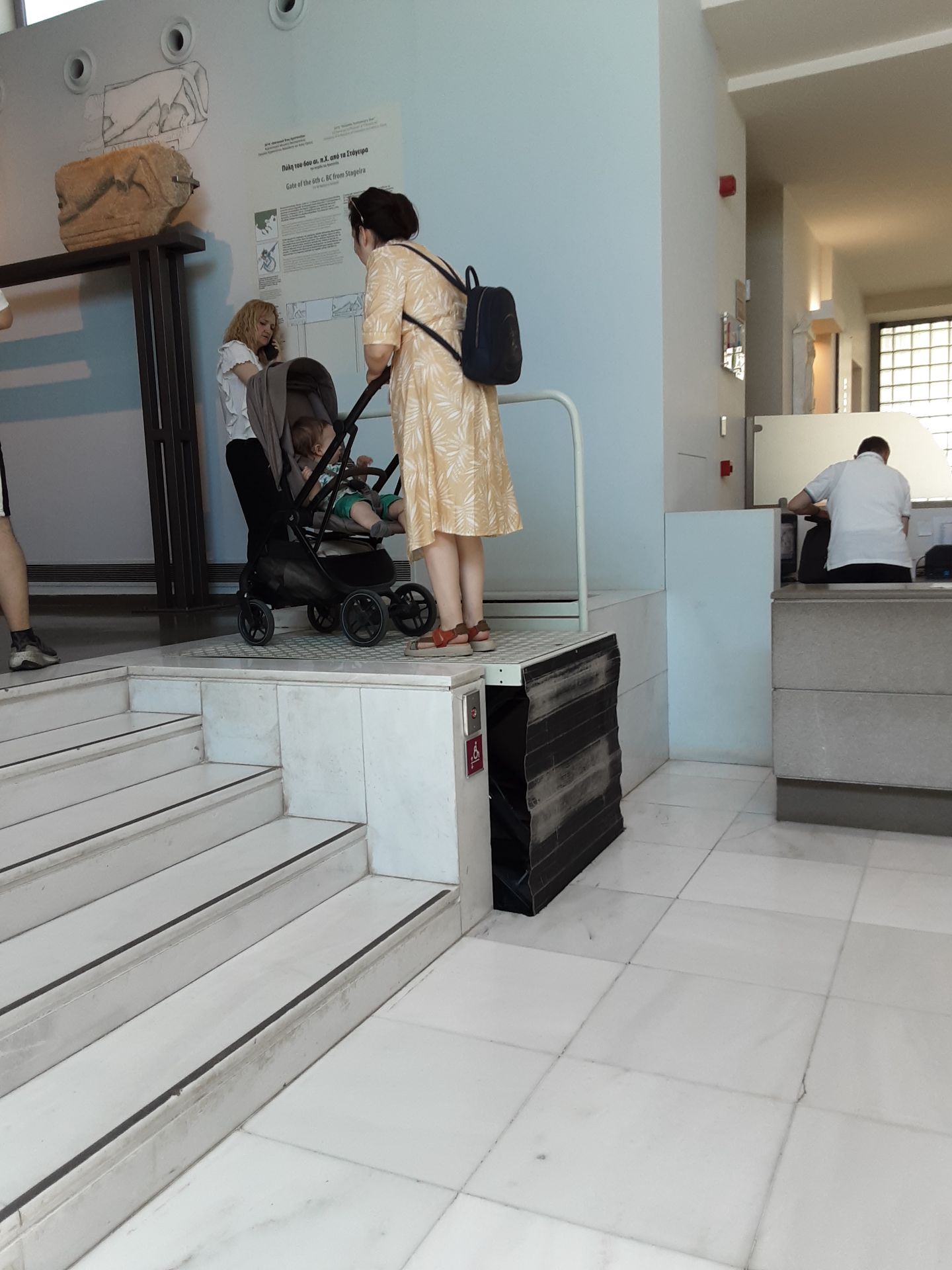
Entrance / exit
Exit (Ground Floor Foyer)
- Is it preceded by an elevator, platform lift or other lifting device?
- Alongside the exit steps
- Preceded by a step
- Marble steps at the exit (5 steps)
- Cross slope
- Suitable
- Longitudinal slope
- Suitable
- Clear opening
- Suitable
- Is it easily identifiable?
- Yes
- Is it preceded by a sidewalk with an unsuitable road–sidewalk connection for wheelchair users?
- Yes (explain)
- Clear passage height
- Suitable
- Informational signage for visitors is provided outside
- No
- Bears suitable informational signage regarding accessibility to the building's spaces
- No
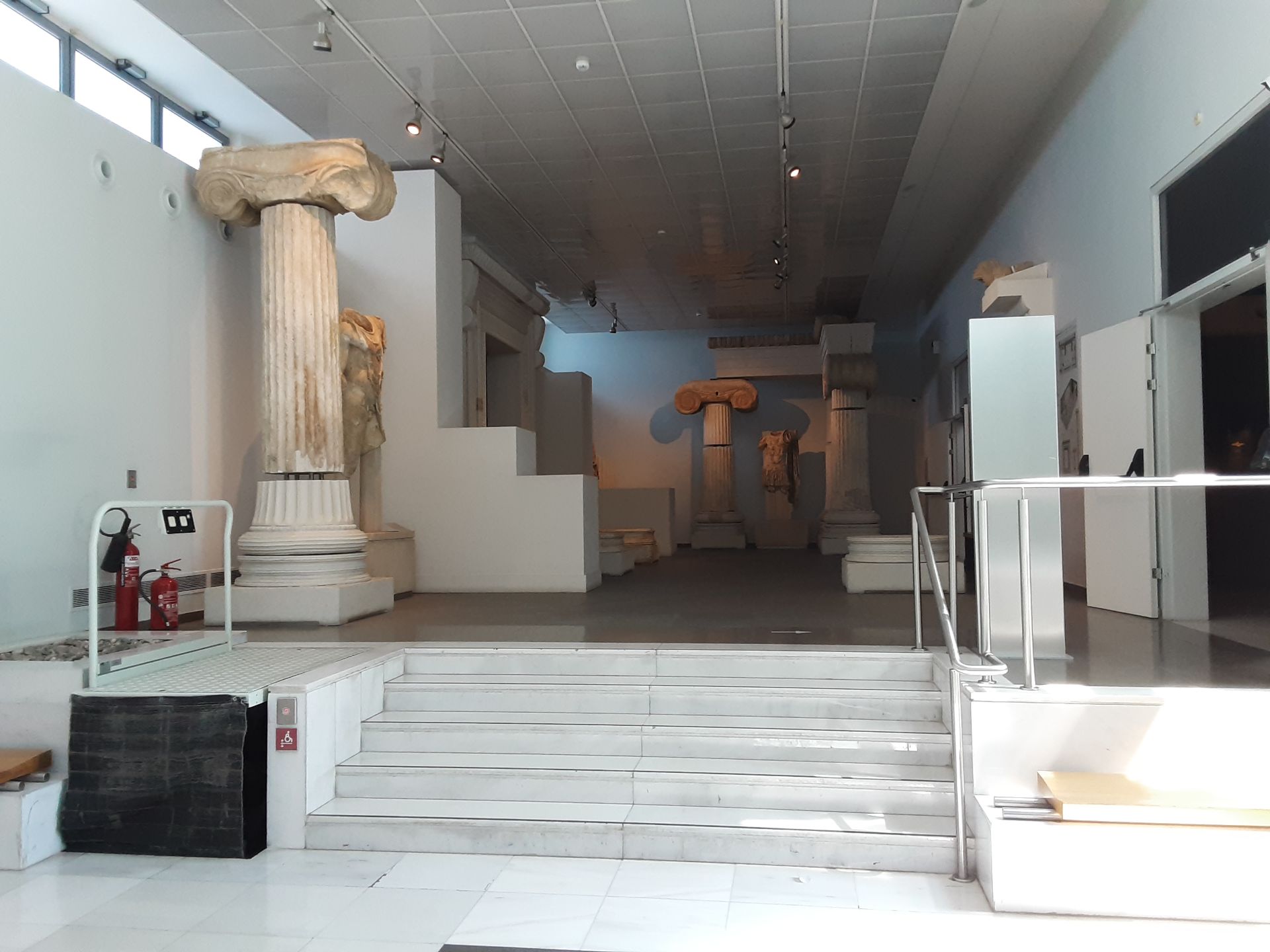
Stairs
Steps at the exit
- Does it have a riser (front face)?
- Vertical
- Handles / handrails
- Present and standards-compliant
- It is a staircase with a stairlift
- No
- Is it…
- Main
- Parapets / railings
- Present and standards-compliant
- Is it interior and…
- Fixed
- Is it…
- Interior
- The (minimum) opening of the stairs is (in cm)…
- 300
- They are clearly legible
- Yes
- The (minimum) depth of the steps is (in cm)…
- 30
- The (maximum) height of the steps is (in cm)…
- 15
- The width of the stairs
- Yes
- In the case of stairways that are part of the existing network with tactile guidance paths for the blind, are there tactile warning surfaces at the start, end and changes of direction of the stairs?
- Not part of such a network
- The lighting is adequate
- Yes
- Are the surfaces
- Yes
- Does it have an emergency lighting system?
- No
- Is it easily identifiable?
- Yes
- At the stair landings, there is informational signage for visitors
- No
- Is it standards-compliant?
- No
- The depth (tread) of the steps is constant from the start to the end of the stairs
- No
- In the case of exposed side/rear surfaces, are these always "covered" so as not to pose a risk to people with visual impairments and white cane users?
- Yes
- The height of the steps is constant from the start to the end of the stairs
- Yes
- Is there a standards-compliant alternative for wheelchair access?
- Present and standards-compliant
- Includes conical and/or curved steps
- No
- (If available), the alternative wheelchair access is via…
- An adjacent accessible elevator or platform lift for wheelchairs
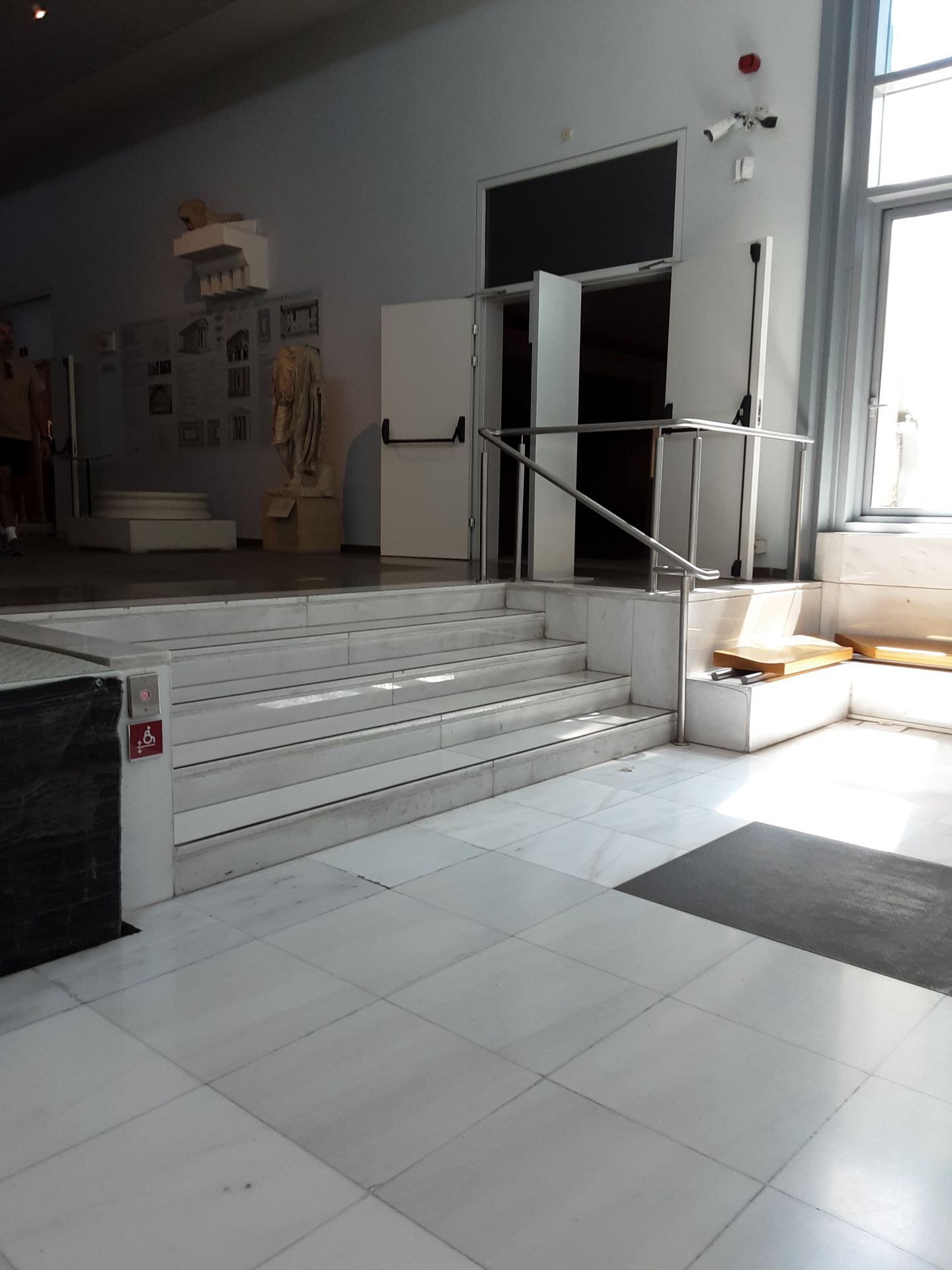
Lift / elevator
Platform lift at the exit (350 kg max)
- The lighting is adequate
- Yes
- Has suitable handles
- Yes, on one side
- Is it…
- Main
- Is it…
- Interior
- Are the surfaces smooth, non-slip
- Yes
- All operating mechanisms
- Yes
- Parapets / railings
- Needed, but not present
- The operating mechanisms
- No
- Is it easily identifiable?
- Yes
- On all levels/stops, there is informational signage for visitors
- No
- Is there a standards-compliant alternative?
- None
- Does it have an emergency lighting system?
- No
- The operating mechanisms
- Yes
- Intended for emergency evacuation
- Yes
- In case of a platform lift
- Yes, there is supervision / operator
- At all levels/stops…
- There is no level difference (<2 cm) between the cabin and the floor surface, The landing surfaces (w > 1.1 m) are separate from the circulation routes
- In the case of exposed side/rear surfaces, are these always "covered" so as not to pose a risk to people with visual impairments and white cane users?
- Yes
- Is it accessible and standards-compliant, and is wheelchair access ensured?
- Yes
- In case of a platform lift
- Yes, and it bears suitable instructions
- In the case of an elevator/platform lift that is part of an existing network with tactile guide paths for the blind, are there tactile warning surfaces outside the door at all levels?
- Not part of such a network
- In case of a platform lift
- Works normally
- In the case of a vertical lifting platform
- No
- In the case of a vertical lifting platform
- The rise does not exceed 2 m.
- In the case of a vertical lifting platform
- Yes
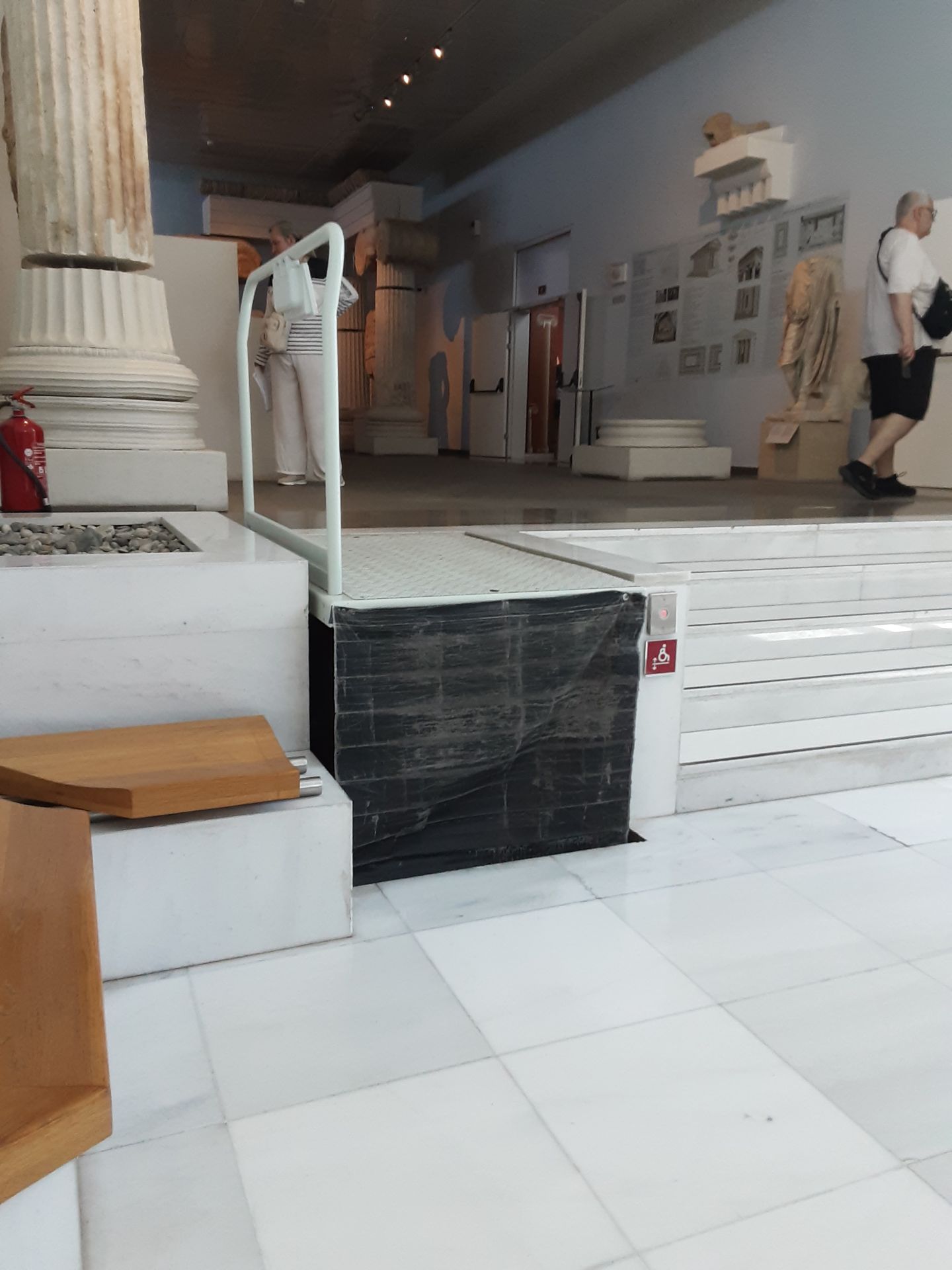
Building
Exhibition "Views of the Plastic Art of Macedonia" (Ground floor)
- Overall, within the building there are accessible areas where staff are present and the public can communicate / interact with them
- No, there is none
- Access to toilet facilities is not an issue?
- Yes
- Overall, noise levels inside the building are suitable at all times of use/visit
- Yes
- Generally, heating in the building is adequate at all hours of use/visit
- Yes
- Generally, the lighting within the building is suitable at all hours of use/visit
- Yes
- In general, air conditioning/ventilation inside the building is appropriate at all hours of use/visit
- Yes
- Is vertical access not an issue?
- Yes
- In general, inside the building there are sufficient/appropriate routes, emergency exits and/or other means
- Yes
- Is access to separated spaces/rooms not an issue?
- Yes
- How many separate floors/levels does it have?
- -1
- It is…
- Historic/listed building
- The areas open to the public occupy the following floors / levels
- Ground floor
- How many separate entrances/exits does it have?
- 1
- Guide dogs are allowed entry
- Yes
- Overall, the corridors and circulation routes have clear widths
- Over 90 cm
- Guide dogs are accepted and staff understand that they should not interact with the dog
- Yes
- An automatic guided-tour system is used and its design ensures accessibility for…
- None
- Audiovisual media are used and their design ensures accessibility for…
- None
- Is there posted and/or available informational material provided to the public?
- No
- All (small) exhibits and their labels are always placed at heights suitable also for wheelchair users (e.g., within a height zone of 75 to 135 cm)
- Yes
- There are exhibits or other objects hung on walls in a way that is dangerous for people with vision disabilities
- No
- There are areas/levels with exhibits that meet the appropriate specifications for wheelchair access
- Yes
- Exhibits are also available in tactile form for blind people
- None
- Digital stations are used
- None
- The signs, labels, exhibit captions, etc. are accompanied by equivalent alternative formats/solutions for people with visual disabilities
- No
- Educational/informational activities, screenings and/or live presentations are organized in spaces and with a design that ensures accessibility for…
- None
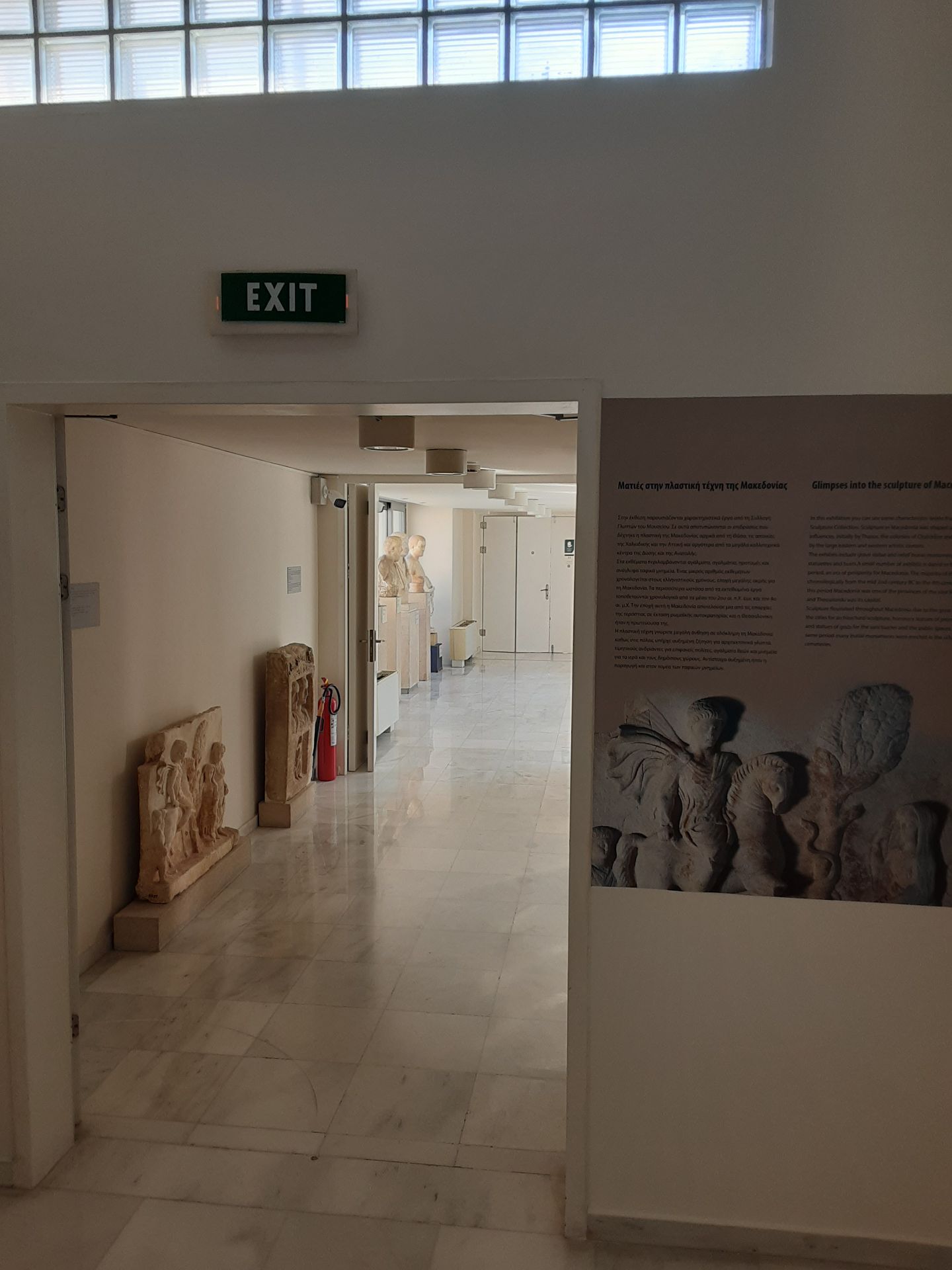
Building
Foyer in the Basement
- Overall, within the building there are accessible areas where staff are present and the public can communicate / interact with them
- Yes, but has no briefing or training on serving people with disabilities
- Access to toilet facilities is not an issue?
- No
- Overall, noise levels inside the building are suitable at all times of use/visit
- Yes
- Generally, heating in the building is adequate at all hours of use/visit
- Yes
- Generally, the lighting within the building is suitable at all hours of use/visit
- Yes
- In general, air conditioning/ventilation inside the building is appropriate at all hours of use/visit
- Yes
- Is vertical access not an issue?
- Yes
- In general, inside the building there are sufficient/appropriate routes, emergency exits and/or other means
- Yes
- Is access to separated spaces/rooms not an issue?
- Yes
- How many separate floors/levels does it have?
- 1
- It is…
- Historic/listed building
- The areas open to the public occupy the following floors / levels
- Basement
- How many separate entrances/exits does it have?
- 1
- Guide dogs are allowed entry
- Yes
- Overall, the corridors and circulation routes have clear widths
- Over 120 cm
- Overall, the corridors and circulation routes have suitable clear heights
- Yes
- There are bridges in the building
- No bridging needed / present
- There is furniture and/or equipment within the 90 cm clear width
- No
- There are levels/areas with seating/rest positions for the public without provisions for a wheelchair stop
- No
- There are levels / areas without sufficient/suitable seating / rest areas for people with difficulty walking / standing for long periods
- No
- There are levels / spaces with furniture
- No
- At strategic points of the building there is a simplified floor plan or a model
- No
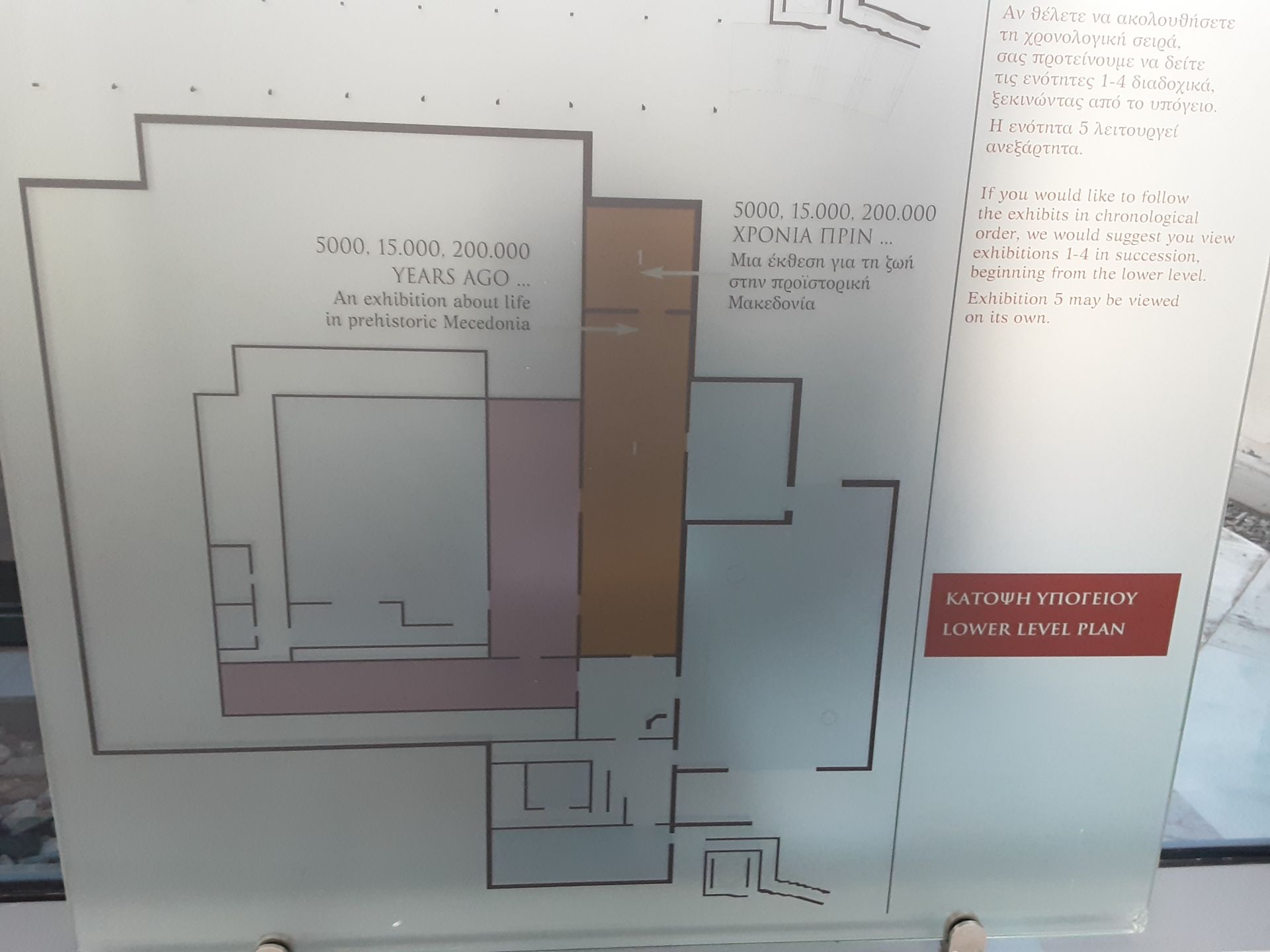
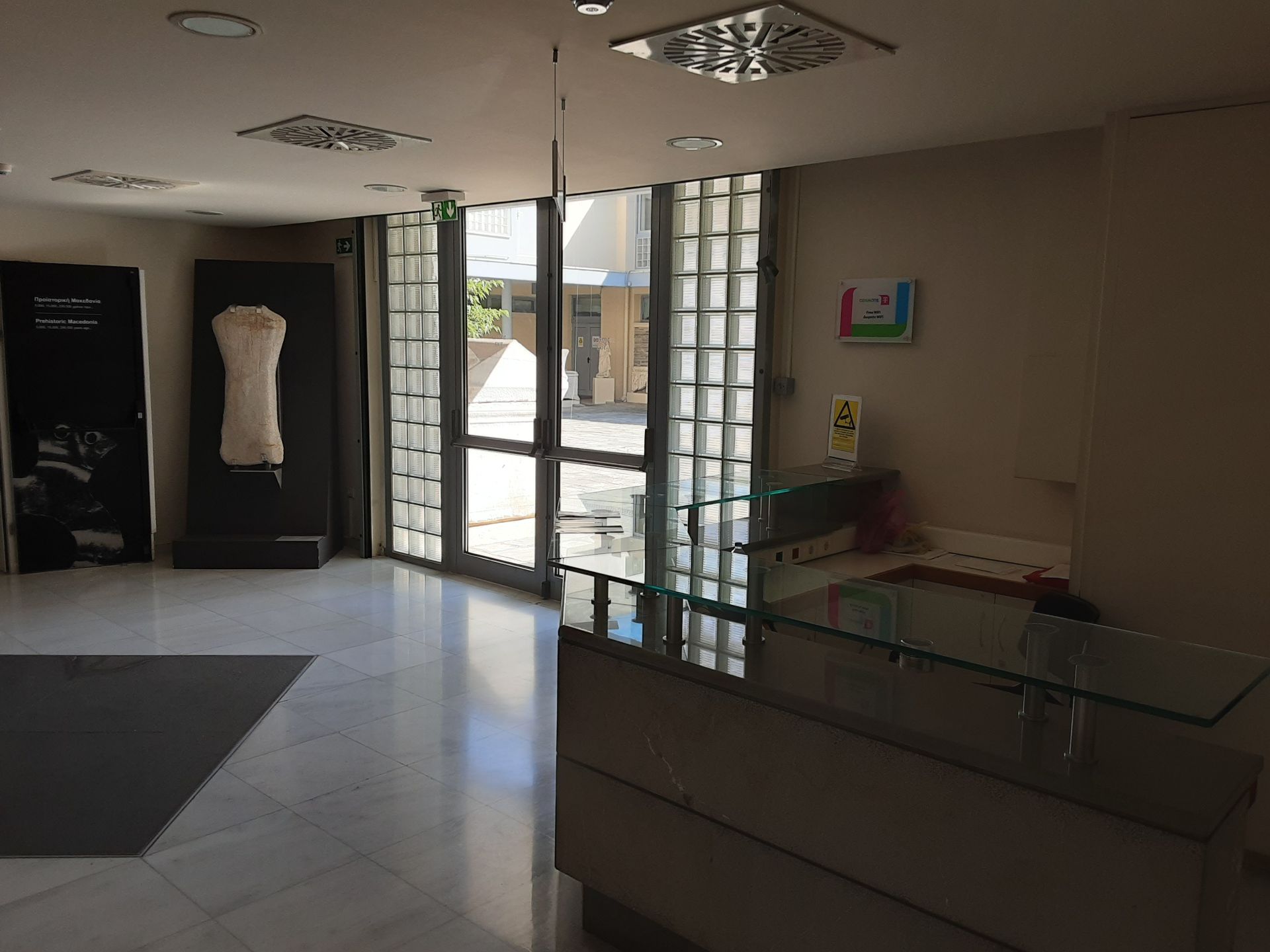
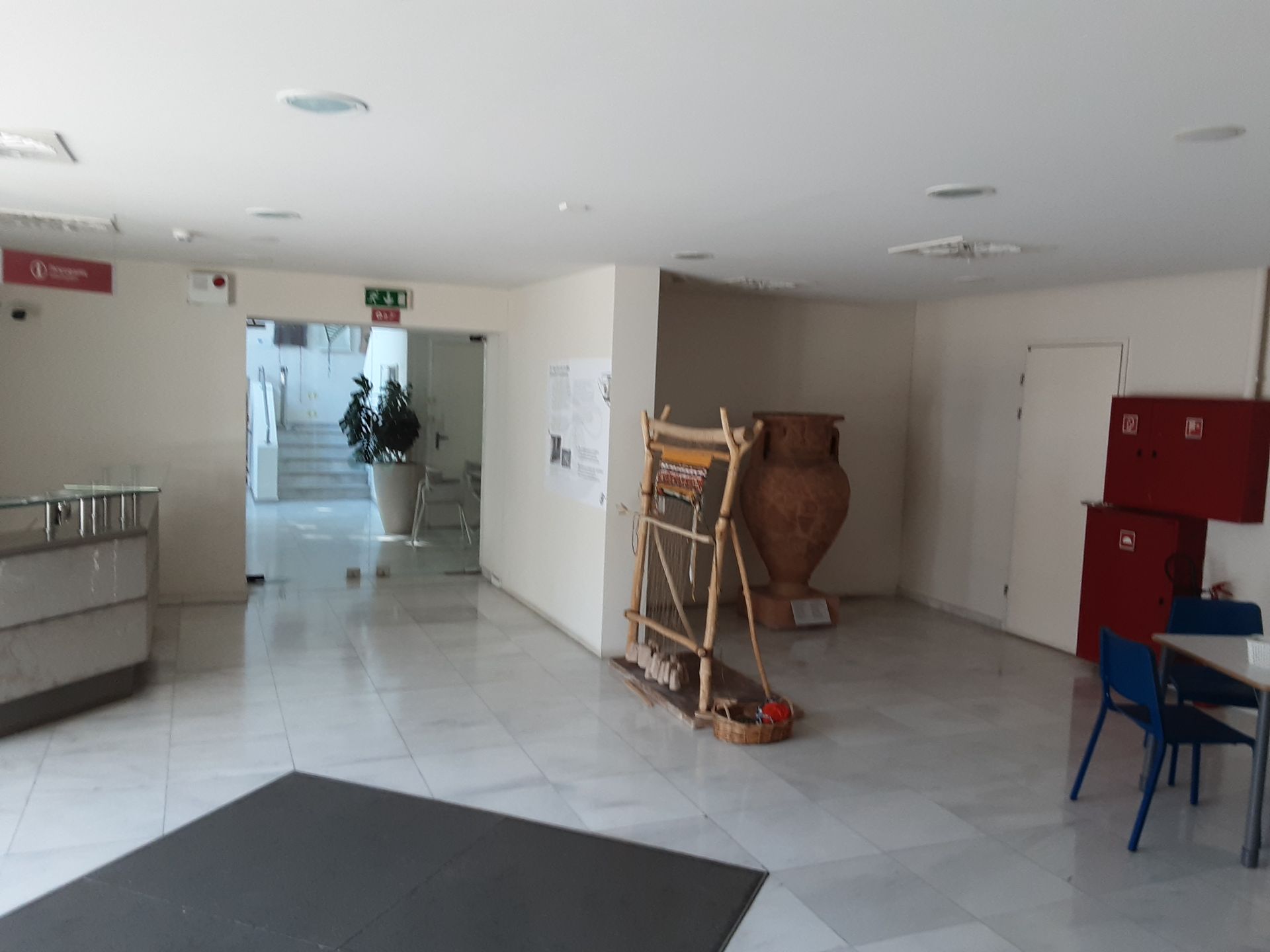
Restroom (WC)
Toilet in the Educational Programs Hall
- If there is a mirror, is it suitable for use by wheelchair users
- Yes
- Includes..
- Space with a toilet bowl, Space with a toilet bowl and washbasin, Vestibule with washbasin(s)
- The lighting is adequate
- Yes
- The door is of type…
- Opening outward
- What type of washbasin does the toilet have?
- For exclusive use
- Are the fire alarms perceptible in all areas of the sanitary space?
- Yes, audible
- Is it easily identifiable?
- Yes
- Is it a standards-compliant accessible toilet?
- Yes, but it does not have suitable signage
- In the case of a vestibule with multiple washbasins…
- No steps in between, No heavy / hard-to-use doors in between, There is at least one washbasin at a height of 85 cm, with 70 cm of clear space underneath and easy access to the soap, Hooks, paper holders and hand-drying systems are placed at heights of 90 to 120 cm and/or are doubled at two heights
- All surfaces are of non-slip, homogeneous, stable, wear-resistant material
- Yes
- The clear width of the free interior space between the sanitary fixtures is
- 225
- Can it be used only at specific times?
- Yes (provide details)
- The controls
- Yes
- The clear interior length of the free space between the sanitary fixtures is
- 140
- Is it…
- Free
- Is the space kept clean and well ventilated?
- Yes
- Is there a telephone or other emergency notification system?
- Yes
- If there is a soap dish, towel holder or hand-drying system, are they easy to use and located at suitable positions and heights for wheelchair users
- Yes
- Is it…
- Interior
- Is wheelchair access ensured?
- Yes
- The clear opening of the door is
- 90
- Has suitable handles
- Yes, on more than one side
- Does it have an emergency lighting system?
- Yes
- Not used for other purposes
- No
- Is it a standards-compliant accessible toilet…
- Unisex
- Is it…
- Mixed (men-women)
- Is there a clear space under the washbasin to fit a wheelchair?
- Yes
- Is it a standards-compliant accessible toilet…
- Together with other toilets / sanitary spaces
- Does it have a suitable clear opening for the intended use?
- Yes
- Outside the door there is clear level space for maneuvering a wheelchair
- Yes
- Is it…
- Entrance unobstructed
- There is free space on one side of the basin of width
- 50
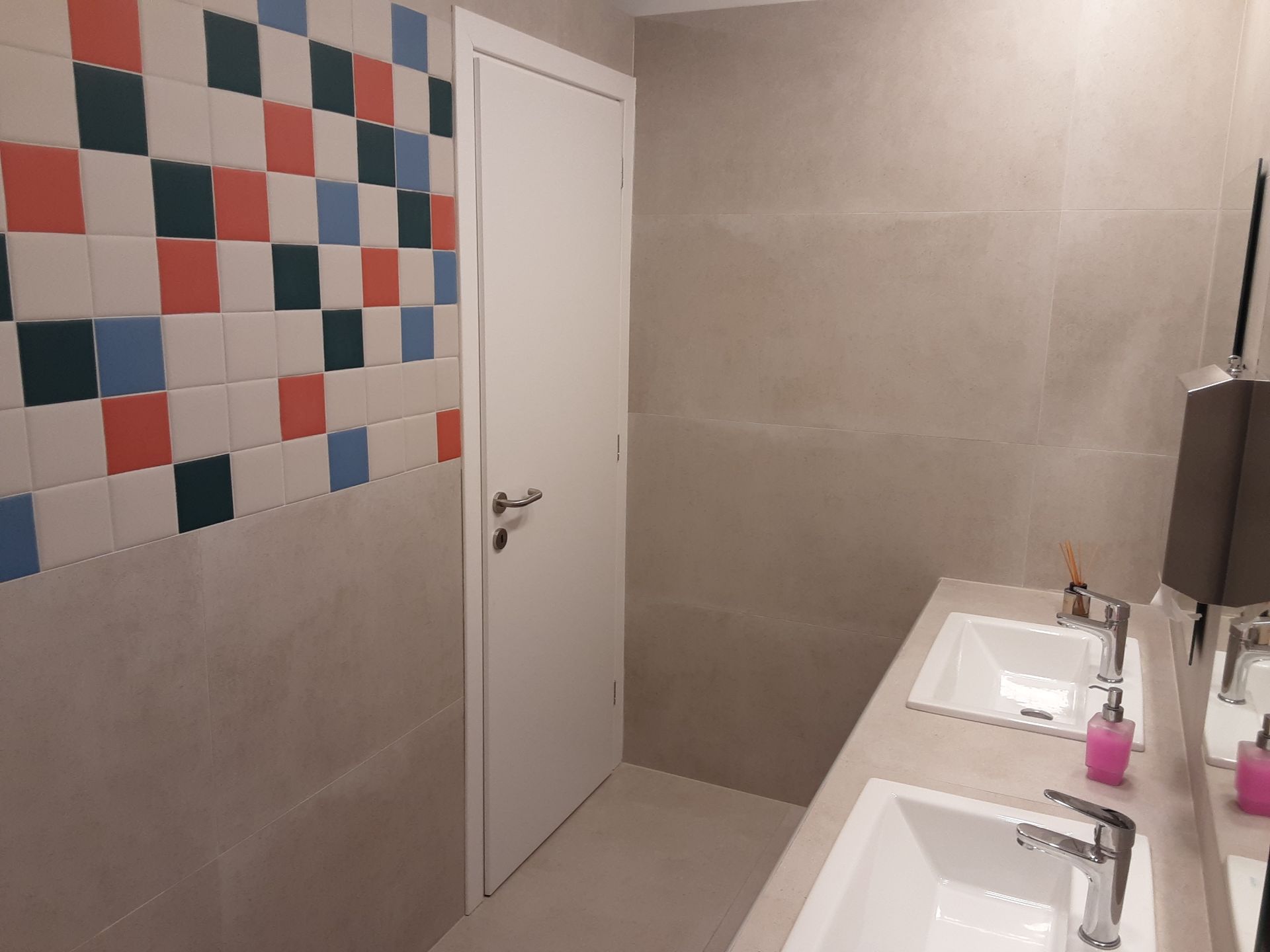
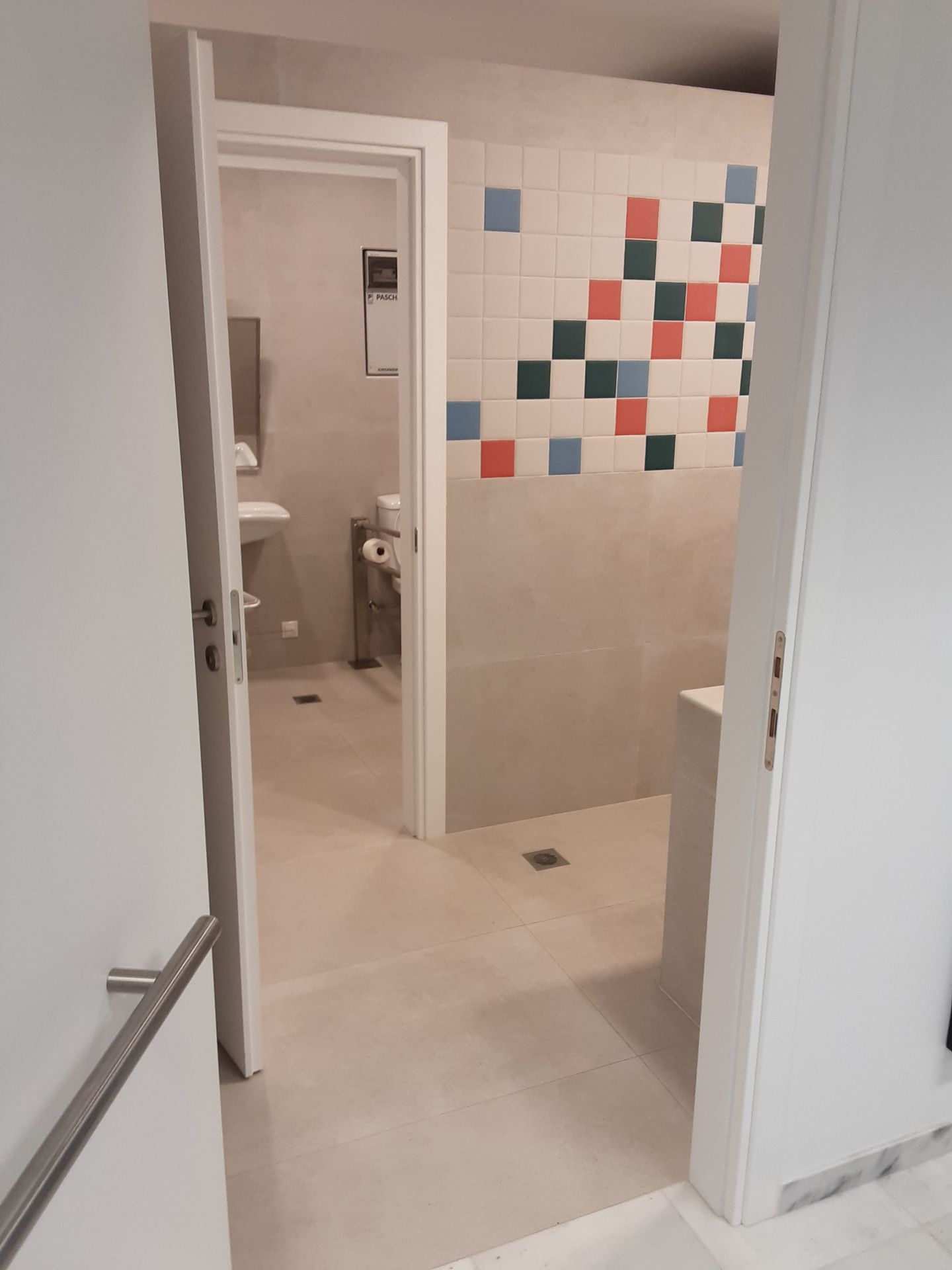
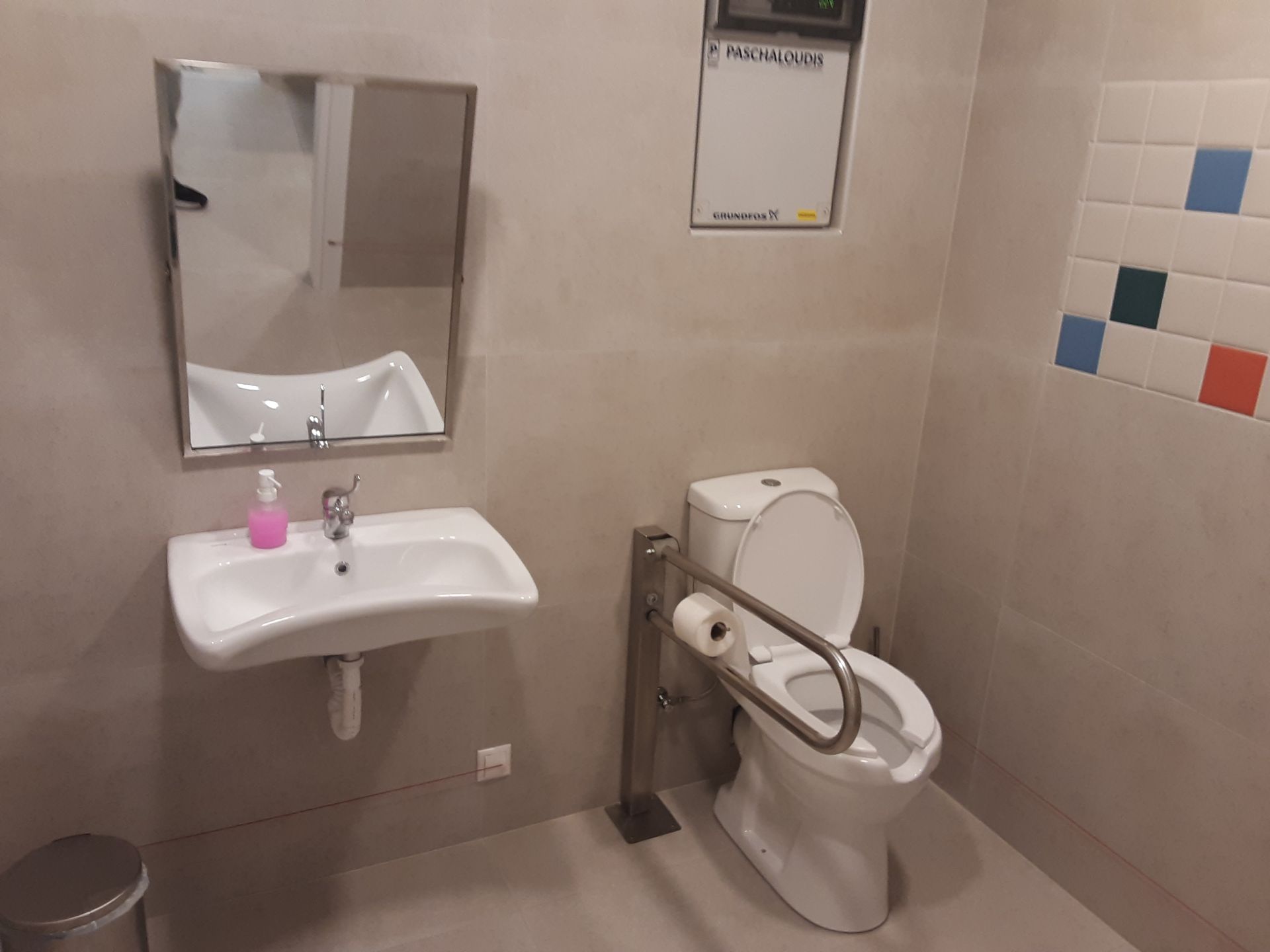
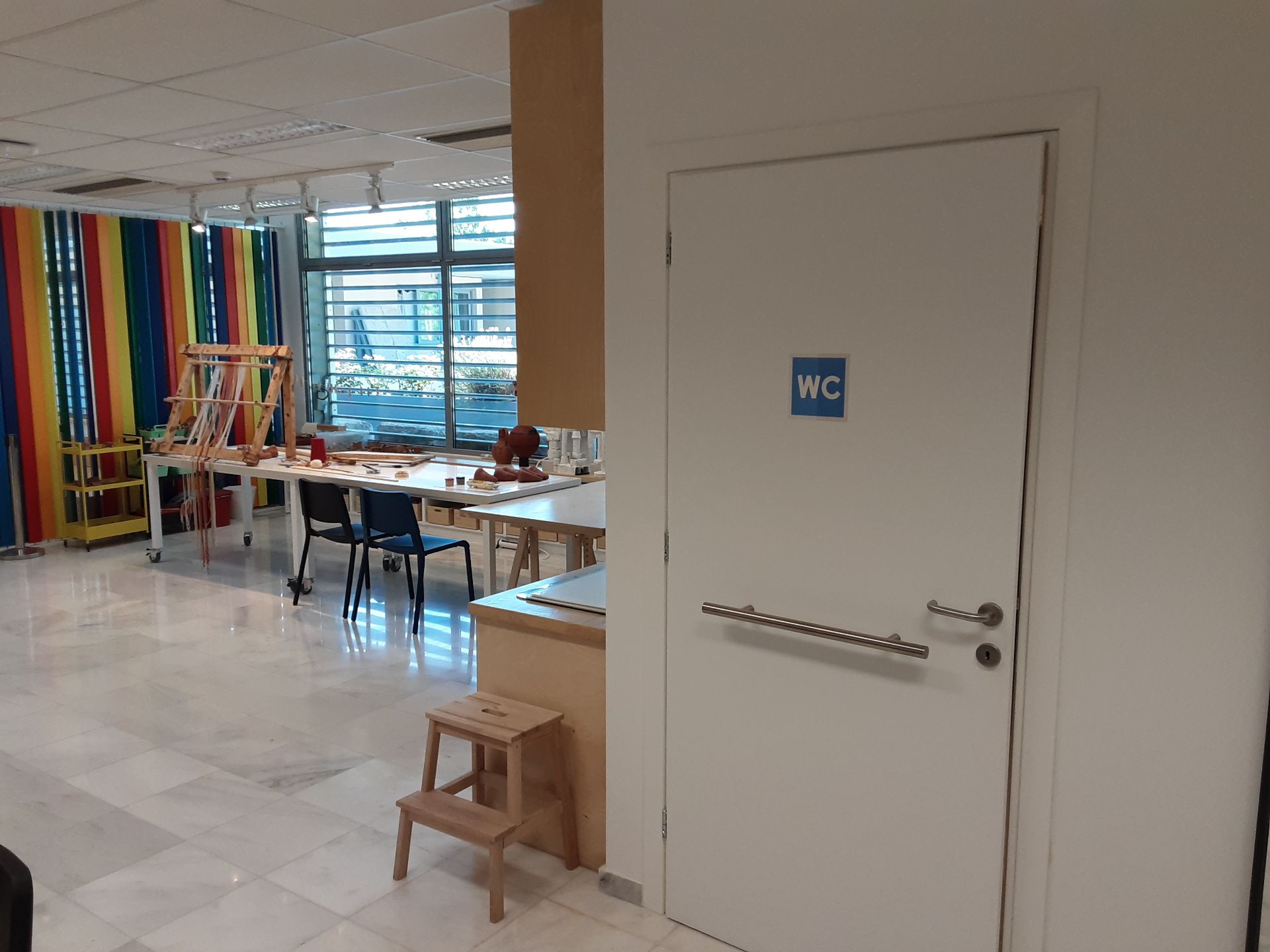
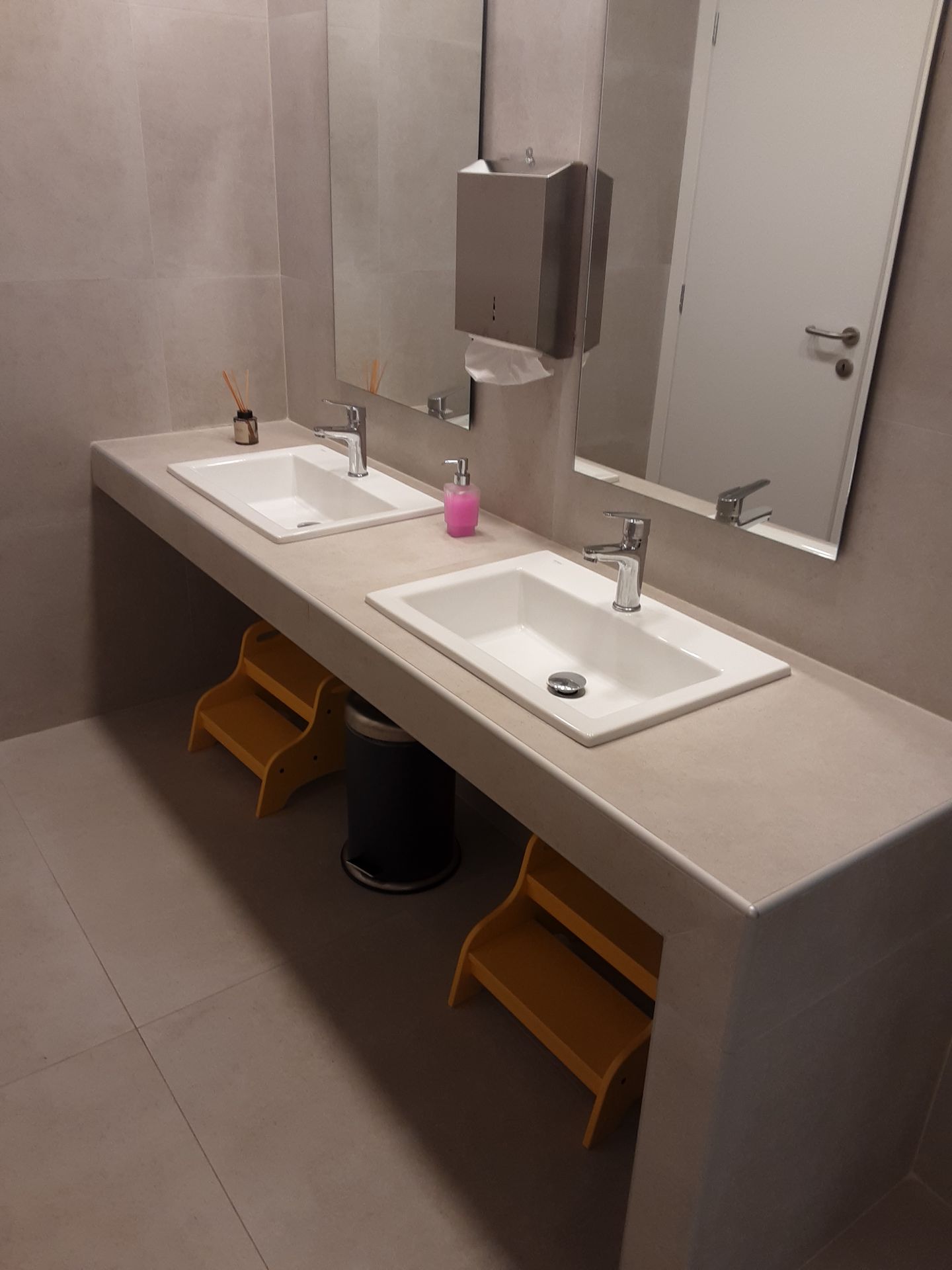
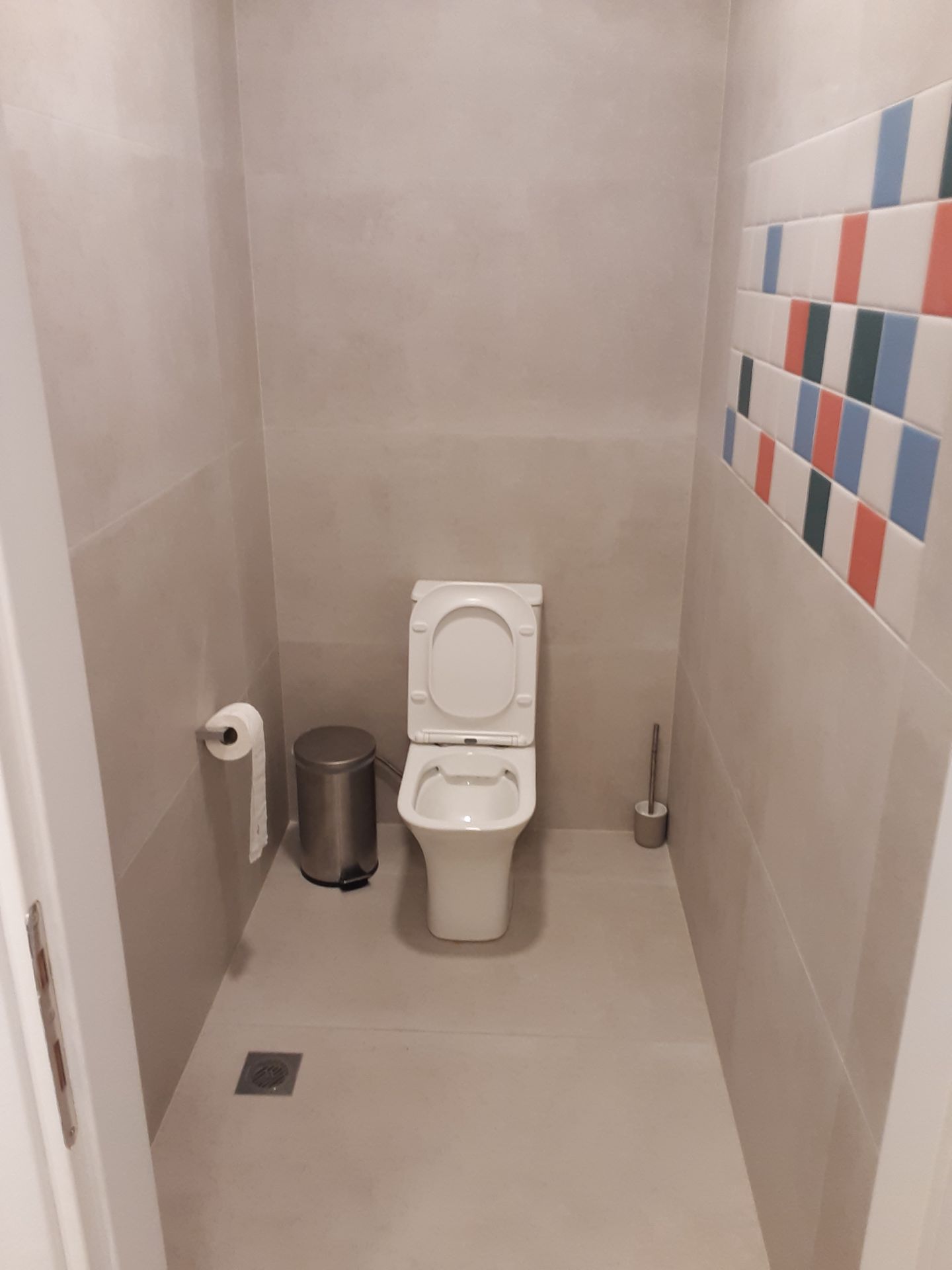
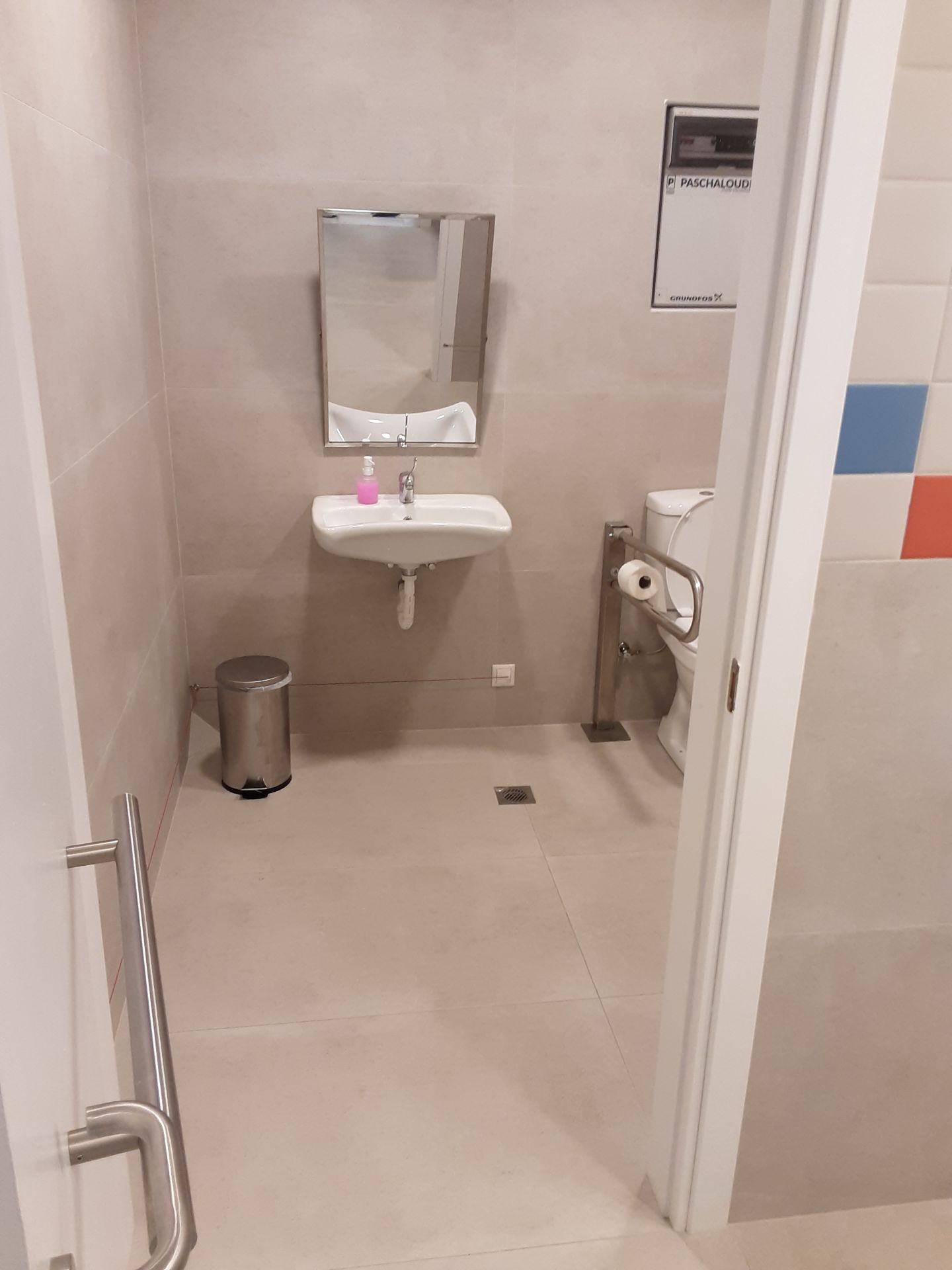
Entrance / exit
Auxiliary entrance (side)
- Adequately served by a dedicated boarding / alighting area suitable for people with disabilities
- Yes
- Does a tactile guide path lead to the building?
- Yes, standards-compliant
- Is it preceded by a ramp?
- A small one for bridging the beveled edge
- Cross slope
- Suitable
- Longitudinal slope
- Suitable
- Offers adequate protection from the weather
- Covered
- Clear opening
- Suitable
- Is it easily identifiable?
- Yes
- Clear passage height
- Suitable
- Informational signage for visitors is provided outside
- No
- Adequately served by a dedicated accessible parking space for private vehicles
- Yes
- Bears suitable informational signage regarding accessibility to the building's spaces
- No
- Adequately served by disability-friendly public transport
- Yes
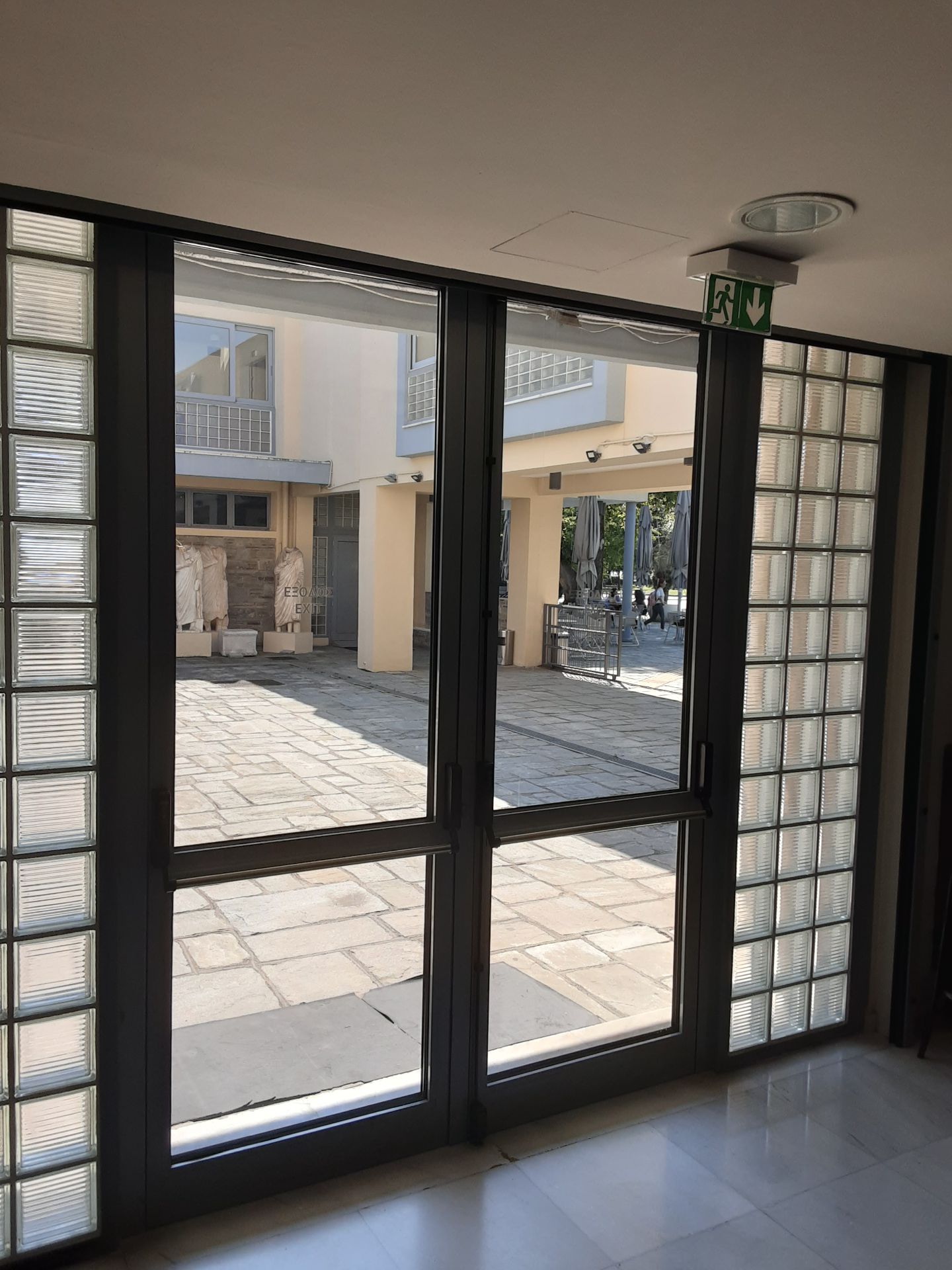
Door
Emergency exit
- It is of type…
- Opening
- Is wheelchair access ensured?
- Yes
- Is it…
- Emergency exit
- It is outdoor/exterior and offers adequate protection from weather conditions
- Covered
- Is it easily identifiable?
- Yes
- Bears appropriate accessible entrance signage
- No, it bears no indication
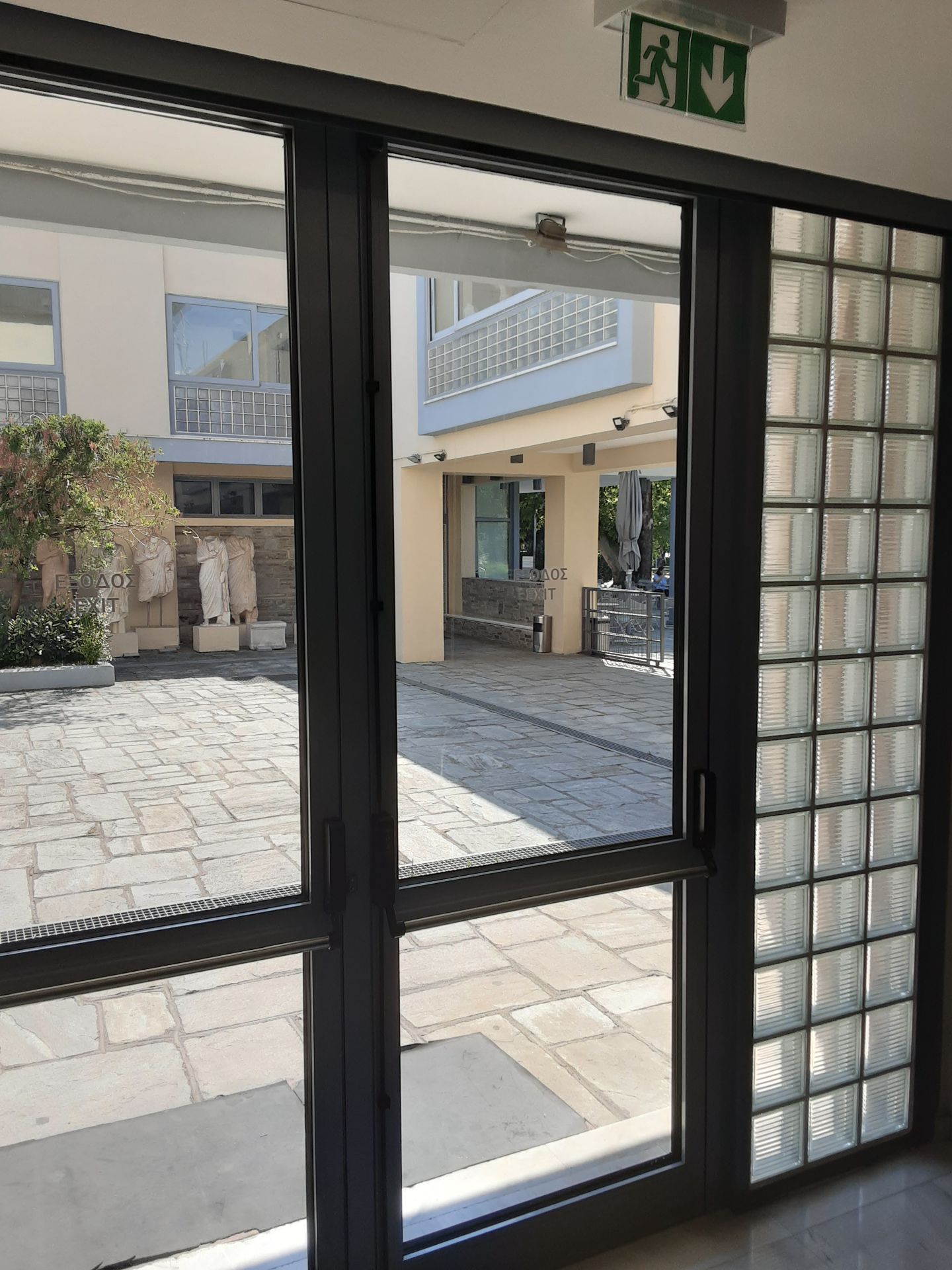
Building
Main reception - Foyer (Ground floor)
- Overall, within the building there are accessible areas where staff are present and the public can communicate / interact with them
- Yes, and it is aware of the various communication needs of people with disabilities
- Access to toilet facilities is not an issue?
- No
- Overall, noise levels inside the building are suitable at all times of use/visit
- Yes
- Generally, heating in the building is adequate at all hours of use/visit
- Yes
- Generally, the lighting within the building is suitable at all hours of use/visit
- Yes
- In general, air conditioning/ventilation inside the building is appropriate at all hours of use/visit
- Yes
- Is vertical access not an issue?
- Yes
- The building has
- Defibrillator, Staff trained in first aid, Emergency first-aid kit
- In general, inside the building there are sufficient/appropriate routes, emergency exits and/or other means
- Yes
- Is access to separated spaces/rooms not an issue?
- No
- How many separate floors/levels does it have?
- 1
- It is…
- Historic/listed building
- The areas open to the public occupy the following floors / levels
- Ground floor
- How many separate entrances/exits does it have?
- 1
- Guide dogs are allowed entry
- Yes
- Overall, the corridors and circulation routes have clear widths
- Over 150 cm
- Overall, the corridors and circulation routes have suitable clear heights
- Yes
- Lighting in corridors and generally along movement routes is appropriate
- Yes
- Is there an emergency lighting system installed in the corridors and generally along the movement routes?
- Yes
- There is furniture and/or equipment within the 90 cm clear width
- No
- There are levels/areas with seating/rest positions for the public without provisions for a wheelchair stop
- Yes
- There are levels / areas without sufficient/suitable seating / rest areas for people with difficulty walking / standing for long periods
- Yes
- Signage is generally provided inside the building
- (in points accessible to people with vision problems) is not in raised/tactile forms at heights of 140-160 cm from the floor (Braille, raised symbols, tactile maps, etc.), has extensive texts in small/hard-to-read fonts
- At strategic points of the building there is a simplified floor plan or a model
- Yes
- In general, the choice of location and placement of signage panels within the building do not comply with the relevant specifications and create obstacles or risks for certain categories of people with disabilities
- Wheelchair users, People with visual disabilities
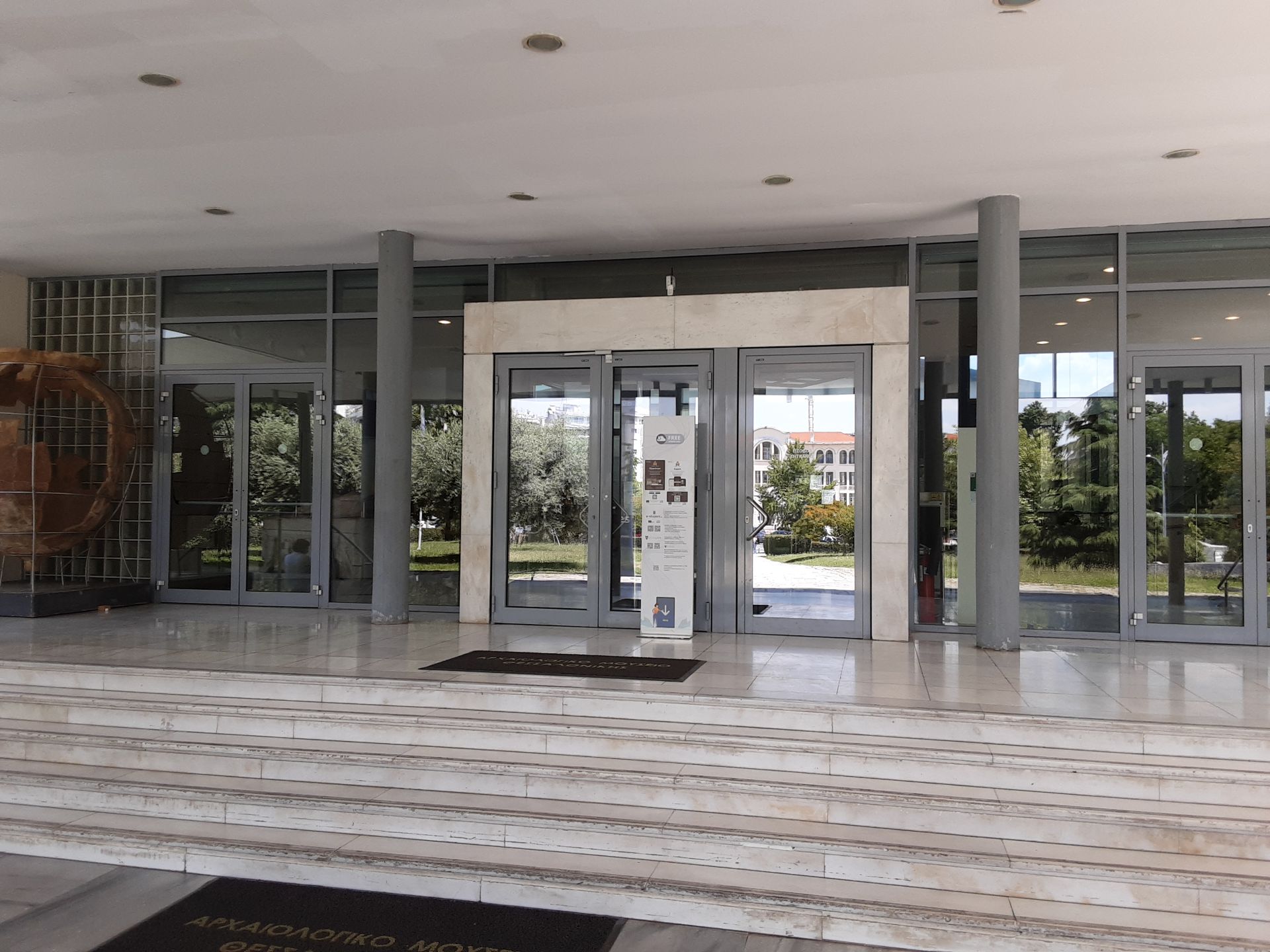
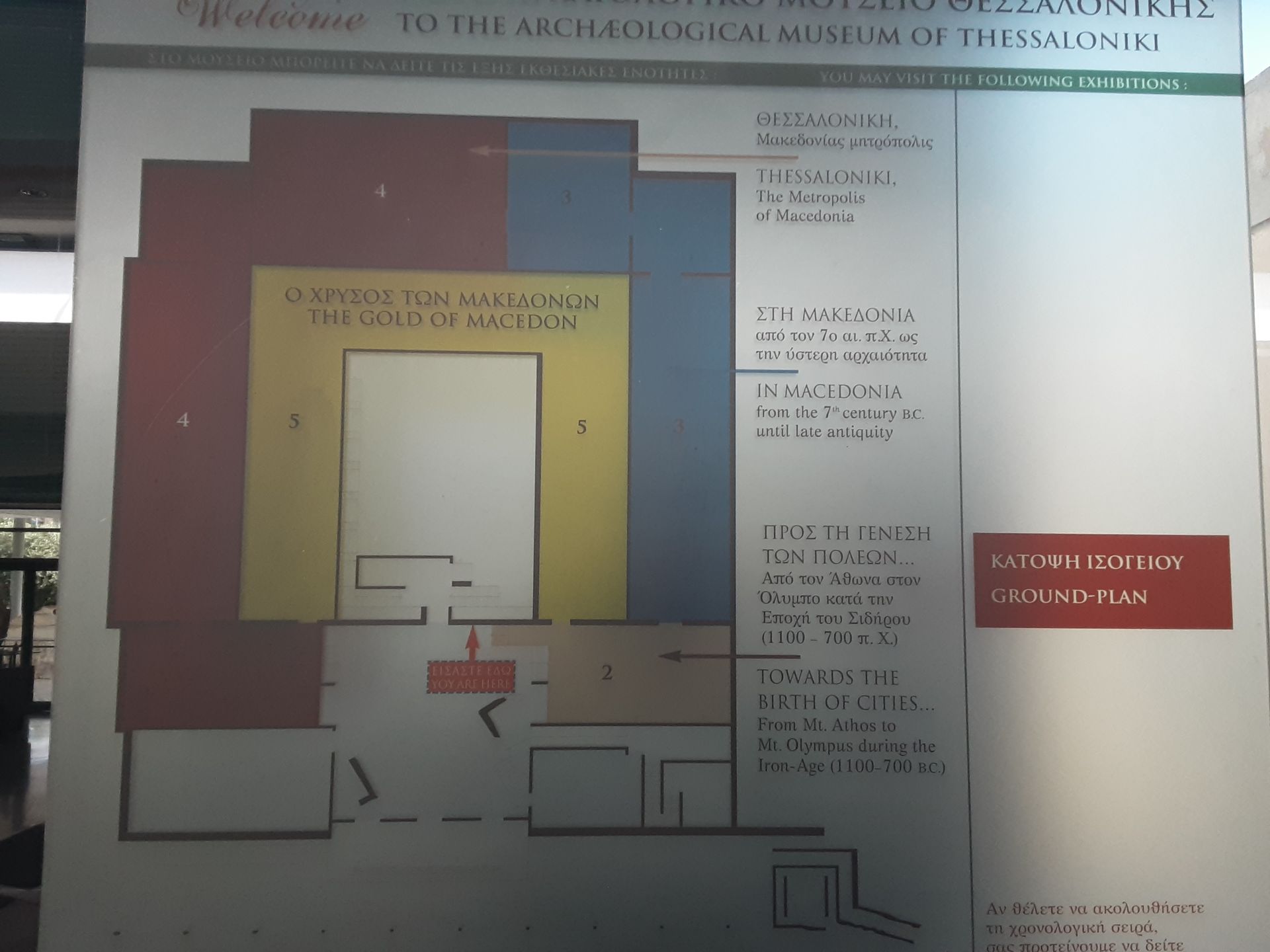
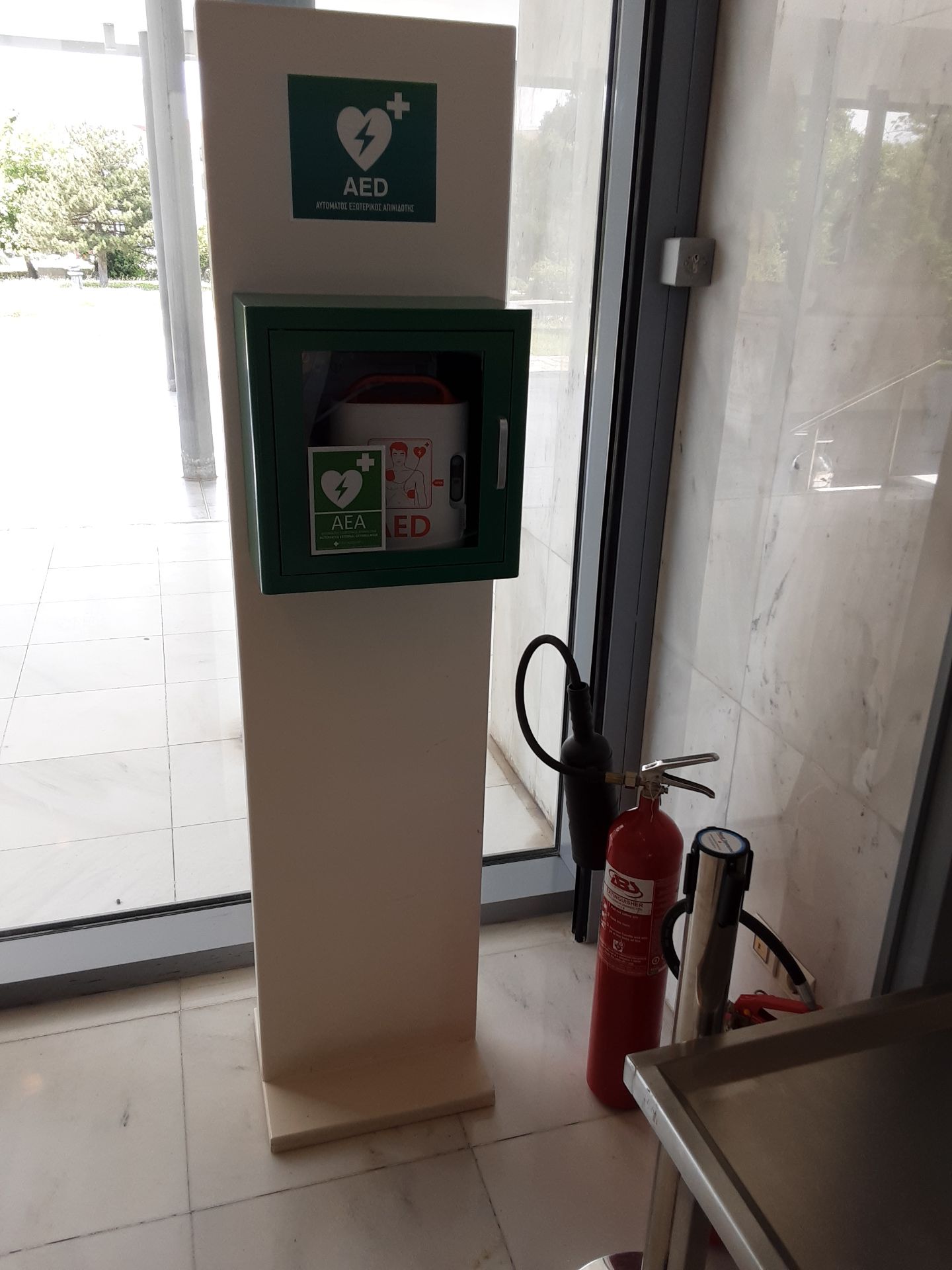
Barriers to be aware of (1)
Obstacle
Dangerous balcony, next to the stairs leading from the ground floor to the public toilet and the refreshment area
- Type / category of obstacle
- Dangerous point (without the necessary / suitable safety railings)
Entrance / exit
Main entrance (from the Courtyard)
- Is there a door?
- One entrance and one exit
- Adequately served by a dedicated boarding / alighting area suitable for people with disabilities
- Yes
- Does a tactile guide path lead to the building?
- Yes, but issues arise
- Is it preceded by a ramp?
- Alongside as an alternative to the steps
- Preceded by a step
- Immediately before the main entrance
- Cross slope
- Suitable
- Longitudinal slope
- Suitable
- Offers adequate protection from the weather
- Covered
- Clear opening
- Suitable
- Is it easily identifiable?
- Yes
- Clear passage height
- Suitable
- Informational signage for visitors is provided outside
- No
- Adequately served by a dedicated accessible parking space for private vehicles
- Yes
- Bears suitable informational signage regarding accessibility to the building's spaces
- No
- Adequately served by disability-friendly public transport
- Yes
Ramp
Ramp at the main entrance
- It has an appropriate handrail
- No
- Is it…
- Outdoor
- At all levels/stops…
- the ramp floor surface is at exactly the same height as the landing surface (difference <2 cm), the landing surfaces (1.5 x 1.5 m) are separate from the circulation routes, the landing surfaces are far from stairs/steps (distance > 1.5 m)
- The lighting is adequate
- No
- All surfaces are of non-slip, homogeneous, stable, wear-resistant material
- Yes
- Is it easily identifiable?
- Yes
- Has non-compliant slopes
- 5-6% for 13 m
- Parapets / railings
- Present and standards-compliant
- Is wheelchair access ensured?
- Yes
- It is outdoors and offers adequate protection from the weather
- Covered
- Is it…
- Permanent
- On all levels/stops, there is informational signage for visitors
- No
- Has a width that allows two wheelchairs to pass each other
- No
- Is standards-compliant:
- No
- Has non-compliant cross slopes on the ramp and/or landings
- No
- In the case of exposed side/rear surfaces, are these always "covered" so as not to pose a risk to people with visual impairments and white cane users?
- Yes
- In the case of a ramp that is part of an existing network with tactile guide paths, are there tactile warning surfaces at all entry-exit points?
- Not part of such a network
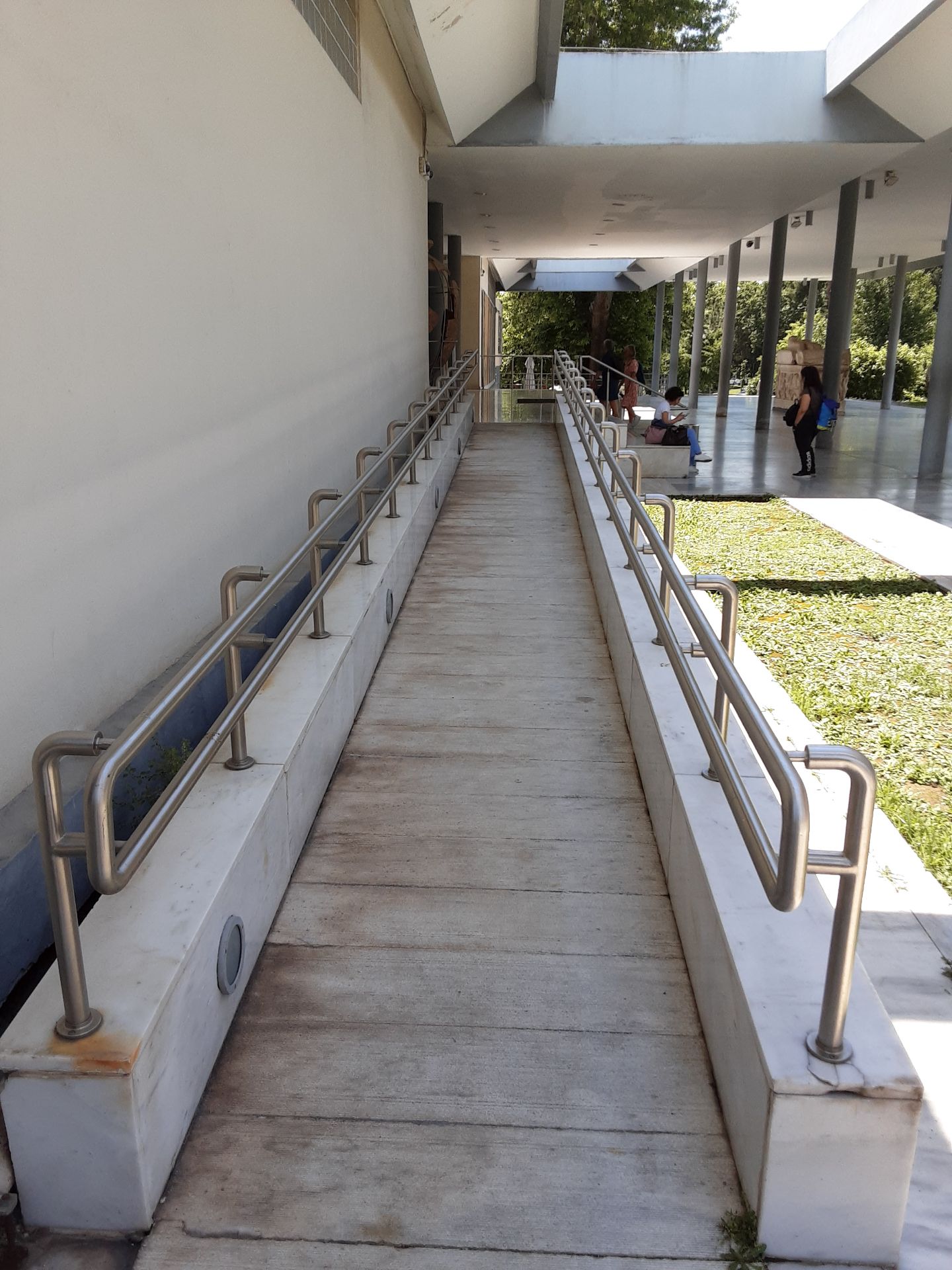
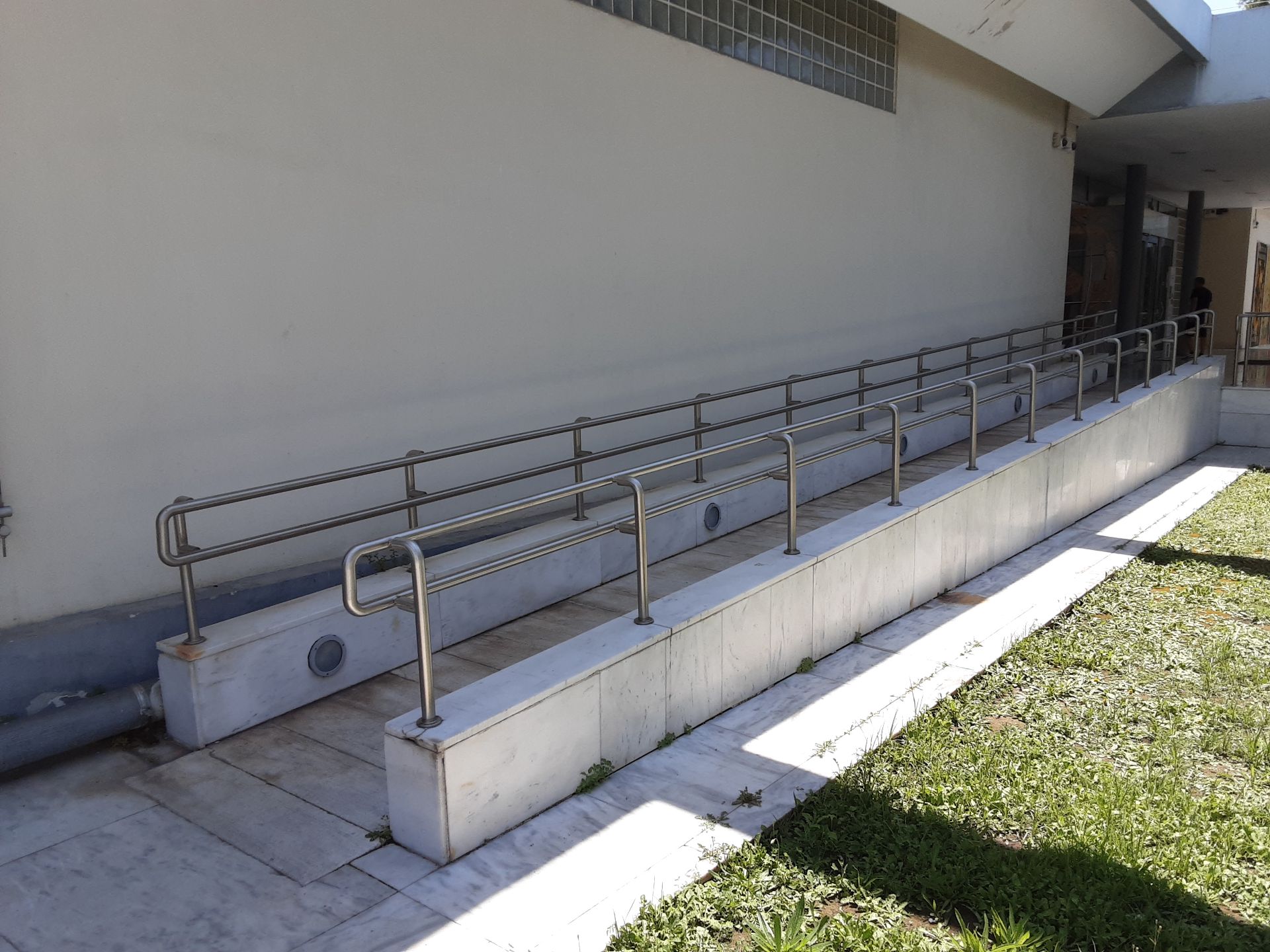
Door
Exit
- Has suitable handrails,
- Yes, on more than one side
- The lighting is adequate
- Yes
- It is of type…
- Opening
- It is a glass door
- Yes, but it does not bear special warning markings
- Has informational signage for visitors
- No
- The clear opening of the door is
- 86
- Not automatic
- wheelchair users (e.g., can be secured in open position, with handles at appropriate height < 90 cm)
- Is wheelchair access ensured?
- Yes
- All surfaces are of non-slip, homogeneous, stable, wear-resistant material
- Yes
- Is it…
- Exterior
- It is outdoor/exterior and offers adequate protection from weather conditions
- Covered
- Is it easily identifiable?
- Yes
- Followed by a vestibule/booth whose dimensions allow wheelchair manoeuvring
- Yes
- Does it have a suitable clear opening for the intended use?
- No
- Bears appropriate accessible entrance signage
- No, it bears no indication
- The controls
- Yes
- In the case of a gate that is part of an existing network with tactile guidance paths for the blind, are there tactile warning surfaces before and after?
- Not part of such a network
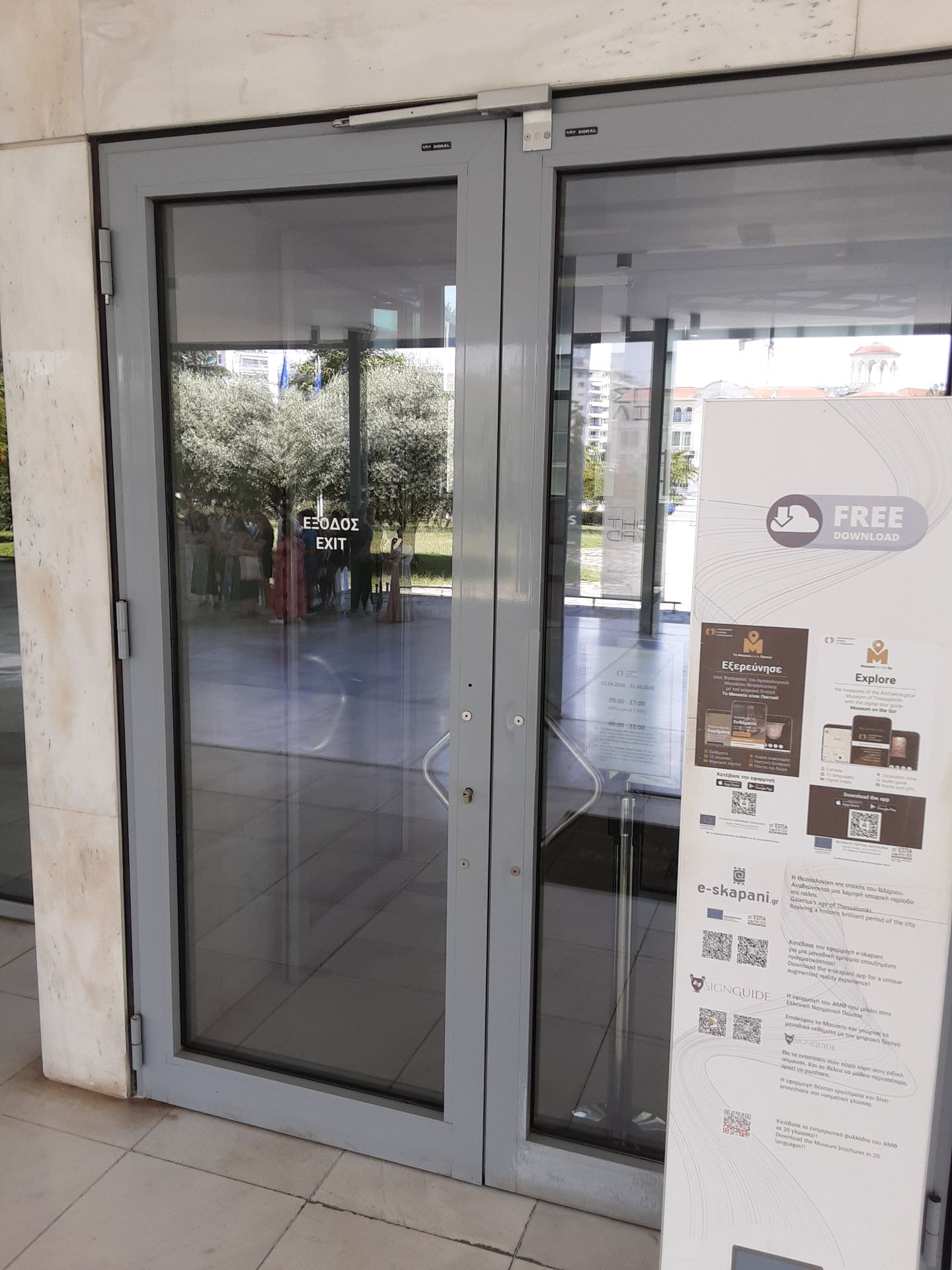
Door
Emergency (2 double doors)
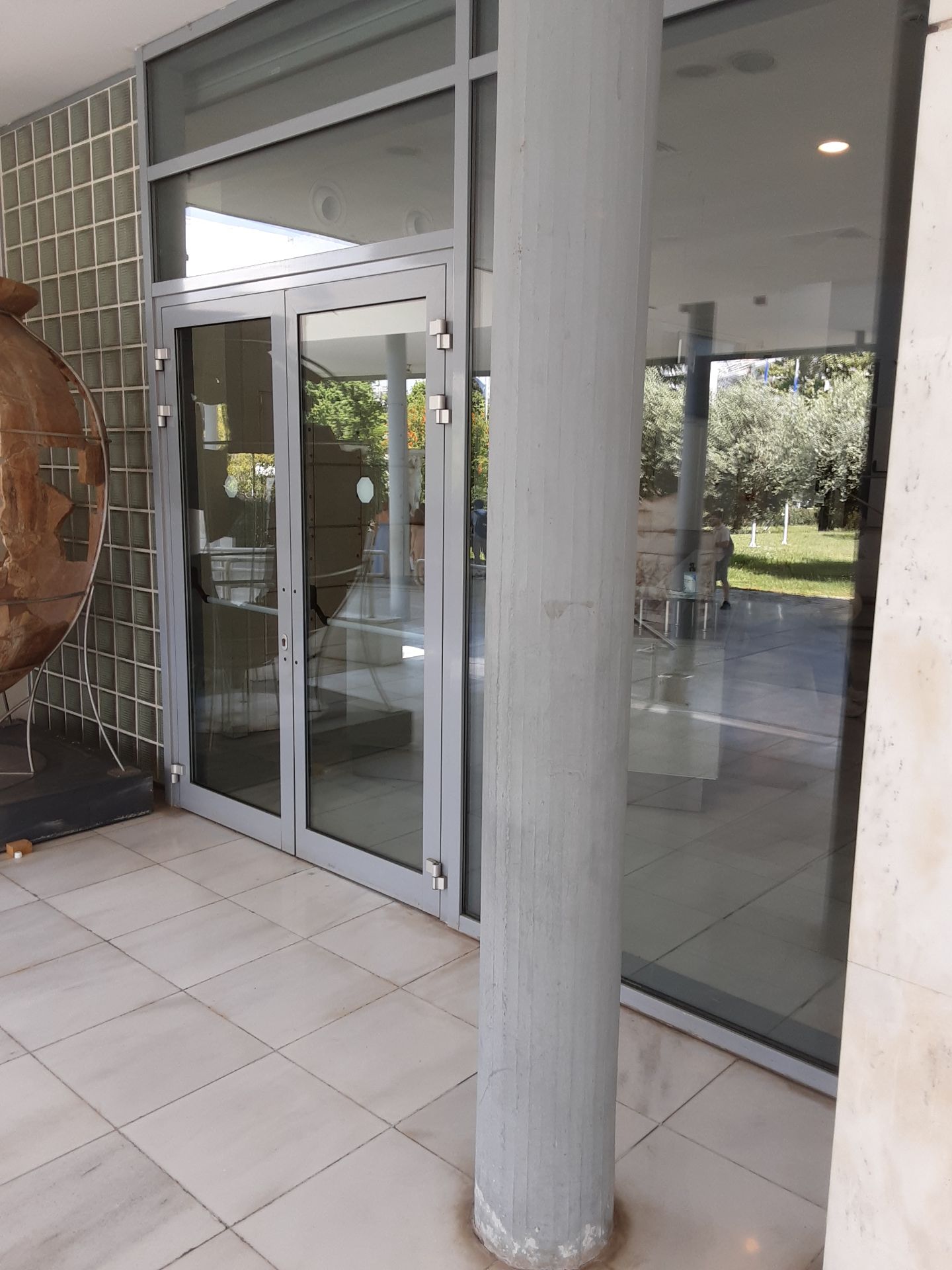
Door
Entrance
- Has suitable handrails,
- Yes, on more than one side
- The lighting is adequate
- Yes
- It is of type…
- Opening
- It is a glass door
- Yes, but it does not bear special warning markings
- Has informational signage for visitors
- No
- The clear opening of the door is
- 90
- Not automatic
- wheelchair users (e.g., can be secured in open position, with handles at appropriate height < 90 cm)
- Is wheelchair access ensured?
- Yes
- All surfaces are of non-slip, homogeneous, stable, wear-resistant material
- Yes
- Is it…
- Exterior
- Is it easily identifiable?
- Yes
- Followed by a vestibule/booth whose dimensions allow wheelchair manoeuvring
- Yes
- Does it have a suitable clear opening for the intended use?
- No
- Bears informational signage for visitors and it is accessible to people with visual disabilities
- No
- Has a width/opening that allows two wheelchairs to pass each other
- No
- Bears appropriate accessible entrance signage
- No, it bears no indication
- In the case of a gate that is part of an existing network with tactile guidance paths for the blind, are there tactile warning surfaces before and after?
- Not part of such a network
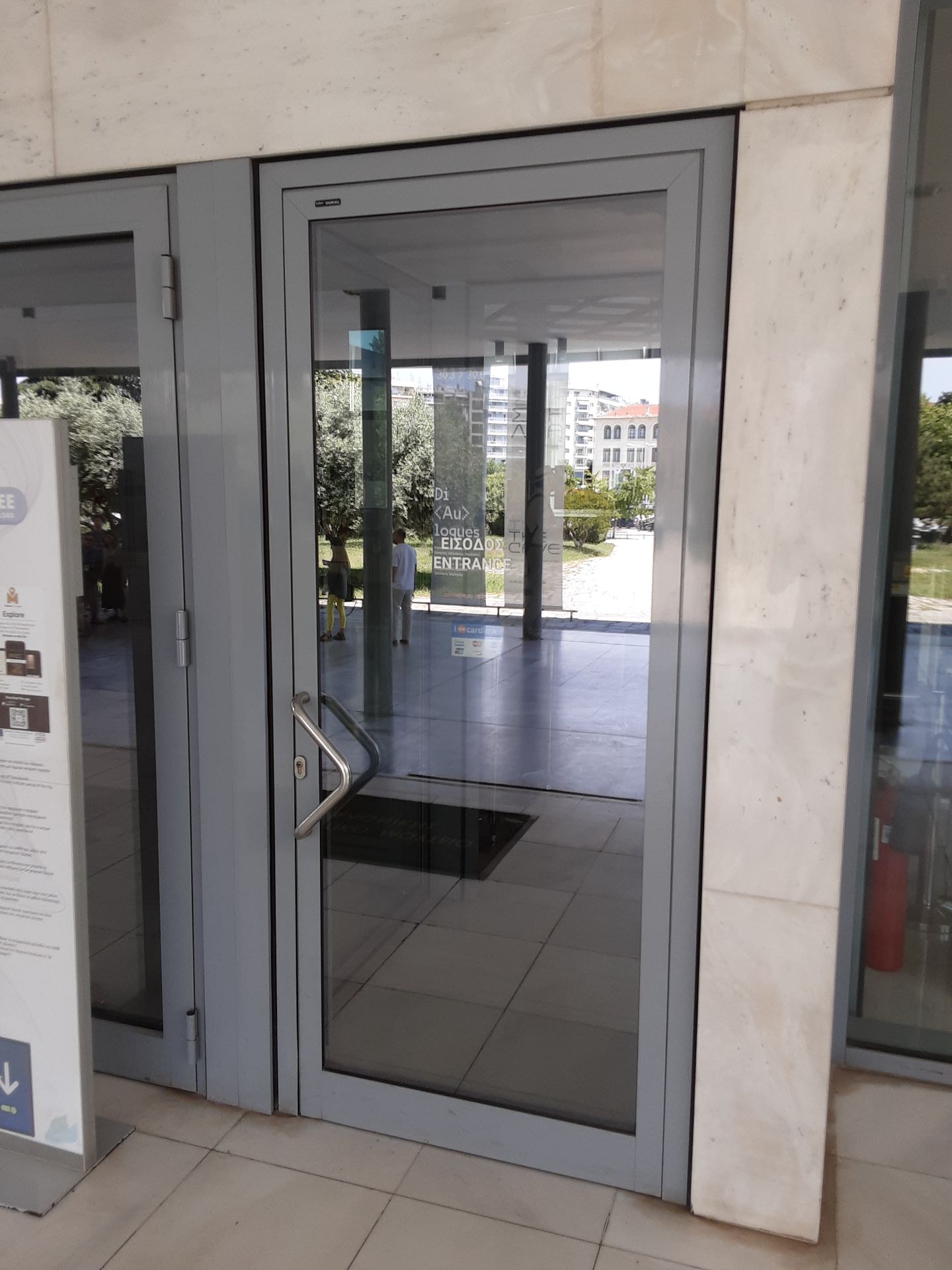
Stairs
Before the doors (5 marble steps)
- Does it have a riser (front face)?
- Vertical
- Handles / handrails
- Present and standards-compliant
- It is a staircase with a stairlift
- No
- Is it…
- Main
- Is it interior and…
- Fixed
- Is it…
- Exterior (closed)
- The (minimum) opening of the stairs is (in cm)…
- 1500
- They are clearly legible
- Yes
- The (minimum) depth of the steps is (in cm)…
- 30
- The (maximum) height of the steps is (in cm)…
- 15
- The width of the stairs
- Yes
- In the case of stairways that are part of the existing network with tactile guidance paths for the blind, are there tactile warning surfaces at the start, end and changes of direction of the stairs?
- Not part of such a network
- The lighting is adequate
- Yes
- Are the surfaces
- Yes
- Is it easily identifiable?
- Yes
- At the stair landings, there is informational signage for visitors
- No
- Is it standards-compliant?
- Yes
- The depth (tread) of the steps is constant from the start to the end of the stairs
- Yes
- The height of the steps is constant from the start to the end of the stairs
- Yes
- Is there a standards-compliant alternative for wheelchair access?
- Present and standards-compliant
- Includes conical and/or curved steps
- No
- It is exterior / outdoor and offers adequate protection from weather conditions
- Covered
- (If available), the alternative wheelchair access is via…
- Side ramp
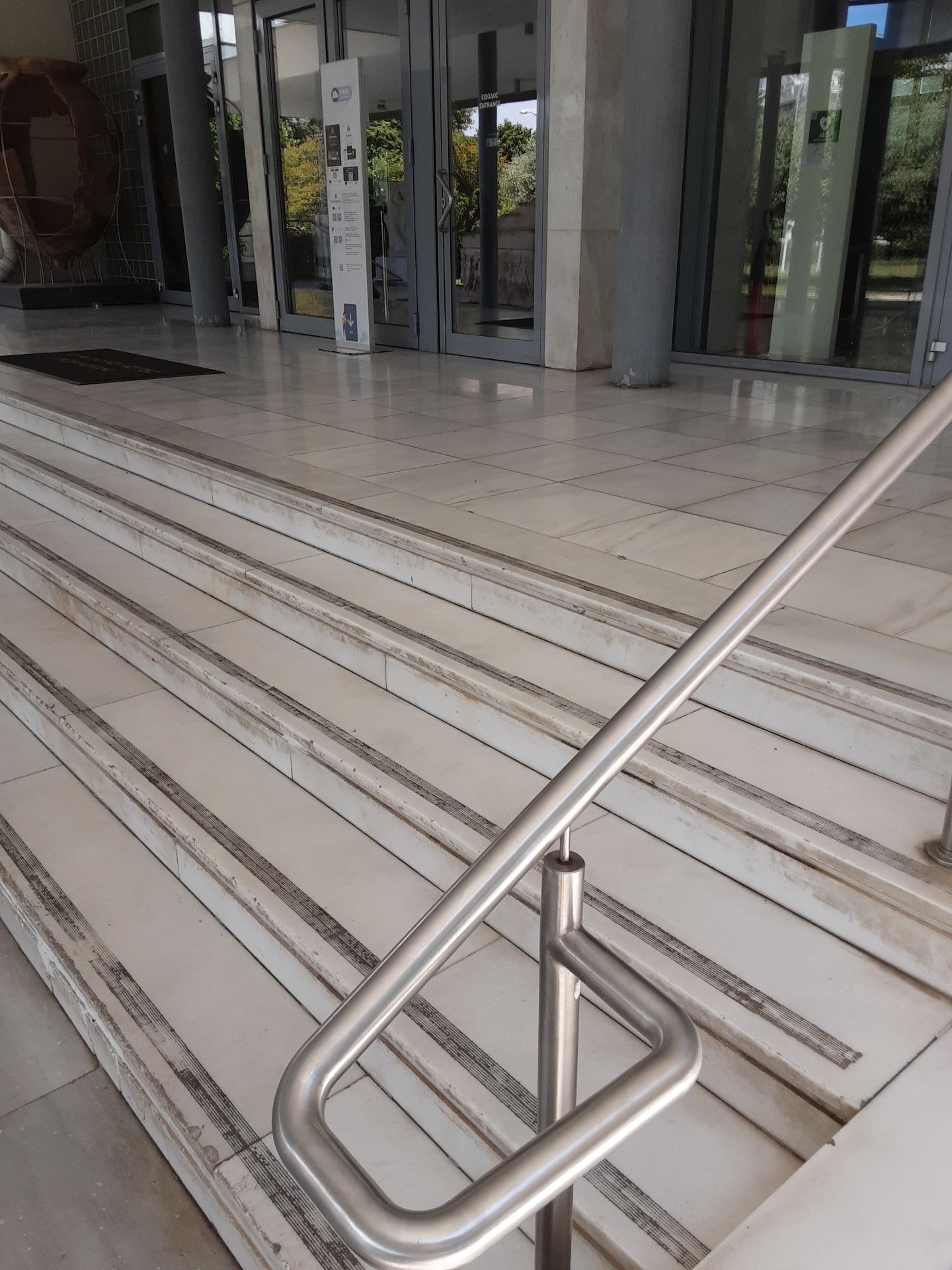
Stairs
Stairs to the public toilet (after the shop)
- Does it have a riser (front face)?
- Vertical
- Handles / handrails
- Present and standards-compliant
- It is a staircase with a stairlift
- No
- Is it…
- Main
- Parapets / railings
- Present and standards-compliant
- Is it interior and…
- Fixed
- Is it…
- Interior
- The (minimum) opening of the stairs is (in cm)…
- 120
- The (minimum) depth of the steps is (in cm)…
- 26
- The (maximum) height of the steps is (in cm)…
- 19
- The width of the stairs
- Yes
- In the case of stairways that are part of the existing network with tactile guidance paths for the blind, are there tactile warning surfaces at the start, end and changes of direction of the stairs?
- Not part of such a network
- The lighting is adequate
- Yes
- Is it easily identifiable?
- Yes
- At the stair landings, there is informational signage for visitors
- Yes, but it is not accessible for people with disabilities (e.g. without Braille or raised lettering)
- Is it standards-compliant?
- No
- The depth (tread) of the steps is constant from the start to the end of the stairs
- Yes
- In the case of exposed side/rear surfaces, are these always "covered" so as not to pose a risk to people with visual impairments and white cane users?
- They are not exposed
- The height of the steps is constant from the start to the end of the stairs
- Yes
- Is there a standards-compliant alternative for wheelchair access?
- None
- Includes conical and/or curved steps
- Yes
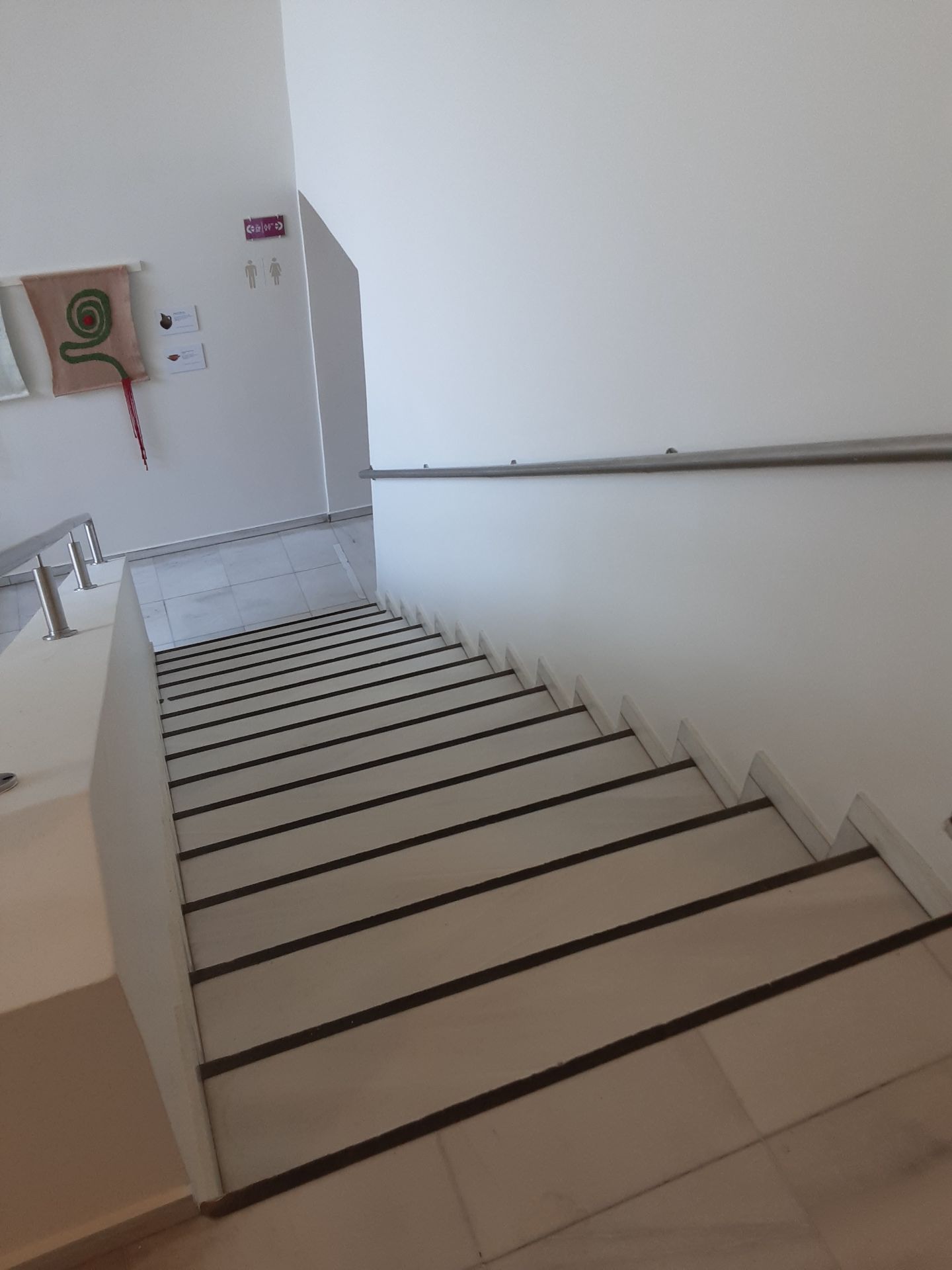
Restroom (WC)
Public toilet (on the mezzanine, between the Foyer and the Refreshment area). Access only via stairs.
- Includes..
- Room with toilet bowl, vestibule with washbasin(s), baby care area
- Is it…
- Free
- Is it…
- Interior
- Is wheelchair access ensured?
- No
- Is it…
- Men and women separate
- Is it…
- Entrance unobstructed
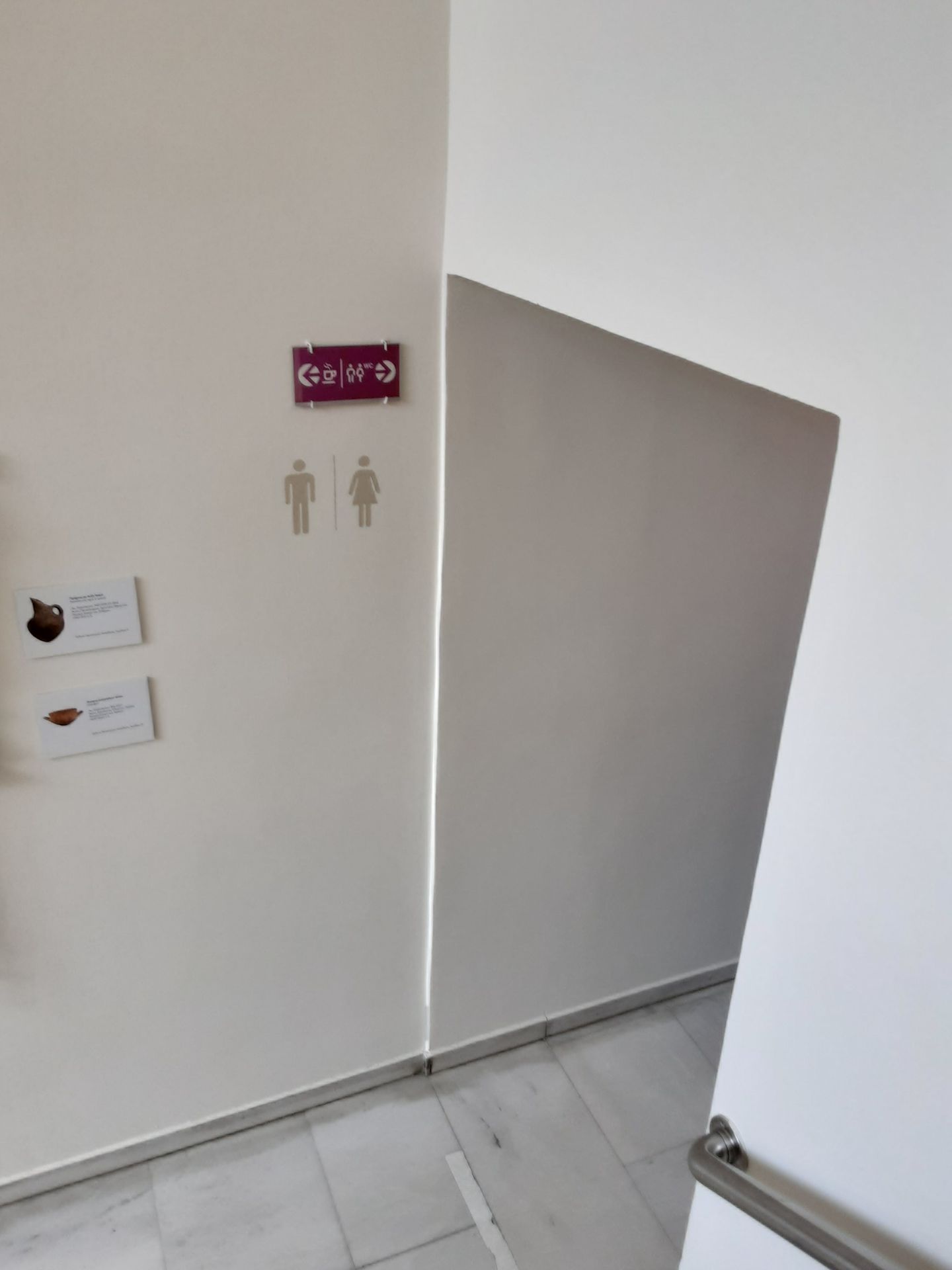
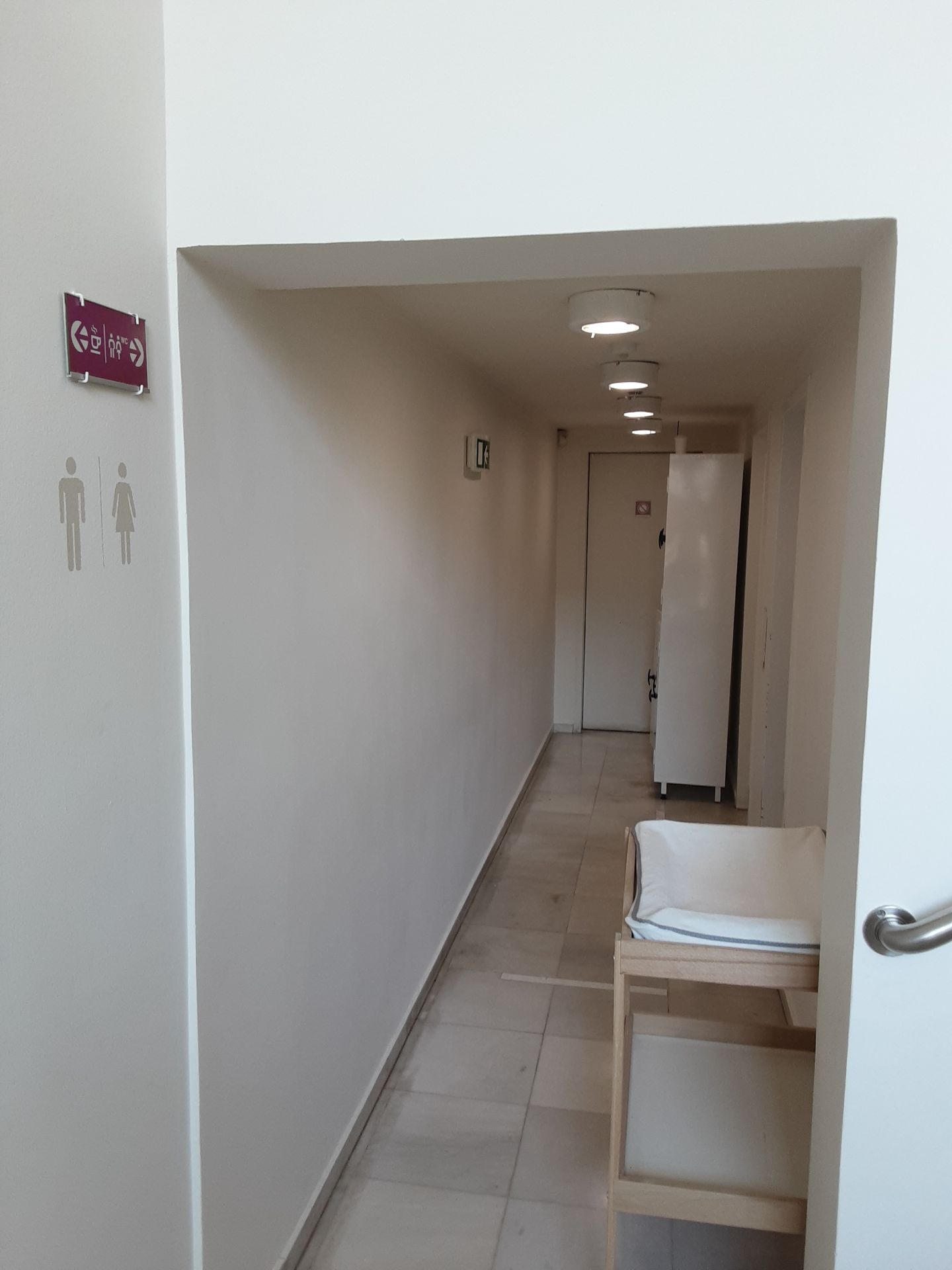
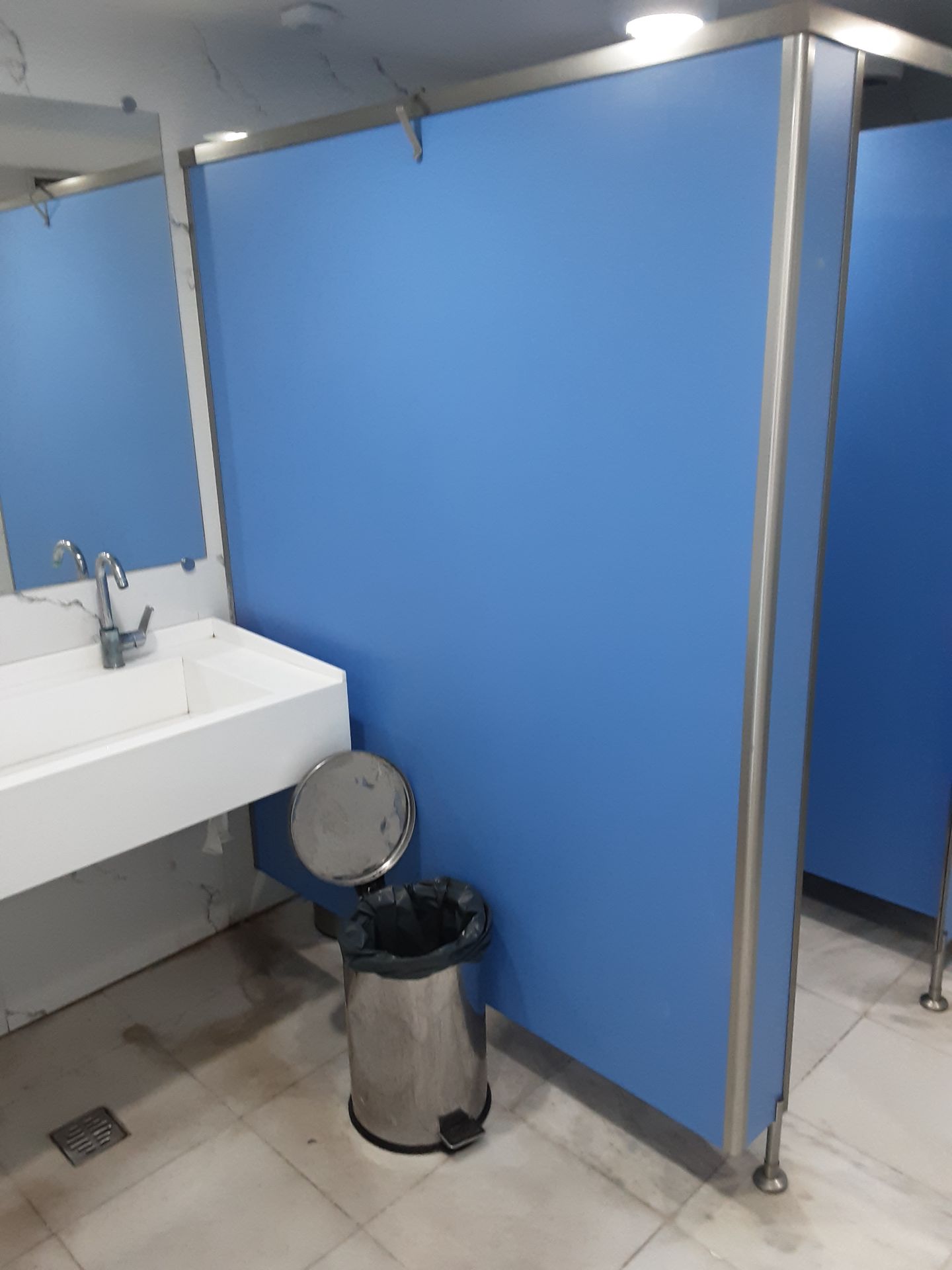
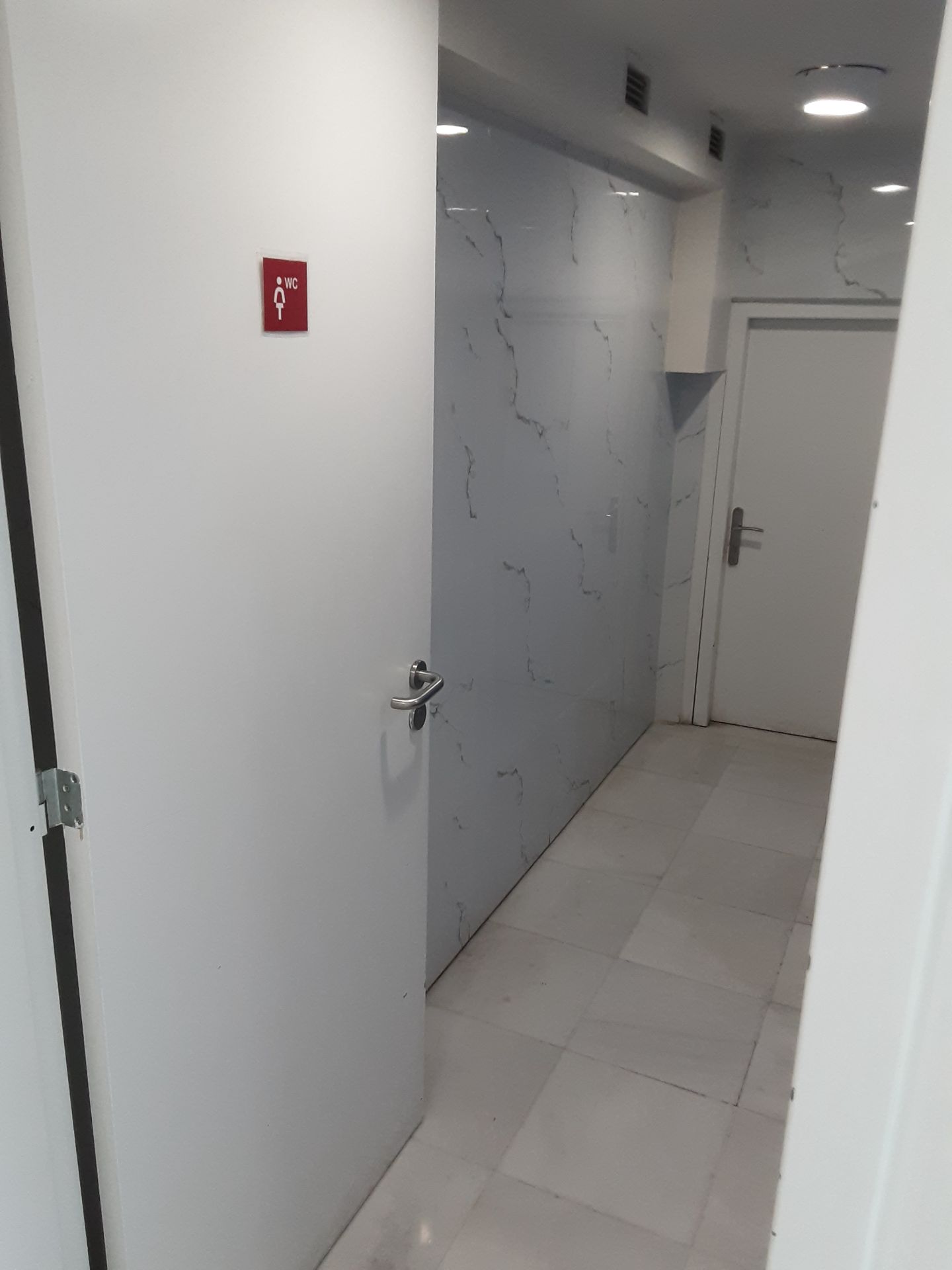
Lift / elevator
Public elevator for access to the basement / ground floor
- The lighting is adequate
- Yes
- Has suitable handles
- No
- Is it…
- Main
- Is it…
- Interior
- The door is automatic
- Yes but closes quickly
- Are the surfaces smooth, non-slip
- Yes
- All operating mechanisms
- Yes
- Is it accessible and standards-compliant?
- Yes, but it lacks appropriate signage
- The operating mechanisms
- No
- Is it easily identifiable?
- No
- Has an emergency system that works properly
- Yes, emergency communication telephone (two-way)
- On all levels/stops, there is informational signage for visitors
- Yes, but it is not accessible for people with disabilities (e.g. without Braille or raised lettering at a height of 90-120 cm)
- The clear opening of the door is
- 85
- Does it have an emergency lighting system?
- No
- The operating mechanisms
- Yes
- Intended for emergency evacuation
- Yes
- The clear interior width is
- 92
- At all levels/stops…
- There is no level difference (<2 cm) between the cabin and the floor surface of the level, The landing surfaces (w > 1.1 m) are separate from the circulation paths, The landing surfaces are far from steps (distance > 1.5 m)
- In the case of exposed side/rear surfaces, are these always "covered" so as not to pose a risk to people with visual impairments and white cane users?
- Yes
- The clear internal length is
- 140
- Is it accessible and standards-compliant, and is wheelchair access ensured?
- Yes
- Overall, use is not possible/safe for specific categories of people with disabilities
- people with visual impairments
- In the case of an elevator/platform lift that is part of an existing network with tactile guide paths for the blind, are there tactile warning surfaces outside the door at all levels?
- Not part of such a network
- The door is automatic but does not close / reopen when an obstacle is detected
- Yes
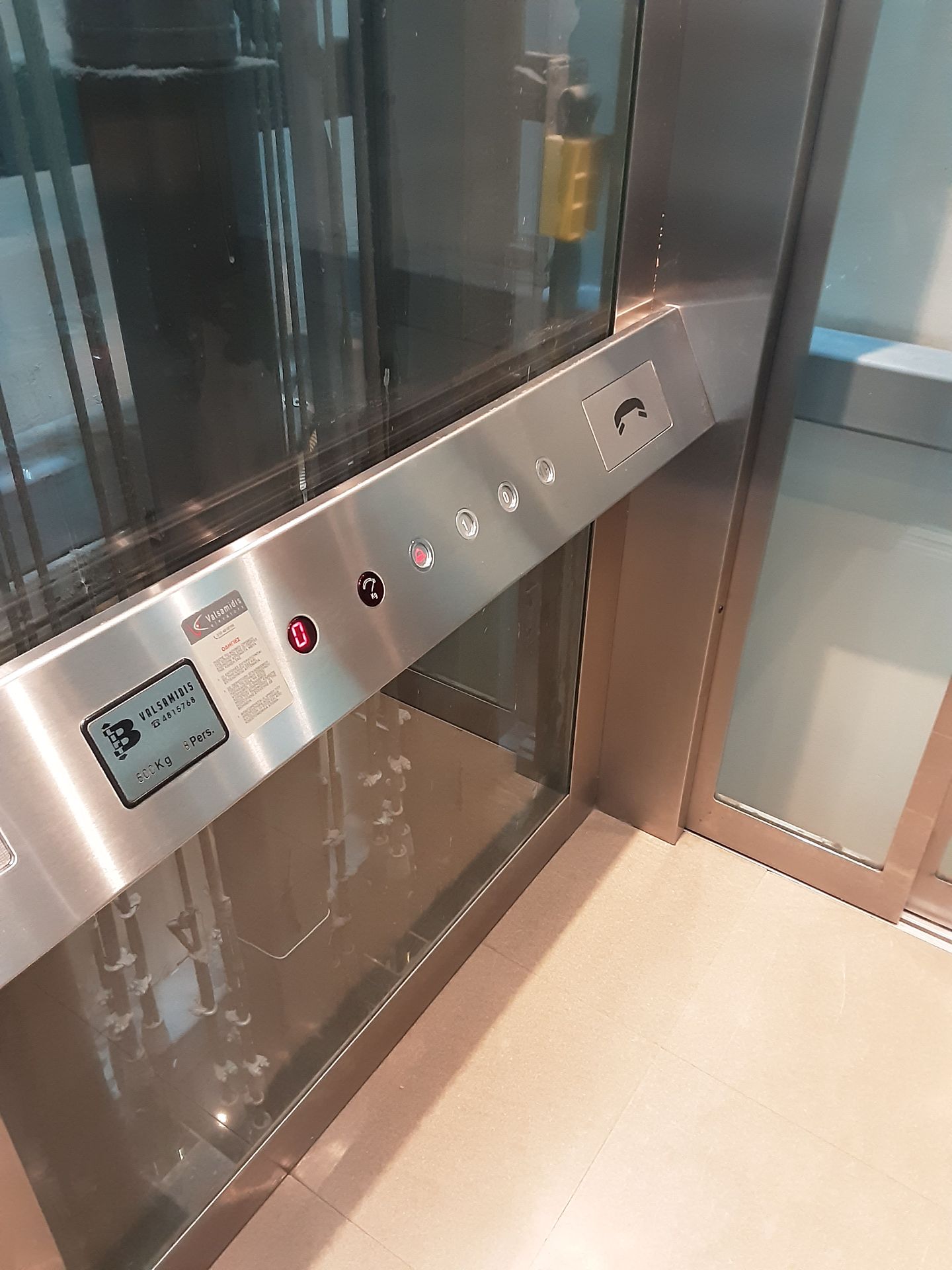
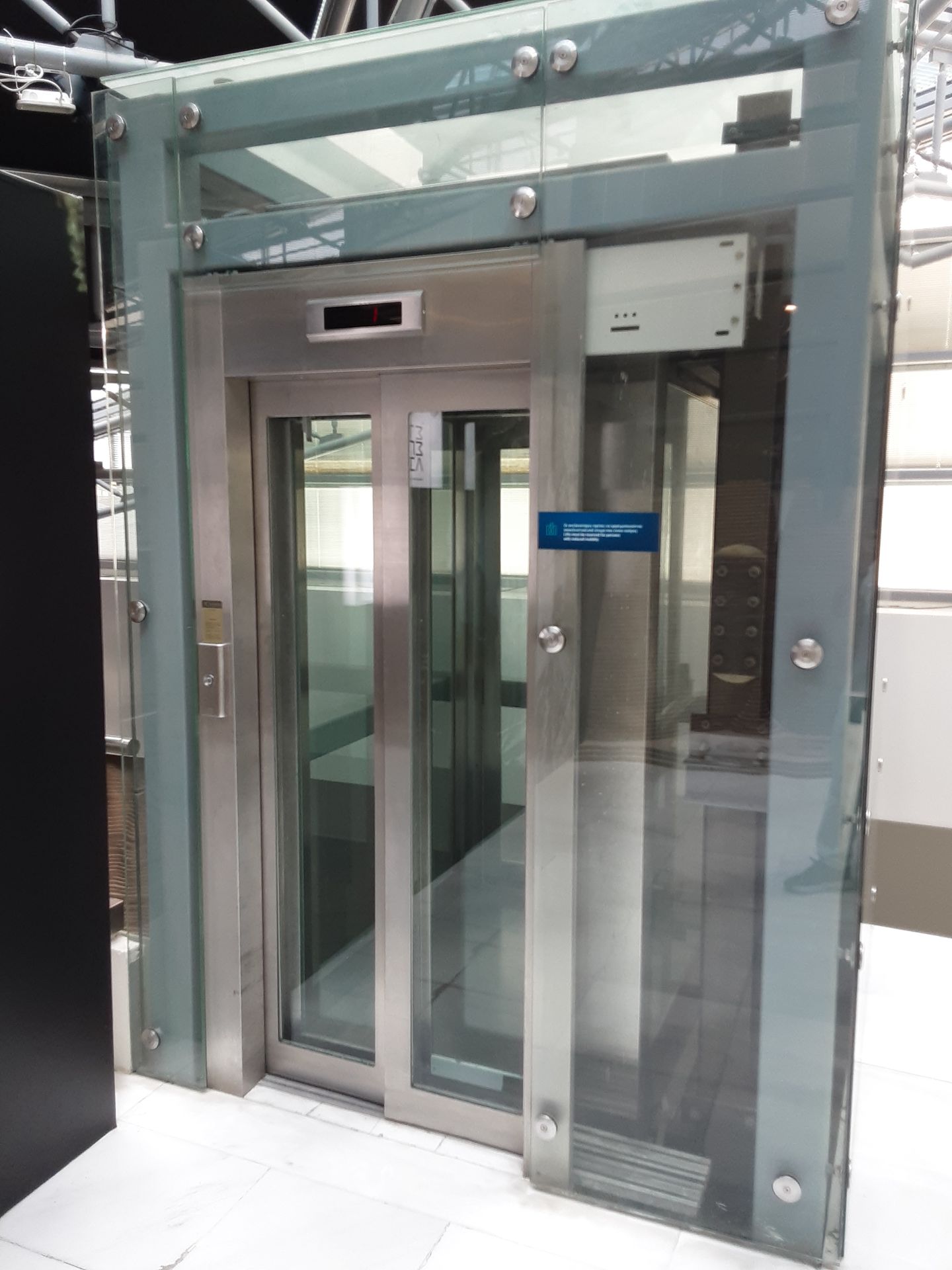
Building
Educational Programs Room (Basement)
- Overall, within the building there are accessible areas where staff are present and the public can communicate / interact with them
- Yes, and it is aware of the various communication needs of people with disabilities
- Access to toilet facilities is not an issue?
- No
- The building has toilets for the public but no accessible toilet for people with disabilities according to national specifications/guidelines
- No
- The building has toilets for people with disabilities and they are sufficient as required by law for this case, because…
- There is at least one on each floor
- Overall, noise levels inside the building are suitable at all times of use/visit
- Yes
- Generally, heating in the building is adequate at all hours of use/visit
- Yes
- Generally, the lighting within the building is suitable at all hours of use/visit
- Yes
- In general, air conditioning/ventilation inside the building is appropriate at all hours of use/visit
- Yes
- Is vertical access not an issue?
- No
- Inside the building
- No
- In general, inside the building there are sufficient/appropriate routes, emergency exits and/or other means
- Yes
- Outside all separated areas there is informational signage for the visiting public
- Not present where needed
- Is access to separated spaces/rooms not an issue?
- No
- How many separate floors/levels does it have?
- 1
- It is…
- Historic/listed building
- The areas open to the public occupy the following floors / levels
- Ground floor
- How many separate entrances/exits does it have?
- 3
- Guide dogs are allowed entry
- Yes
- Overall, the corridors and circulation routes have clear widths
- Over 90 cm
- Overall, the corridors and circulation routes have suitable clear heights
- Yes
- Lighting in corridors and generally along movement routes is appropriate
- Yes
- Is there an emergency lighting system installed in the corridors and generally along the movement routes?
- Yes
- There are bridges in the building
- No bridging needed / present
- There is furniture and/or equipment within the 90 cm clear width
- No
- There is equipment
- No
- There is equipment
- No
- There are levels/areas with seating/rest positions for the public without provisions for a wheelchair stop
- No
- There are levels / areas without sufficient/suitable seating / rest areas for people with difficulty walking / standing for long periods
- No
- There is equipment
- No
- There are levels / spaces with furniture
- No
- Signage is generally provided inside the building
- is not standardized / consistent and/or positioned according to its size and function, Other (specify…)
- At strategic points of the building there is a simplified floor plan or a model
- No
- In general, the choice of location and placement of signage panels within the building do not comply with the relevant specifications and create obstacles or risks for certain categories of people with disabilities
- People with visual disabilities
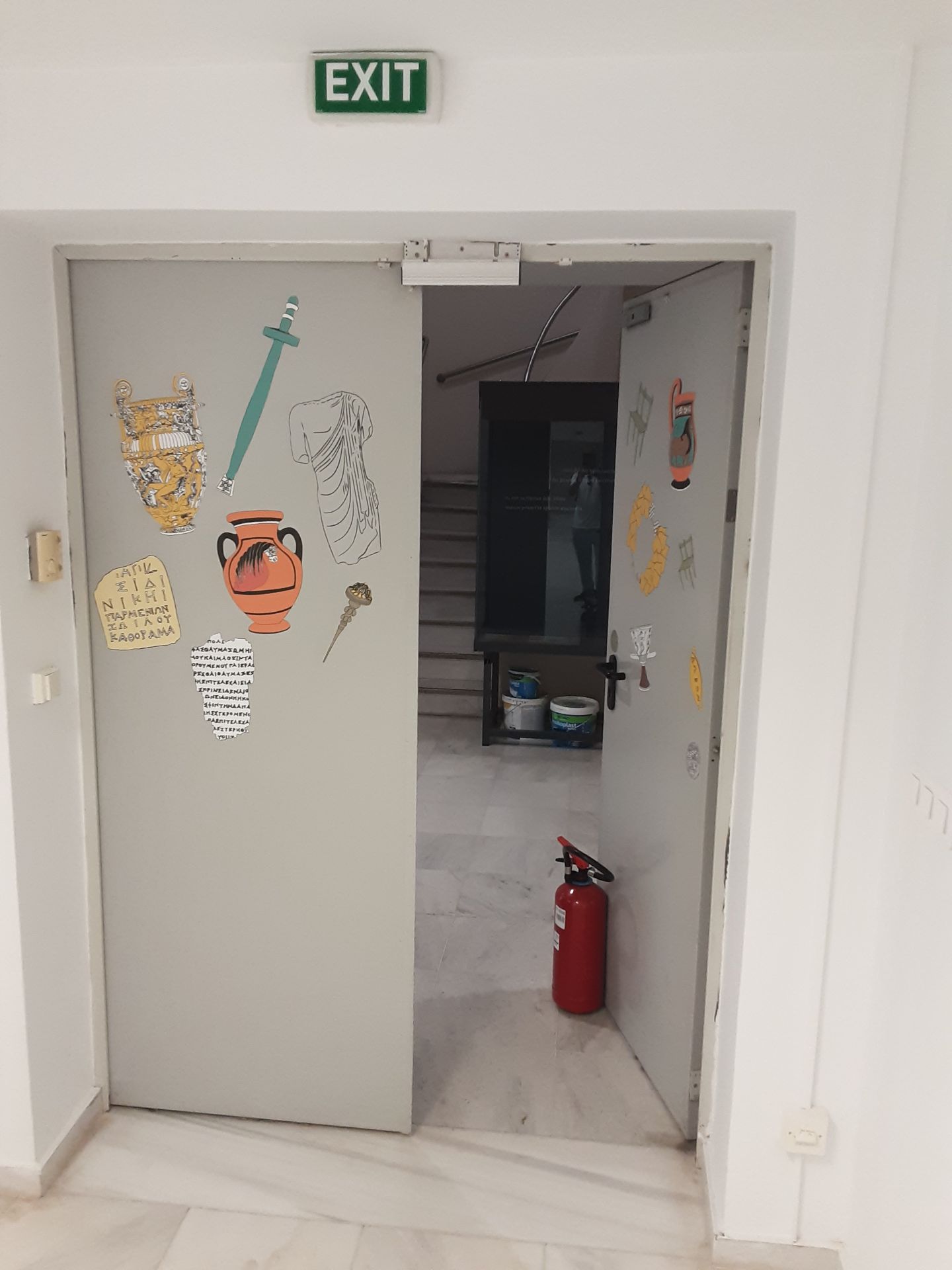
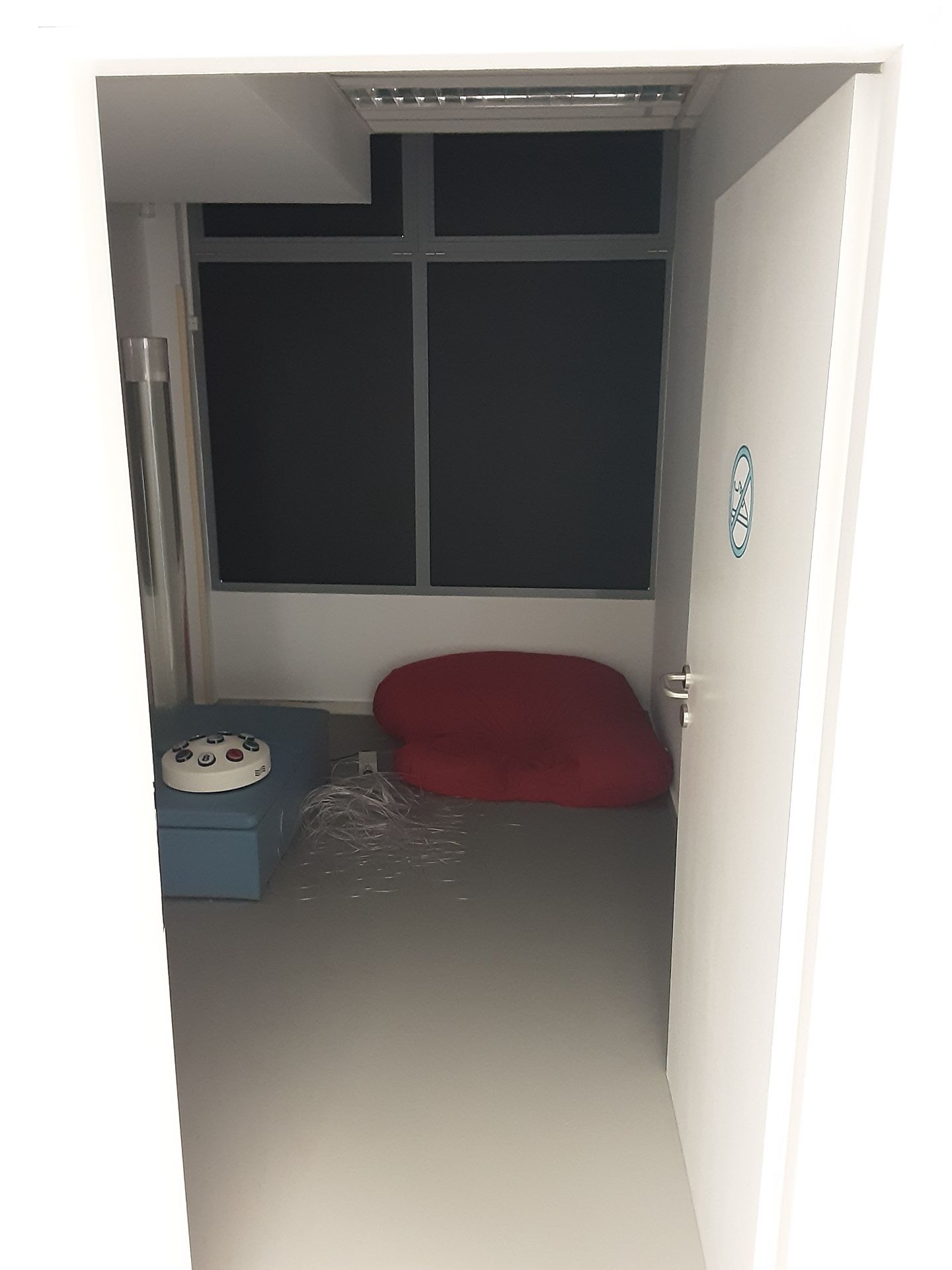
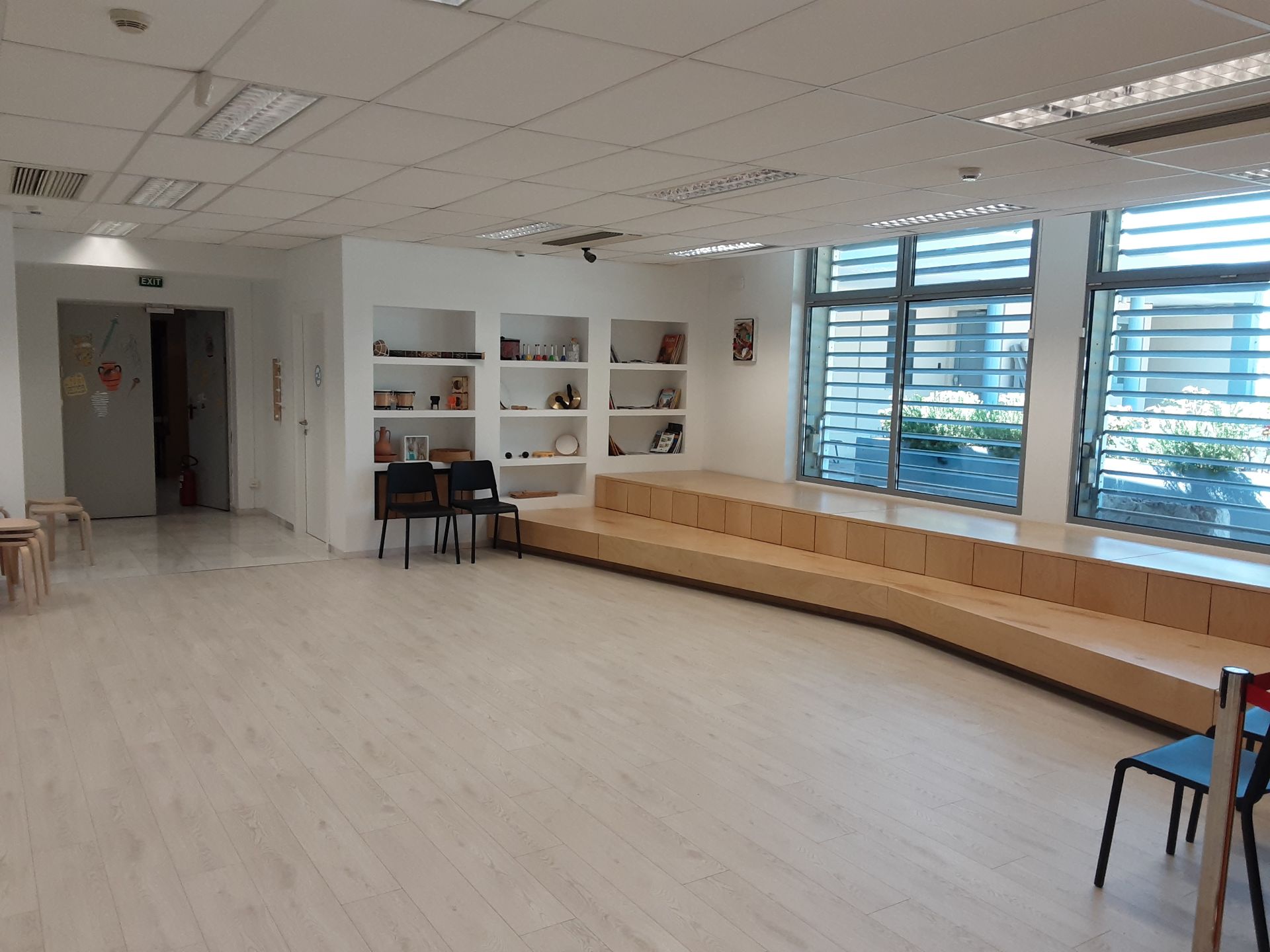
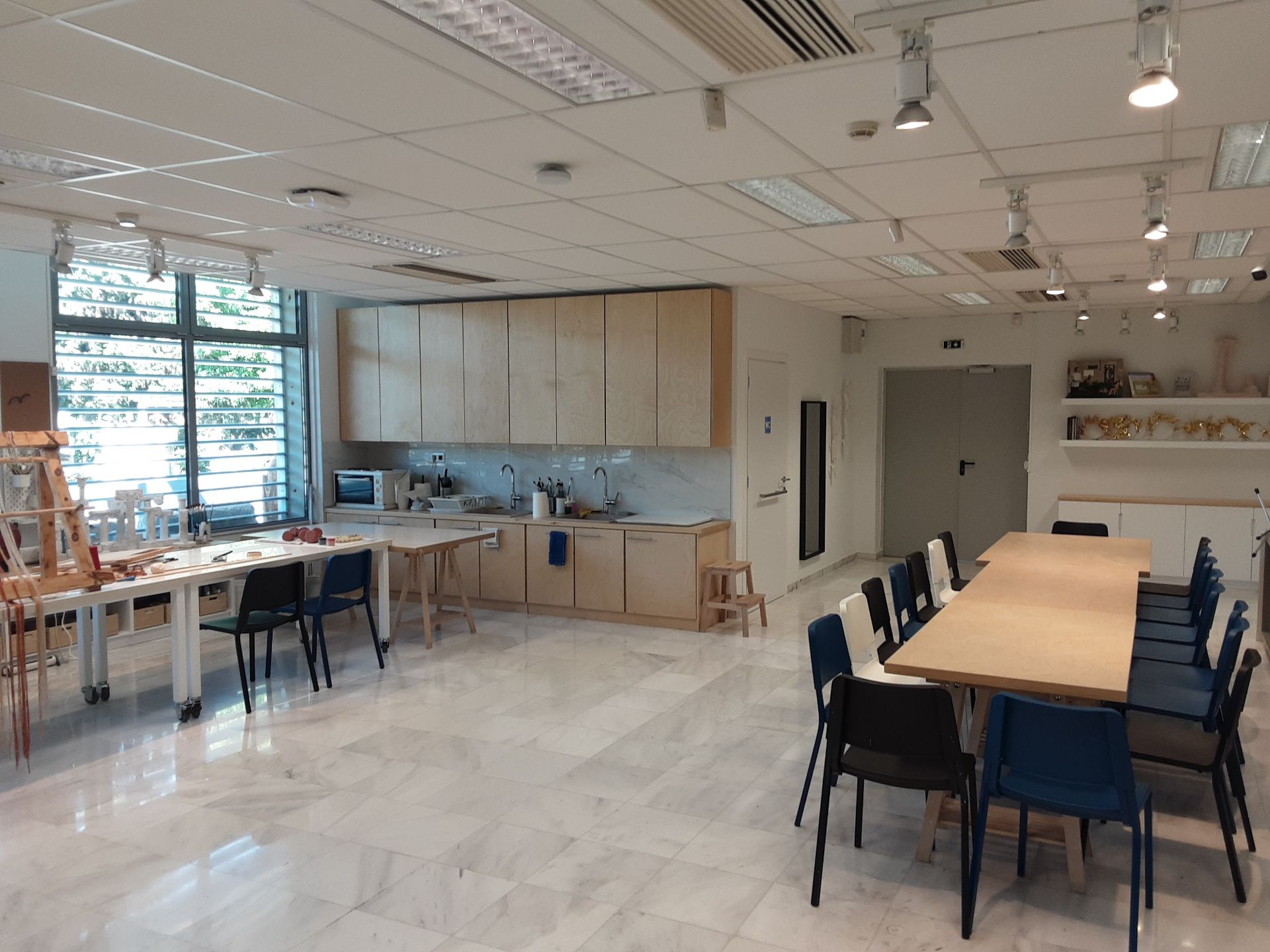
Entrance / exit
From the atrium to the Basement (A)
- Is there a door?
- Stays open when needed.
- Railings / parapet
- Not needed
- Adequately served by a dedicated boarding / alighting area suitable for people with disabilities
- Yes
- Does a tactile guide path lead to the building?
- Yes, standards-compliant
- Cross slope
- Suitable
- Longitudinal slope
- Suitable
- Offers adequate protection from the weather
- Covered
- Clear opening
- Suitable
- Is it easily identifiable?
- Yes
- Is it preceded by a sidewalk with an unsuitable road–sidewalk connection for wheelchair users?
- No
- Clear passage height
- Suitable
- Informational signage for visitors is provided outside
- No
- Adequately served by a dedicated accessible parking space for private vehicles
- Yes
- Bears suitable informational signage regarding accessibility to the building's spaces
- No
- Adequately served by disability-friendly public transport
- Yes
Entrance / exit
From the atrium to the Basement (B)
- Is there a door?
- Remains open when needed.
- Railings / parapet
- Not needed
- Cross slope
- Suitable
- Longitudinal slope
- Suitable
- Offers adequate protection from the weather
- Covered
- Clear opening
- Suitable
- Is it easily identifiable?
- Yes
- Clear passage height
- Suitable
- Informational signage for visitors is provided outside
- No
- Bears suitable informational signage regarding accessibility to the building's spaces
- No
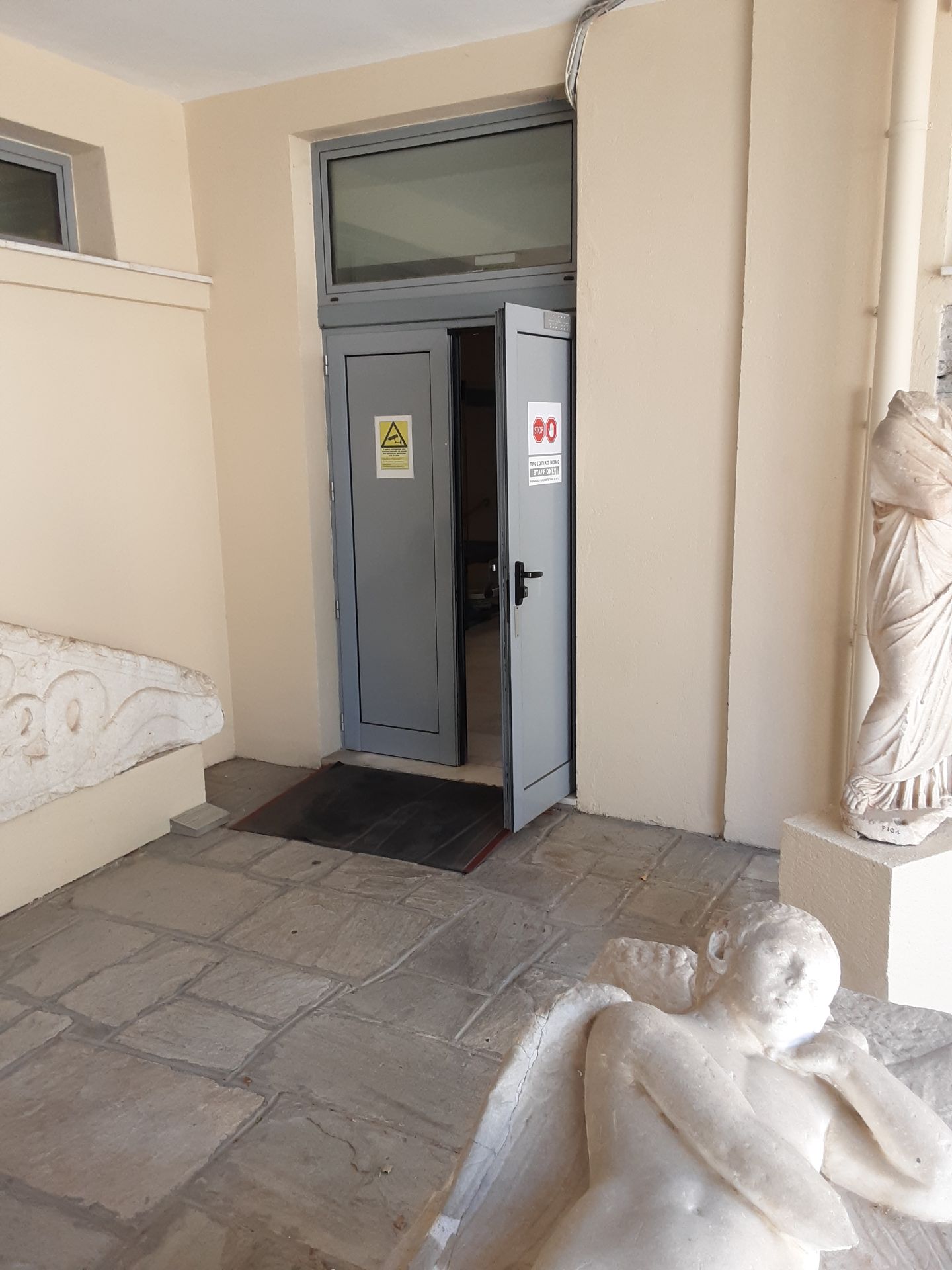
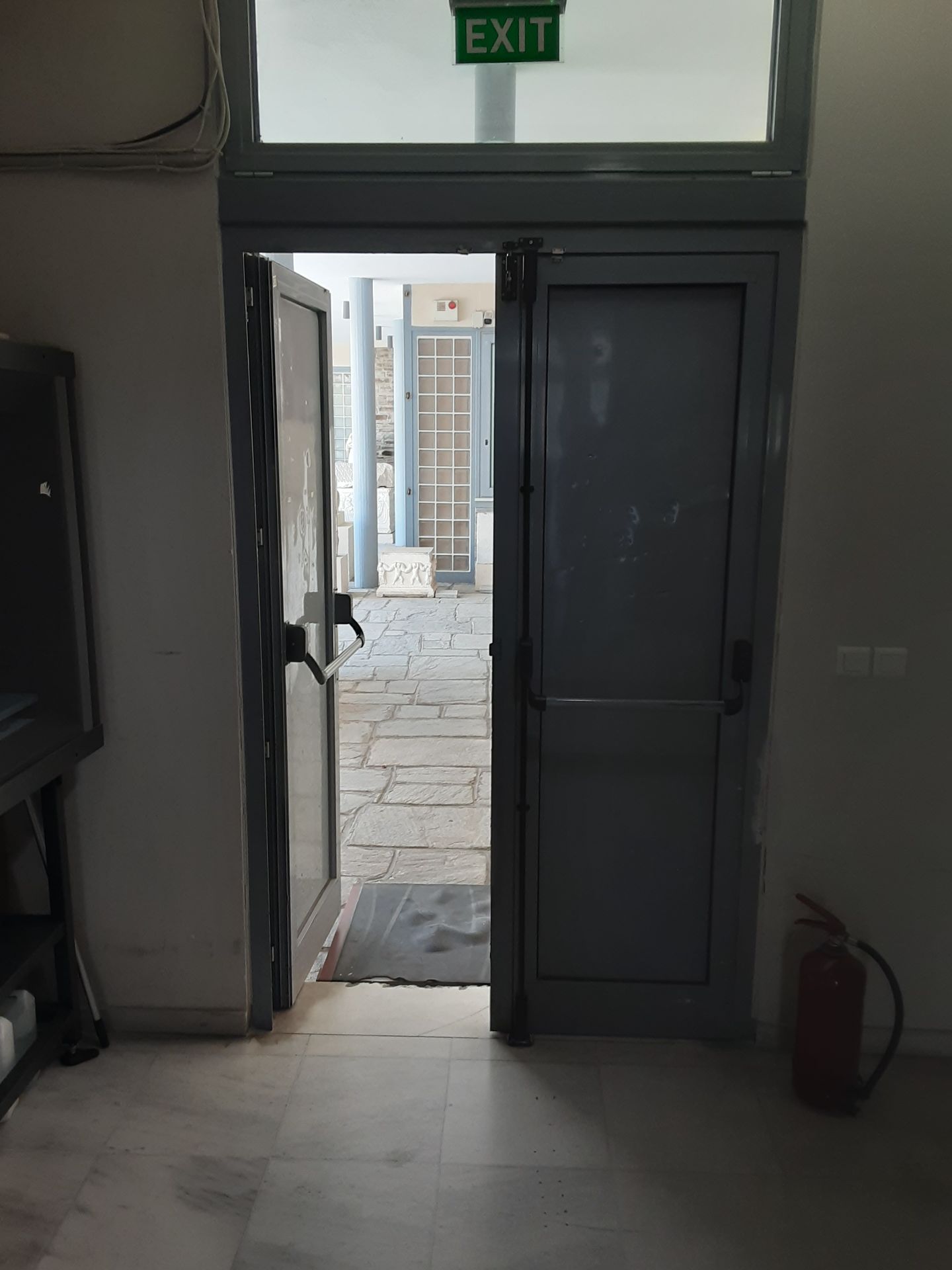
Entrance / exit
From the side/courtyard
- Is there a door?
- But it remains open when needed.
- Adequately served by a dedicated boarding / alighting area suitable for people with disabilities
- Yes
- Does a tactile guide path lead to the building?
- No
- Cross slope
- Suitable
- Longitudinal slope
- Suitable
- Clear opening
- Suitable
- Is it easily identifiable?
- Yes
- Clear passage height
- Suitable
- Informational signage for visitors is provided outside
- No
- Adequately served by a dedicated accessible parking space for private vehicles
- Yes
- Bears suitable informational signage regarding accessibility to the building's spaces
- No
- Adequately served by disability-friendly public transport
- Yes
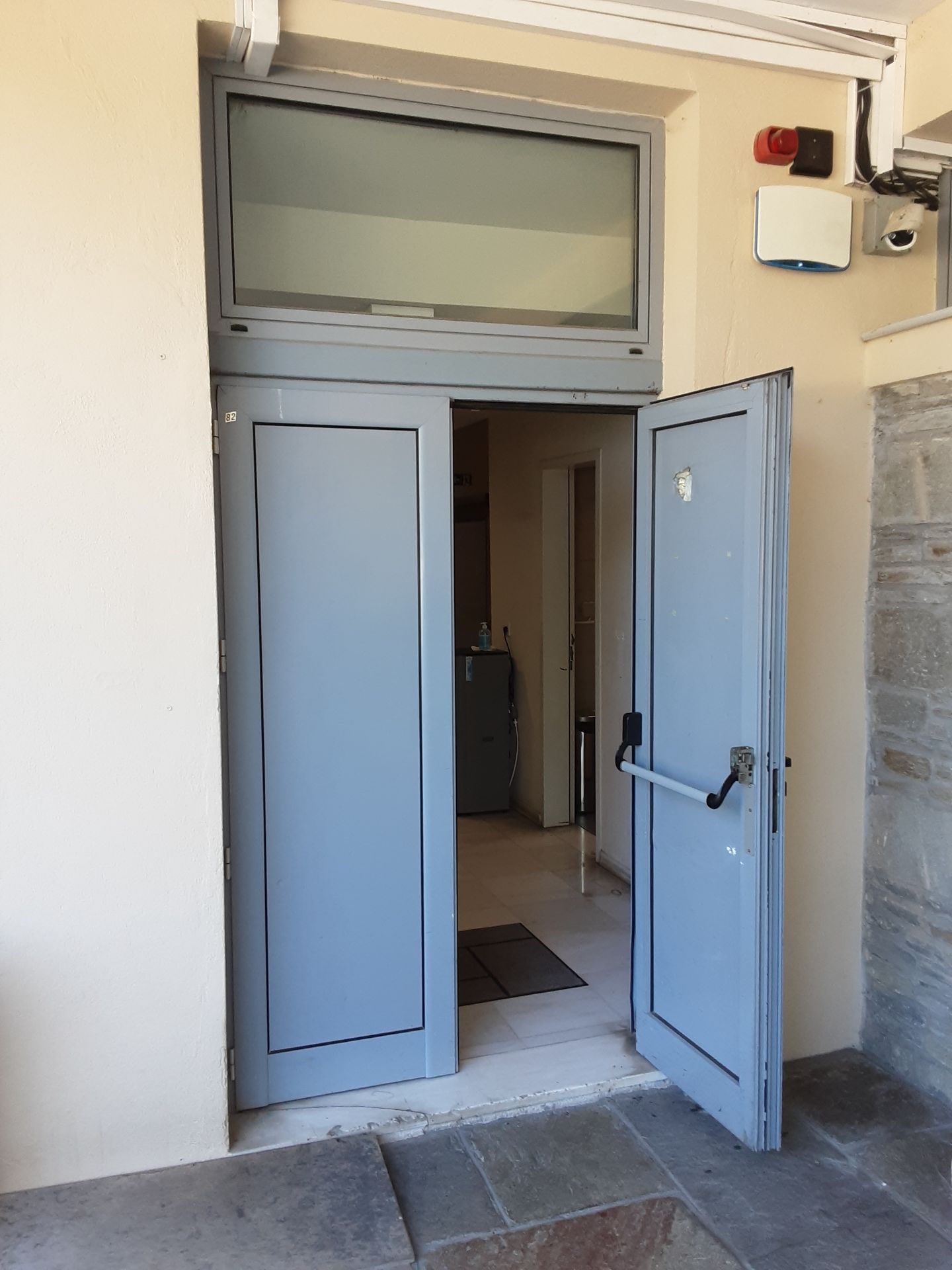
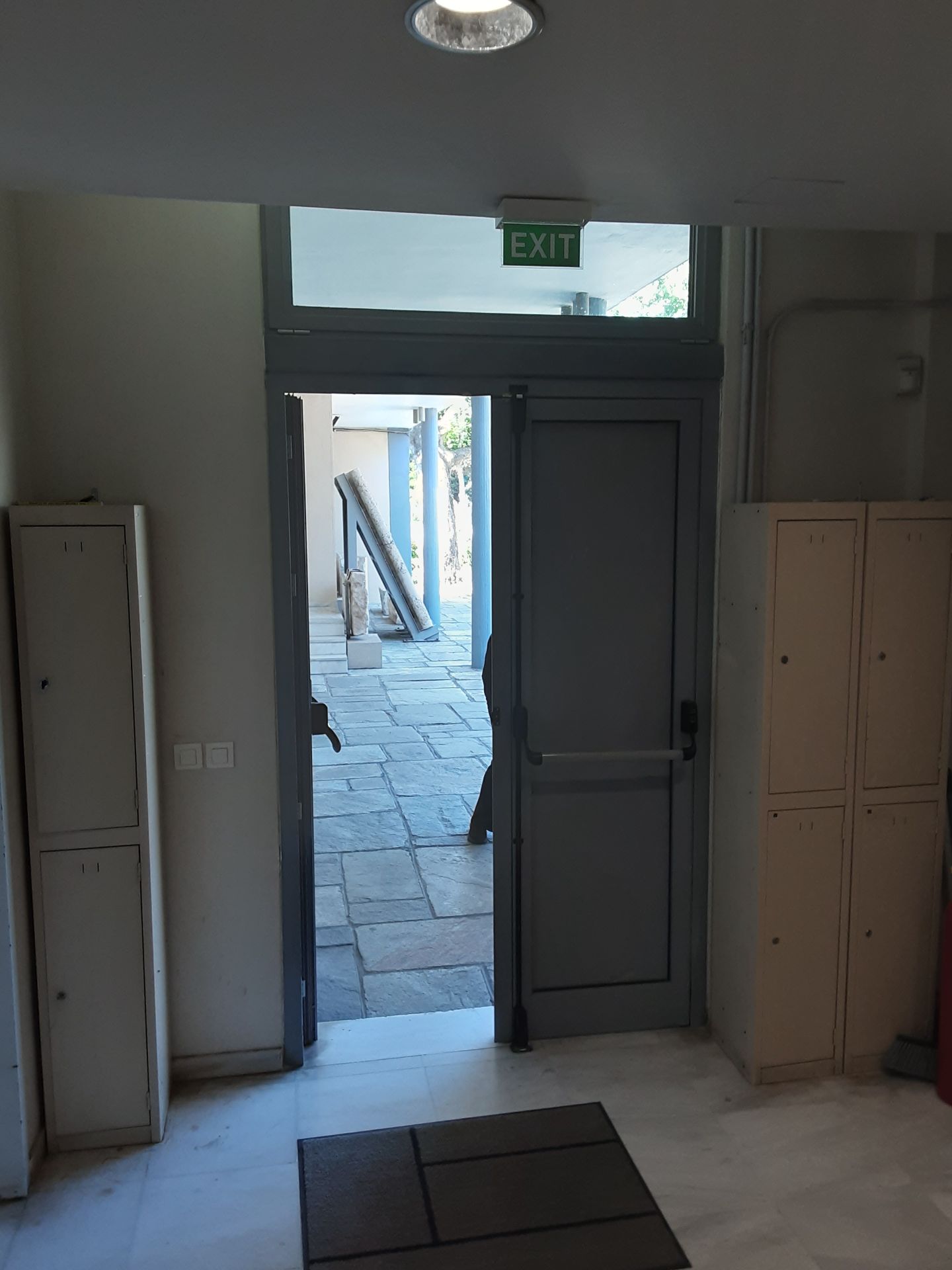
Outdoor area
Open-air exhibition "Field, House, Garden, Place"
- In general, within the site there are visitable areas with staff that the public can contact / interact with
- No, there is none
- Generally, lighting in the space is adequate at all hours of use/visit
- Yes
- Access to toilet facilities is not an issue?
- Yes
- Is vertical access not an issue?
- Yes
- Overall, the venue has adequate/suitable routes, emergency exits and/or other means for wheelchair users and people with disabilities in general
- No
- Access to separated areas/zones is not an issue?
- Yes
- The interventions to make the space visitable by the public were made…
- After 1985
- Guide dogs are allowed entry
- Yes
- How many separate entrances/exits does it have?
- 1
- The areas open to the public occupy the following floors / levels
- Ground floor (at ground level)
- There is a special mobility/transport service for people with disabilities
- No
- Overall, use is not possible/safe for specific categories of people with disabilities
- Blind people, Wheelchair users, People with vision impairments, People with walking difficulties
- Generally, the corridors and circulation routes have appropriate slopes
- No
- Overall, the corridors and circulation routes have clear widths
- Over 120 cm
- Generally, the paths are adequately maintained
- No (specify…)
- There are obstacles
- No
- In general, the movement routes / paths are laterally delimited
- Flower beds, Curb (low kerb), None
- There are levels where the corridors and circulation areas are not suitable and safe for navigation by blind people, white-cane users, and people with guide dogs
- Other (specify…)
- There are bridges in the space
- No bridging needed / present
- Generally, lighting along the circulation routes is adequate
- Yes
- On a level of the venue that is otherwise accessible, there are points, spaces or areas that wheelchair users cannot reach independently, comfortably and safely
- With unsuitable bridging and/or slopes > 5%
- Overall, on an otherwise accessible level, access to some spaces/areas located on it is not possible/safe for specific categories of people with disabilities
- People with walking difficulty, People with vision disabilities
- Overall, the corridors and circulation routes have suitable clear heights
- No
- There are levels / areas without sufficient/suitable seating / rest areas for people with difficulty walking / standing for long periods
- Yes
- There are levels/areas with seating/rest positions for the public without provisions for a wheelchair stop
- Yes
- A simplified floor plan or model is available at strategic points in the space
- No
- An automatic guide system is used and its design ensures accessibility for...
- None
- Guide dogs are accepted and staff understand that they should not interact with the dog
- Yes
- Audiovisual media are used and their design ensures accessibility for...
- None
- Is there posted and/or available informational material provided to the public?
- No
- All (small) exhibits and their labels are always placed at heights suitable also for wheelchair users
- Yes
- Digital stations are used
- None
- Exhibits are also available in tactile form for blind people
- There are specific originals that may be touched
- Educational/informational activities, screenings and/or live presentations are organized in spaces and with a design that ensures accessibility for...
- None
- There are exhibits or other objects hung in a way that is dangerous for people with visual disabilities
- No
- The signs, labels, exhibit captions, etc. are accompanied by equivalent alternative formats/solutions for people with visual disabilities
- No
- There are areas/levels with exhibits that meet the appropriate specifications for wheelchair access
- Yes
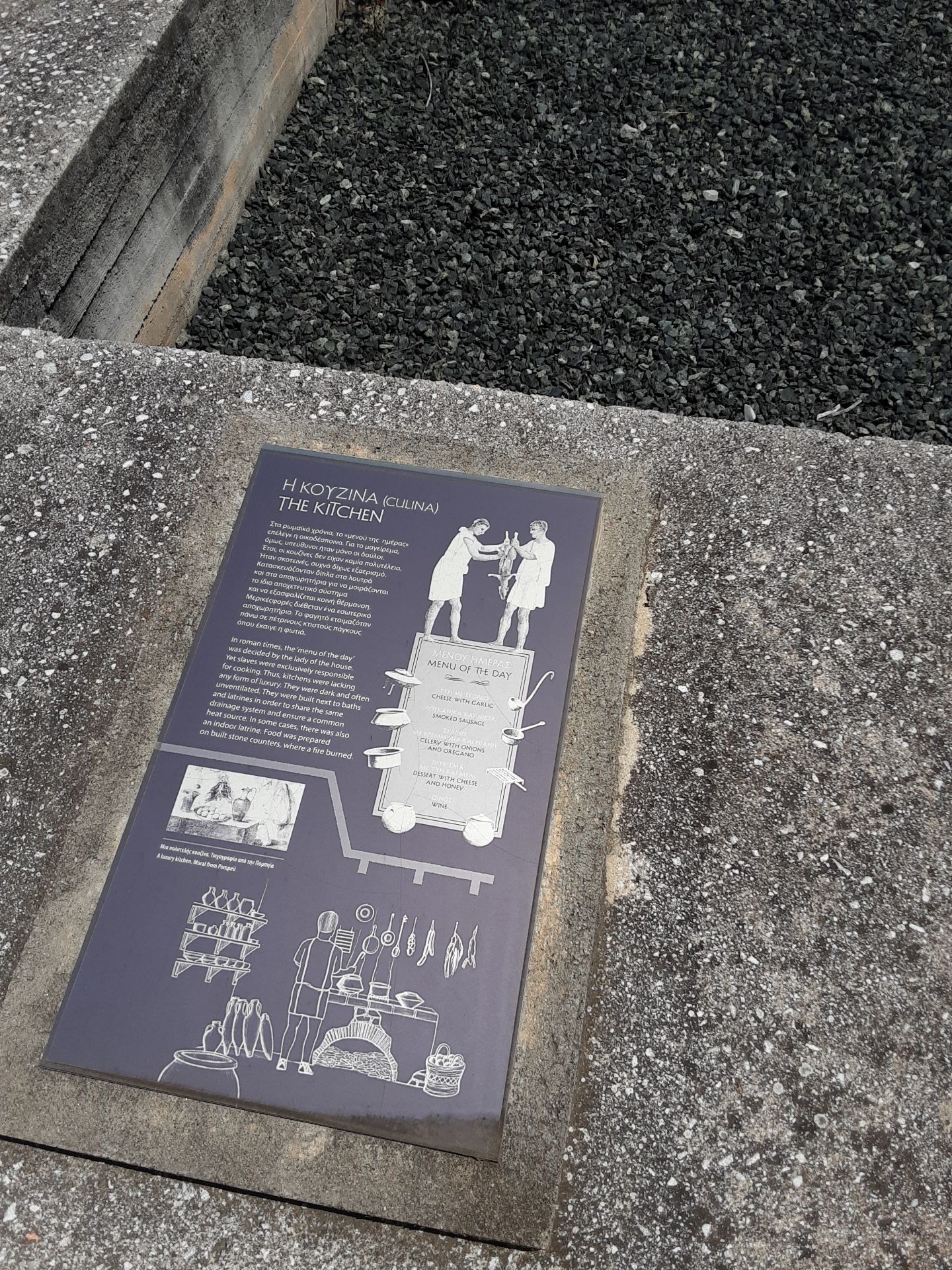
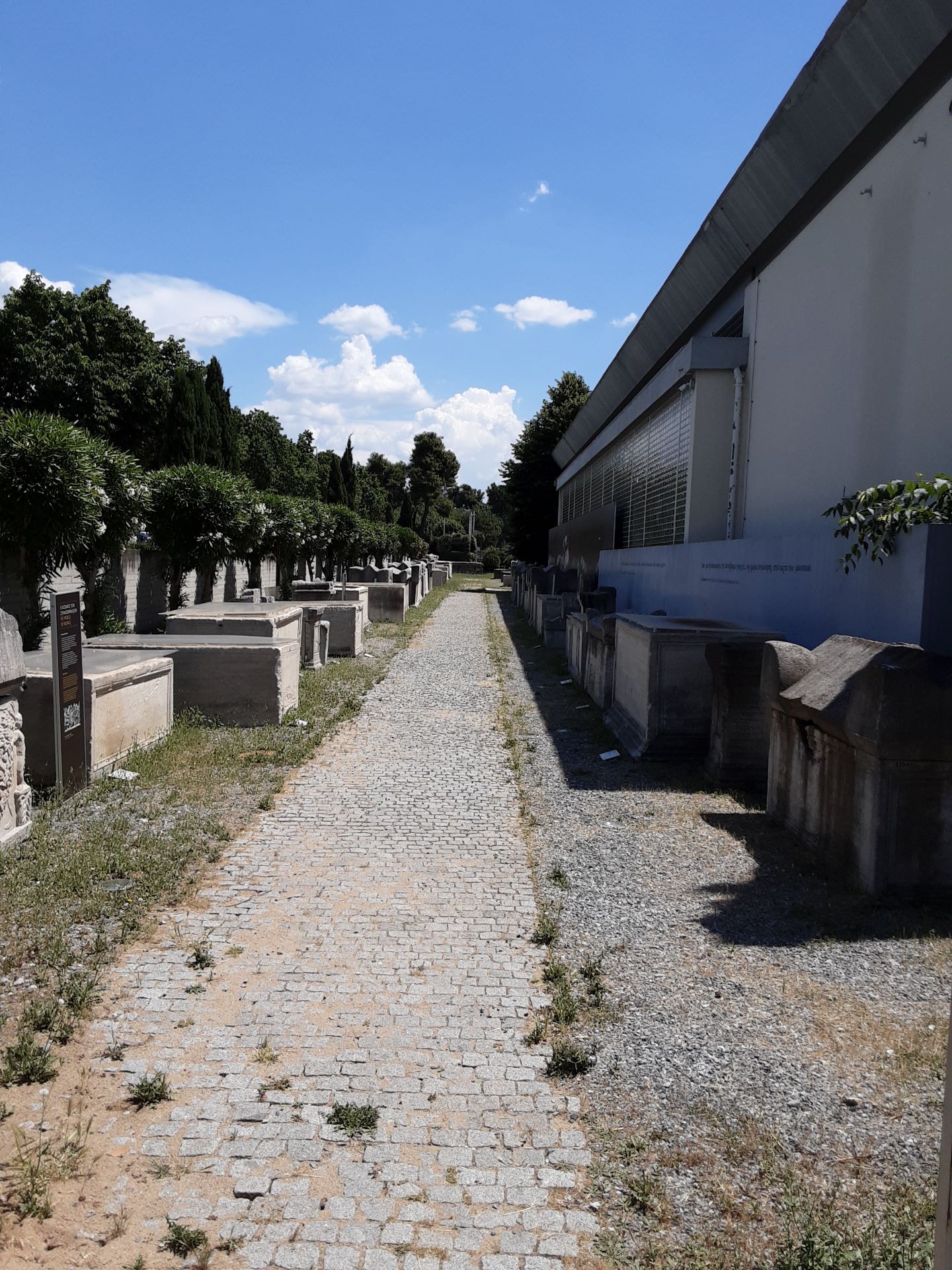
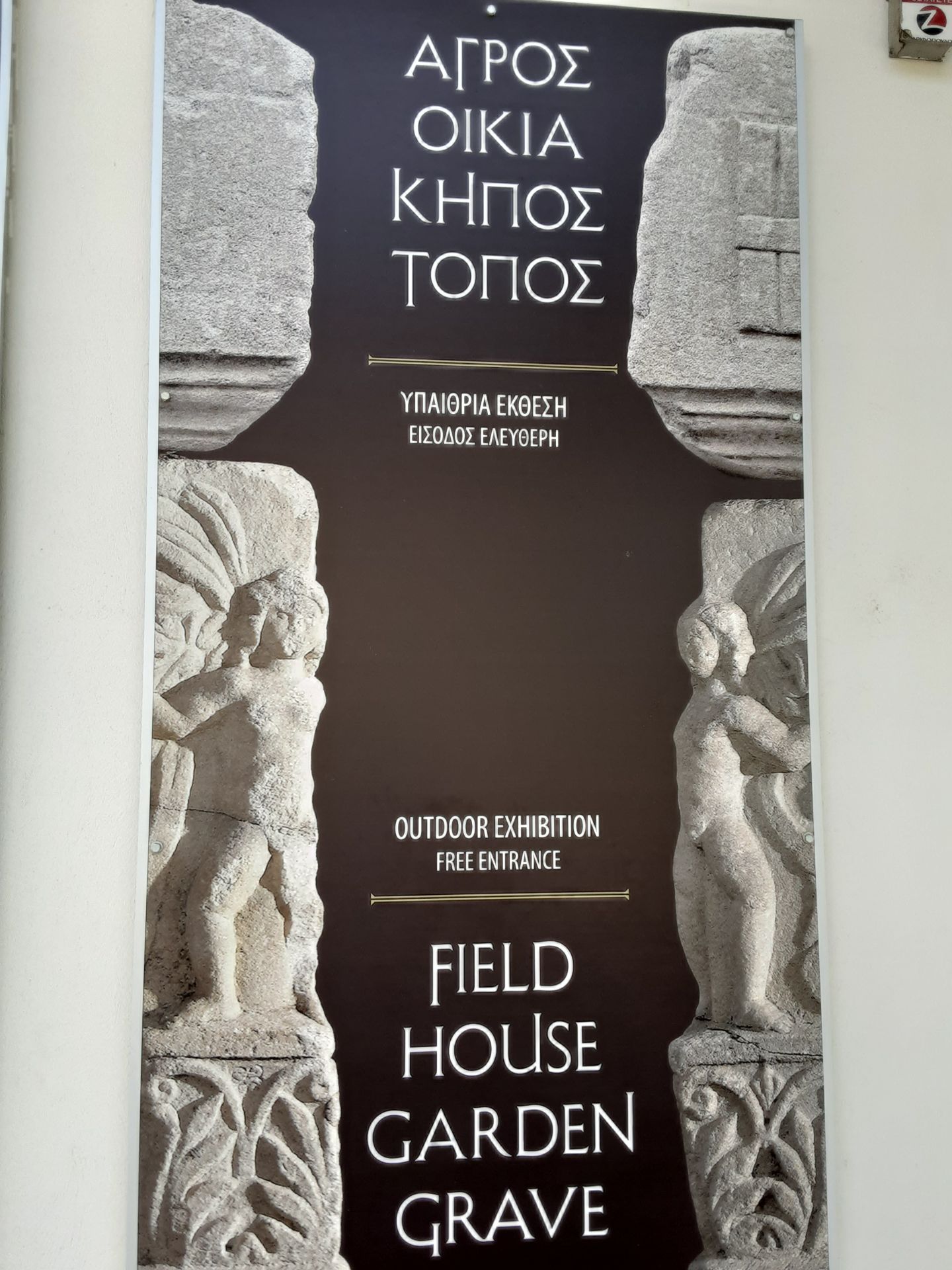
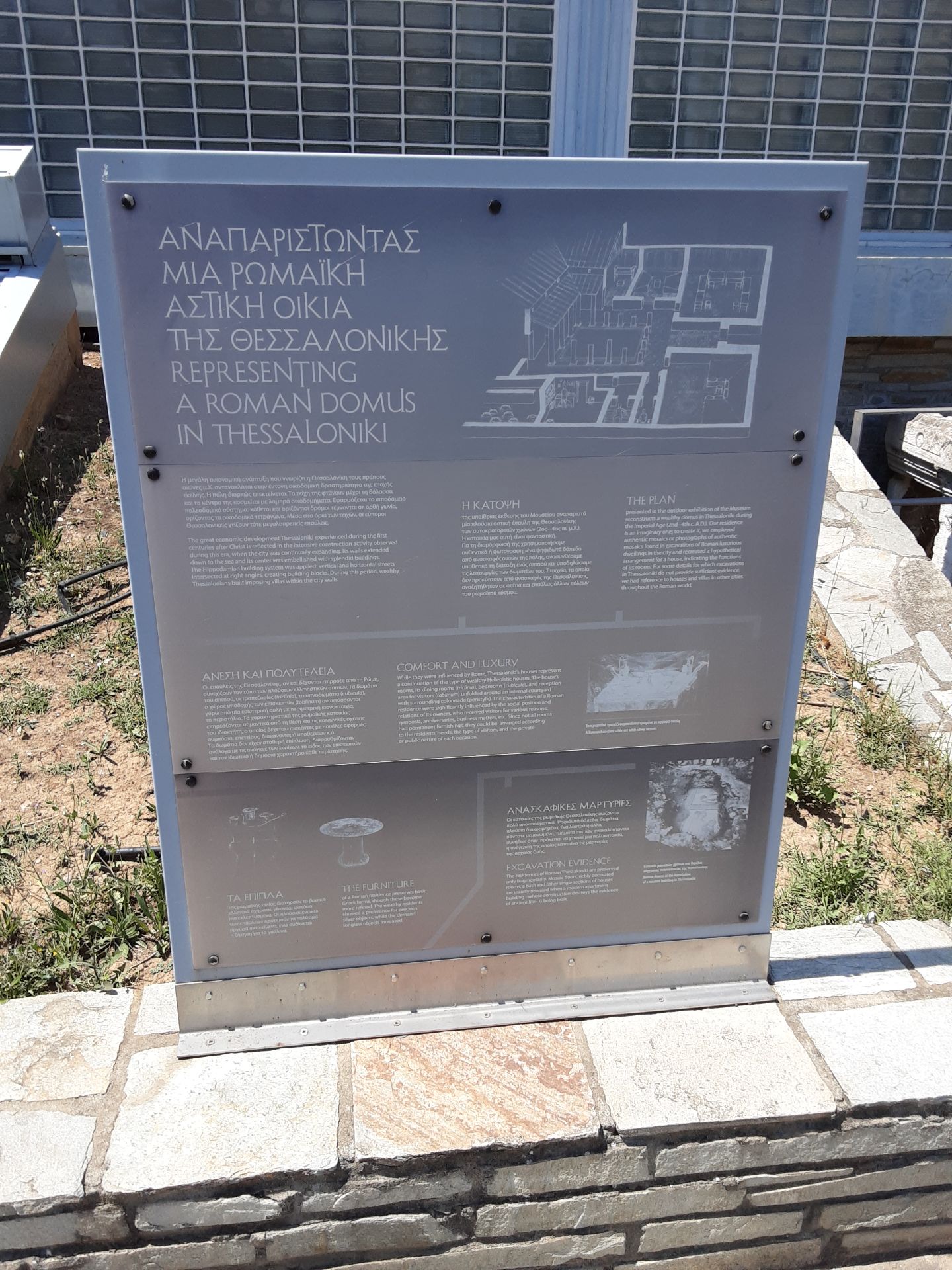
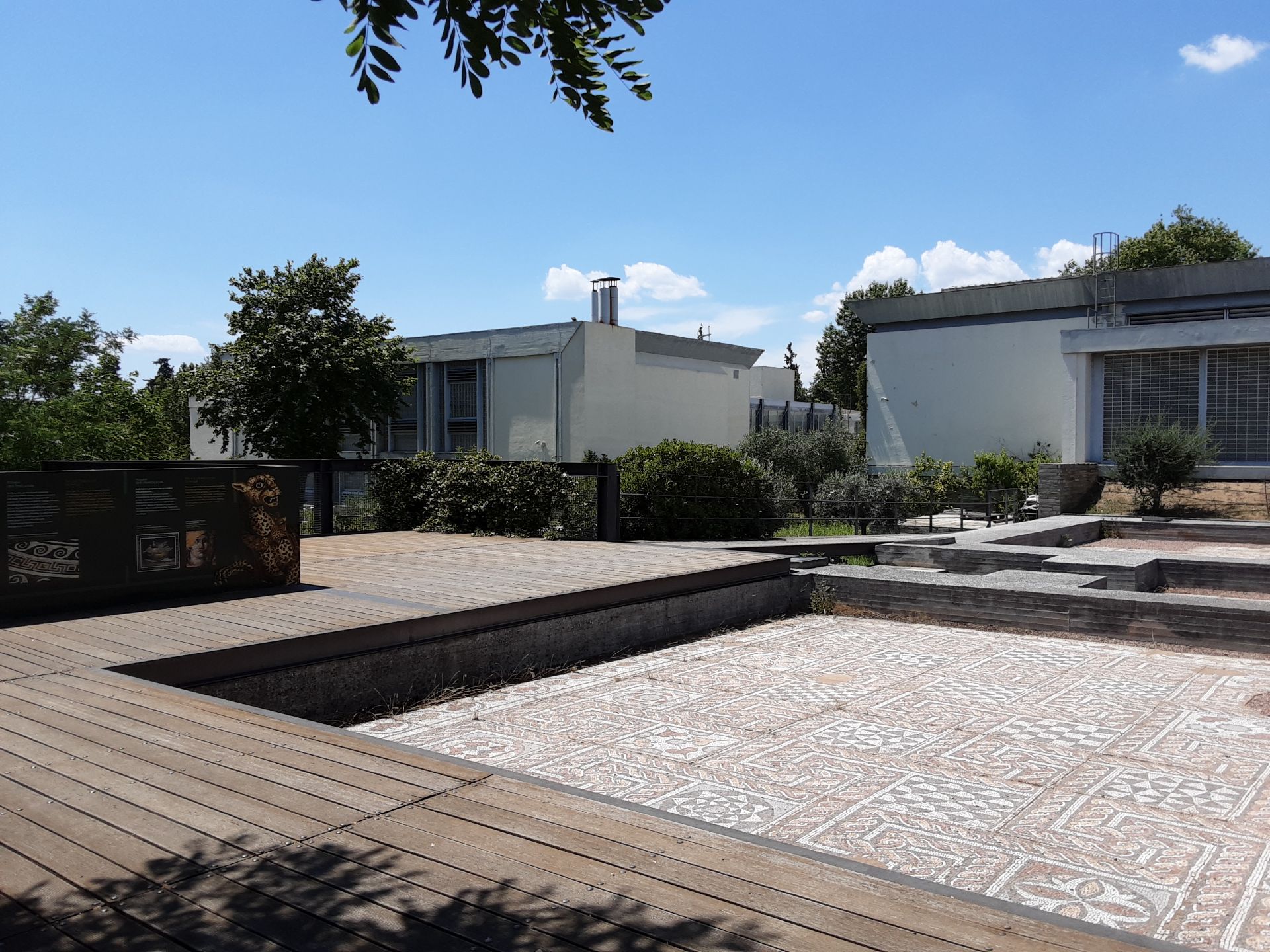
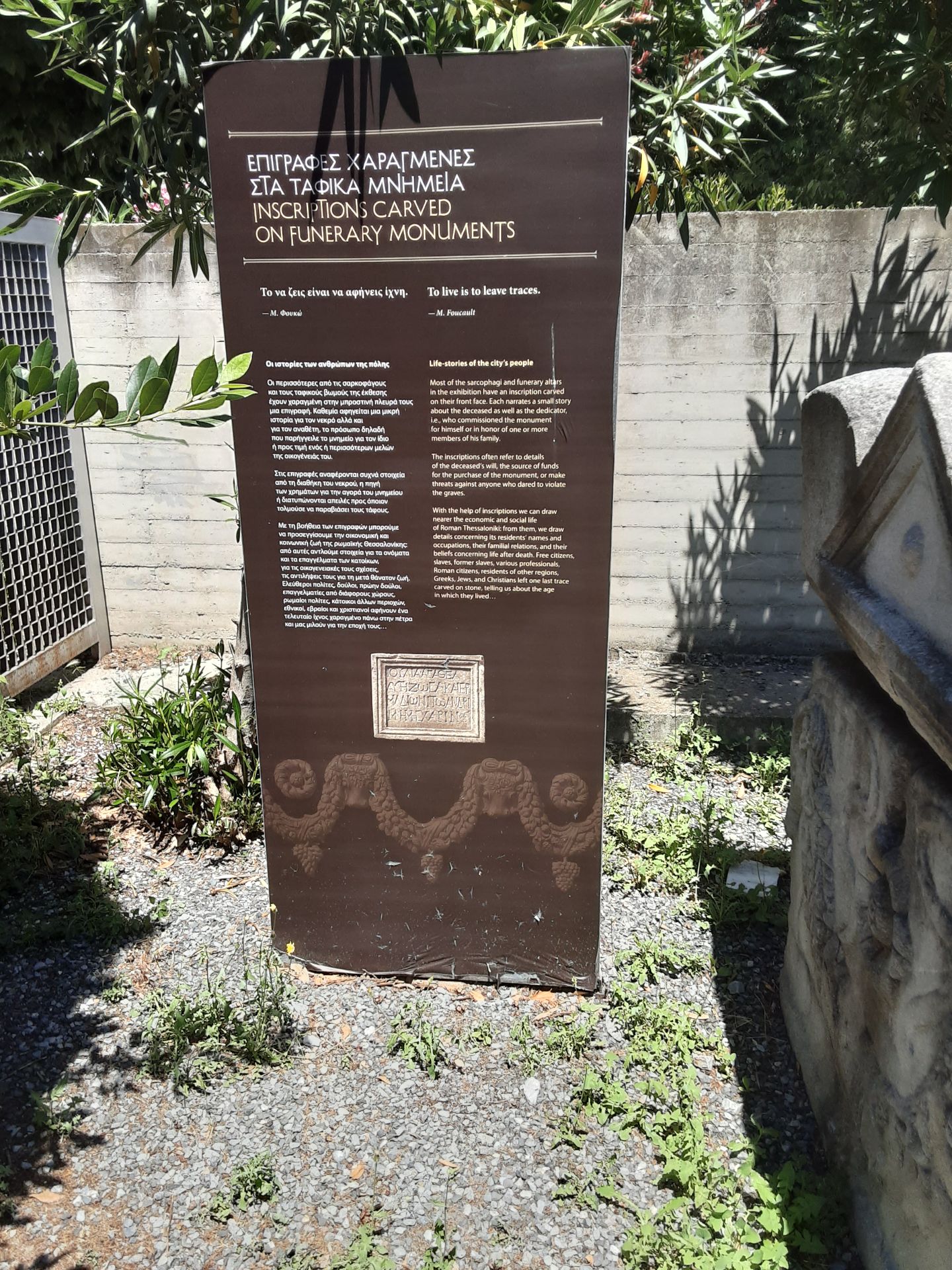
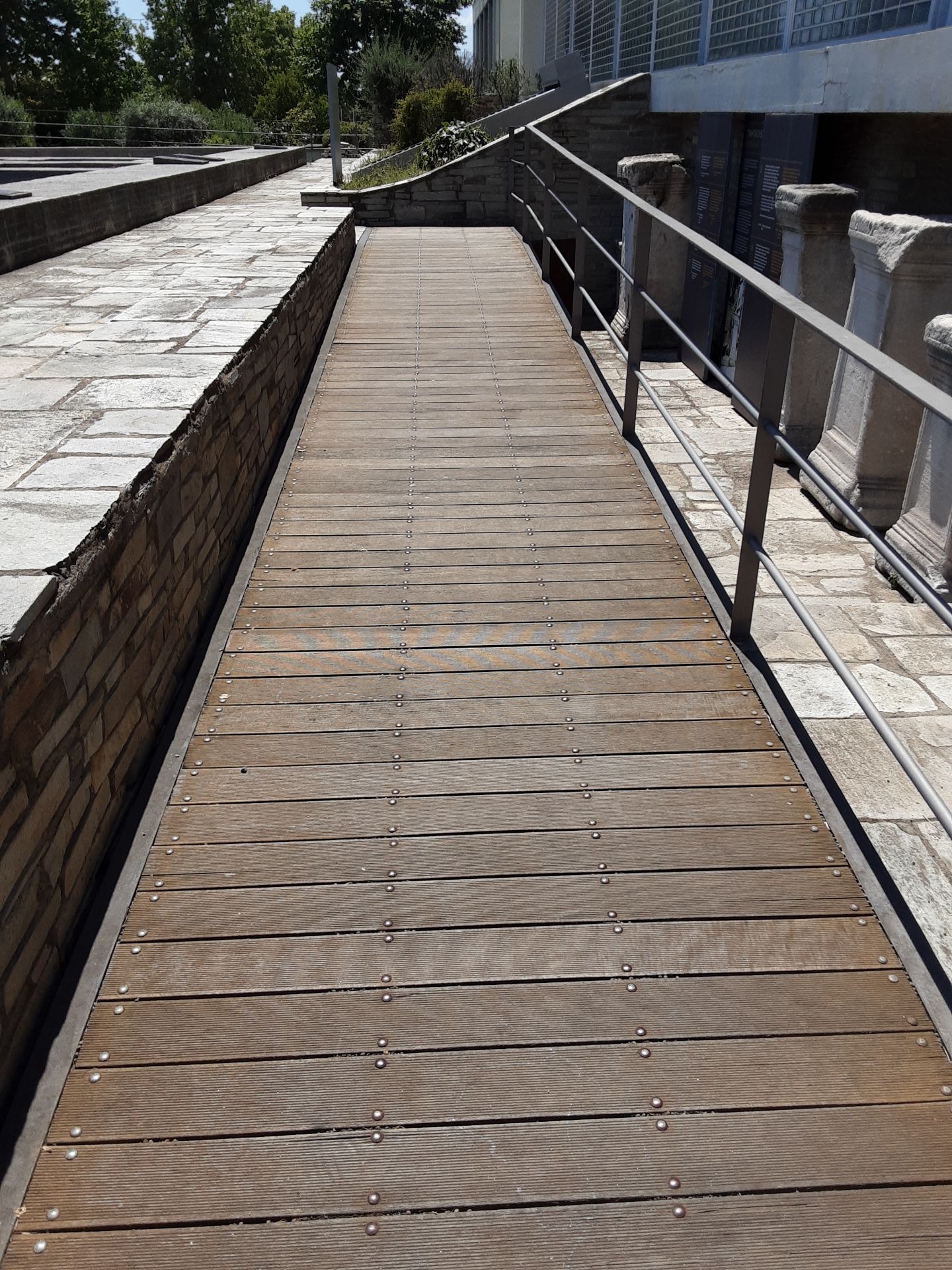
Barriers to be aware of (3)
Obstacle
Ground irregularities, maintenance issues
- Type / category of obstacle
- Intolerable deformations (e.g., with a height greater than 2 cm and less than 4 cm, but without a bevel)
Obstacle
Tree branches
- Recommendations for visitors
- Greater safety with an escort
- Type / category of obstacle
- Overhead obstacles (below the minimum height of 2.2 m)
Obstacle
Information signs and exhibit labels not accessible to people with visual disabilities
- Type / category of obstacle
- Other
Special facilities (1)
Special facility
Exhibits you can touch
Beneficiaries
- Blind people with white cane
- People with low vision
- People with a guide dog
- People with other vision disabilities
- People with intellectual
- cognitive or mental disabilities
Outdoor entrance / exit
Entrance (from the courtyard / Stratou Ave.)
- Is there a door?
- Remains open during operating hours
- Adequately served by a dedicated boarding / alighting area suitable for people with disabilities
- Yes
- Does a blind guidance path lead to the entrance?
- No
- Cross slope
- Suitable
- Clear opening
- Suitable
- Is it easily identifiable?
- Yes
- Is it preceded by a sidewalk with an unsuitable road–sidewalk connection for wheelchair users?
- Yes (explain…)
- Clear passage height
- Suitable
- Informational signage for visitors is provided outside
- Yes, but it is not accessible for people with disabilities (e.g. without Braille or raised lettering)
- Adequately served by a dedicated accessible parking space for private vehicles
- Yes
- It has appropriate signage providing accessibility information for the individual interior spaces
- No
- Adequately served by disability-friendly public transport
- Yes
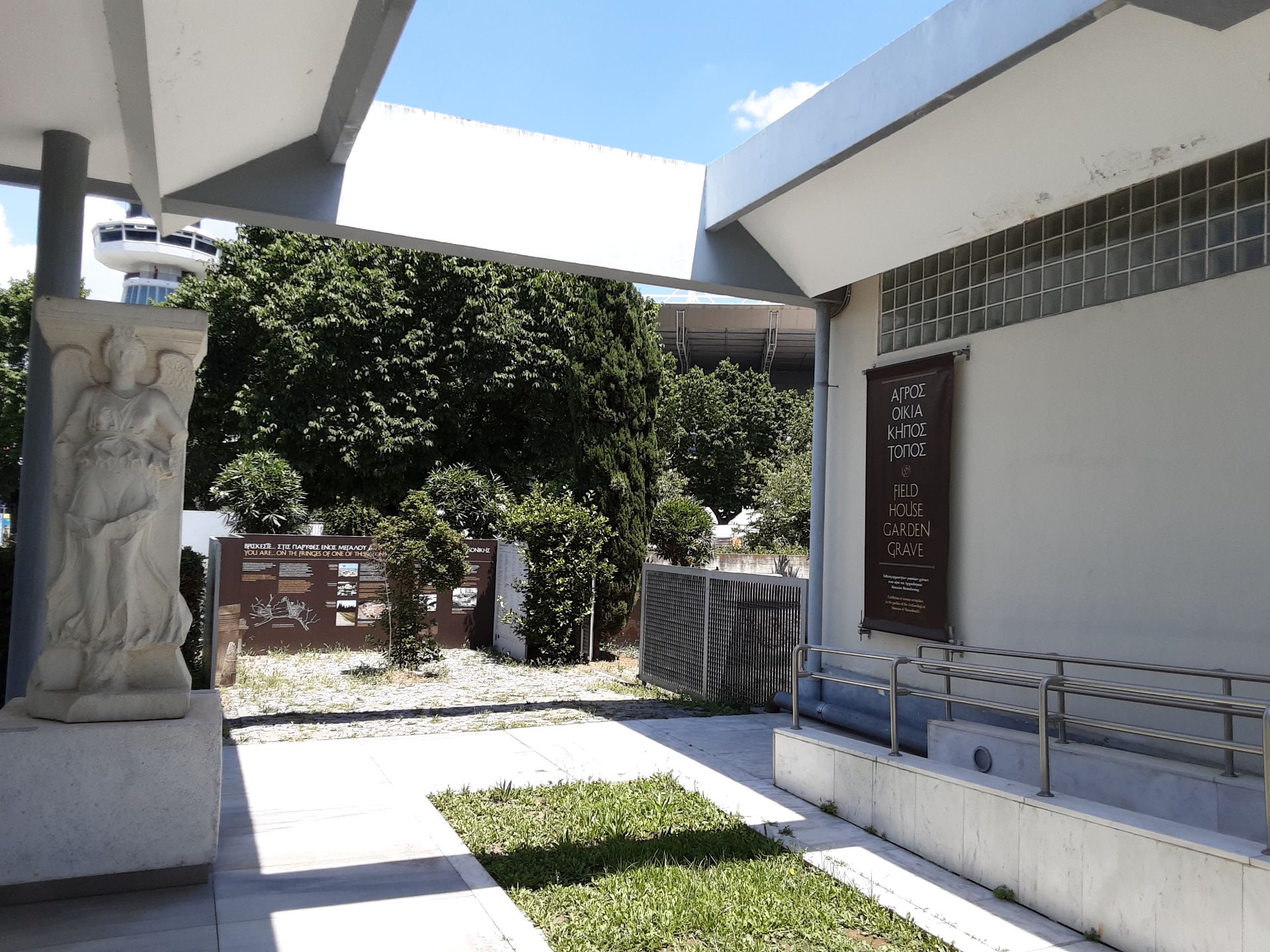
Building
Shop (Ground floor)
- Overall, within the building there are accessible areas where staff are present and the public can communicate / interact with them
- Yes, but has no briefing or training on serving people with disabilities
- Access to toilet facilities is not an issue?
- Yes
- Overall, noise levels inside the building are suitable at all times of use/visit
- Yes
- Generally, heating in the building is adequate at all hours of use/visit
- Yes
- Generally, the lighting within the building is suitable at all hours of use/visit
- Yes
- In general, air conditioning/ventilation inside the building is appropriate at all hours of use/visit
- Yes
- Is there an alternative way to serve people who cannot reach these?
- Not needed
- Is vertical access not an issue?
- Yes
- In general, inside the building there are sufficient/appropriate routes, emergency exits and/or other means
- Yes
- Is access to separated spaces/rooms not an issue?
- Yes
- How many separate floors/levels does it have?
- -1
- It is…
- Historic/listed building
- The areas open to the public occupy the following floors / levels
- Ground floor
- How many separate entrances/exits does it have?
- 2
- Guide dogs are allowed entry
- Yes
- Overall, the corridors and circulation routes have clear widths
- Over 90 cm
- Overall, the corridors and circulation routes have suitable clear heights
- Yes
- Lighting in corridors and generally along movement routes is appropriate
- Yes
- Is there an emergency lighting system installed in the corridors and generally along the movement routes?
- Yes
- There are bridges in the building
- No bridging needed / present
- There is furniture and/or equipment within the 90 cm clear width
- No
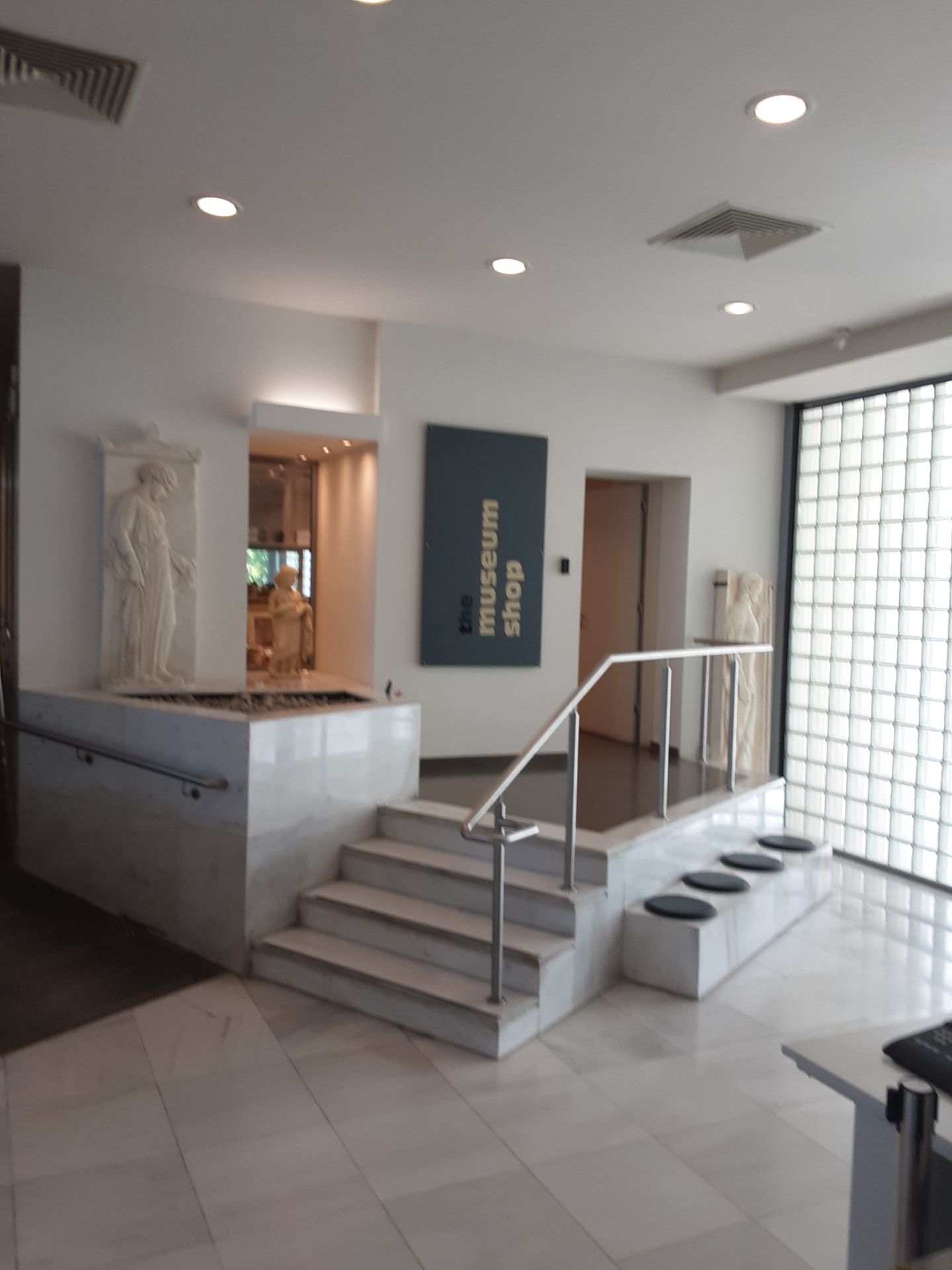
Entrance / exit
Secondary (from the corridor after the Ground Floor Foyer)
- Is it preceded by a ramp?
- The ramp/corridor to the right of the reception
- Is it easily identifiable?
- No
Ramp
Ramp to the right of the reception
- It has an appropriate handrail
- Yes, single at a height of 90 cm
- Is it…
- Interior
- At all levels/stops…
- the ramp floor is exactly at the same level as the landing floor (difference <2 cm)
- Has standards-compliant slopes:
- 6% (3.5°) for a section up to 8 m, 10% (5.7°) for a section up to 1 m
- The lighting is adequate
- Yes
- All surfaces are of non-slip, homogeneous, stable, wear-resistant material
- Yes
- Is it easily identifiable?
- Yes
- Is wheelchair access ensured?
- Yes
- Does it have an emergency lighting system?
- Yes
- Is it…
- Permanent
- On all levels/stops, there is informational signage for visitors
- No
- Has a width that allows two wheelchairs to pass each other
- No
- Is standards-compliant:
- Yes and it is signed accordingly (international symbol)
- Has non-compliant cross slopes on the ramp and/or landings
- No
- In the case of exposed side/rear surfaces, are these always "covered" so as not to pose a risk to people with visual impairments and white cane users?
- They are not exposed
- In the case of a ramp that is part of an existing network with tactile guide paths, are there tactile warning surfaces at all entry-exit points?
- Not part of such a network
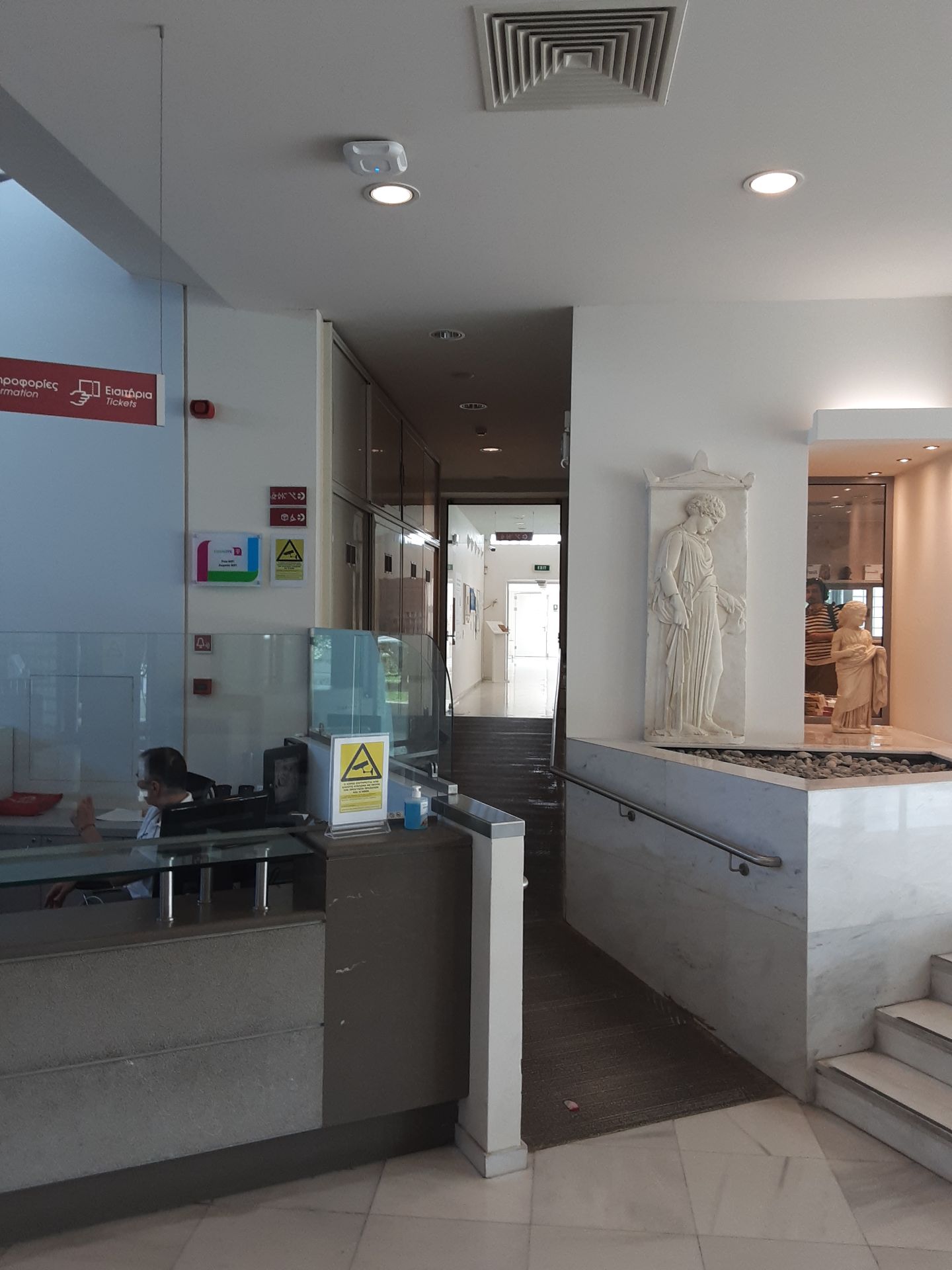
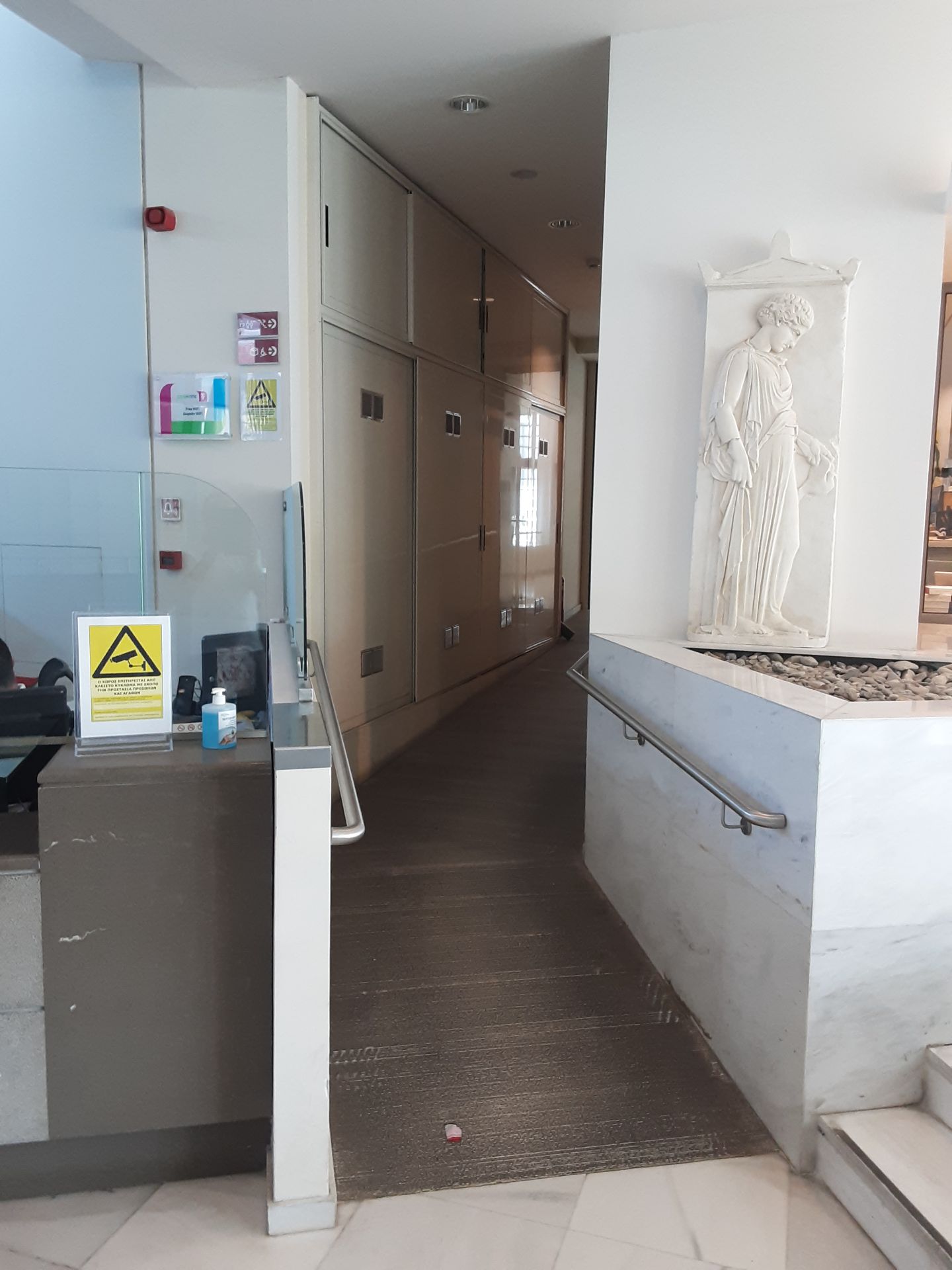
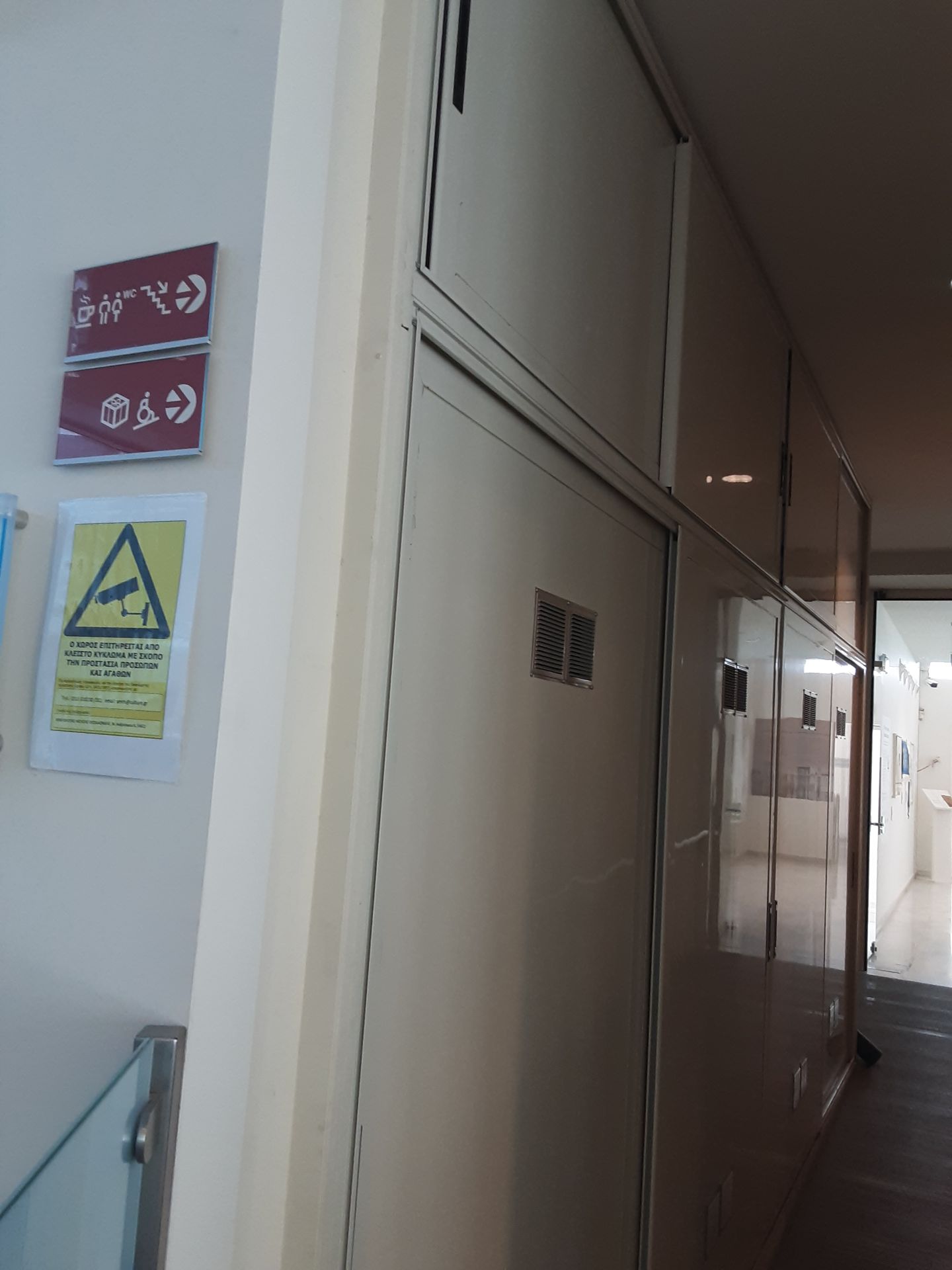
Entrance / exit
Main (from the Ground Floor Foyer)
- Is there a door?
- Stays open
- Cross slope
- Suitable
- Longitudinal slope
- Suitable
- Clear opening
- Suitable
- Is it easily identifiable?
- Yes
- Clear passage height
- Suitable
- Informational signage for visitors is provided outside
- Yes, but it is not accessible for people with disabilities (e.g. without Braille or raised lettering)
- Bears suitable informational signage regarding accessibility to the building's spaces
- No
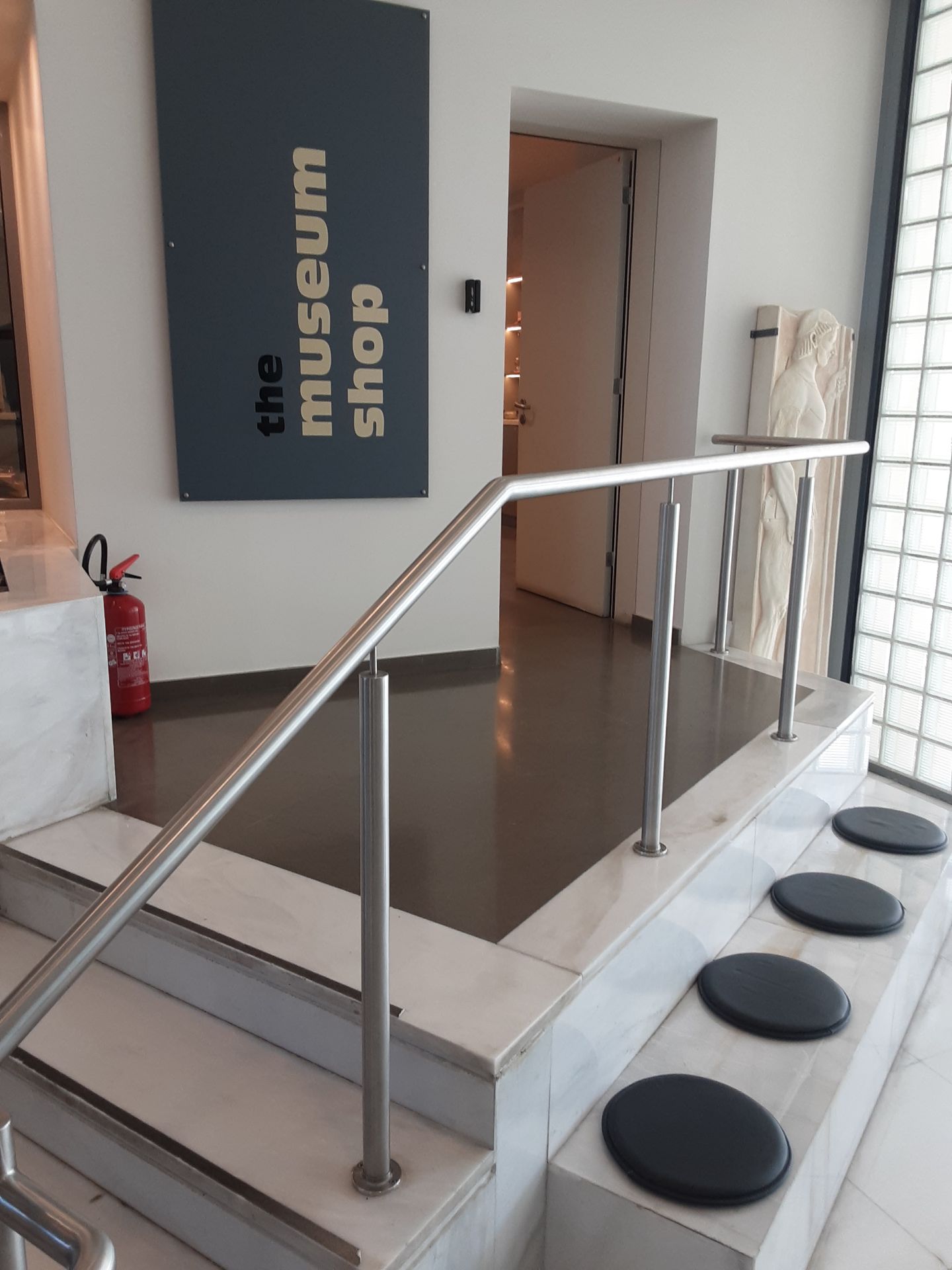
Stairs
Steps (quadruple)
- Does it have a riser (front face)?
- Vertical
- Handles / handrails
- Present, but not standards-compliant
- It is a staircase with a stairlift
- No
- Is it…
- Main
- Parapets / railings
- Present and standards-compliant
- Is it interior and…
- Fixed
- Is it…
- Interior
- The (minimum) opening of the stairs is (in cm)…
- 125
- They are clearly legible
- Yes
- The (minimum) depth of the steps is (in cm)…
- 30
- The (maximum) height of the steps is (in cm)…
- 16
- The width of the stairs
- Yes
- In the case of stairways that are part of the existing network with tactile guidance paths for the blind, are there tactile warning surfaces at the start, end and changes of direction of the stairs?
- Not part of such a network
- The lighting is adequate
- Yes
- Are the surfaces
- Yes
- Is it easily identifiable?
- Yes
- At the stair landings, there is informational signage for visitors
- No
- Is it standards-compliant?
- No
- The depth (tread) of the steps is constant from the start to the end of the stairs
- Yes
- In the case of exposed side/rear surfaces, are these always "covered" so as not to pose a risk to people with visual impairments and white cane users?
- Yes
- The height of the steps is constant from the start to the end of the stairs
- Yes
- Is there a standards-compliant alternative for wheelchair access?
- Present and standards-compliant
- Includes conical and/or curved steps
- No
- (If available), the alternative wheelchair access is via…
- Other (e.g. another route)
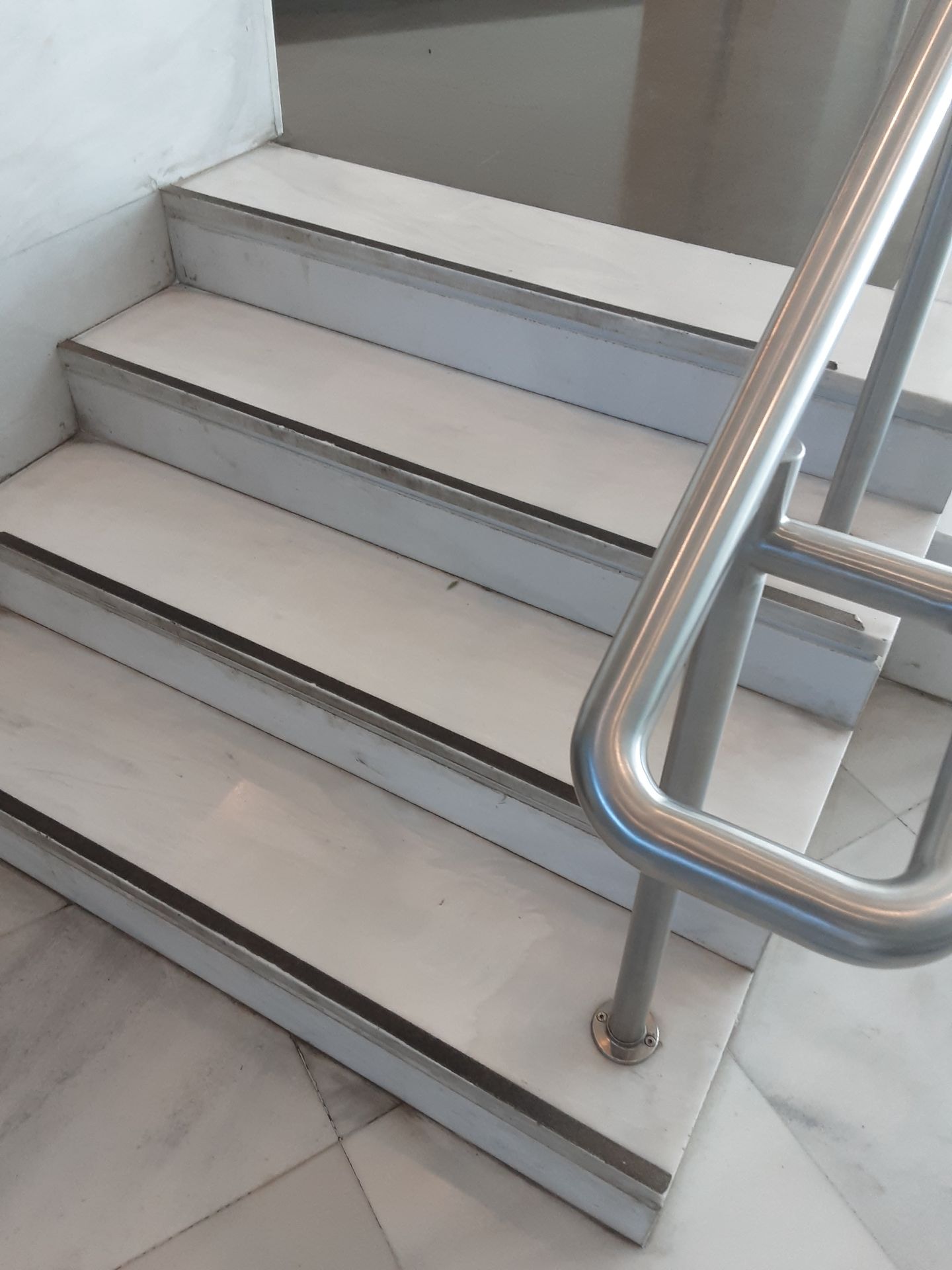
Building
Café (Basement)
- Overall, within the building there are accessible areas where staff are present and the public can communicate / interact with them
- Yes, but has no briefing or training on serving people with disabilities
- Access to toilet facilities is not an issue?
- No
- The building has toilets for the public but no accessible toilet for people with disabilities according to national specifications/guidelines
- No
- The building has toilets for people with disabilities and they are sufficient as required by law for this case, because…
- There is at least one on each floor
- Overall, noise levels inside the building are suitable at all times of use/visit
- Yes
- Generally, heating in the building is adequate at all hours of use/visit
- Yes
- Generally, the lighting within the building is suitable at all hours of use/visit
- Yes
- In general, air conditioning/ventilation inside the building is appropriate at all hours of use/visit
- Yes
- Is vertical access not an issue?
- Yes
- In general, inside the building there are sufficient/appropriate routes, emergency exits and/or other means
- Yes
- Is access to separated spaces/rooms not an issue?
- Yes
- How many separate floors/levels does it have?
- 1
- It is…
- Historic/listed building
- The areas open to the public occupy the following floors / levels
- Basement
- How many separate entrances/exits does it have?
- 4
- Overall, the corridors and circulation routes have clear widths
- Over 90 cm
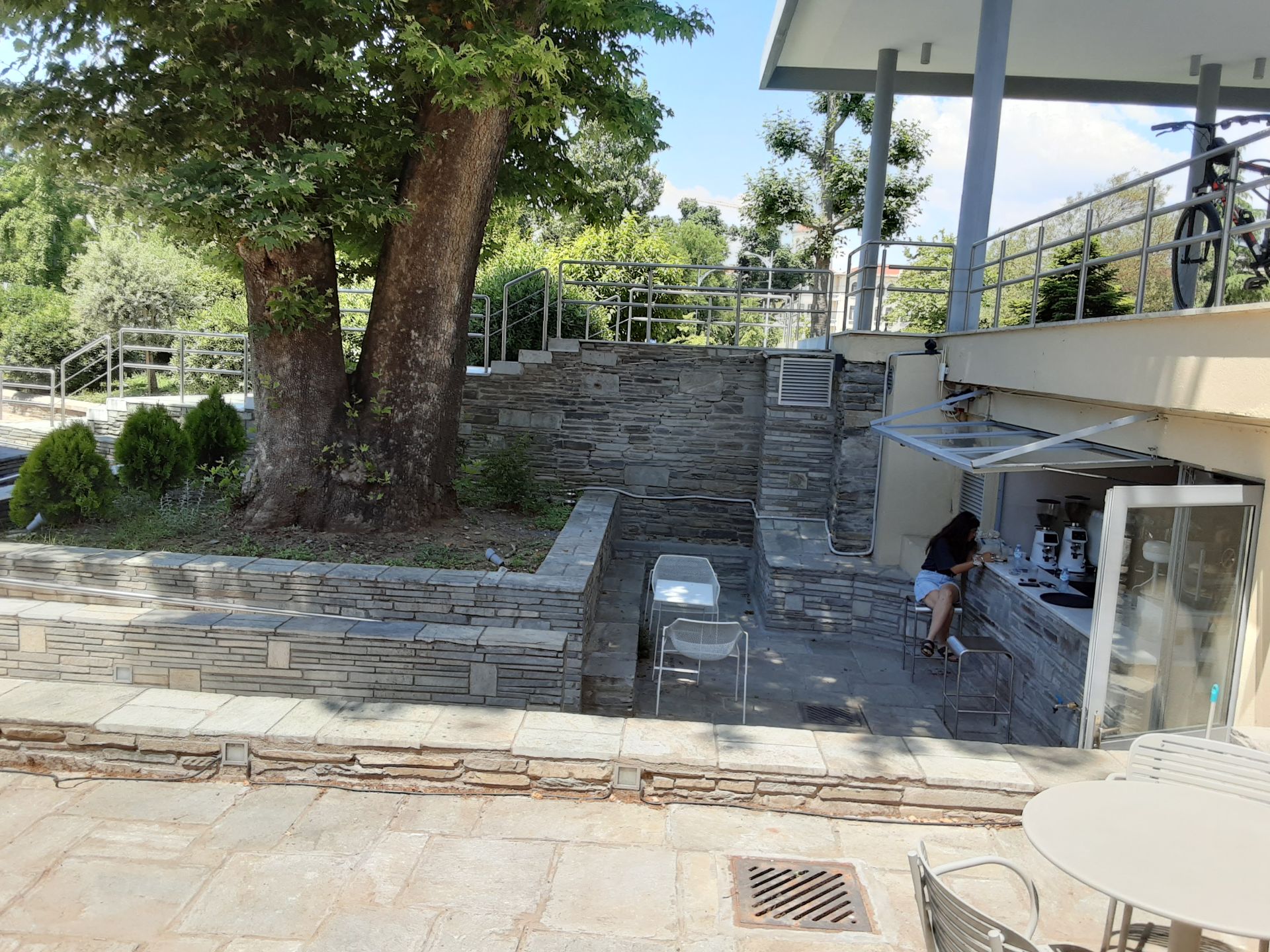
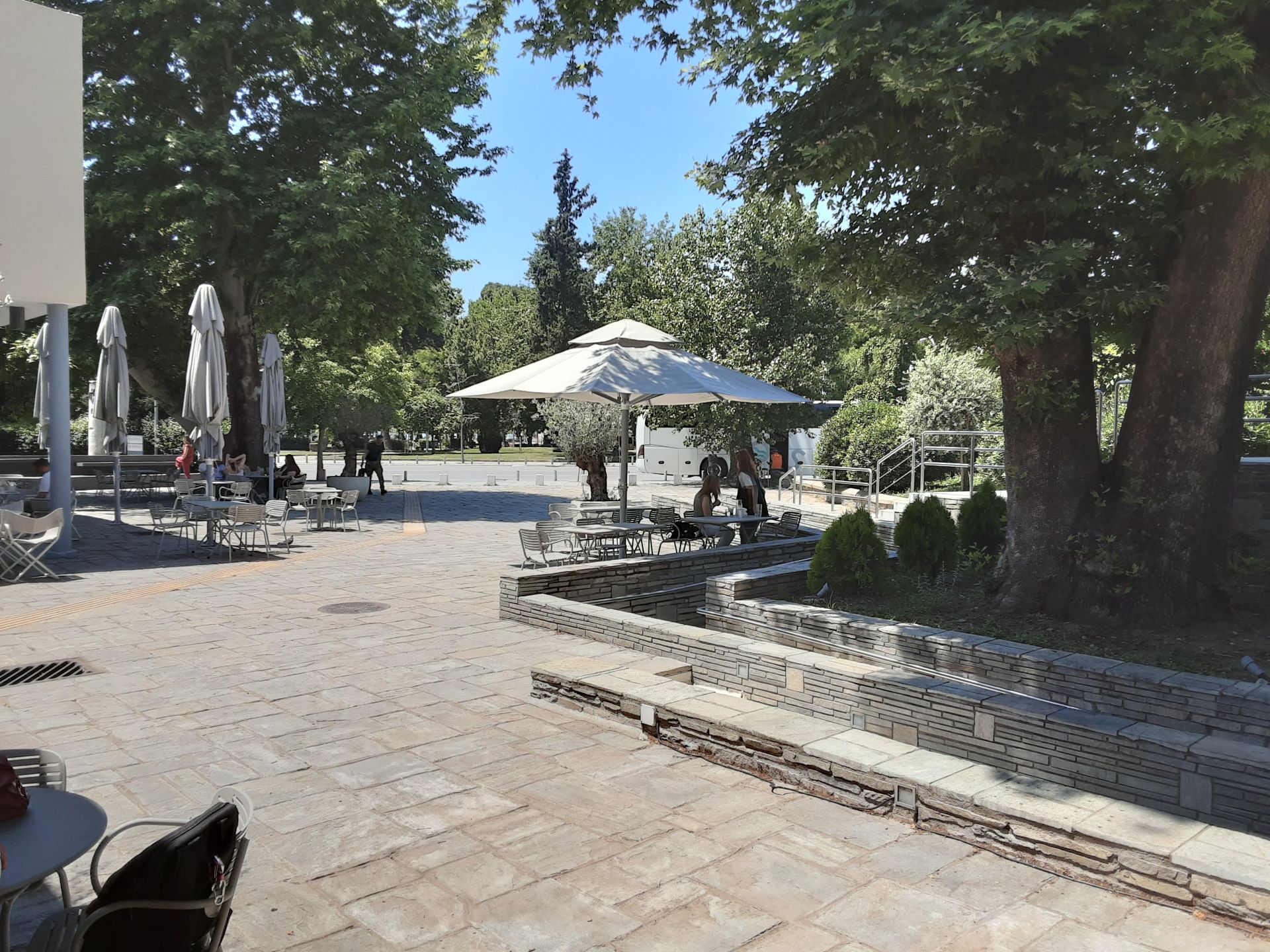
Restroom (WC)
Public (accessible only via stairs)
- Includes..
- Room with toilet bowl, vestibule with washbasin(s), baby care area
- Is it easily identifiable?
- Yes
- Can it be used only at specific times?
- Yes (provide details)
- Is it…
- Free
- Is it…
- Interior
- Is wheelchair access ensured?
- No
- Is it…
- Men and women separate
- Is it…
- Entrance unobstructed
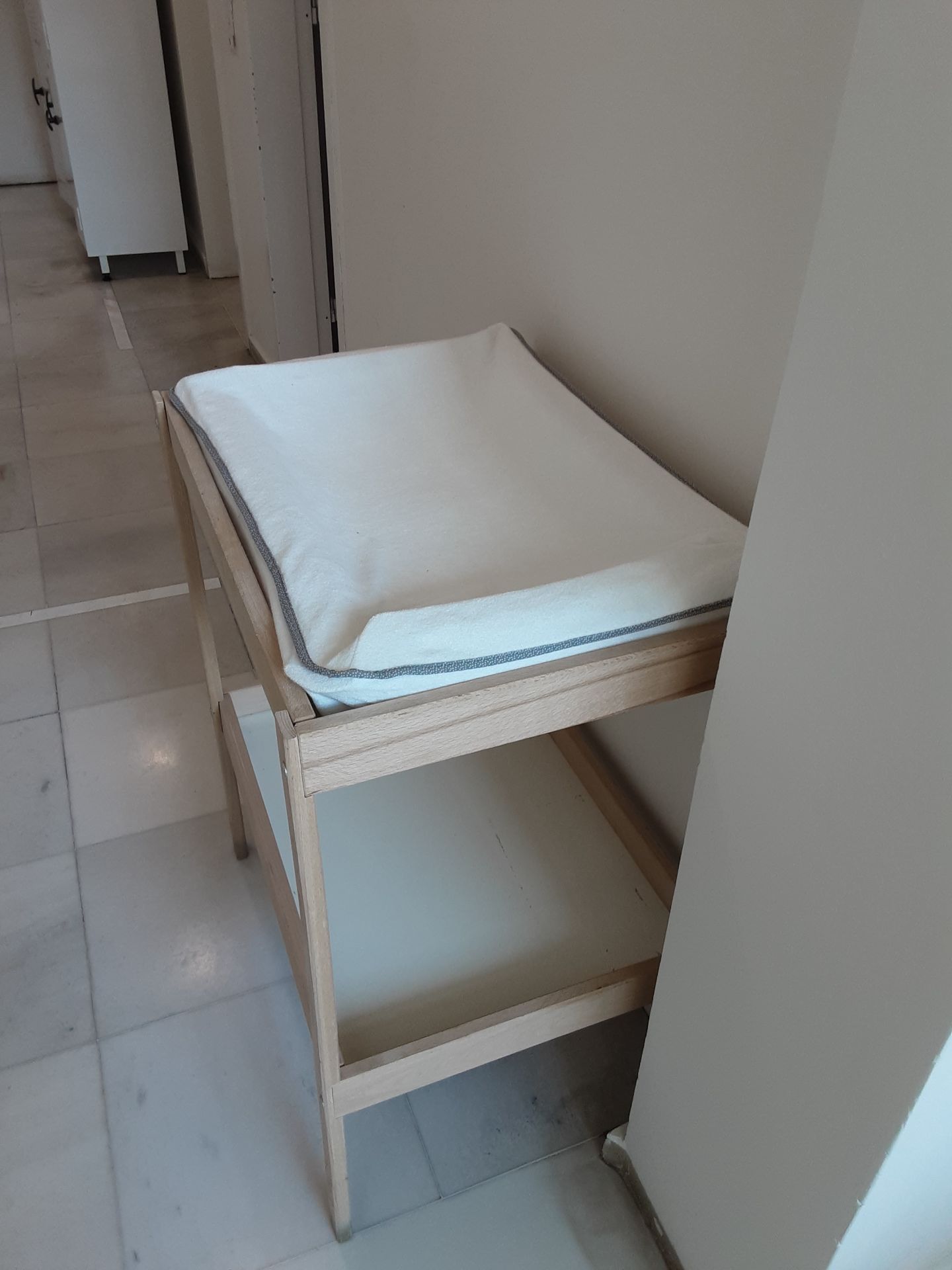
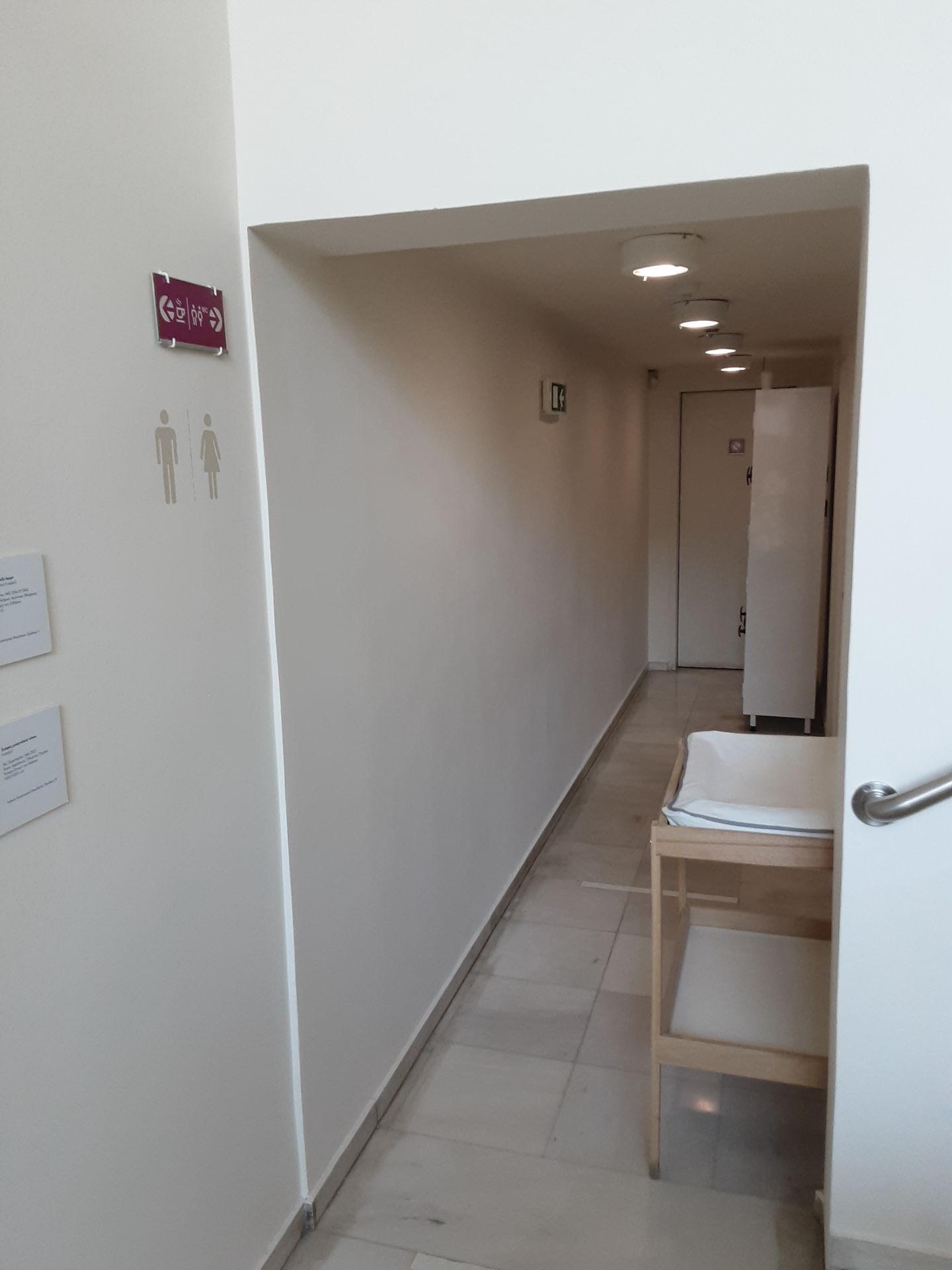
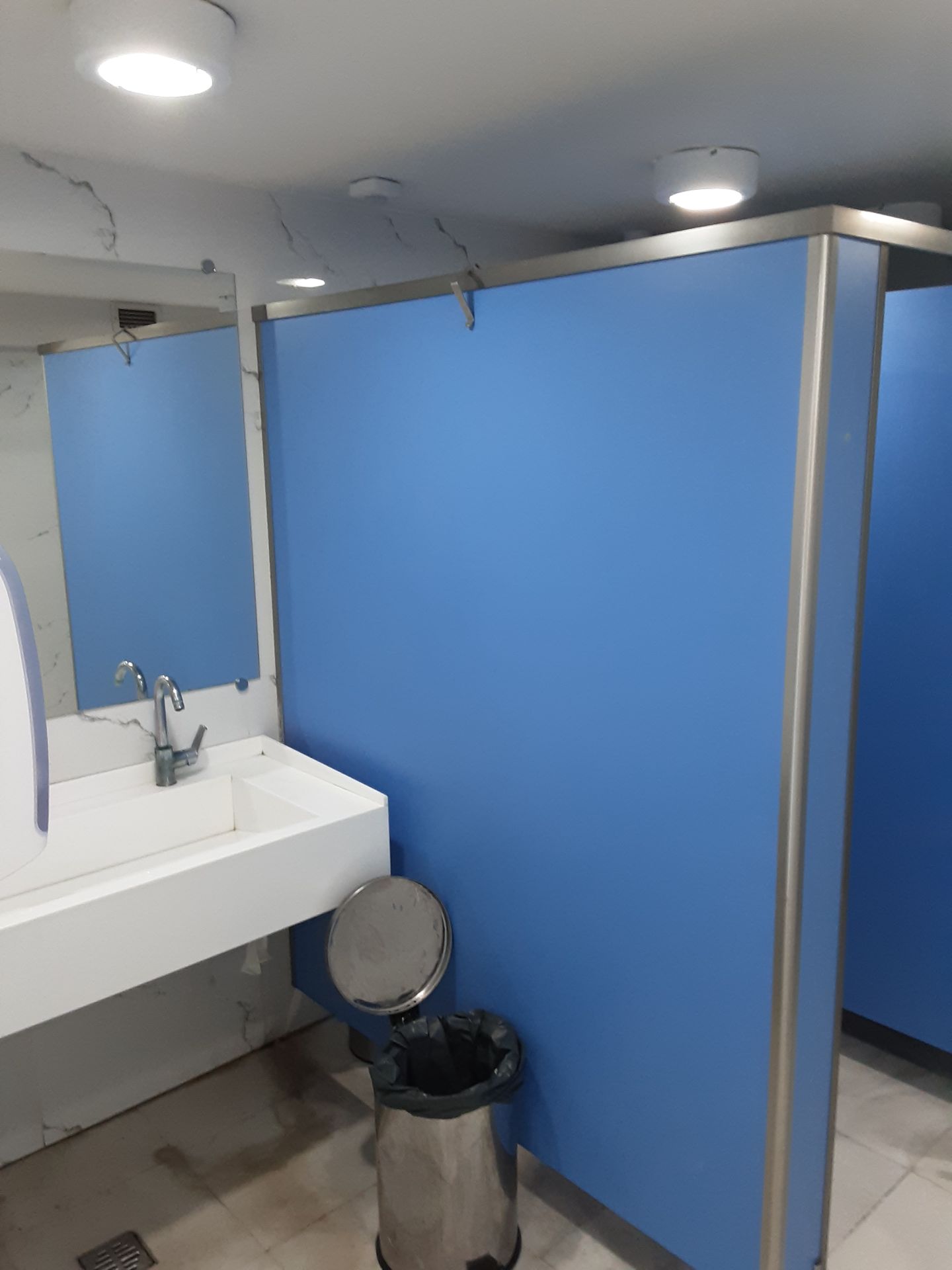
Entrance / exit
From the Basement Foyer
- Is there a door?
- Glass door (remains open)
- Cross slope
- Suitable
- Longitudinal slope
- Suitable
- Clear opening
- Suitable
- Is it easily identifiable?
- Yes
- Clear passage height
- Suitable
- Informational signage for visitors is provided outside
- Yes, but it is not accessible for people with disabilities (e.g. without Braille or raised lettering)
- Bears suitable informational signage regarding accessibility to the building's spaces
- No
Entrance / exit
From the Ground Floor Foyer (via stairs)
- Cross slope
- Suitable
- Longitudinal slope
- Suitable
- Clear opening
- Suitable
- Is it easily identifiable?
- Yes
- Clear passage height
- Suitable
- Informational signage for visitors is provided outside
- Yes, but it is not accessible for people with disabilities (e.g. without Braille or raised lettering)
- Bears suitable informational signage regarding accessibility to the building's spaces
- No
- Overall, passage / use is not possible/safe for specific categories of people with disabilities
- wheelchair users
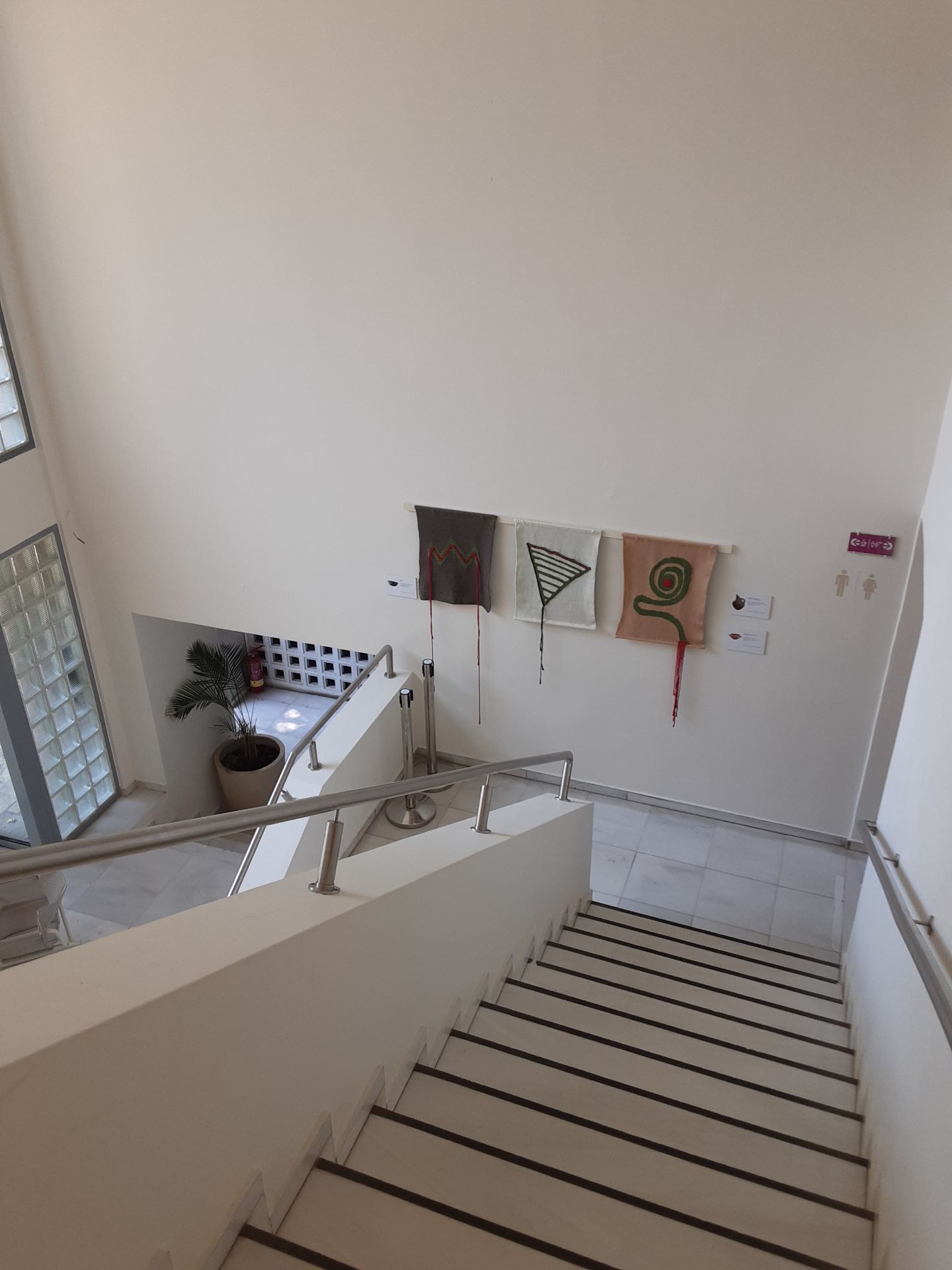
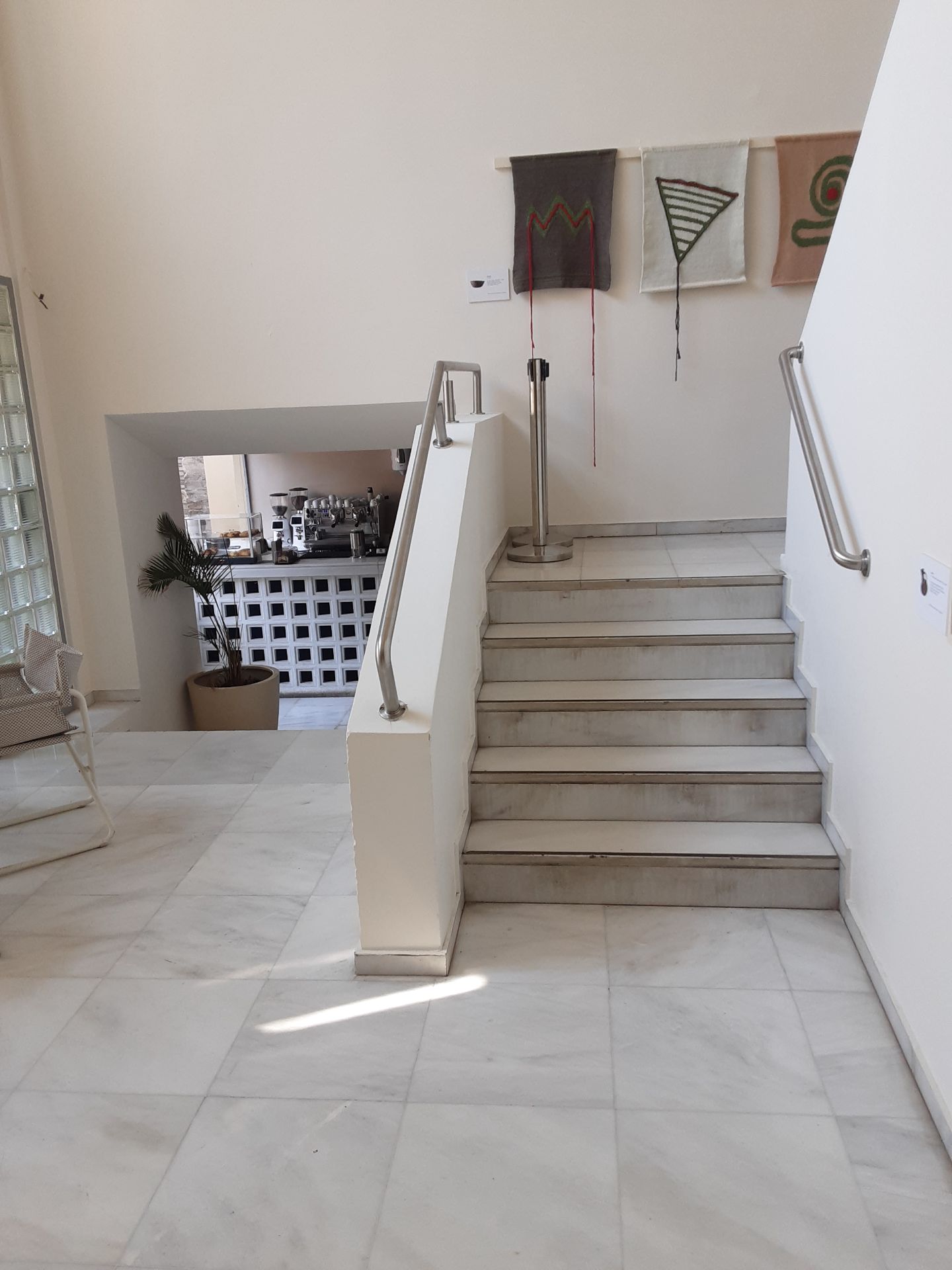
Stairs
Stairs connecting the ground floor (foyer) - mezzanine (public toilet) - basement (refreshment area)
- Does it have a riser (front face)?
- Vertical
- Handles / handrails
- Present and standards-compliant
- It is a staircase with a stairlift
- No
- Is it…
- Main
- Parapets / railings
- Present and standards-compliant
- Is it interior and…
- Fixed
- Is it…
- Interior
- The (minimum) opening of the stairs is (in cm)…
- 120
- They are clearly legible
- Yes
- The (minimum) depth of the steps is (in cm)…
- 26
- The (maximum) height of the steps is (in cm)…
- 19
- The width of the stairs
- Yes
- In the case of stairways that are part of the existing network with tactile guidance paths for the blind, are there tactile warning surfaces at the start, end and changes of direction of the stairs?
- Not part of such a network
- Are the intermediate landings of adequate dimensions
- Yes
- The lighting is adequate
- Yes
- Are the surfaces
- Yes
- Is it easily identifiable?
- Yes
- At the stair landings, there is informational signage for visitors
- Yes, but it is not accessible for people with disabilities (e.g. without Braille or raised lettering)
- Is it standards-compliant?
- No
- The depth (tread) of the steps is constant from the start to the end of the stairs
- Yes
- In the case of exposed side/rear surfaces, are these always "covered" so as not to pose a risk to people with visual impairments and white cane users?
- Yes
- The height of the steps is constant from the start to the end of the stairs
- Yes
- Is there a standards-compliant alternative for wheelchair access?
- Present and standards-compliant
- Includes conical and/or curved steps
- No
- (If available), the alternative wheelchair access is via…
- Other (e.g. another route)
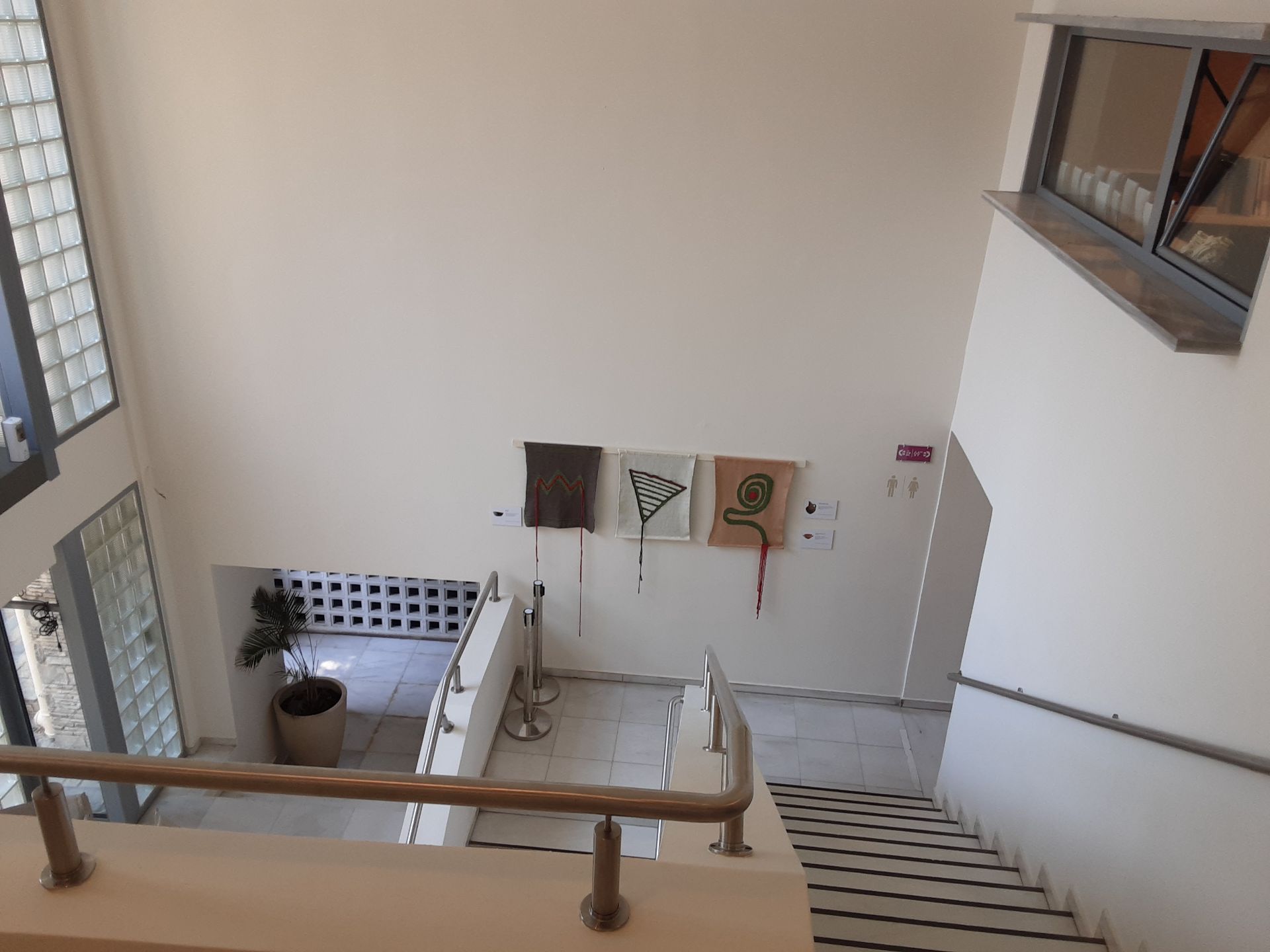
Entrance / exit
From the courtyard (exterior)
- Adequately served by a dedicated boarding / alighting area suitable for people with disabilities
- Yes
- Does a tactile guide path lead to the building?
- Yes, standards-compliant
- Is it preceded by a ramp?
- Side ramp to the refreshment area
- Preceded by a step
- By marble steps
- Is it easily identifiable?
- Yes
- Is it preceded by a sidewalk with an unsuitable road–sidewalk connection for wheelchair users?
- Yes (explain)
- Adequately served by a dedicated accessible parking space for private vehicles
- Yes
- Adequately served by disability-friendly public transport
- Yes
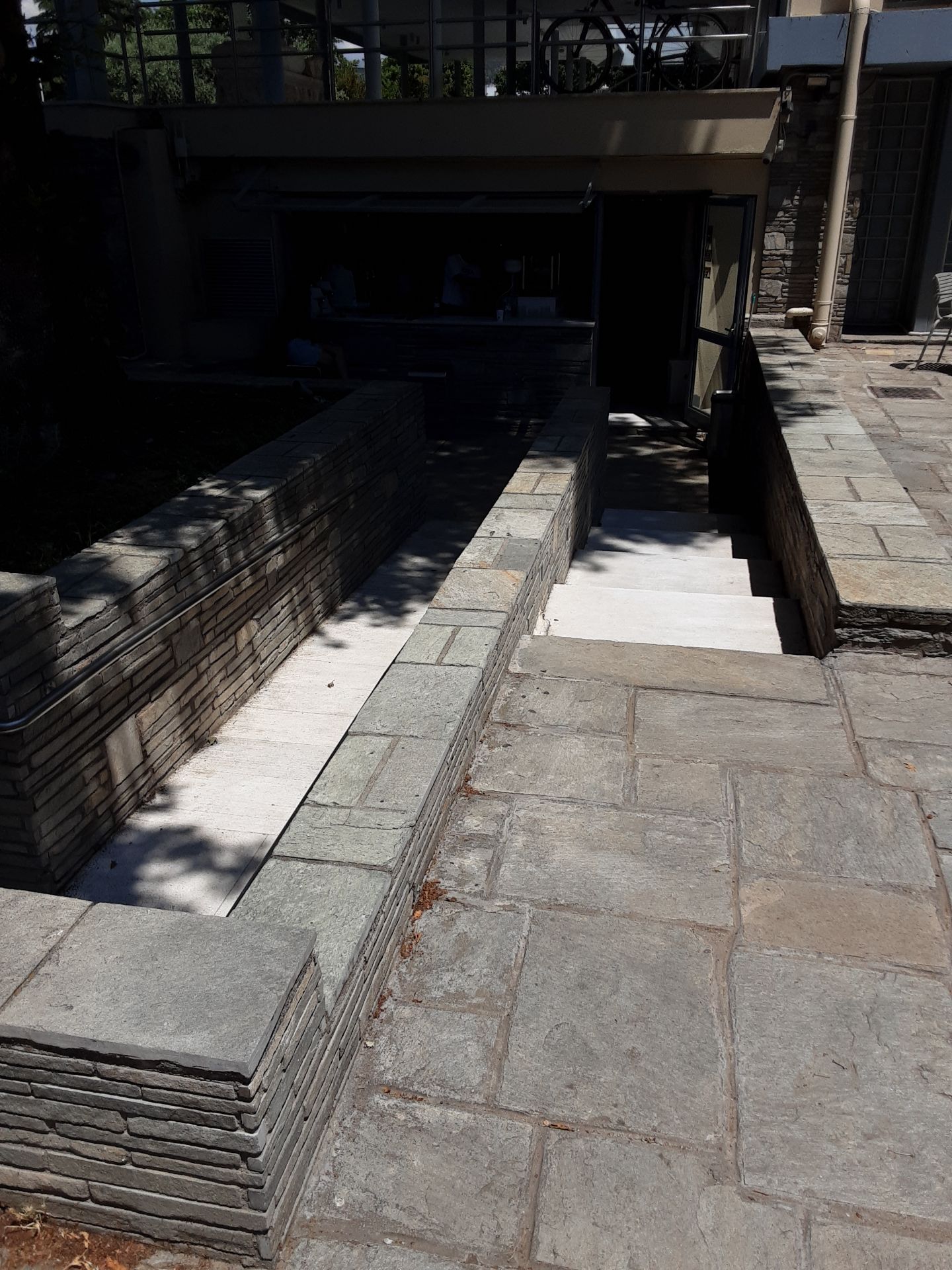
Stairs
Steps to the refreshment area
- Does it have a riser (front face)?
- Vertical
- Handles / handrails
- None
- It is a staircase with a stairlift
- No
- Is it…
- Main
- Is it interior and…
- Fixed
- Is it…
- Outdoor
- The (minimum) opening of the stairs is (in cm)…
- 108
- They are clearly legible
- No
- The (minimum) depth of the steps is (in cm)…
- 100
- The (maximum) height of the steps is (in cm)…
- 17
- The width of the stairs
- Yes
- In the case of stairways that are part of the existing network with tactile guidance paths for the blind, are there tactile warning surfaces at the start, end and changes of direction of the stairs?
- Not part of such a network
- The lighting is adequate
- No
- Are the surfaces
- No
- Is it easily identifiable?
- Yes
- At the stair landings, there is informational signage for visitors
- No
- Is it standards-compliant?
- No
- The depth (tread) of the steps is constant from the start to the end of the stairs
- Yes
- In the case of exposed side/rear surfaces, are these always "covered" so as not to pose a risk to people with visual impairments and white cane users?
- Yes
- The height of the steps is constant from the start to the end of the stairs
- Yes
- Is there a standards-compliant alternative for wheelchair access?
- Present and standards-compliant
- Includes conical and/or curved steps
- No
- (If available), the alternative wheelchair access is via…
- Side ramp
- Overall, passage / use is not possible/safe for specific categories of people with disabilities
- wheelchair users
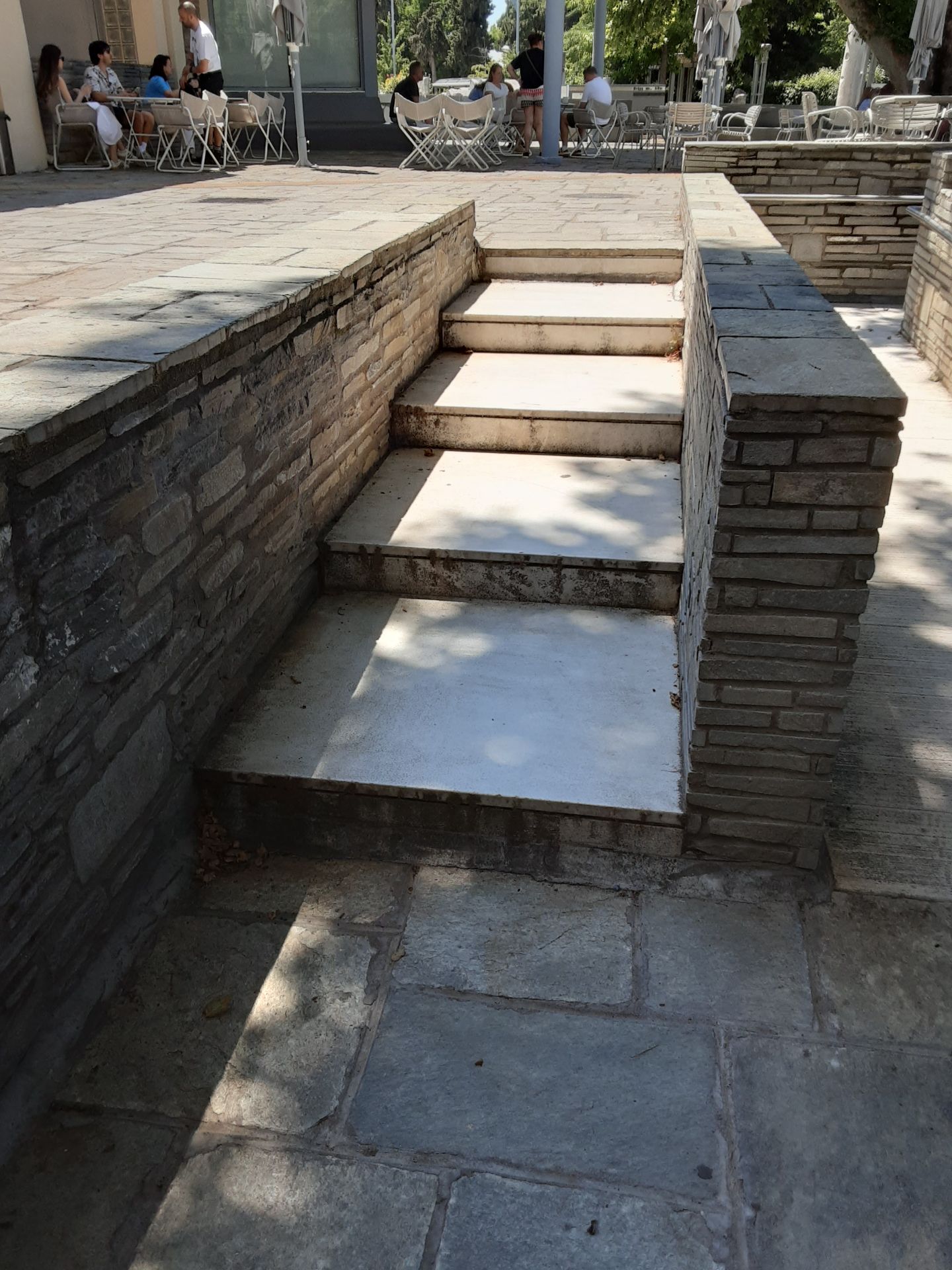
Ramp
Next to the exterior steps to the refreshment area
- It has an appropriate handrail
- Yes, single at a height of 90 cm
- Is it…
- Outdoor
- At all levels/stops…
- the ramp floor surface is at exactly the same height as the landing surface (difference <2 cm), the landing surfaces (1.5 x 1.5 m) are separate from the circulation routes, the landing surfaces are far from stairs/steps (distance > 1.5 m)
- Has standards-compliant slopes:
- 6% (3.5°) for a section up to 8 m
- The lighting is adequate
- No
- All surfaces are of non-slip, homogeneous, stable, wear-resistant material
- Yes
- Is it easily identifiable?
- Yes
- Is wheelchair access ensured?
- Yes
- Is it…
- Permanent
- On all levels/stops, there is informational signage for visitors
- No
- Has a width that allows two wheelchairs to pass each other
- No
- Is standards-compliant:
- No
- Has non-compliant cross slopes on the ramp and/or landings
- No
- In the case of exposed side/rear surfaces, are these always "covered" so as not to pose a risk to people with visual impairments and white cane users?
- They are not exposed
- In the case of a ramp that is part of an existing network with tactile guide paths, are there tactile warning surfaces at all entry-exit points?
- Not part of such a network
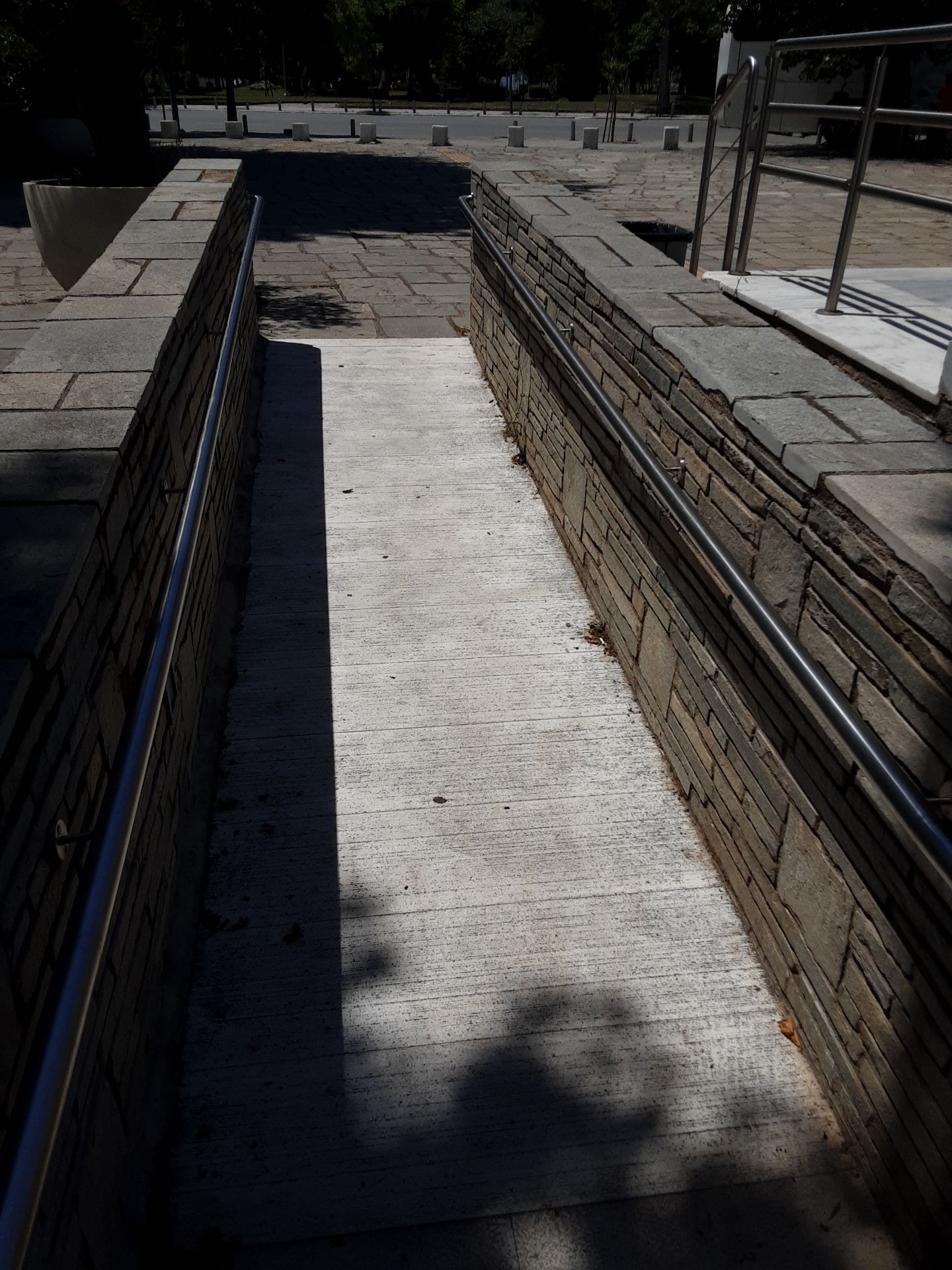
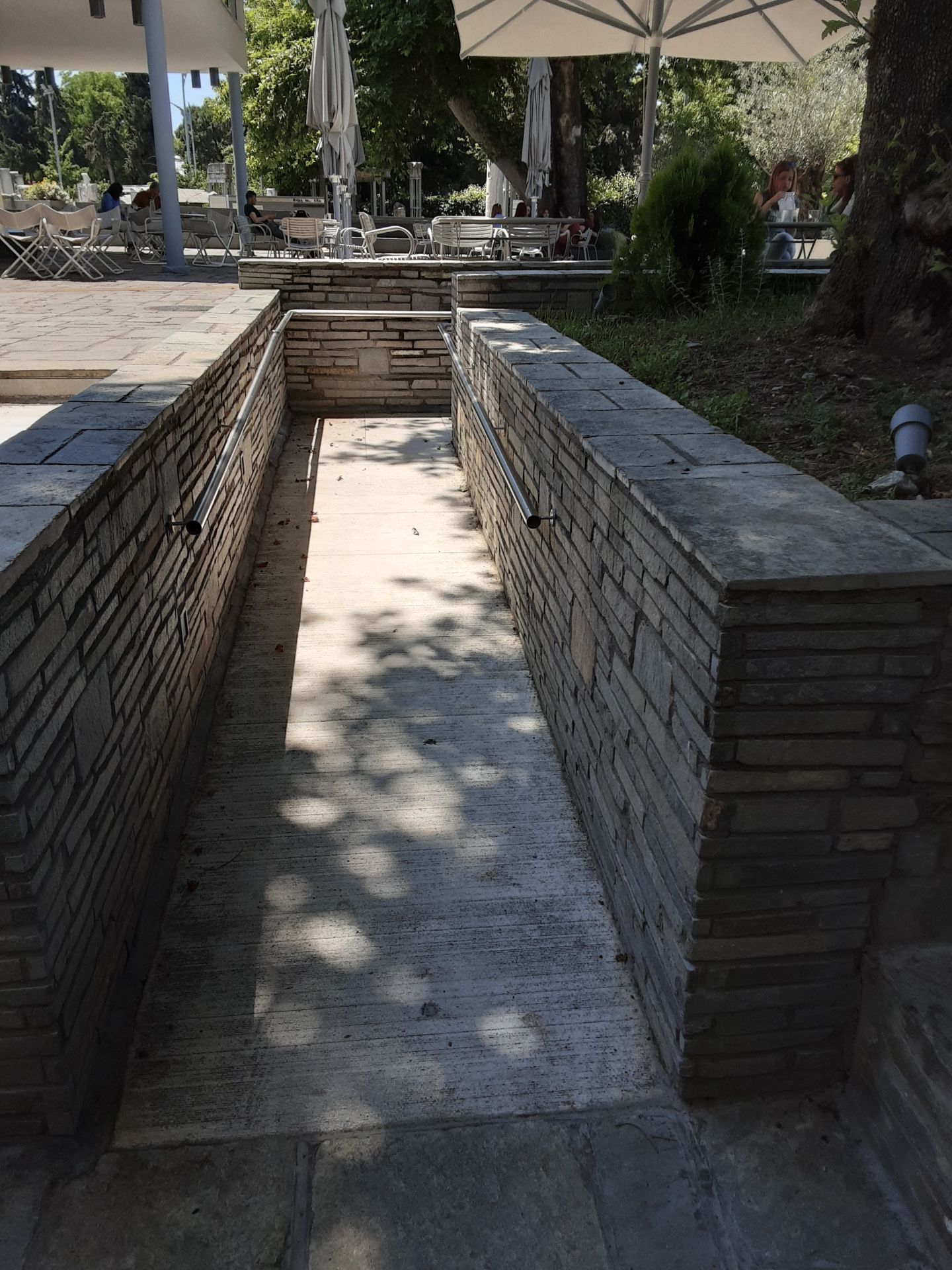
Building
Permanent Exhibition Wing (Basement)
- Overall, within the building there are accessible areas where staff are present and the public can communicate / interact with them
- Yes, but has no briefing or training on serving people with disabilities
- Access to toilet facilities is not an issue?
- Yes
- Overall, noise levels inside the building are suitable at all times of use/visit
- Yes
- Generally, heating in the building is adequate at all hours of use/visit
- Yes
- Generally, the lighting within the building is suitable at all hours of use/visit
- Yes
- In general, air conditioning/ventilation inside the building is appropriate at all hours of use/visit
- Yes
- Is vertical access not an issue?
- Yes
- In general, inside the building there are sufficient/appropriate routes, emergency exits and/or other means
- Yes
- Is access to separated spaces/rooms not an issue?
- Yes
- How many separate floors/levels does it have?
- 1
- It is…
- Historic/listed building
- The areas open to the public occupy the following floors / levels
- Basement
- How many separate entrances/exits does it have?
- 2
- Guide dogs are allowed entry
- Yes
- Overall, the corridors and circulation routes have clear widths
- Over 120 cm
- Overall, the corridors and circulation routes have suitable clear heights
- Yes
- Lighting in corridors and generally along movement routes is appropriate
- Yes
- Is there an emergency lighting system installed in the corridors and generally along the movement routes?
- Yes
- There are bridges in the building
- No bridging needed / present
- There is furniture and/or equipment within the 90 cm clear width
- No
- There is equipment
- Yes
- There is equipment
- Yes
- There are levels/areas with seating/rest positions for the public without provisions for a wheelchair stop
- No
- There are levels / areas without sufficient/suitable seating / rest areas for people with difficulty walking / standing for long periods
- No
- At strategic points of the building there is a simplified floor plan or a model
- No
- Guide dogs are accepted and staff understand that they should not interact with the dog
- Yes
- An automatic guided-tour system is used and its design ensures accessibility for…
- Deaf people / sign language users, Blind people
- Is there posted and/or available informational material provided to the public?
- No
- All (small) exhibits and their labels are always placed at heights suitable also for wheelchair users (e.g., within a height zone of 75 to 135 cm)
- Yes
- There are exhibits or other objects hung on walls in a way that is dangerous for people with vision disabilities
- No
- There are areas/levels with exhibits that meet the appropriate specifications for wheelchair access
- Yes
- Exhibits are also available in tactile form for blind people
- None
- The signs, labels, exhibit captions, etc. are accompanied by equivalent alternative formats/solutions for people with visual disabilities
- No
- Educational/informational activities, screenings and/or live presentations are organized in spaces and with a design that ensures accessibility for…
- None
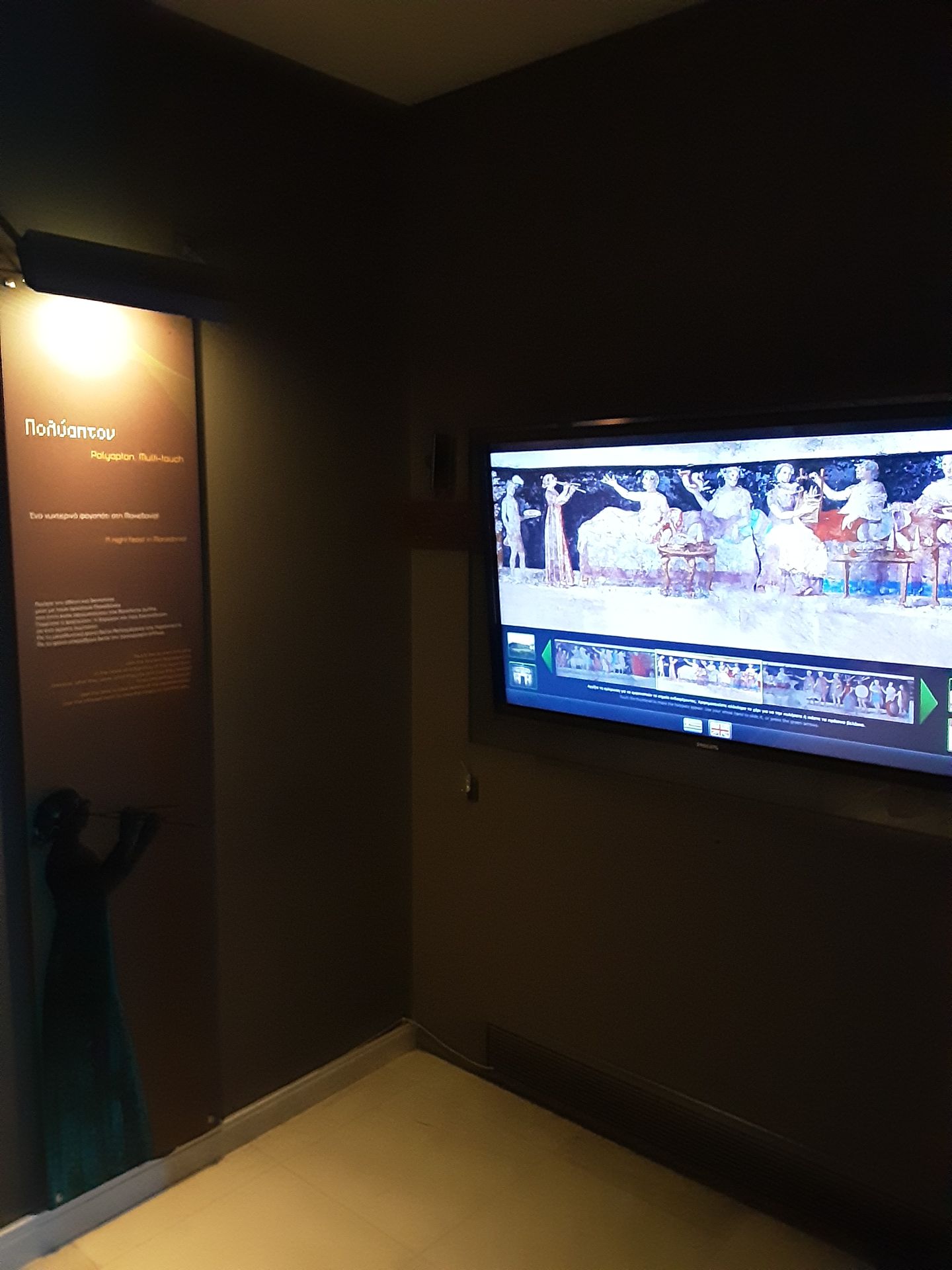
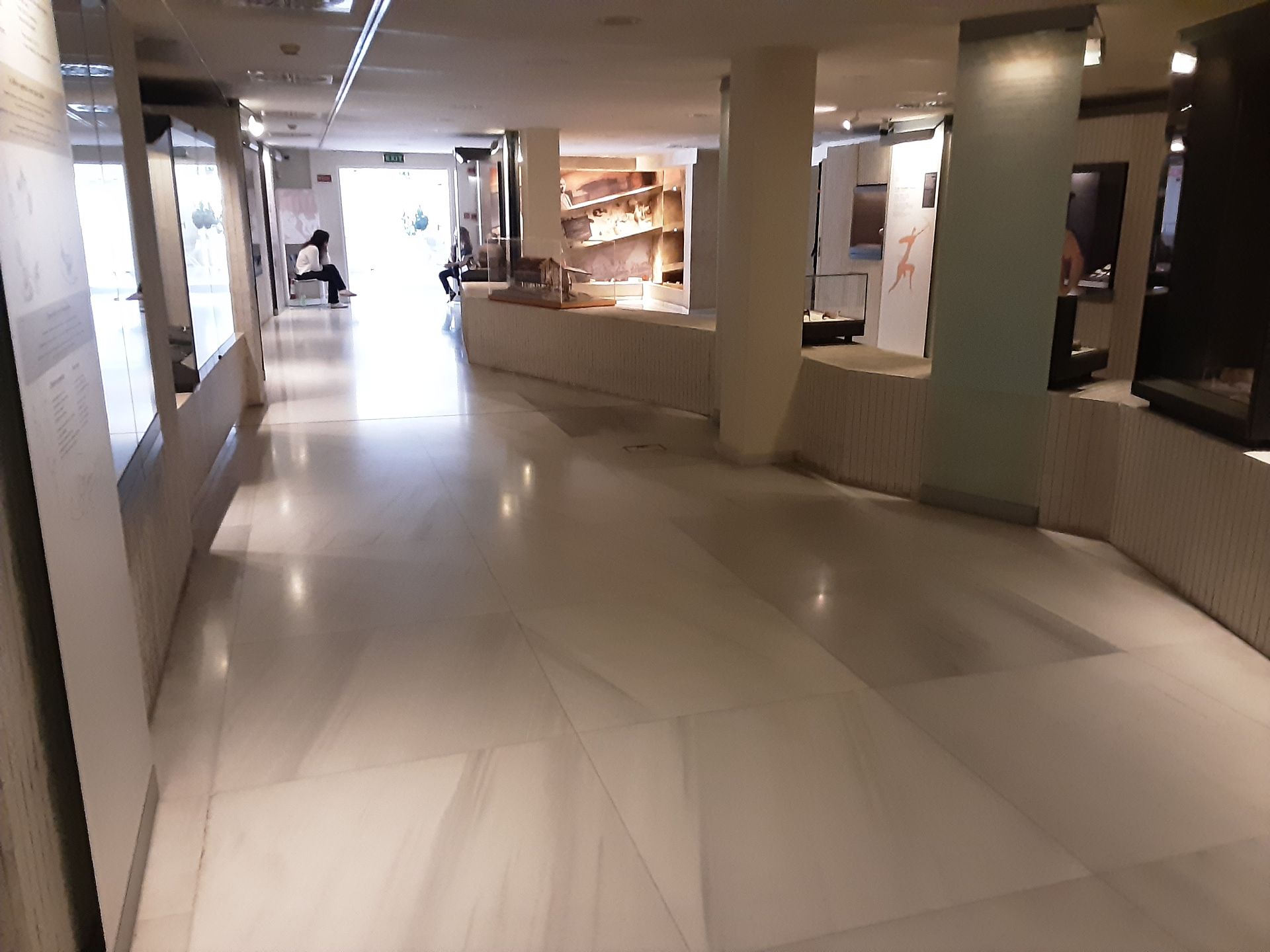
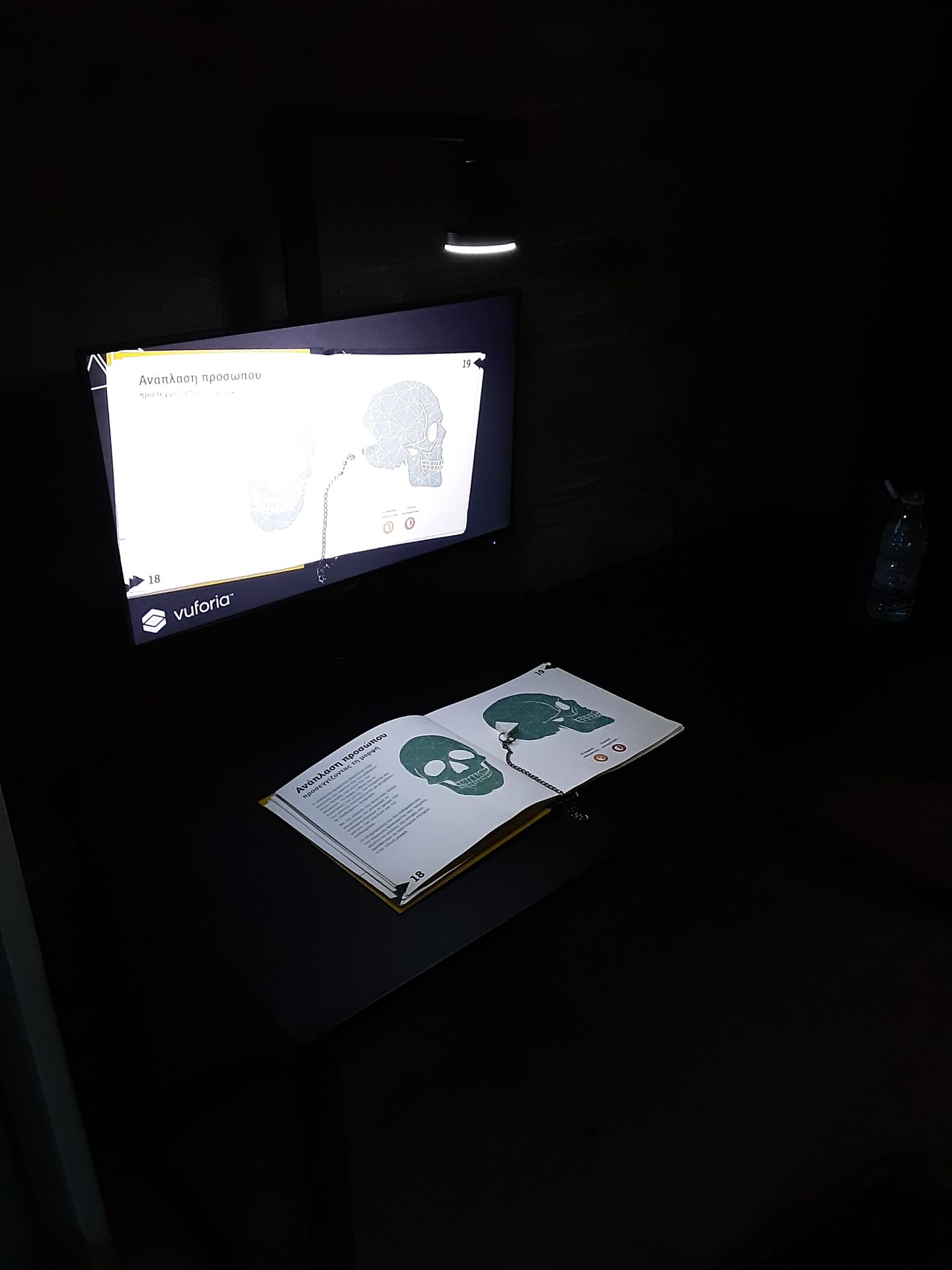
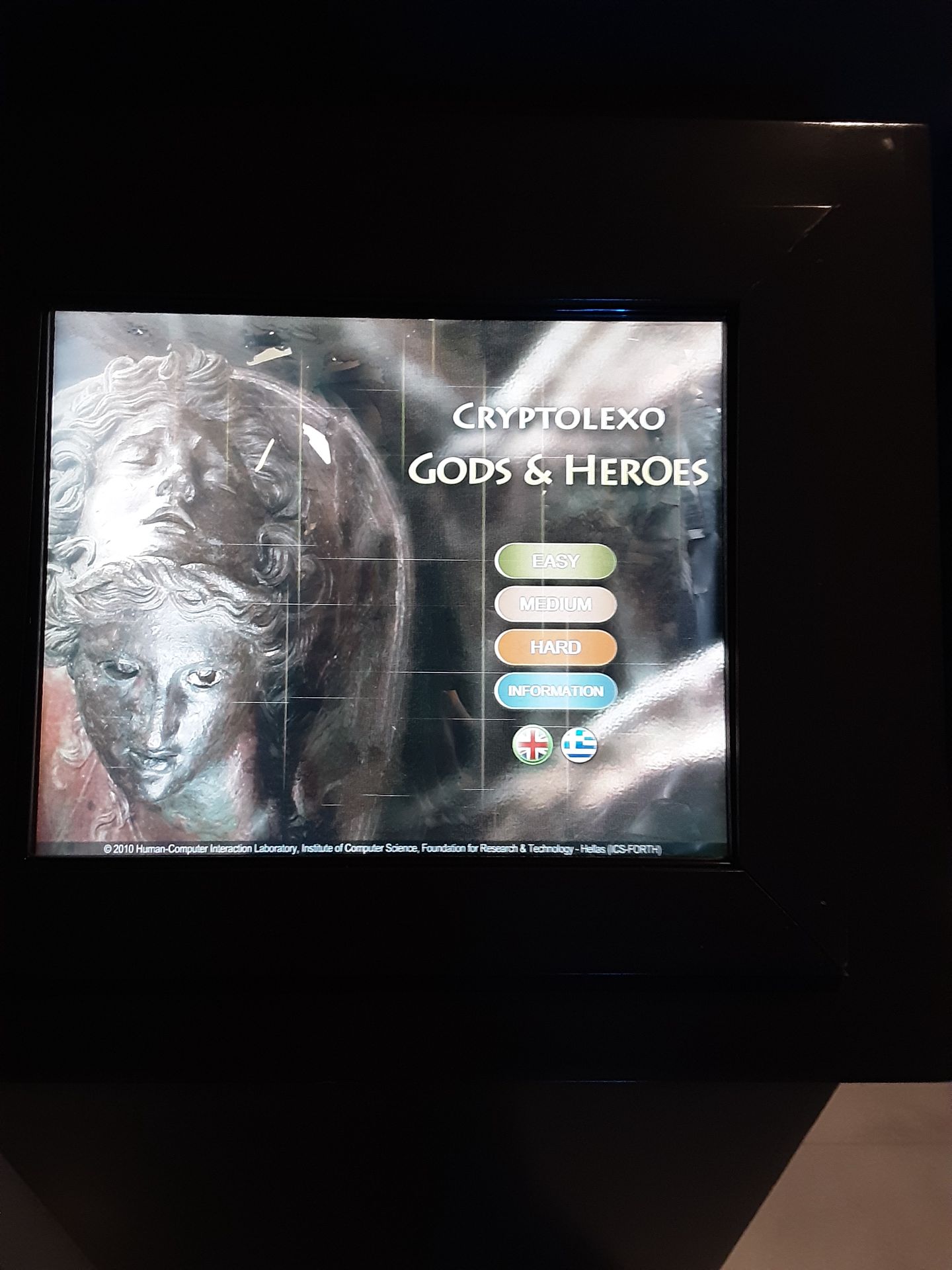
Entrance / exit
Main entrance (Basement Foyer)
- Is there a door?
- Stays open
- Cross slope
- Suitable
- Longitudinal slope
- Suitable
- Clear opening
- Suitable
- Is it easily identifiable?
- Yes
- Clear passage height
- Suitable
- Informational signage for visitors is provided outside
- No
- Adequately served by a dedicated accessible parking space for private vehicles
- Yes
- Bears suitable informational signage regarding accessibility to the building's spaces
- No
Entrance / exit
Interior (through the Temporary Exhibition Wing)
- Is there a door?
- Stays open
- Cross slope
- Suitable
- Longitudinal slope
- Suitable
- Clear opening
- Suitable
- Is it easily identifiable?
- Yes
- Clear passage height
- Suitable
- Informational signage for visitors is provided outside
- No
- Bears suitable informational signage regarding accessibility to the building's spaces
- No
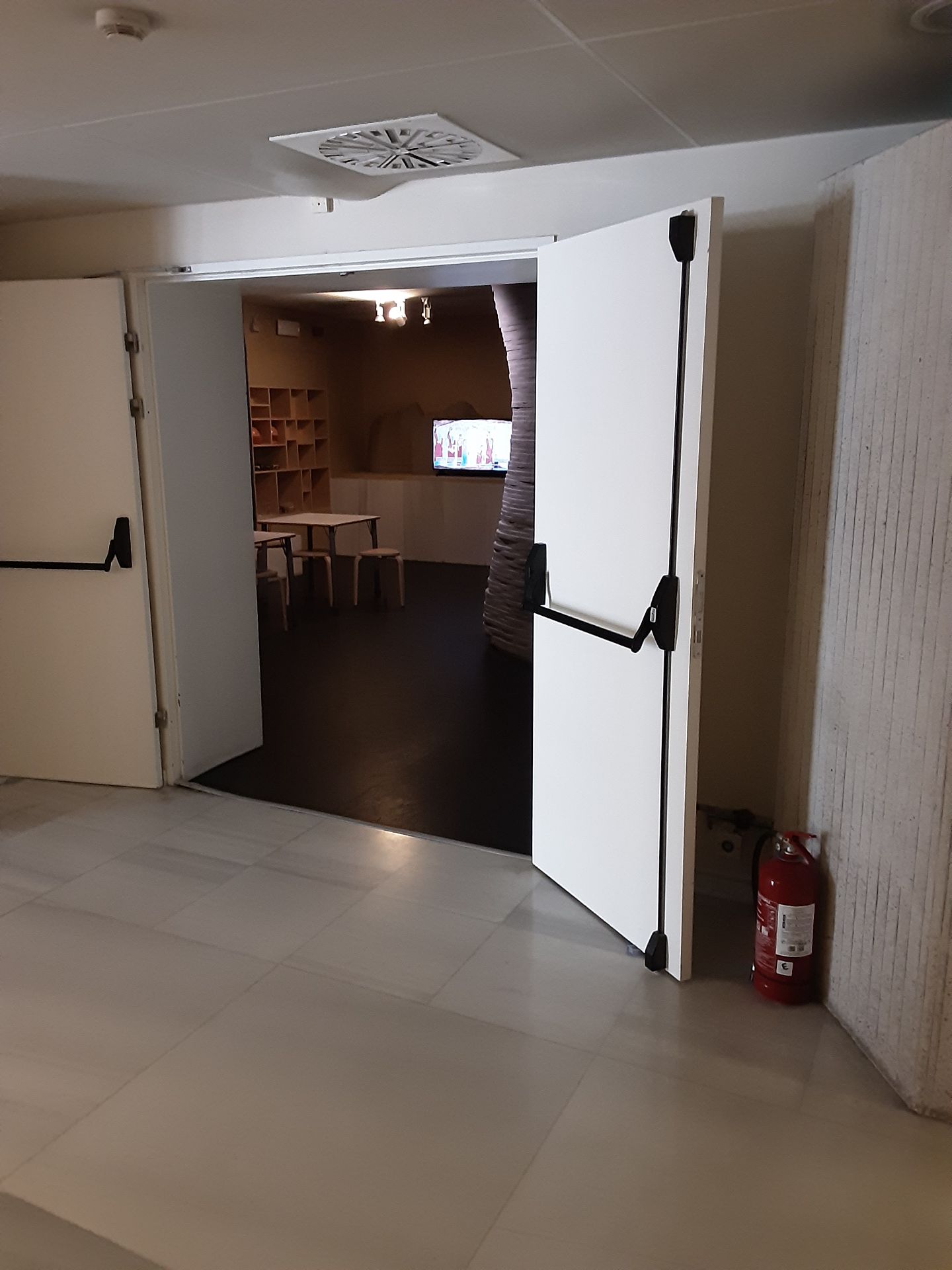
Services
Guided tours
e-skapani.gr
Ticket office / Reception
Information (Basement Foyer)
- Includes…
- Reception/information desk
- The lighting is adequate
- Yes
- At all points with high desks/counters/service windows
- No
- Is it…
- Inside the building
- Can the public be informed about the existence, content and accessibility of the service before visiting the site?
- No, no such information is provided
- Is the space kept clean and well ventilated?
- Yes
- Are the points where services are provided easy to locate?
- Yes
- At all points with desks/counters/service windows with transparent partitions, is a microphone/speaker system installed?
- There are no points with such desks/counters/windows
- Is wheelchair access ensured?
- Yes
- Sign language assistance is available
- No
- There are systems, devices or other equipment for the public, without suitable design for specific categories of users with disabilities
- No such systems / equipment
- There are dedicated points/staff to assist people with disabilities
- No
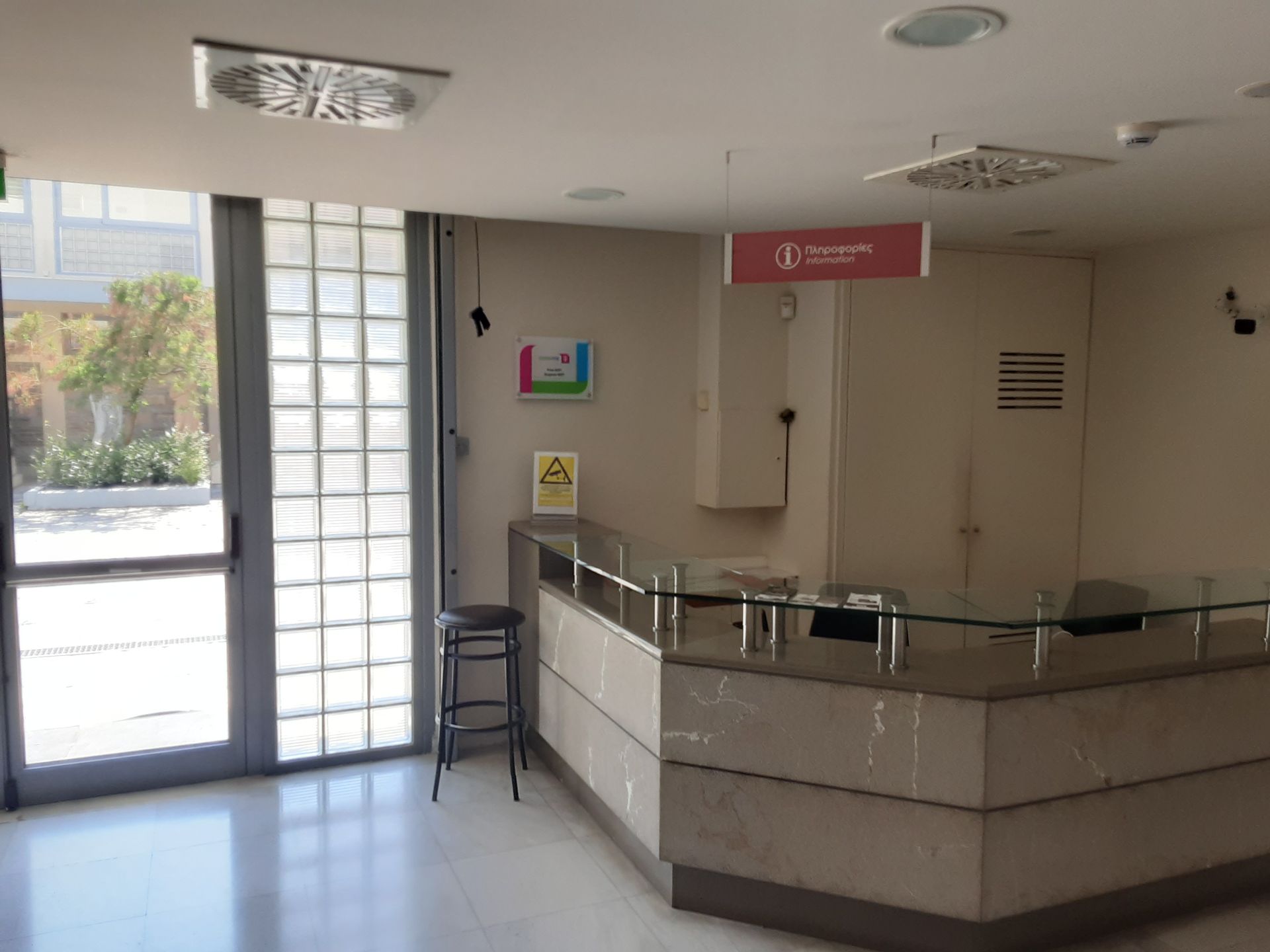
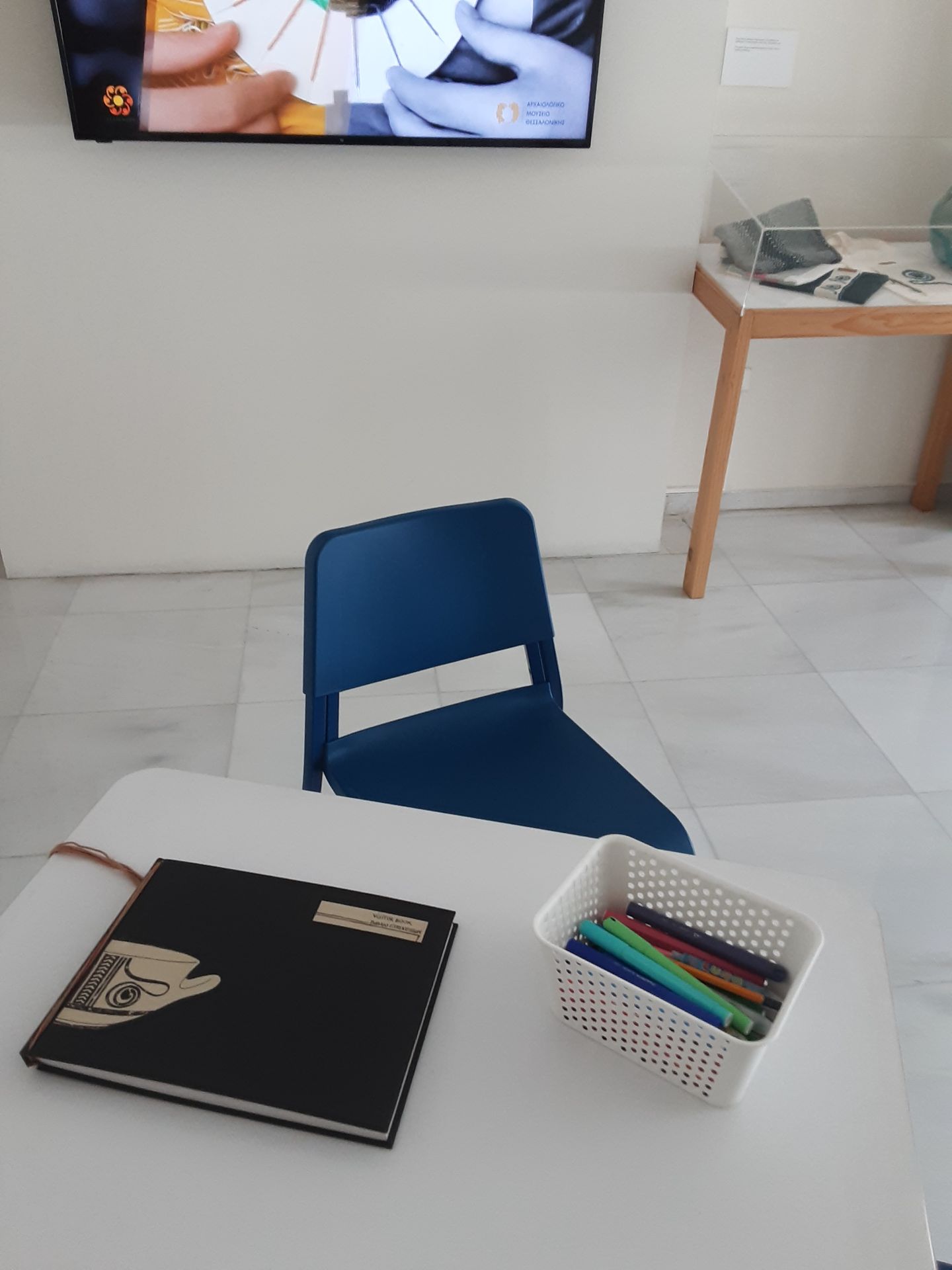
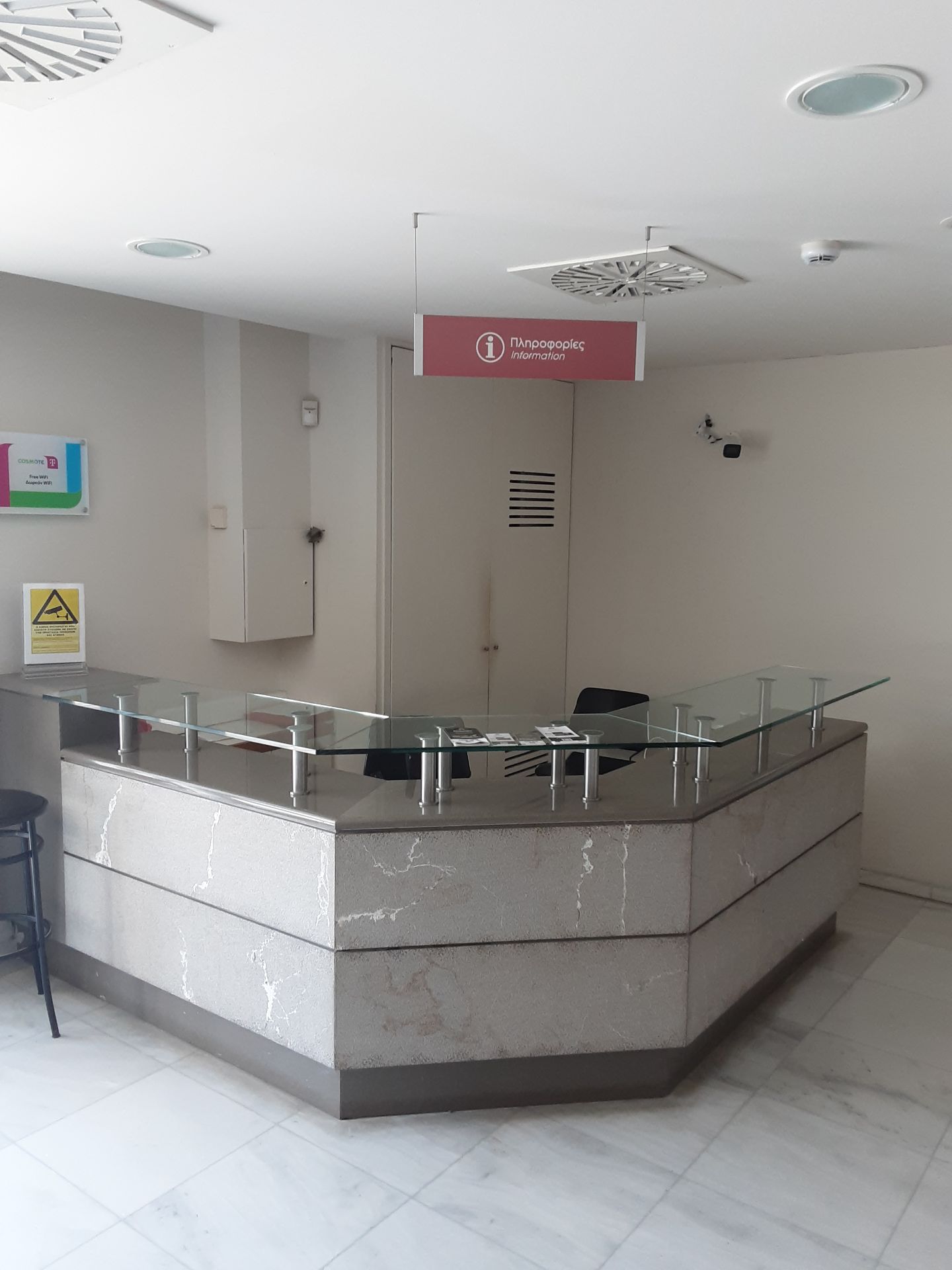
Café / Catering
Café
- Is it…
- Café, Refreshment bar
- Capacity
- 80
- The lighting is adequate
- Yes
- The service is operated by…
- Private individual
- Guide dogs are allowed
- Yes
- Is there a dedicated quiet area?
- No
- The seating for customers is…
- Dining chairs at fixed height (45-50 cm)
- The spaces are…
- Indoor, Outdoor
- The tables for customers are…
- Dining tables (71-76 cm)
- Are there toilets/WCs for customers?
- Yes, and there is also a suitable accessible area/toilet
- Can the public learn about the menu/price list and the service accessibility before visiting?
- No, no such information is provided
- The tables and seating for customers are…
- Free-standing in the space
- Is locating ability and unobstructed wheelchair movement ensured from the entrance to all points where customers can be served/seated?
- Yes
- Is the space kept clean and well ventilated?
- Yes
- Is the space easy to locate?
- Yes
- Category
- Self-service (counter service)
- Is wheelchair access ensured?
- Yes
- At all points with counters/windows with transparent partitions, is a microphone / speaker system installed?
- There are no points with such desks/counters/windows
- At all points with high counters/service windows
- No
- Are alternative ways of service provided for people with disabilities?
- No
- Between the tables and chairs…
- Spaces can be set up at suitable points where wheelchair users and their companions can stand (e.g., by moving free seats/tables)
- In general, service is not provided in ways and conditions that ensure accessibility and non-discrimination on grounds of disability for specific categories of people with disabilities
- People with hearing disabilities / sign language users
- There are dedicated points/staff to assist people with disabilities
- No
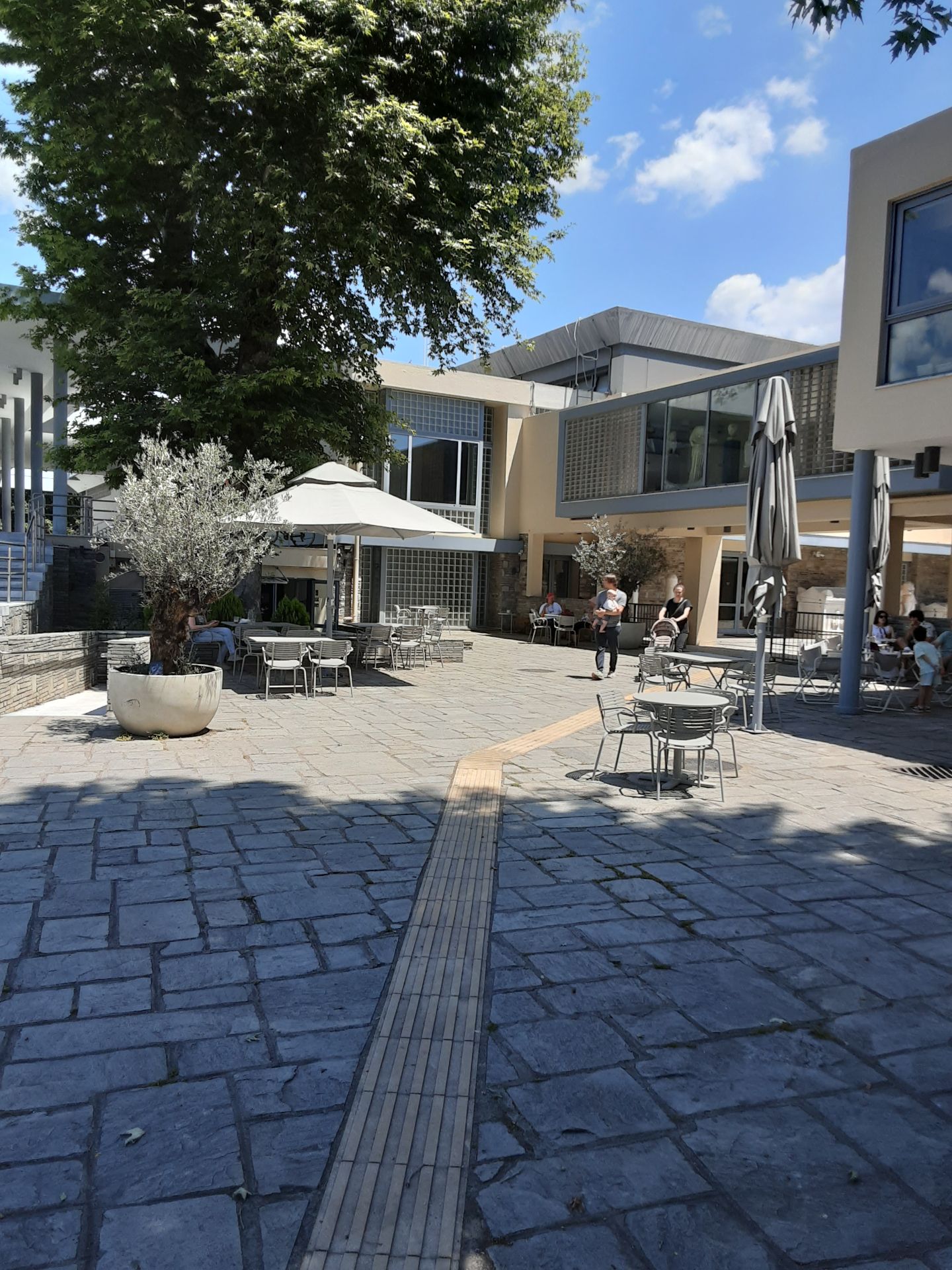
Cloakroom
Cloakroom
- Type
- Locker room (area with lockers secured by key, code or digital systems)
- There are suitable seats / resting areas in the space
- There are, and they are sufficient and suitable
- The lighting is adequate
- Yes
- There is furniture
- They exist and are designed to suit visitors with wheelchairs too (e.g., low cabinets, hooks at two heights, etc.)
- Is it…
- Mixed (men-women)
- At all points where there are high desks/counters
- No
- Is it…
- With the ticket
- Is the space kept clean and well ventilated?
- Yes
- Service priority is provided…
- No, not provided
- Is it easy to locate?
- Yes
- Is wheelchair access ensured?
- Yes
- There are lockers
- For people with vision disabilities, For people with upper-limb disabilities
- Service
- No service / interaction with staff
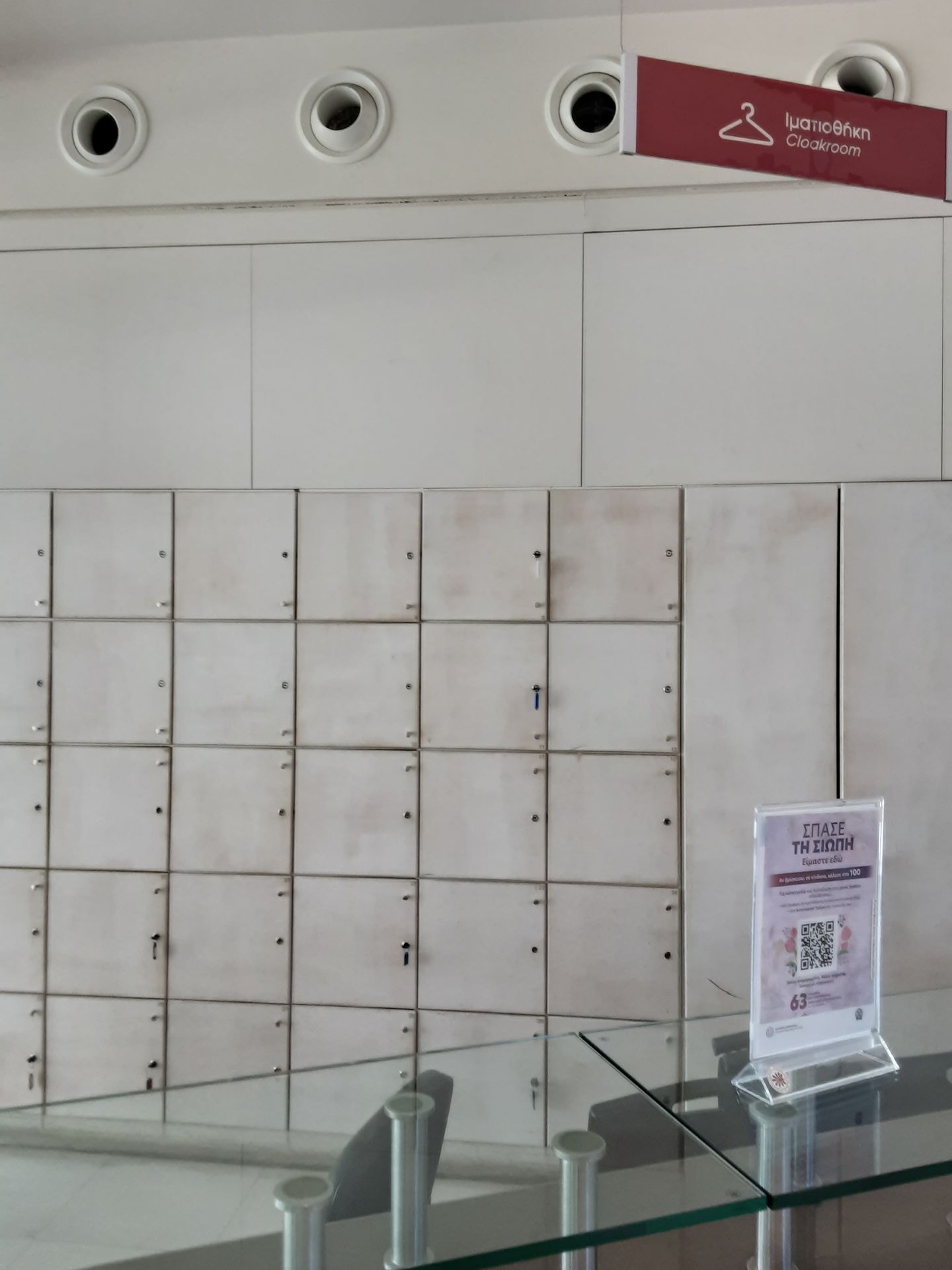
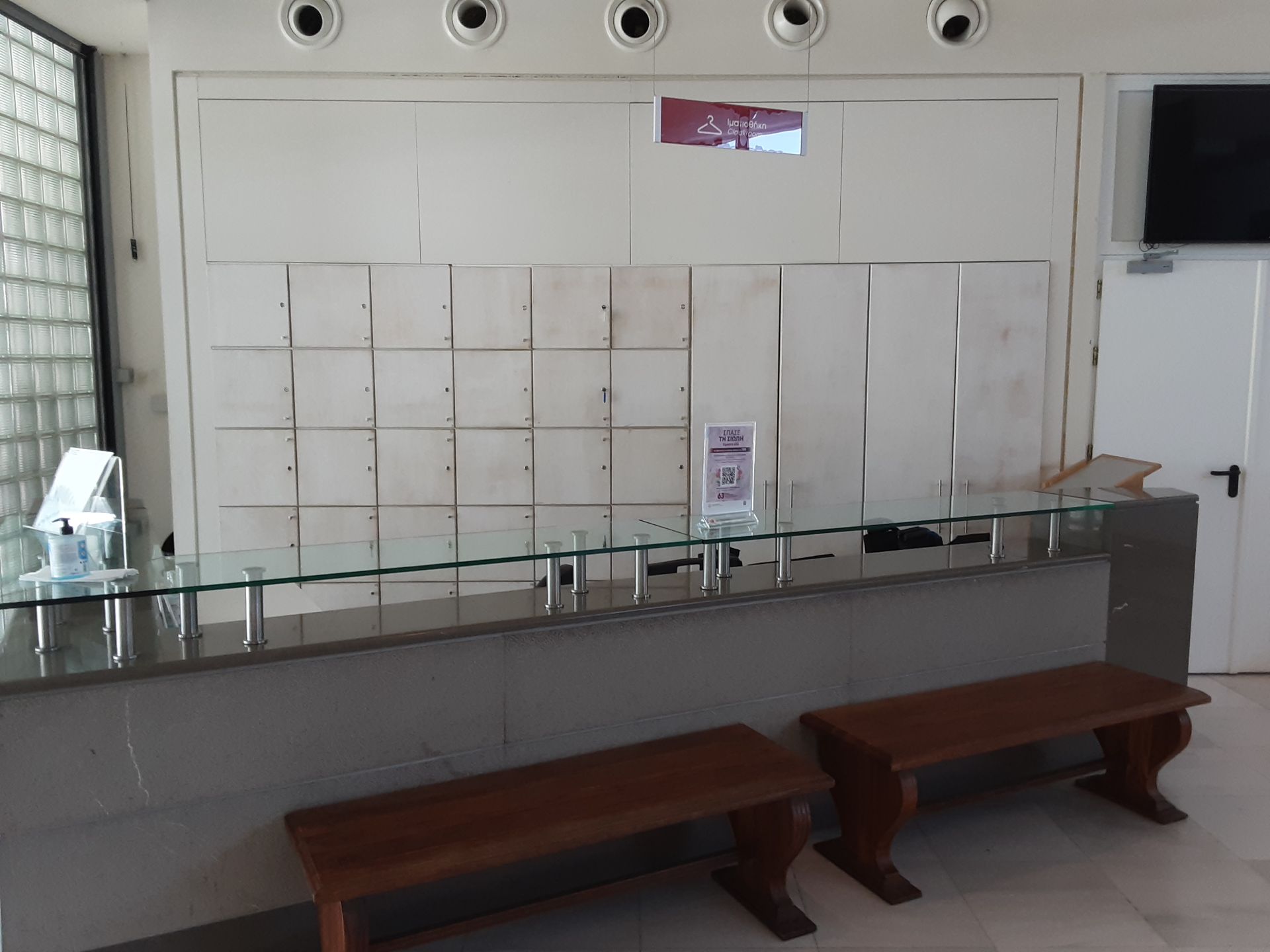
Events hall
Educational Programs (Basement)
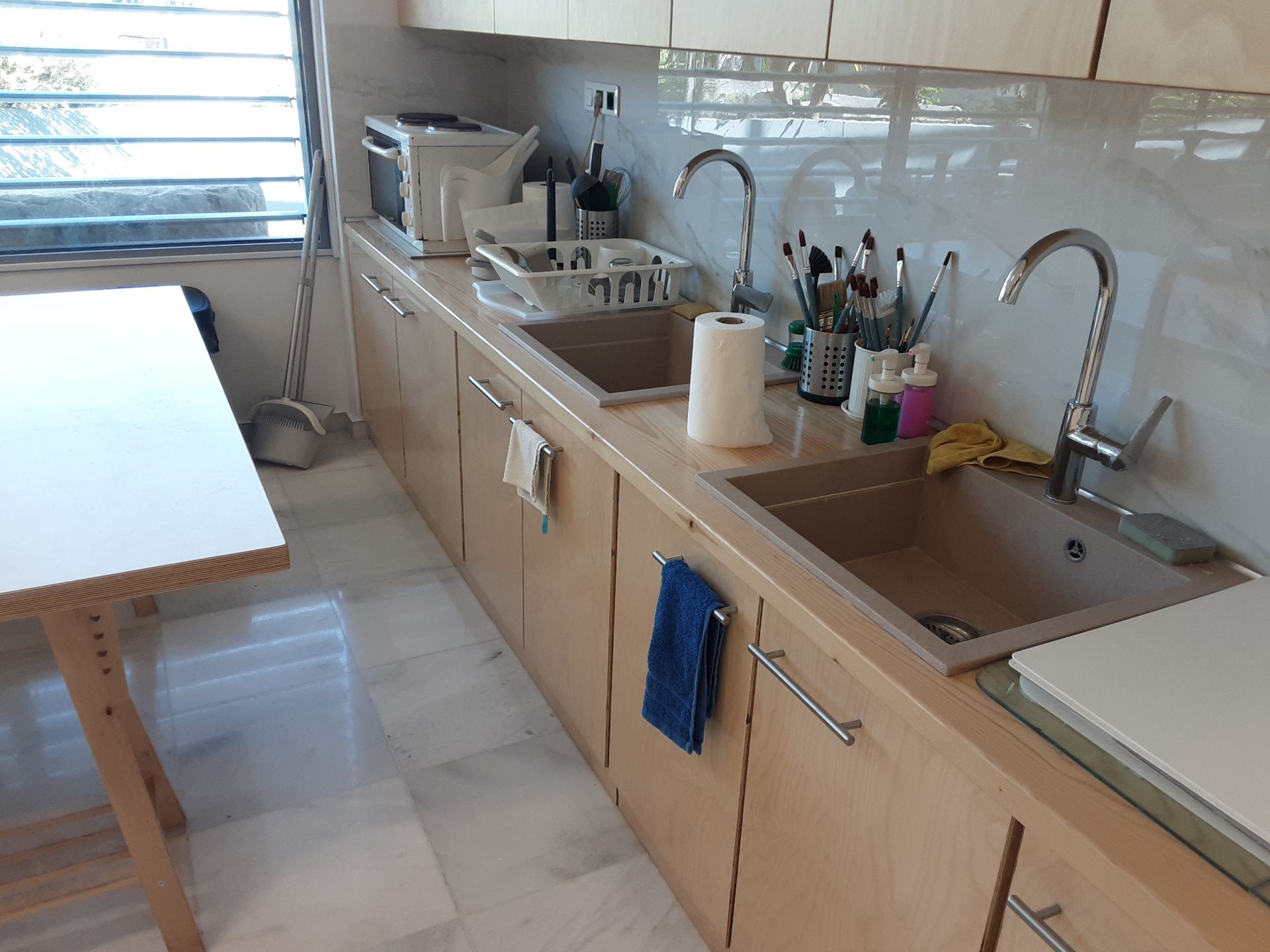
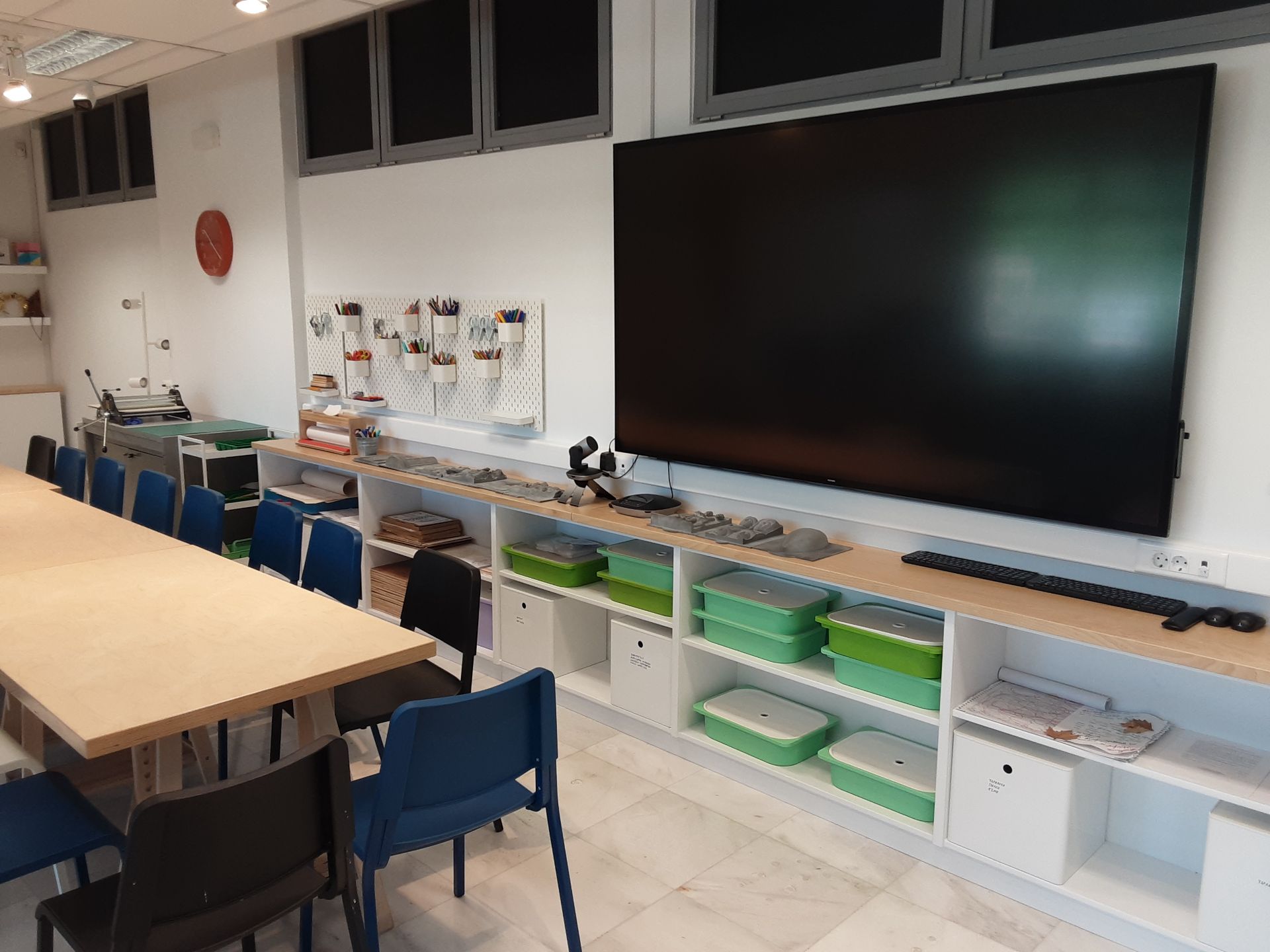
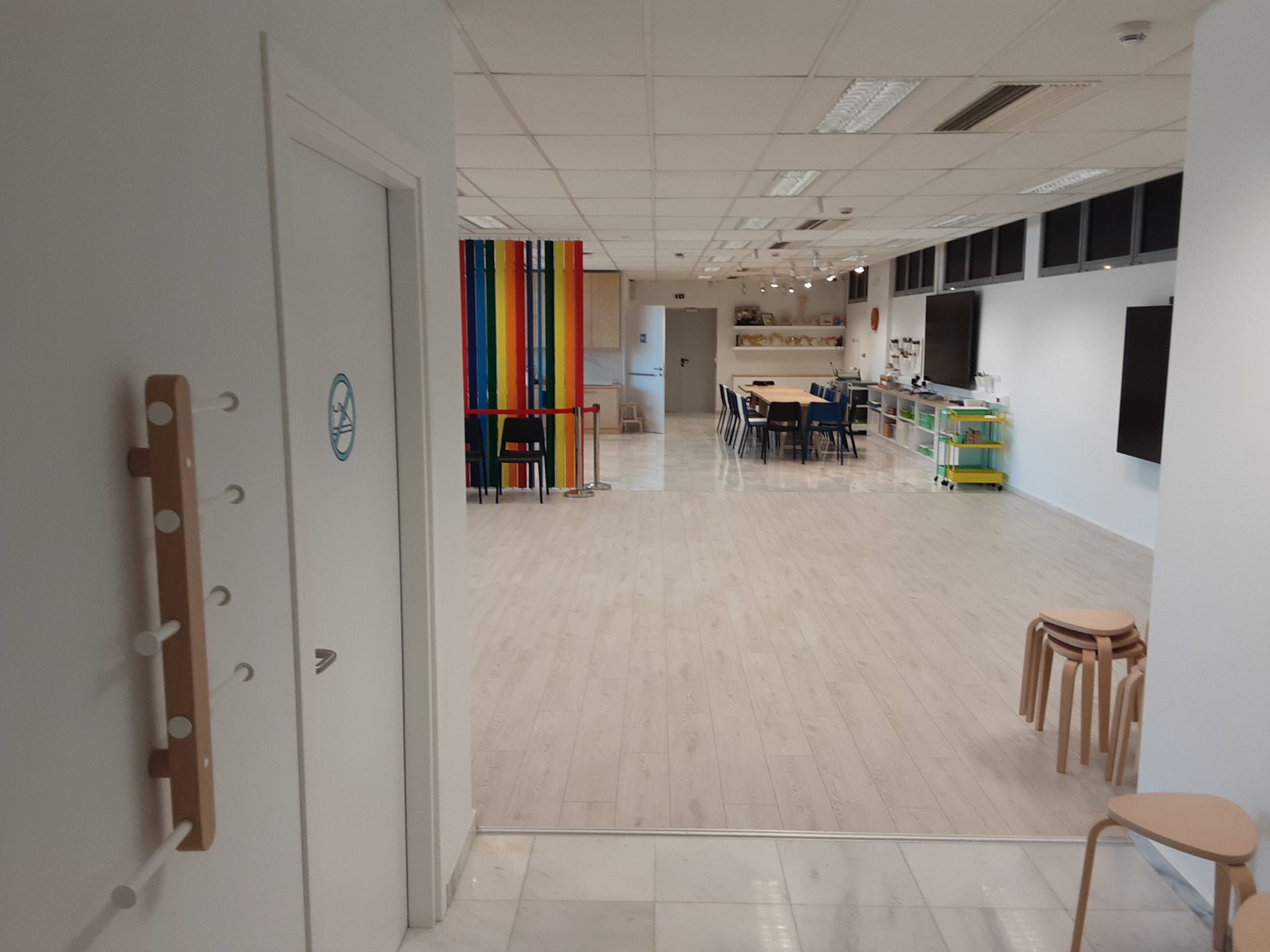
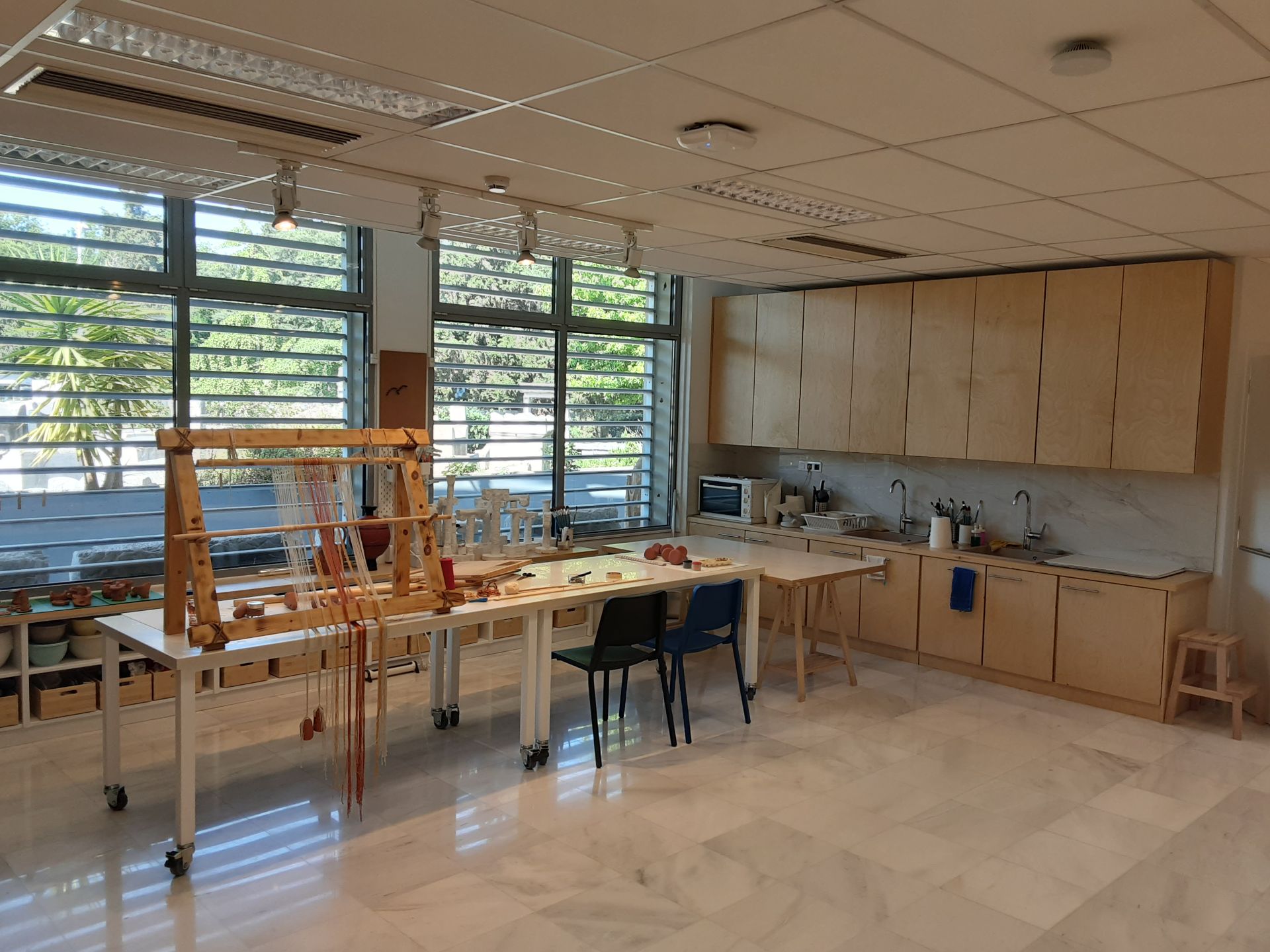
Guided tours
Audio guide (mobile app)
- It operates…
- By the operator (with own resources)
- Overall, use is not possible/safe for specific categories of people with disabilities
- People with visual impairments, People with hearing impairments / sign language users
- Can the public learn about the existence, content, and accessibility of the service before visiting the site?
- Yes, with information media and content suitable for people with disabilities (i.e. with accessible media and accessibility information)
- Done through the use of technology devices/systems, such as…
- Digital app for smart devices
- Specifically for people with disabilities, there is provision for…
- Audio description
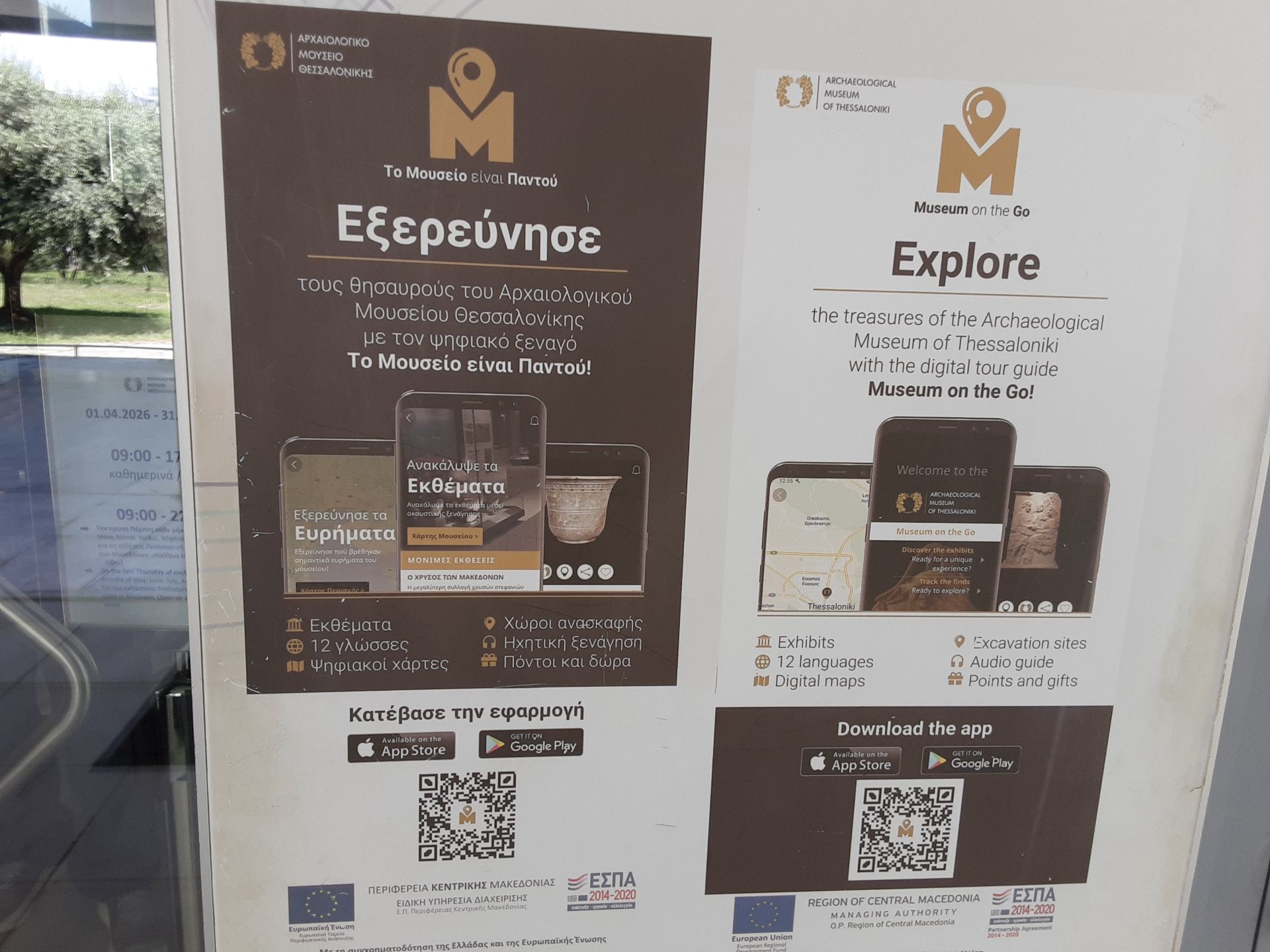
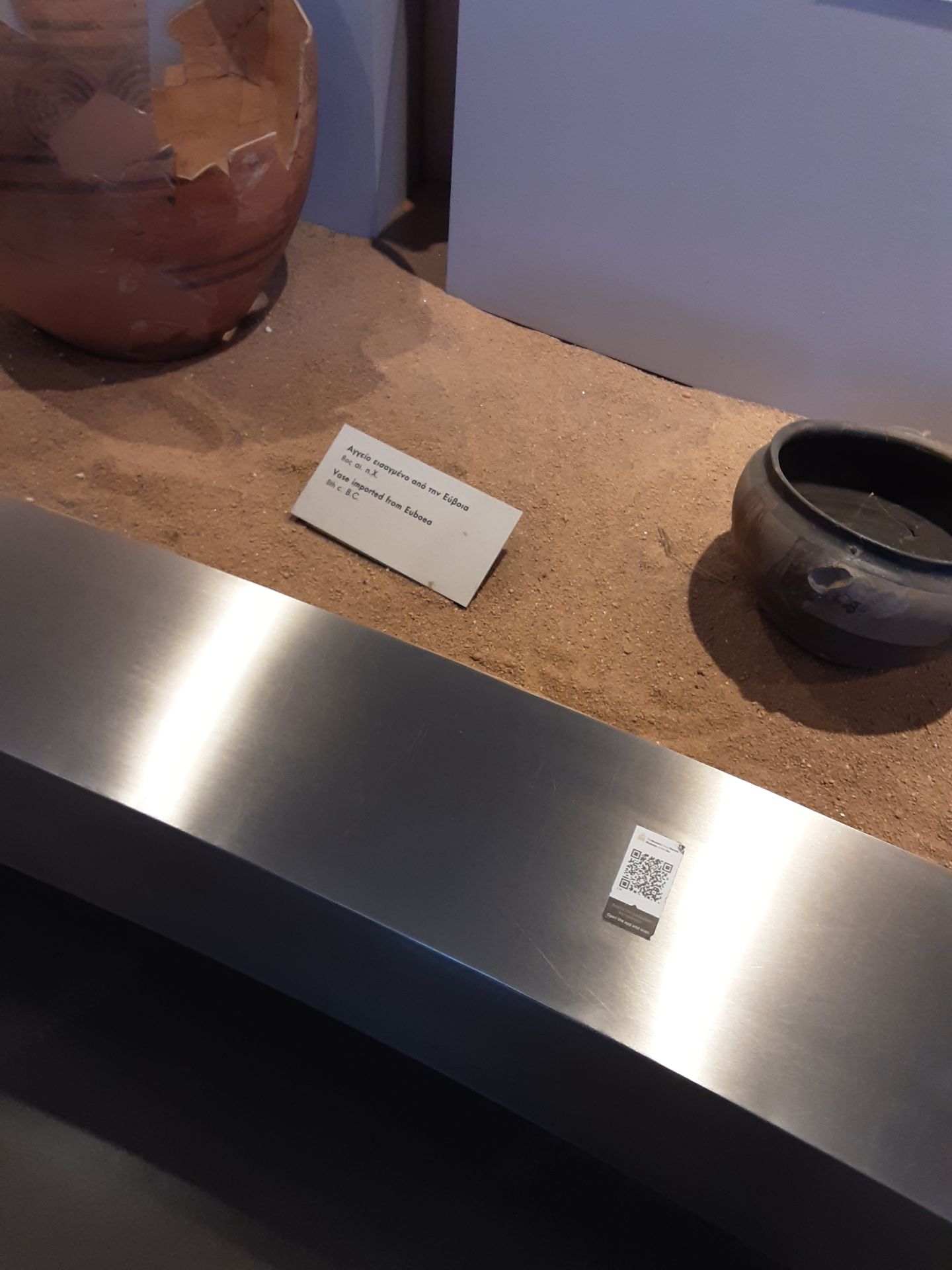
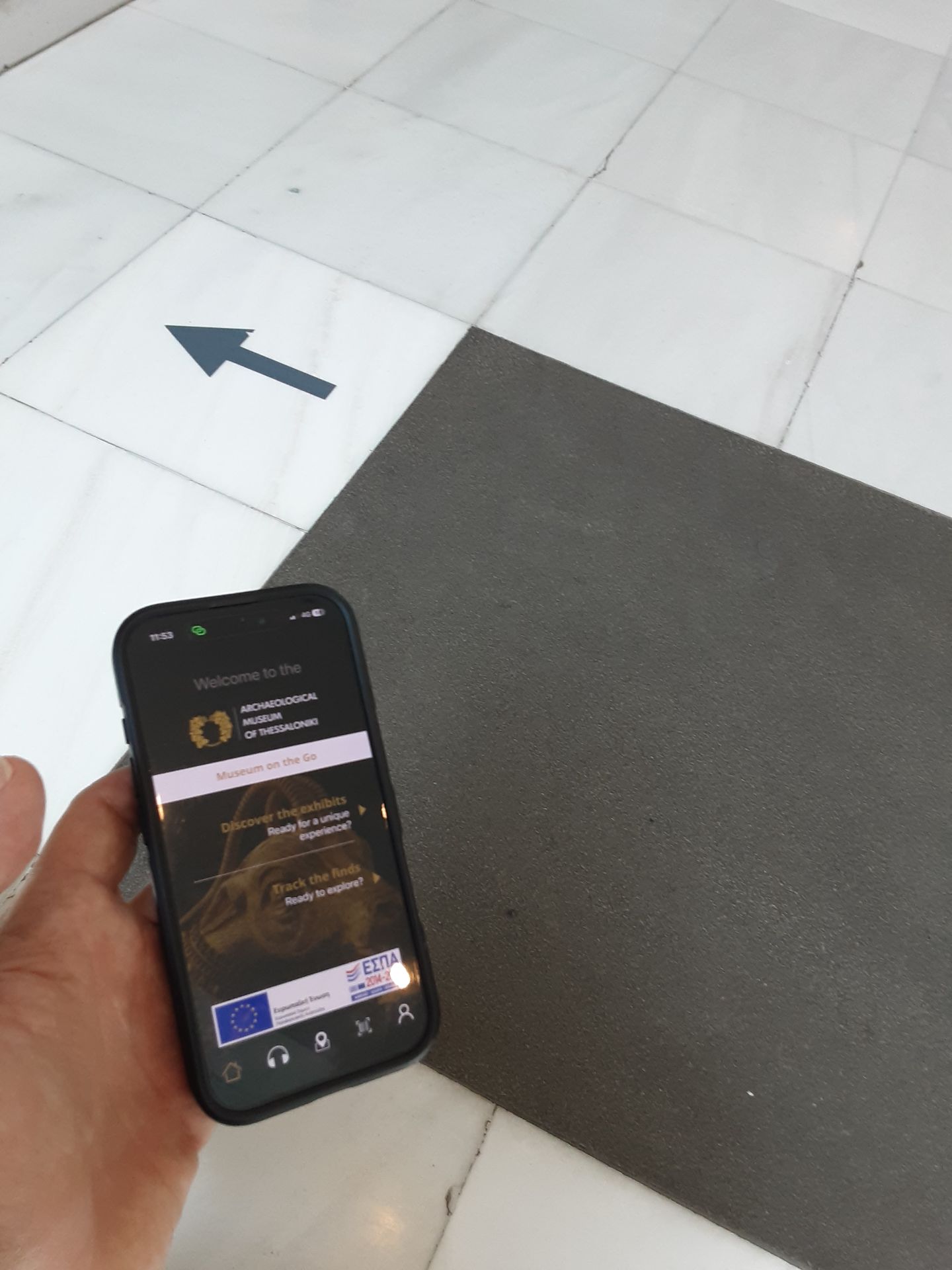
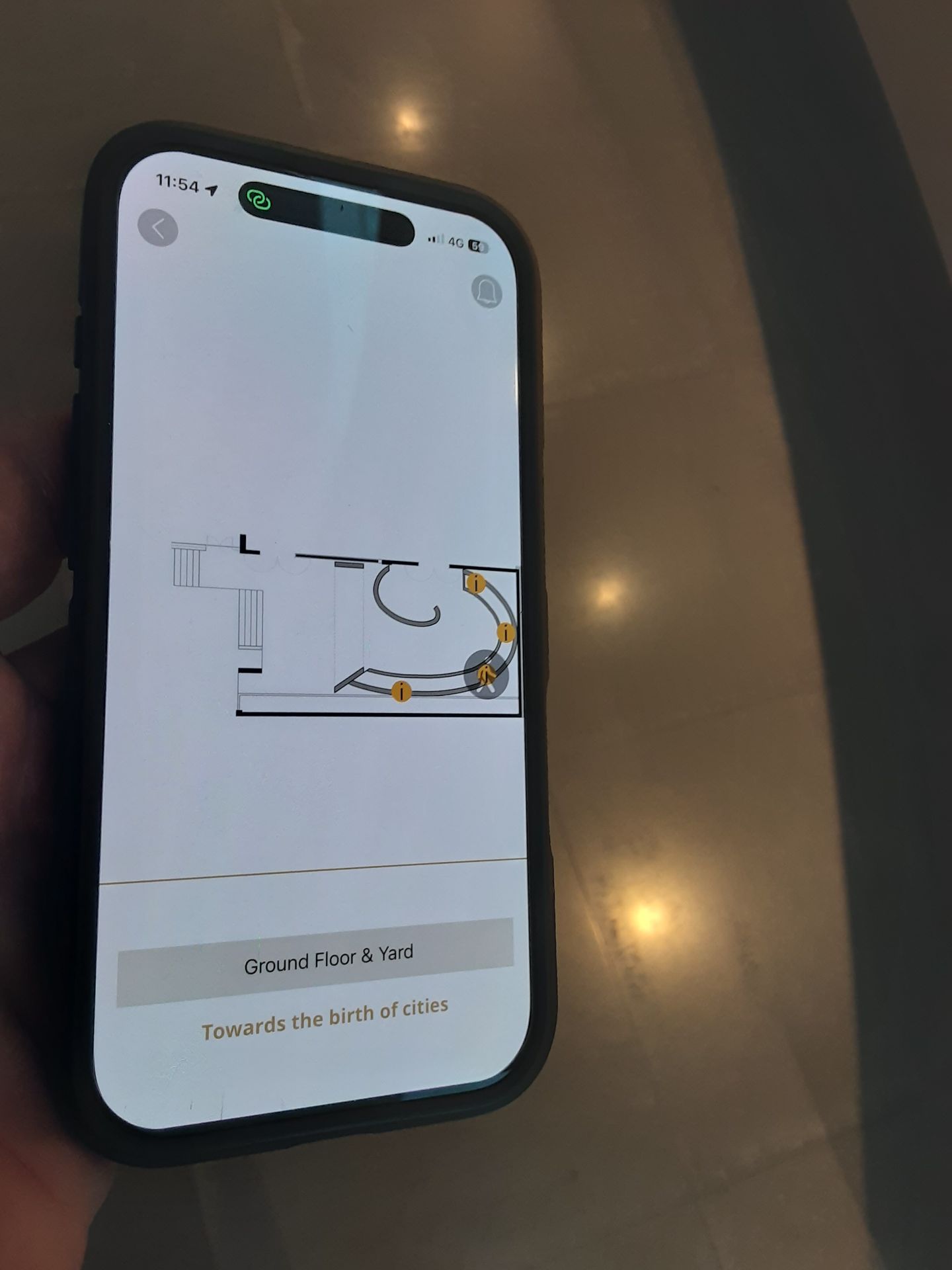
Guided tours
Di<Au>logues
- It operates…
- By a private individual
- Overall, use is not possible/safe for specific categories of people with disabilities
- People with vision disabilities, People with upper-limb disabilities
- Can the public learn about the existence, content, and accessibility of the service before visiting the site?
- Yes, with information media and content suitable for people with disabilities (i.e. with accessible media and accessibility information)
- There is a special service for people with disabilities
- No
- Done through the use of technology devices/systems, such as…
- Other (specify…)
- There are systems, devices or other equipment without suitable design for specific categories of users with disabilities
- For blind people, For people with visual disabilities, For people with upper-limb disabilities, For people with hearing disabilities
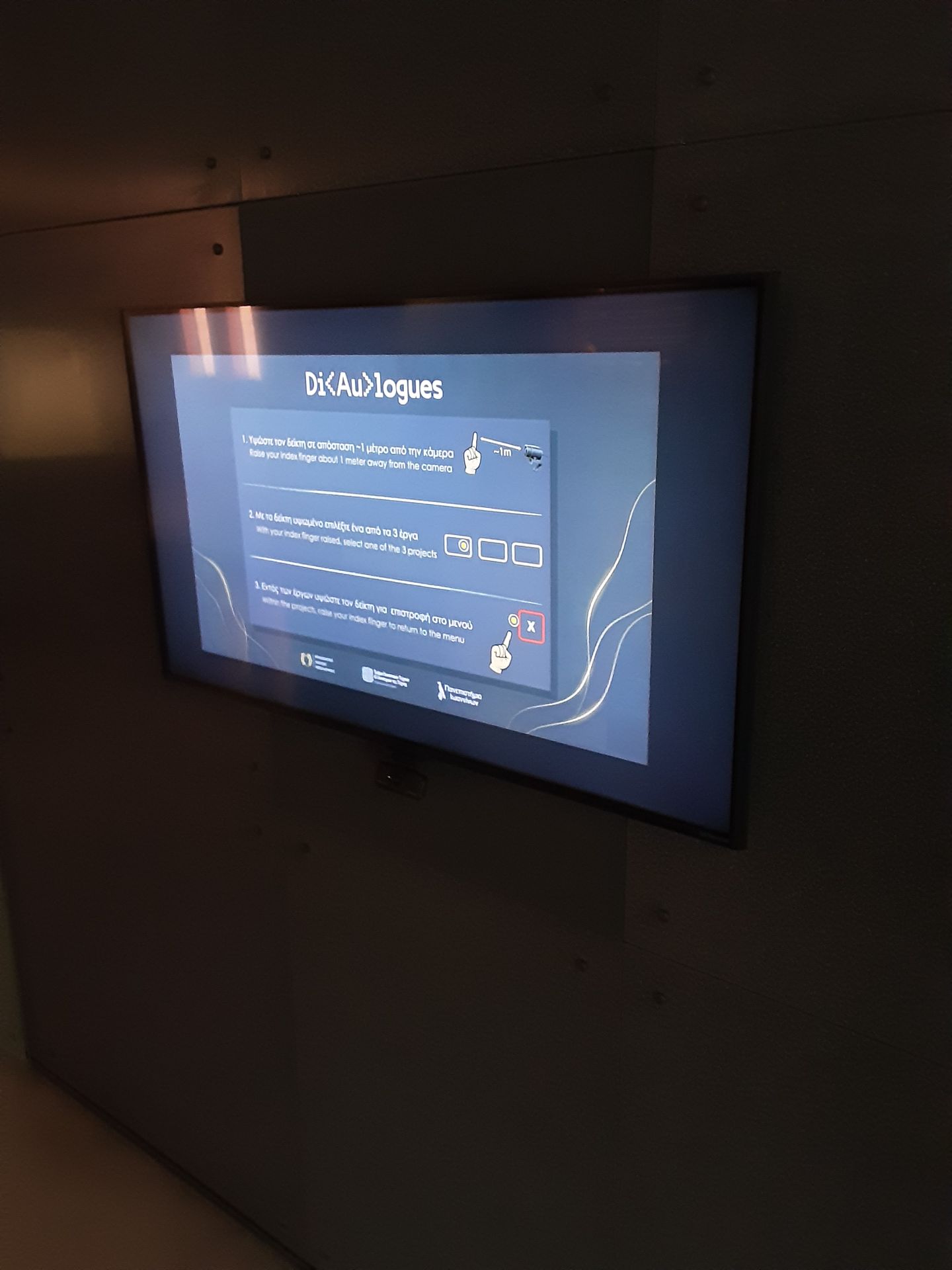
Guided tours
SignGuide (mobile app)
- It operates…
- By a private individual
- Can the public learn about the existence, content, and accessibility of the service before visiting the site?
- Yes, with information media and content suitable for people with disabilities (i.e. with accessible media and accessibility information)
- There is a special service for people with disabilities
- Yes (describe…)
- Done through the use of technology devices/systems, such as…
- Digital app for smart devices
- Specifically for people with disabilities, there is provision for…
- Sign language guided tour
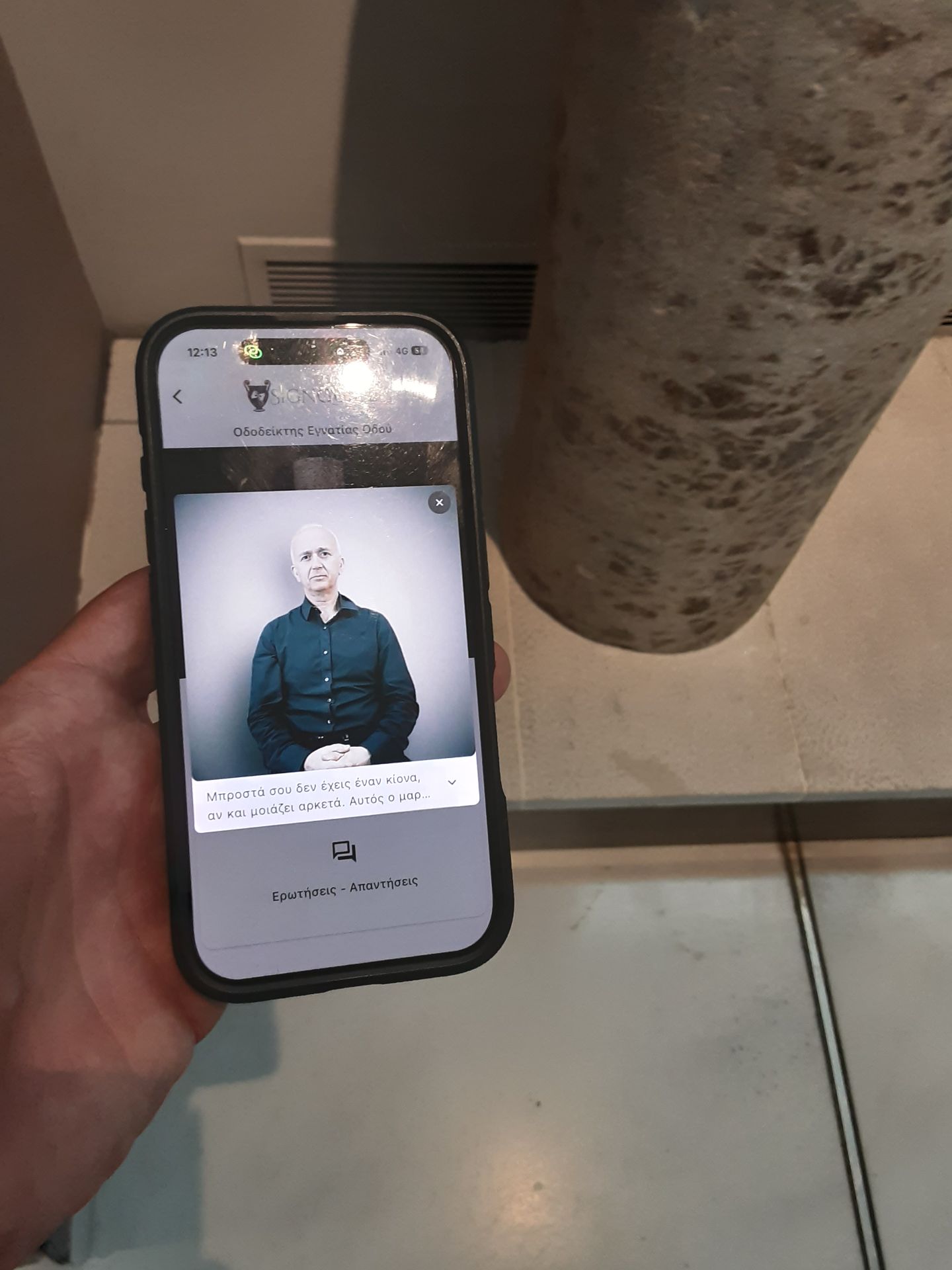
Ticket office / Reception
Tickets / Information (Ground floor Foyer)
- Includes…
- Reception/information desk, Ticket offices/cashiers, Ticket checkpoints
- The lighting is adequate
- Yes
- At all points with high desks/counters/service windows
- Yes
- Is there a dedicated quiet area nearby?
- No
- Any printed material provided to inform service users is also available in…
- Other, Braille
- Is it…
- Inside the building
- Can the public be informed about the existence, content and accessibility of the service before visiting the site?
- Yes, with information media and content suitable for people with disabilities (i.e. with accessible media and accessibility information)
- Is the space kept clean and well ventilated?
- Yes
- Are the points where services are provided easy to locate?
- Yes
- At all points with desks/counters/service windows with transparent partitions, is a microphone/speaker system installed?
- There are no points with such desks/counters/windows
- Is wheelchair access ensured?
- Yes
- Are alternative ways of service provided for people with disabilities?
- None, because they are not needed
- Sign language assistance is available
- No
- There are systems, devices or other equipment for the public, without suitable design for specific categories of users with disabilities
- No such systems / equipment
- There are dedicated points/staff to assist people with disabilities
- No
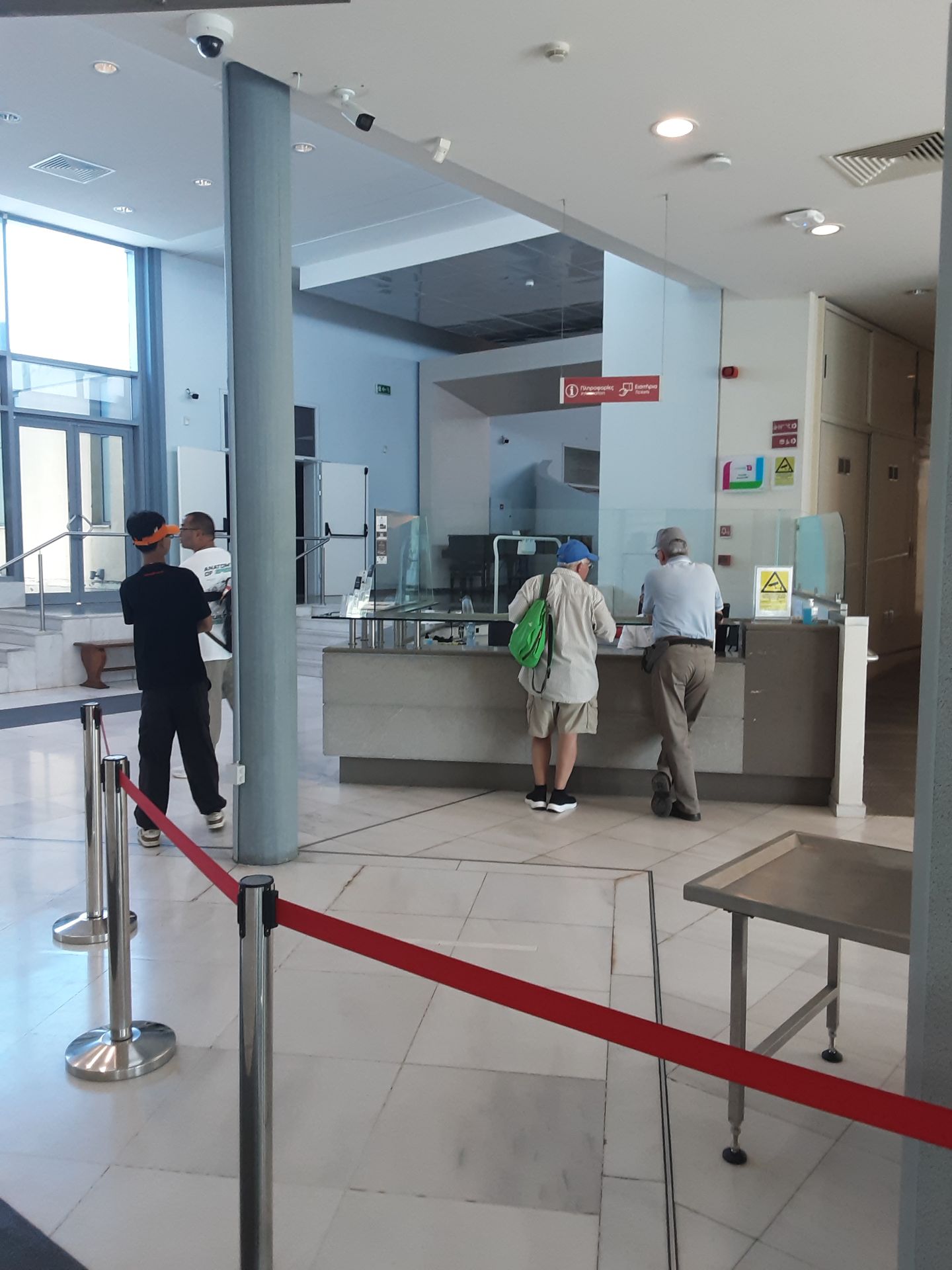
Special facilities (2)
Special facility
Information leaflet in 20 languages
Special facility
Provision of wheelchairs to visitors
- Description
- Free provision (3 seats)
Beneficiaries
- People with difficulty walking / standing for long periods
- Wheelchair users
Events hall
Lecture hall "Manolis Andronikos" (Ground floor)
- What is the capacity?
- 110 seats
- Includes…
- Stage, Speaker's podium, Seats, Microphones and speakers, Projection screen(s), WiFi
- The lighting is adequate
- Yes
- Are fire alarms perceptible in all areas of the space?
- No, it is not
- The seats for the public / speakers are…
- Dining chairs at fixed height (45-50 cm)
- Is it…
- Inside the building
- The seats for the public / speakers are…
- Fixed (anchored)
- Is it…
- With ticket
- Layout of the seats
- Theater-style (chairs without tables)
- Are there emergency exits for the public in the hall?
- Yes, and they are accessible/suitable for wheelchair users
- In all areas of different use where there are high tables/desks
- No areas with such tables/desks
- Are there toilet facilities for the public near the hall?
- Yes, and there is also a suitable accessible area/toilet
- Is the space kept clean and well ventilated?
- Yes
- Is it easily identifiable?
- Yes
- Is wheelchair access ensured?
- Yes
- Does it have an emergency lighting system?
- Yes
- Service
- No service / interaction with staff
- Is it ensured that wheelchair users can locate and move unobstructed from the entrance to the points where they can stand / watch the event?
- There are no such points for wheelchair users
- Is unobstructed access to the podium and/or stage ensured for speakers using a wheelchair or with walking difficulties?
- No, there are obstacles (specify)
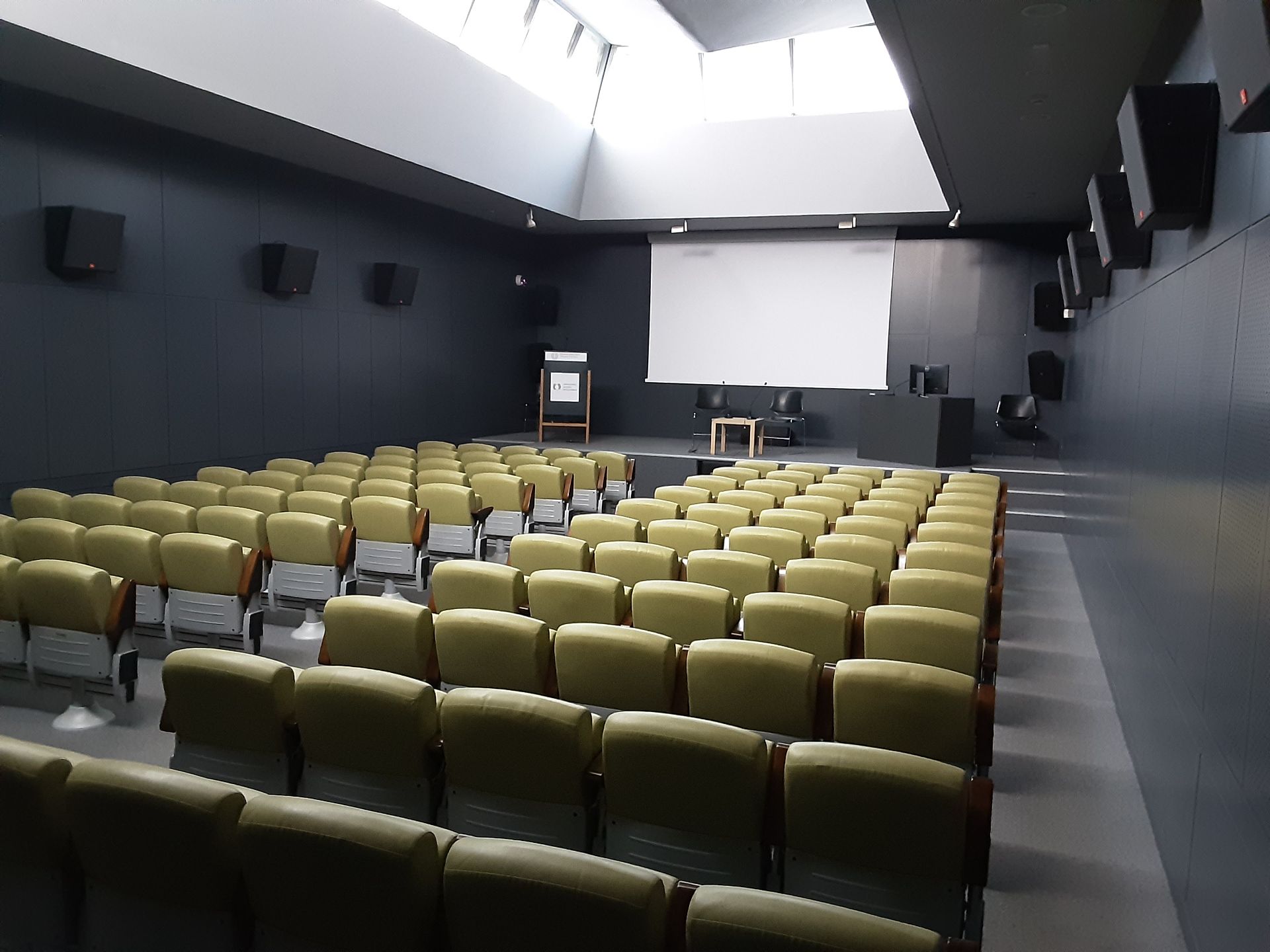
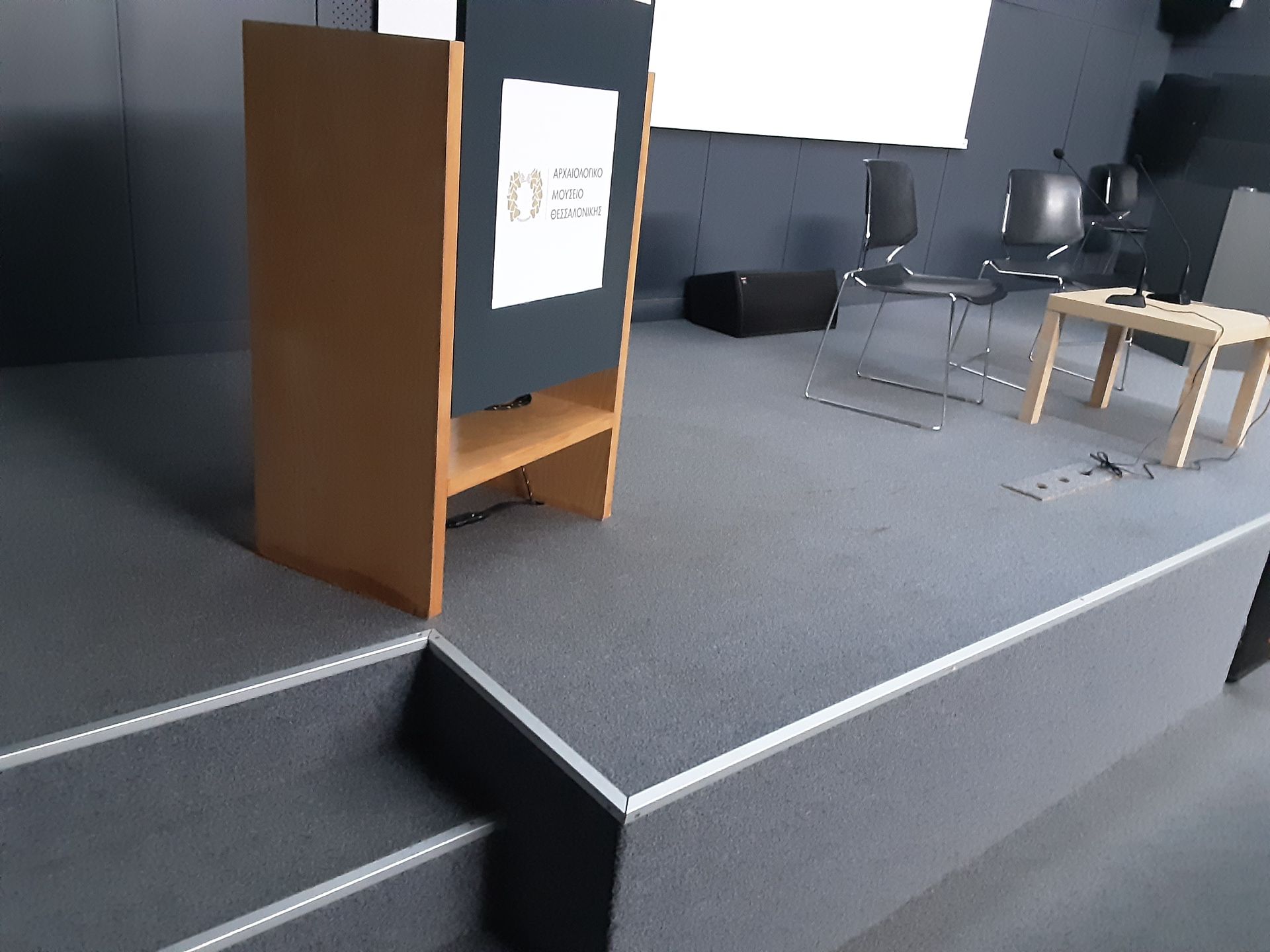
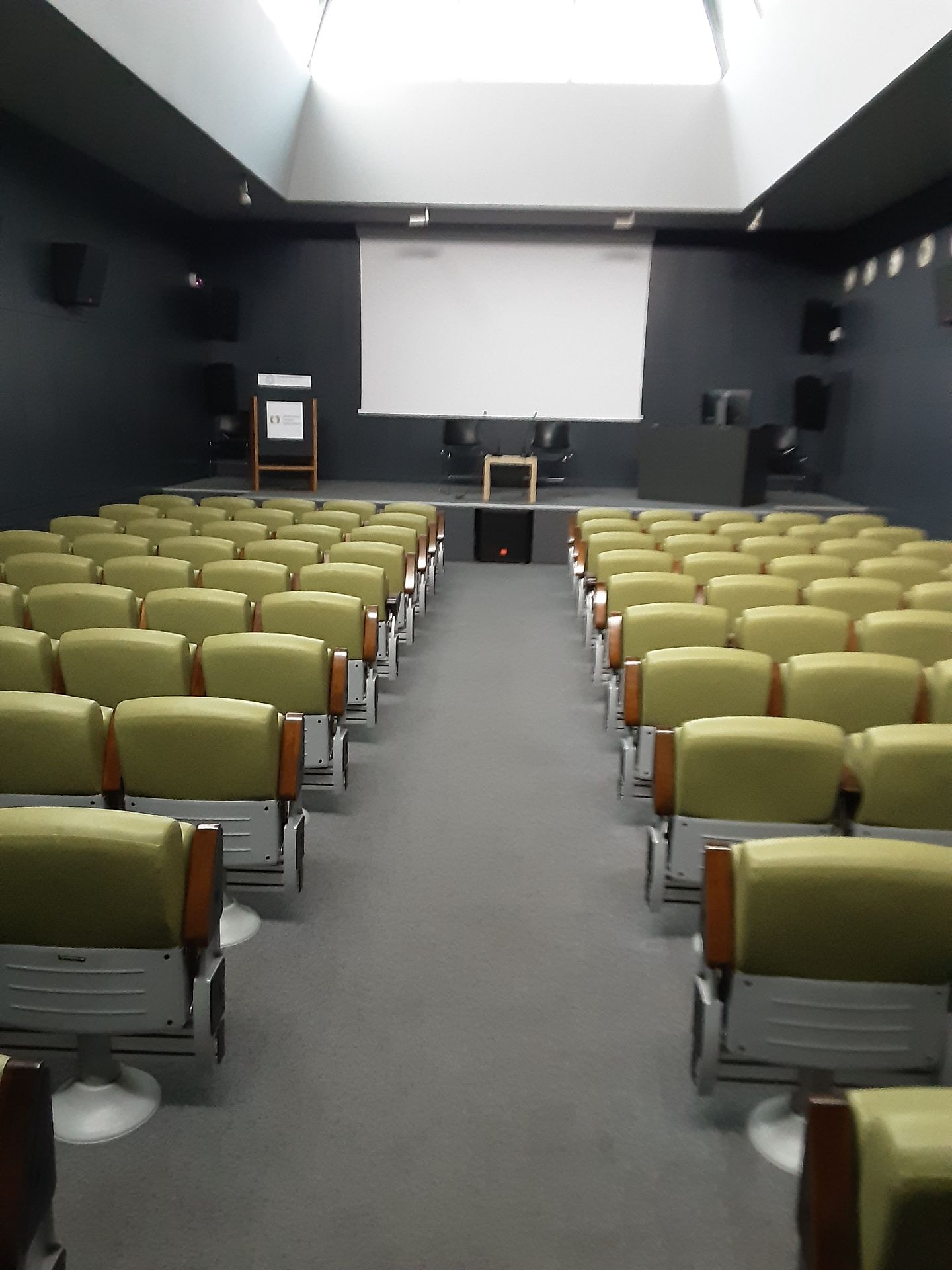
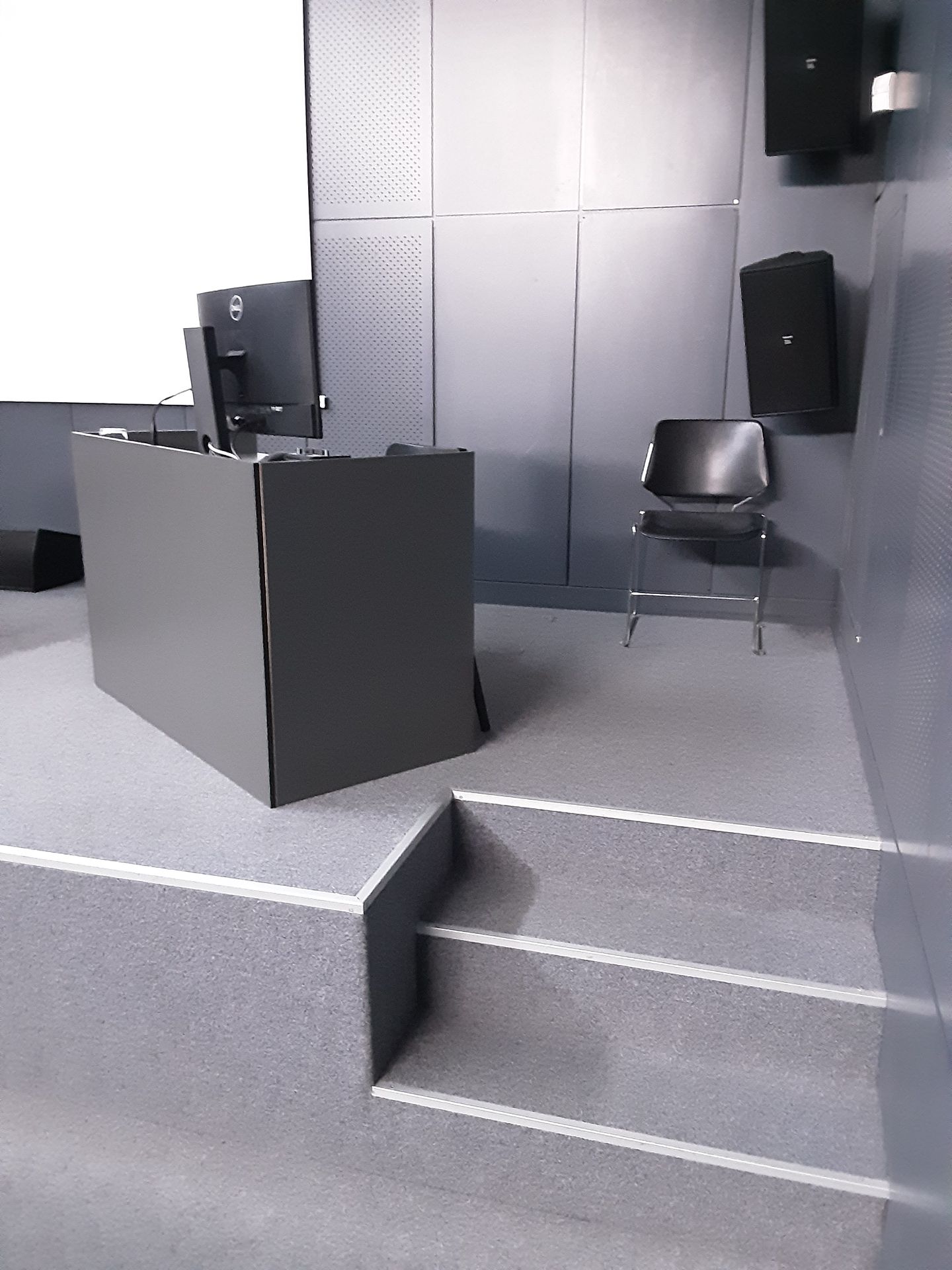
Gift shop
Souvenir / gift shop
- The lighting is adequate
- Yes
- At all points with high counters/desks/booths
- Yes
- Is it…
- Inside the building
- Can the public be informed about the existence, content and accessibility of the service before visiting the site?
- No, no such information is provided
- Is the space kept clean and well ventilated?
- Yes
- Are the points where services are provided easy to locate?
- Yes
- Is wheelchair access ensured?
- Yes
- Products are on display
- Yes
- Are alternative ways of service provided for people with disabilities?
- None, because they are not needed
- At all points with desks/counters/service windows with transparent partitions, is a microphone/speaker system installed?
- There are no points with such desks/counters/windows
- There are systems, devices or other equipment for the public, without suitable design for specific categories of users with disabilities
- No such systems / equipment
- Are there dedicated points/staff for serving people with disabilities?
- No