West Macedonia · Museum, Exhibition & Collection
Byzantine Museum of Kastoria
Who we are
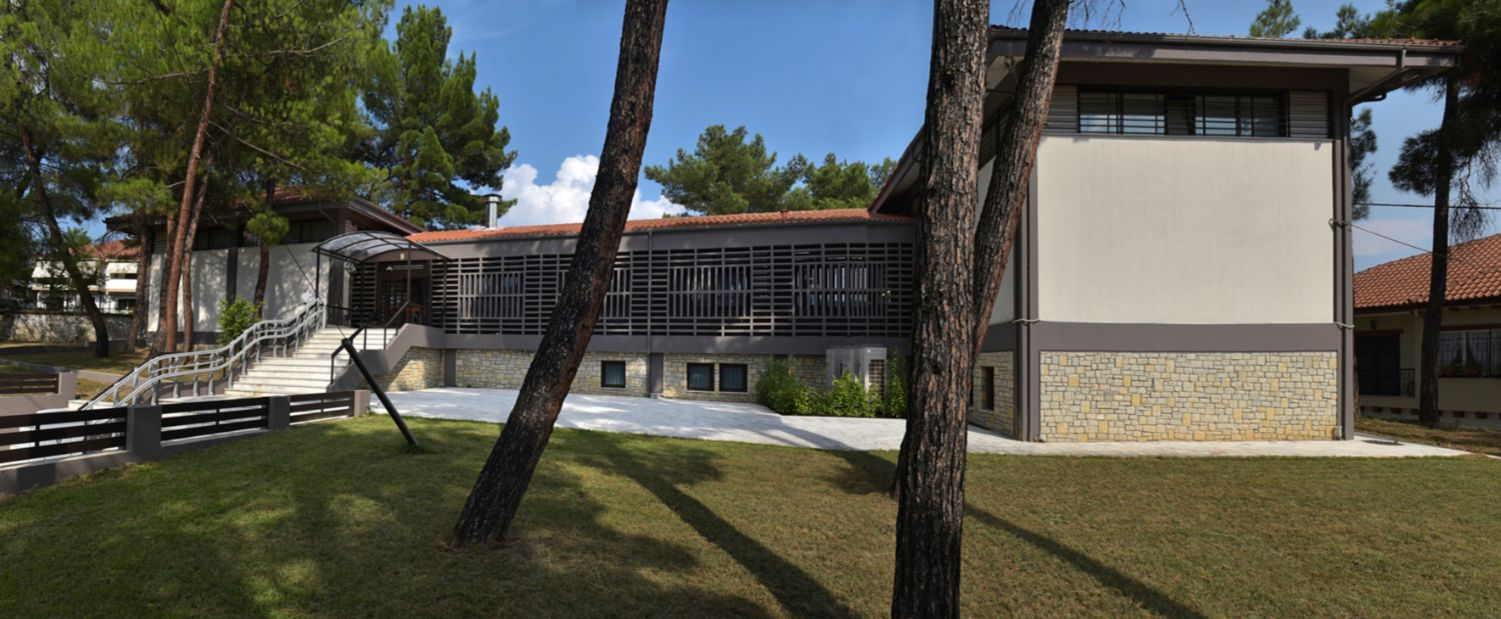
The Byzantine Museum of Kastoria is located at the highest point of the city, in the area of the old Xenia. The Museum, following the recent renovation of the building within the framework of the NSRF 2007-2013, has been reopened since October 2016 and houses its new permanent exhibition. It is a unique thematic museum of icons, since its collections consist mainly of portable works of religious painting from the Byzantine and post-Byzantine periods. In the three halls, arranged around a central atrium, the artistic production found in Kastoria is presented in an equal number of thematic sections: "Byzantine Kastoria", "Post-Byzantine Kastoria", "the post-Byzantine artistic workshops". The exhibition includes portable icons of every kind, such as processional, despotic, devotional and epistyle icons, as well as sanctuary doors of the templon. Many of them are of rare iconography and painting. A few detached wall paintings, coins and jewellery complete our knowledge of the flourishing local society and art of the period. Information panels with illustrative material directly related to the exhibits compose small, charming human stories that illuminate unknown aspects of the Byzantine and post-Byzantine castle-town, with the founders of the churches, local officials, noblewomen and renowned artists as protagonists. At the same time, through modern digital applications, the visitor discovers in an interactive way the numerous monuments of the city, while learning the secrets hidden in the technique of making a Byzantine icon. The new exhibition highlights the importance and radiance of Kastoria within the framework of the Byzantine Empire, as well as in post-Byzantine times, and showcases the unique wealth of its icons. At the same time, it offers the visitor the stimuli to understand the conditions that favoured the particular artistic flourishing of the region. The exhibition is in open dialogue with the churches of the historic centre, from which these precious icons mainly originate. Thus the museum becomes the starting point for a tour of the neighbourhoods and the cobbled streets of the Byzantine castle, a journey through space and time, in Kastoria, the city that is an "open-air museum".
The Byzantine Museum of Kastoria was inaugurated in 1989 and operated in its original form until June 2013. Until then it housed a "temporary exhibition" of 35 portable icons, which occupied one of the three exhibition spaces. This exhibition, owing to its temporary character, presented significant shortcomings and weaknesses, mainly in interpretive material and approach, with the result that it failed to convey both the importance and renown of the famous medieval city of Kastoria and the uniqueness of the wealth of its splendid icons. For these reasons, the then newly established 16th Ephorate of Byzantine Antiquities, in collaboration with the competent Directorate of Museums, Exhibitions and Educational Programmes of the Ministry of Culture, drew up a museological - museographic study, which was approved by the Central Archaeological Council in 2010. The study, applied in the new exhibition, combined with the Museographic maturation study - Proposal of internal rearrangements for the functional and aesthetic upgrading of the spaces of the Byzantine Museum of Kastoria, was included as a project within the framework of the "NSRF Macedonia-Thrace 2007-2013" by Decision 4728/4-12-2012, with a total budget of 1,870,000 euros. The Museum's new exhibition material focuses mainly on portable icons and sanctuary doors of the iconostasis, amounting to seventy-five (75), supplemented by four (4) sections of detached wall-paintings and fifty (50) objects of minor arts. The inclusion of the material was reconsidered and exhibited on the basis of the following directions, identical with contemporary museological and museographic practice: -Connection with the socio-economic context of the period that allowed the creation of the icons and the system of values they served. -Emphasis on the uninterrupted radiance of the city of Kastoria, which, despite its peripheral character, flourished both in Byzantine and post-Byzantine times (9th-19th c.). -Creation of a museum oriented exclusively to Byzantine and post-Byzantine icons, which documents their unique character in Kastoria and the multifaceted function of icons in general in the world of Byzantium, while ranking among the most important collections of icons in the world. -Organization of the exhibition of icons-relics in direct combination with the churches from which they originate, which will become the occasion for an archaeological walk in Kastoria, a city considered par excellence an open / living-museum city. - Creation of a museum that is modern and "friendly" to the average visitor while at the same time preserving its scholarly character.
- Managing authority
- Ephorate of Antiquities of Kastoria
- Accessibility statement
- Available
General information
- Address
- Dexamenis Square, Postal code 52100, Kastoria (Prefecture of Kastoria)
- Opening hours
- Winter opening hours (November - March): Daily, except Tuesday, 08.30 - 15:30. Summer opening hours (April - October): Daily, except Tuesday, 08.30 - 17:00.
- Tickets
- Ticket price: 10 euros. Reduced: 5 euros
How to prepare
- An accessibility statement is available — review it before your visit.
Contact & help
- Contact
- Museum: Telephone: +30 24670 88200 Fax: +30 24670 29748 E-mail: info@bmk.gr Ephorate of Antiquities of Kastoria: Telephone: +30 24670 26781 Email: efakas@culture.gr
- Website
- https://www.bmk.gr
How to get here
By private car, on foot, 300 m from the "Olympion" stop of the Kastoria urban buses
- Accessible parking spaces: 1
- Drop-off area
- Accessible parking
Entry / exit points (1)
-
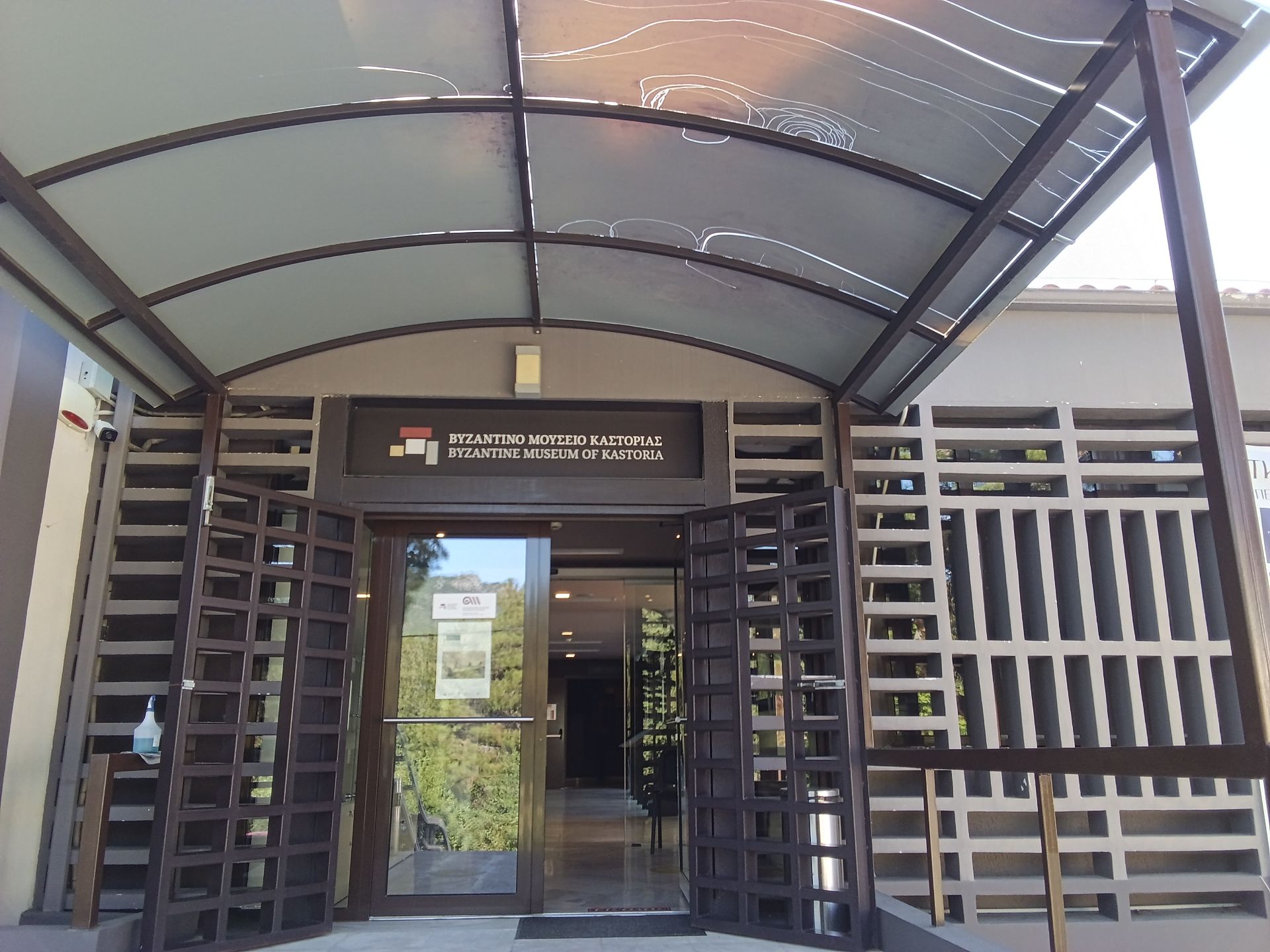
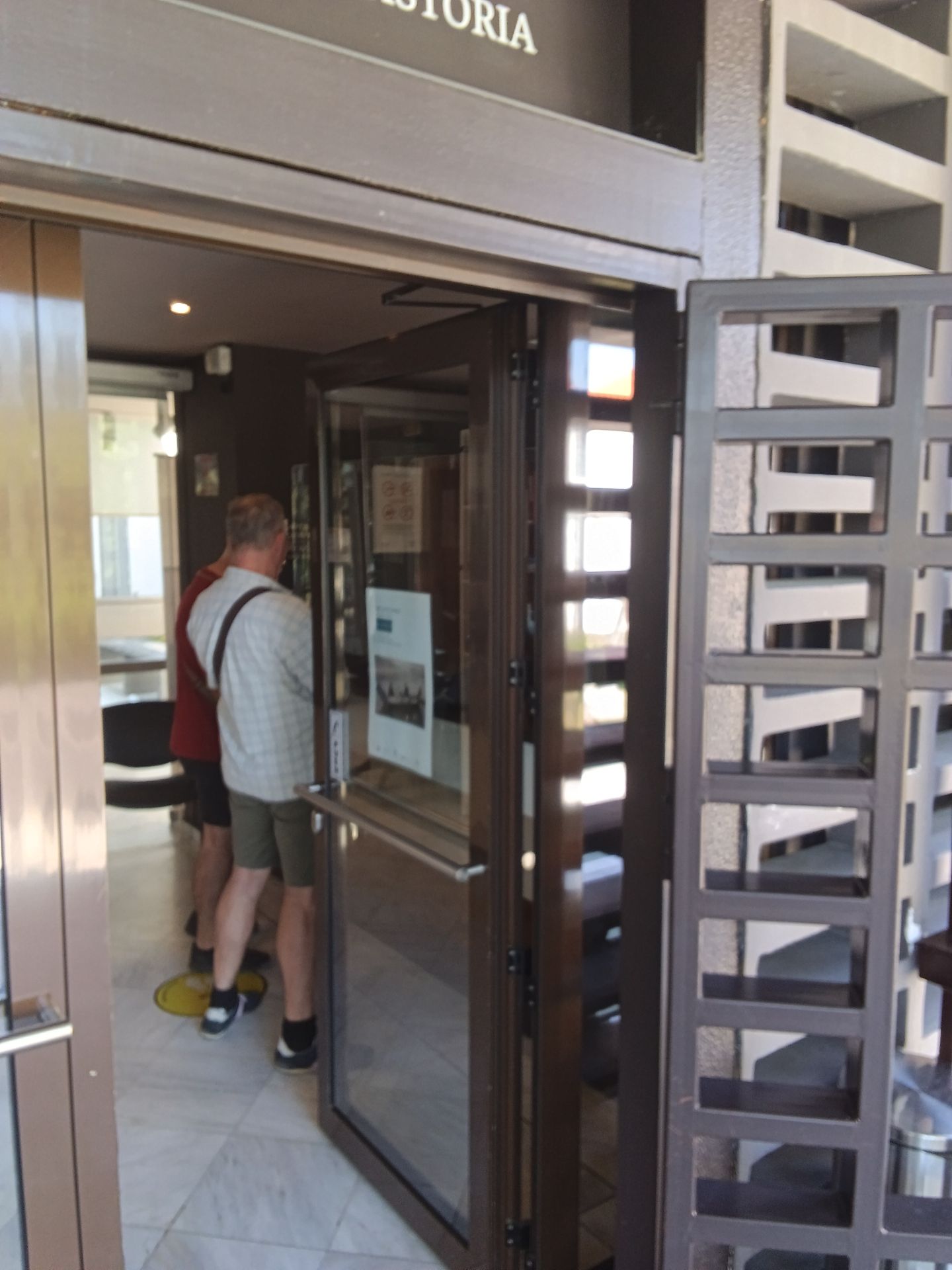
Main entrance to the building
Building infrastructure- Is there a beveled edge before it?
- Suitable (up to 26 degrees for a length not exceeding 4 cm, or up to 45 degrees for a length not exceeding 2 cm, or 90 degrees for a length not exceeding 1 cm)
- Is there a door?
- Stays open during operating hours
- Adequately served by a dedicated boarding / alighting area suitable for people with disabilities
- Yes
- Does a tactile guide path lead to the building?
- No
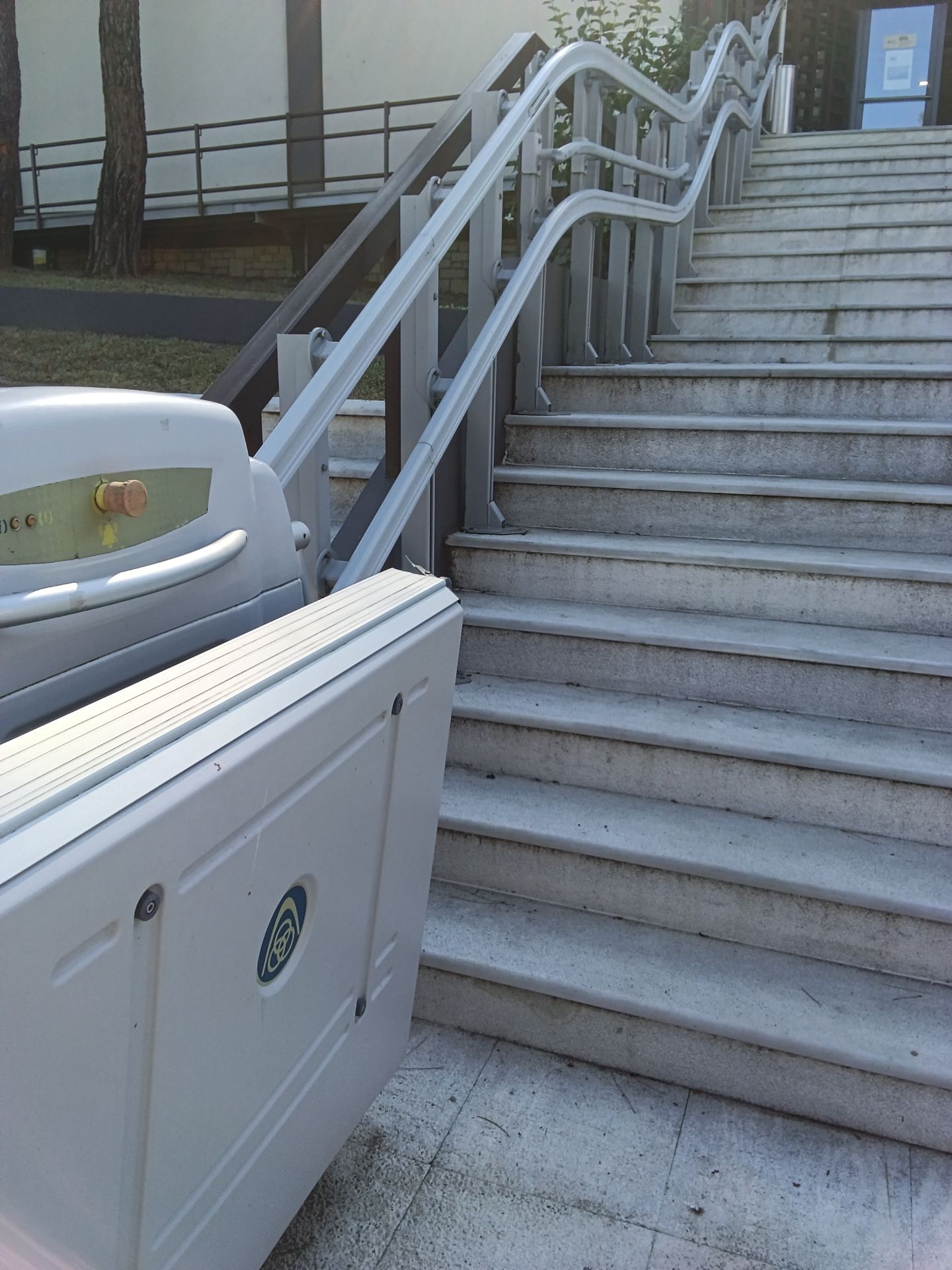
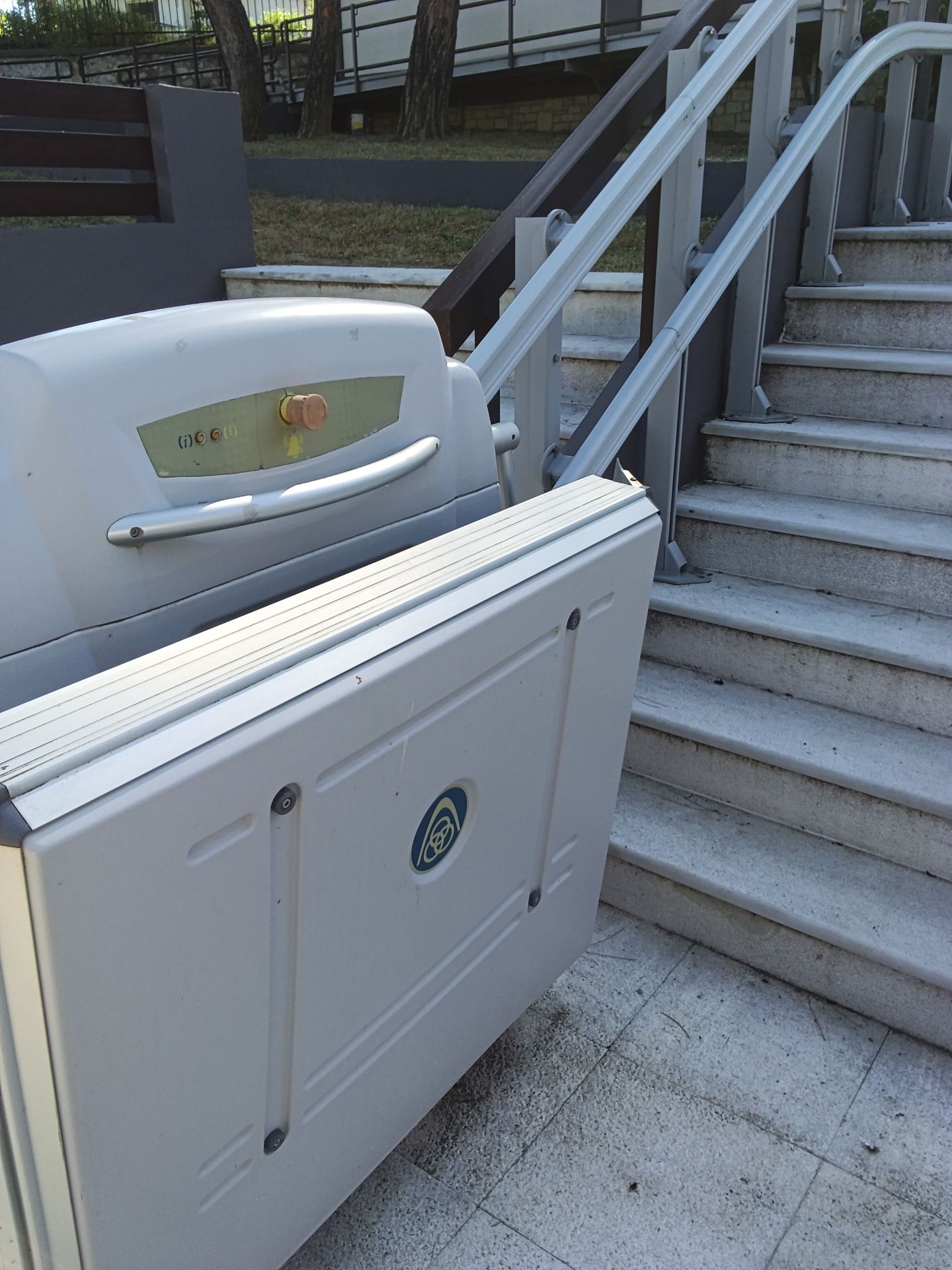
- Is it preceded by an elevator, platform lift or other lifting device?
- Platform lift
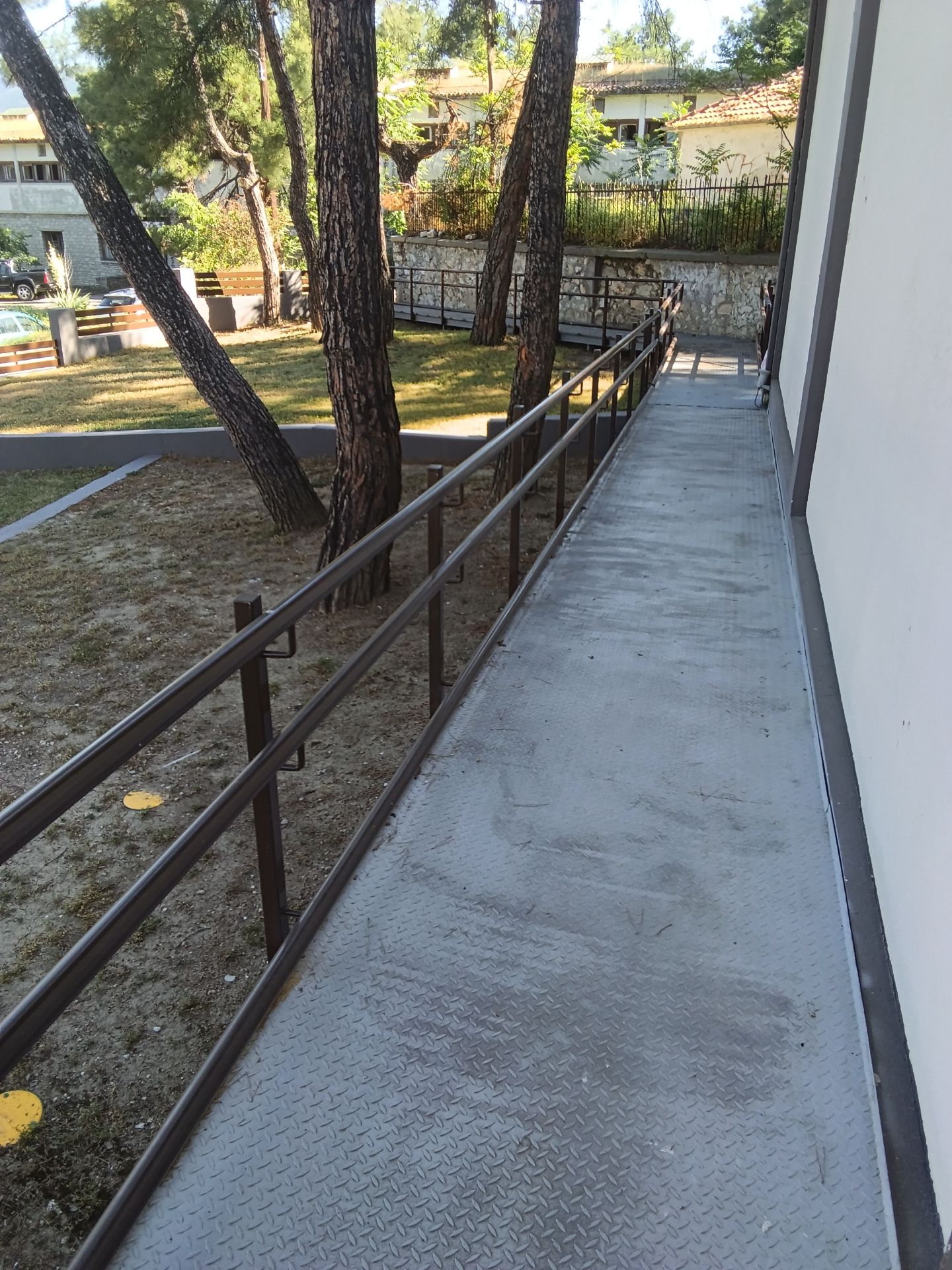
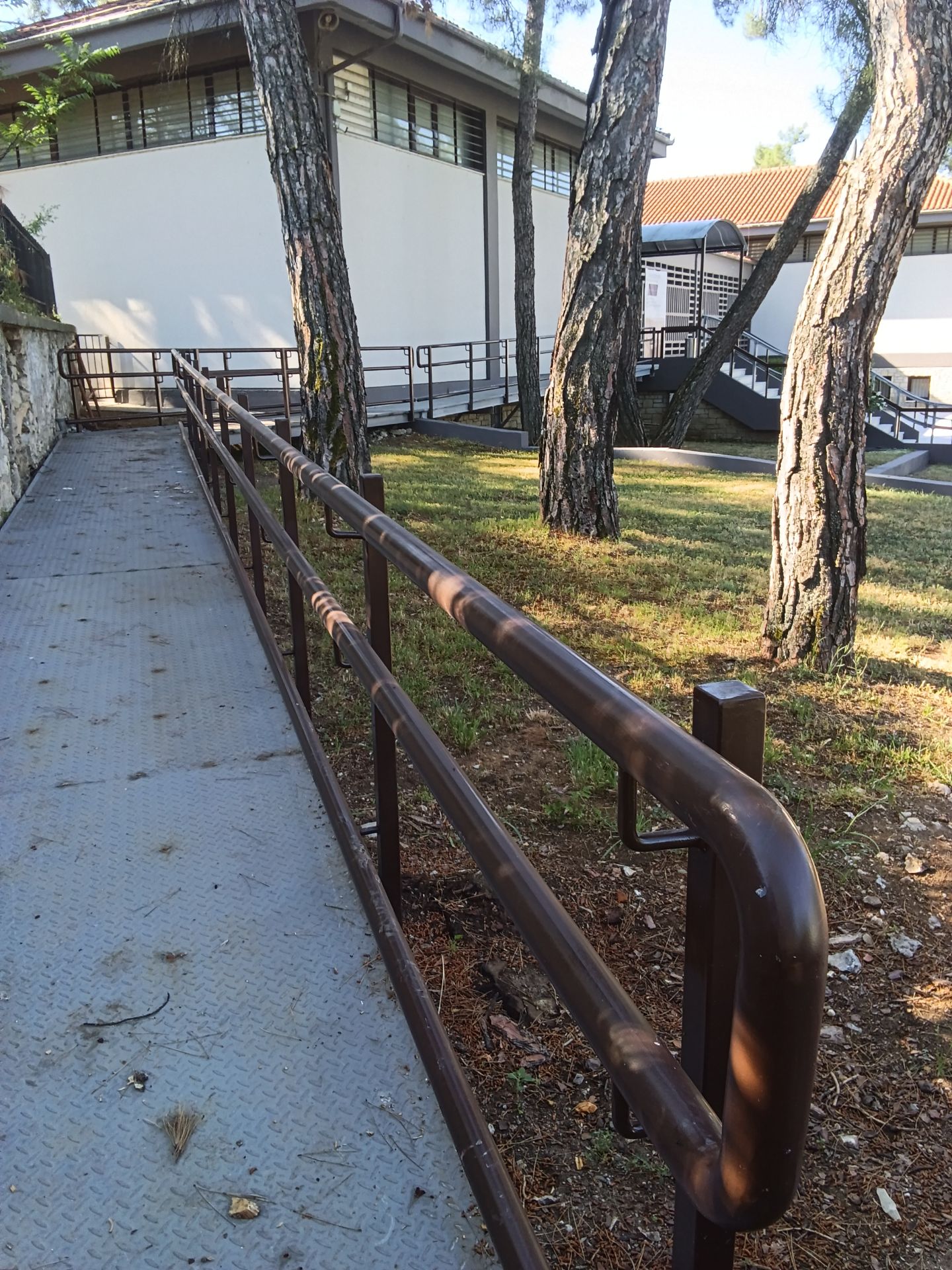
- Is it preceded by a ramp?
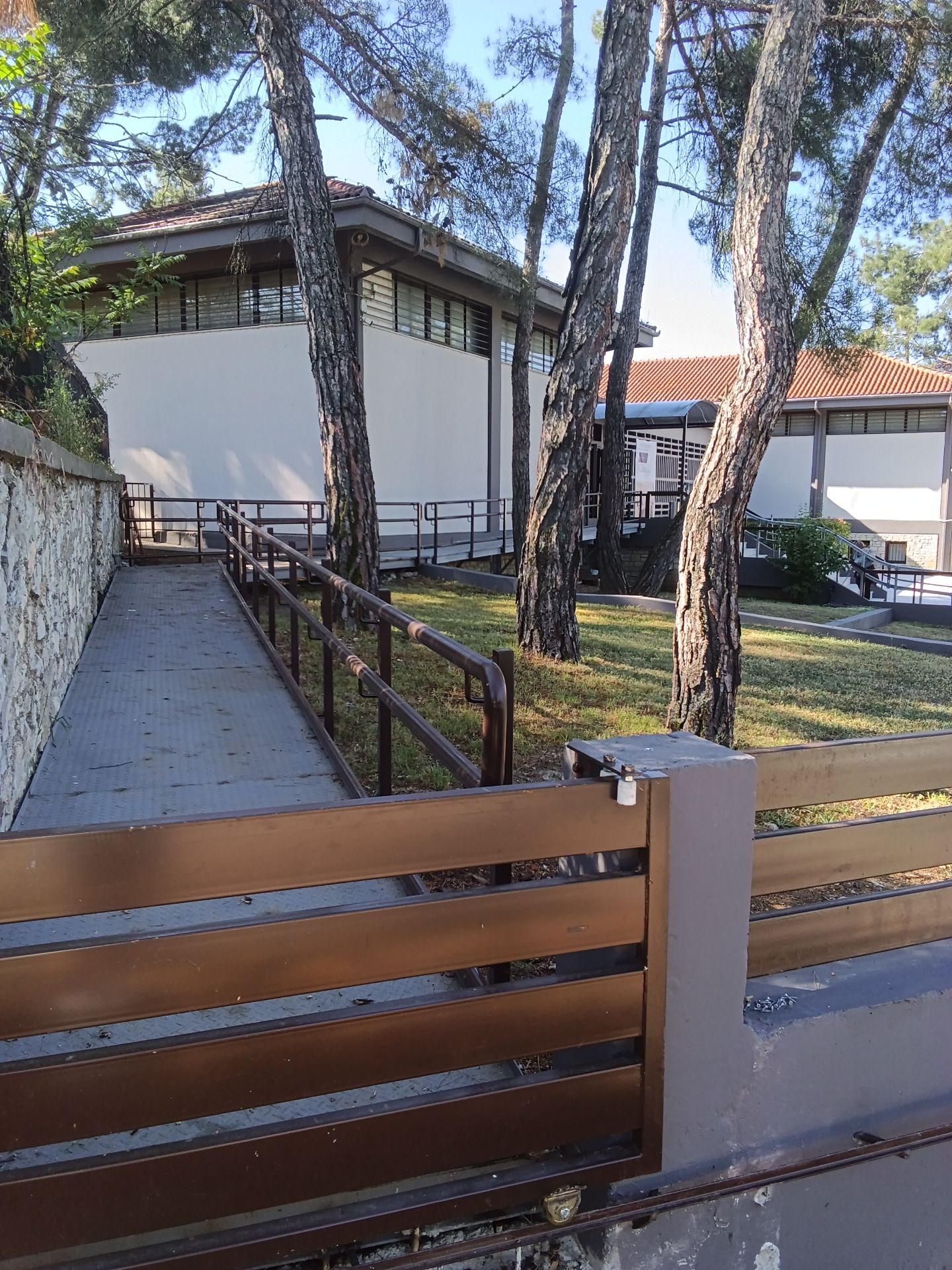
- On the left side of the building there is an entrance ramp
- Preceded by a step
- Main staircase before the entrance to the building
- Cross slope
- Suitable
- At the entrance, are there obstacles preventing wheelchair passage?
- Carpet
- Longitudinal slope
- Suitable
- Offers adequate protection from the weather
- Covered
- Clear opening
- Suitable
- Is it easily identifiable?
- Yes
- Is it preceded by a sidewalk with an unsuitable road–sidewalk connection for wheelchair users?
- Yes (explain)
- Clear passage height
- Suitable
- Informational signage for visitors is provided outside
- Yes, but it is not accessible for people with disabilities (e.g. without Braille or raised lettering)
What you can see & do
Activities & facilities
- Restrooms
- Ticket office
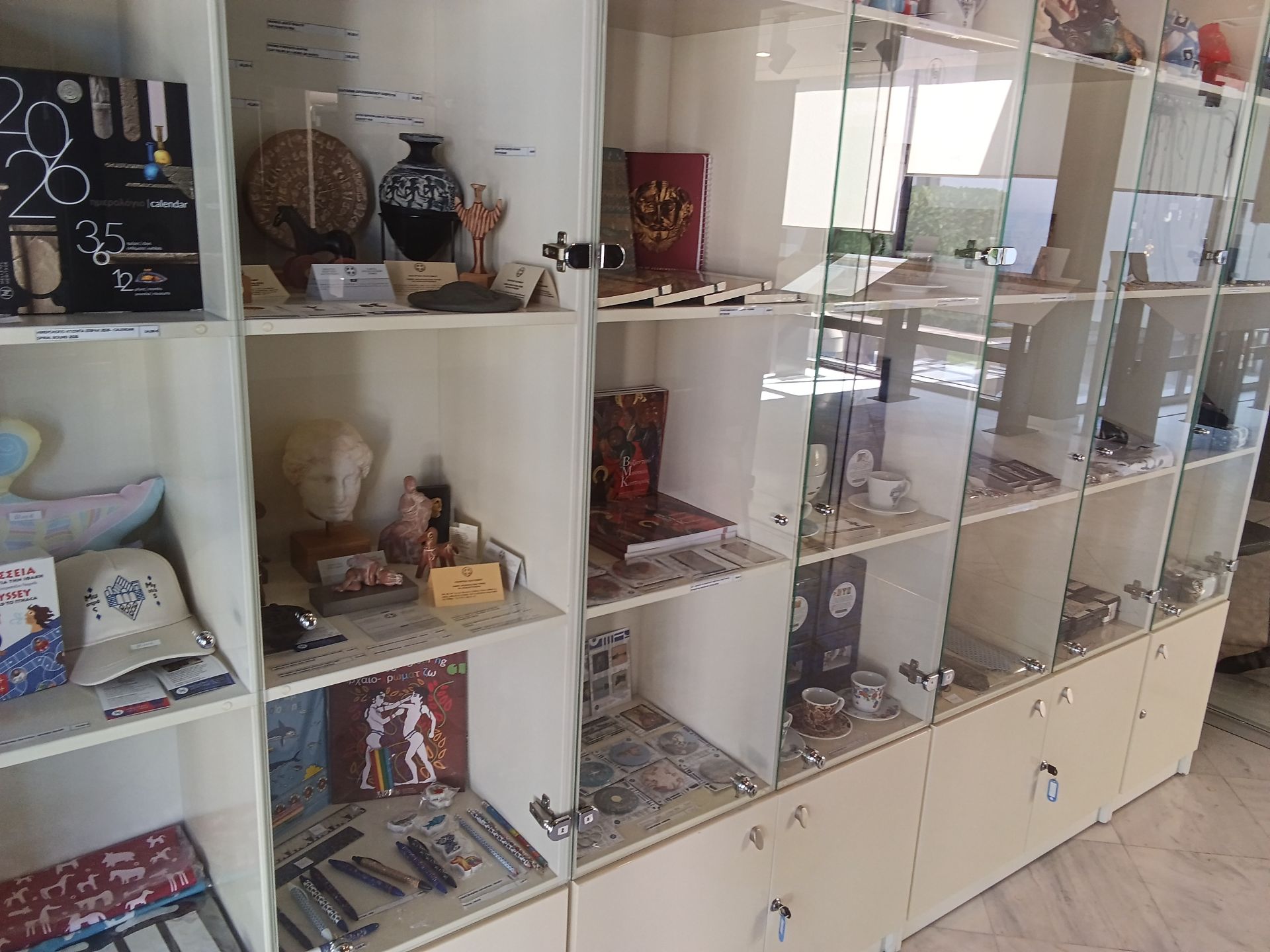
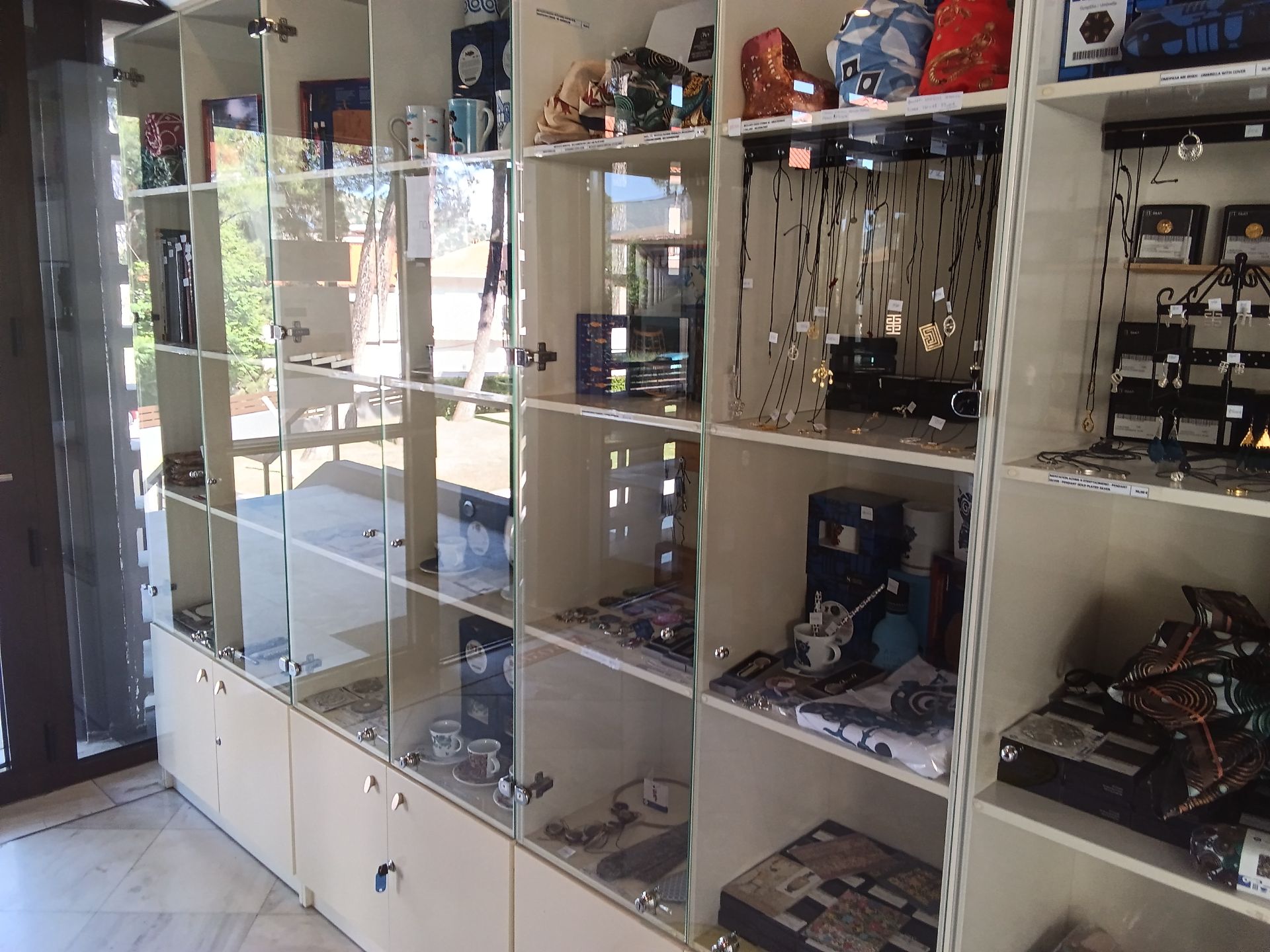
- Gift shop
- Parking
Special facilities (5)
Ticket office / Reception
Tickets - Information
-
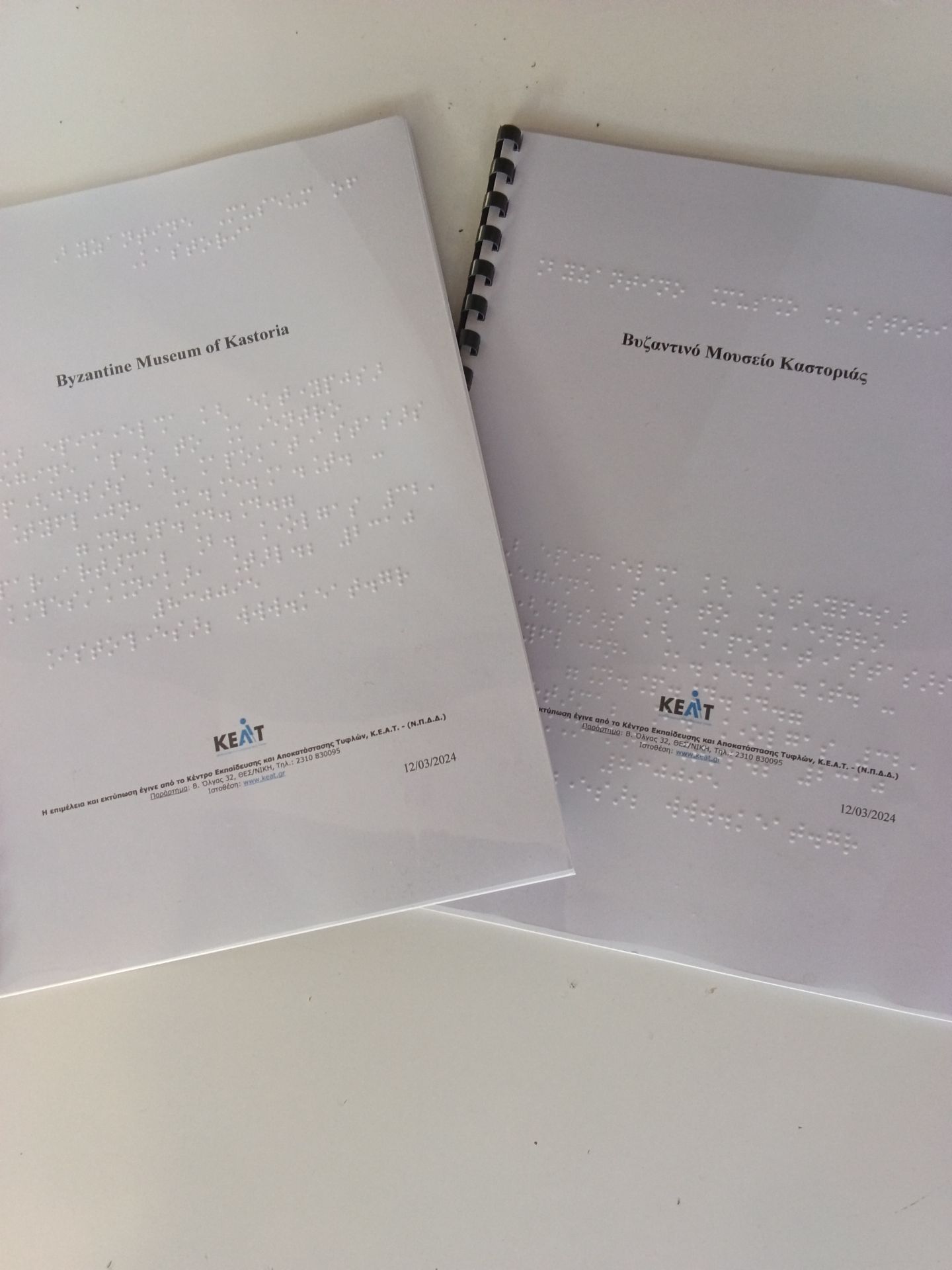
With an information leaflet in Greek and English in Braille
Beneficiaries
- Blind people with a white cane
- People with other visual impairments
- People with a guide dog
-
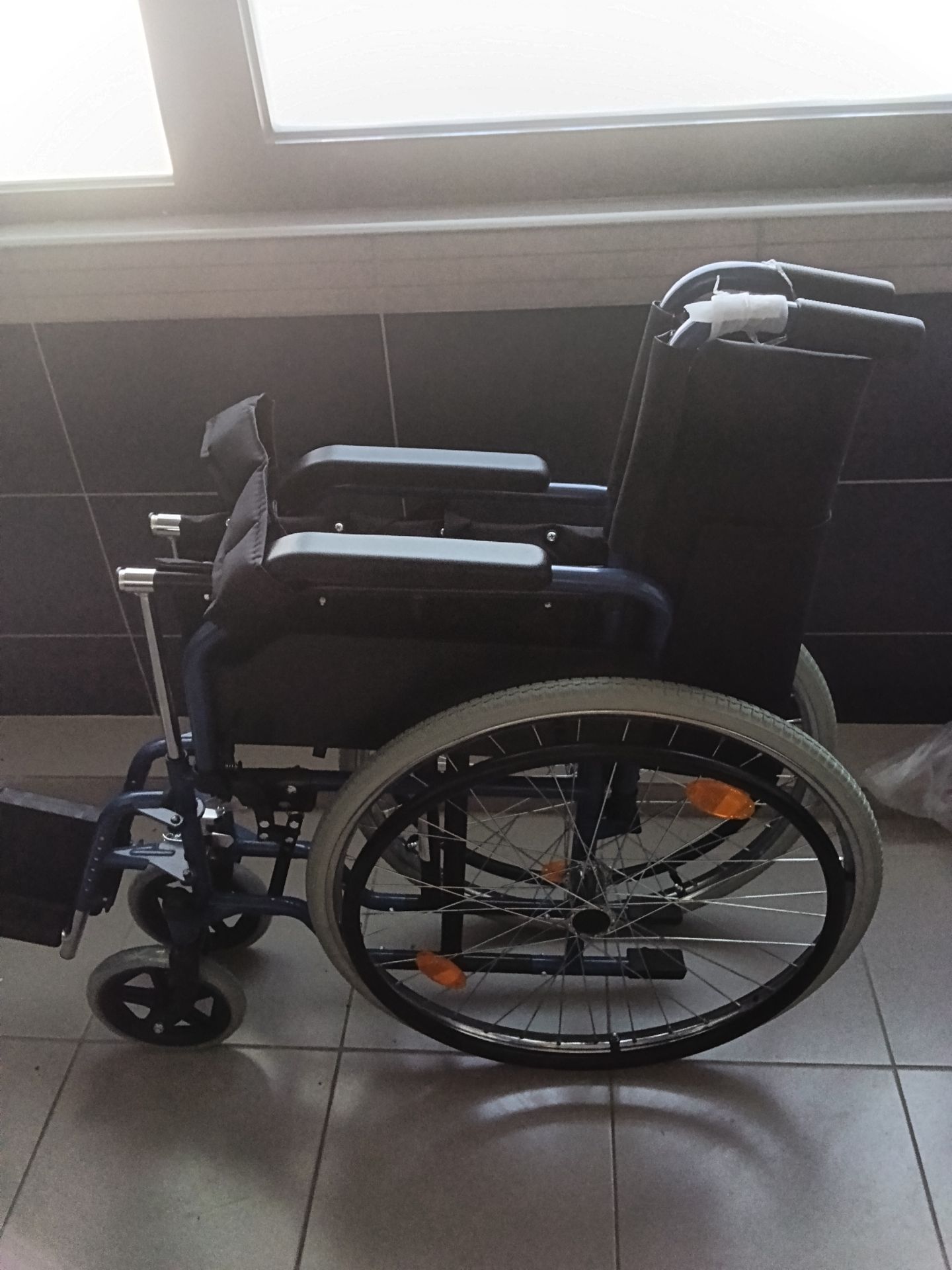
Wheelchair available for visitors
Beneficiaries
- People with disabilities/absence of upper limbs
- people with difficulty walking / prolonged standing
- wheelchair users
- other (people with allergies, children, etc.)
-
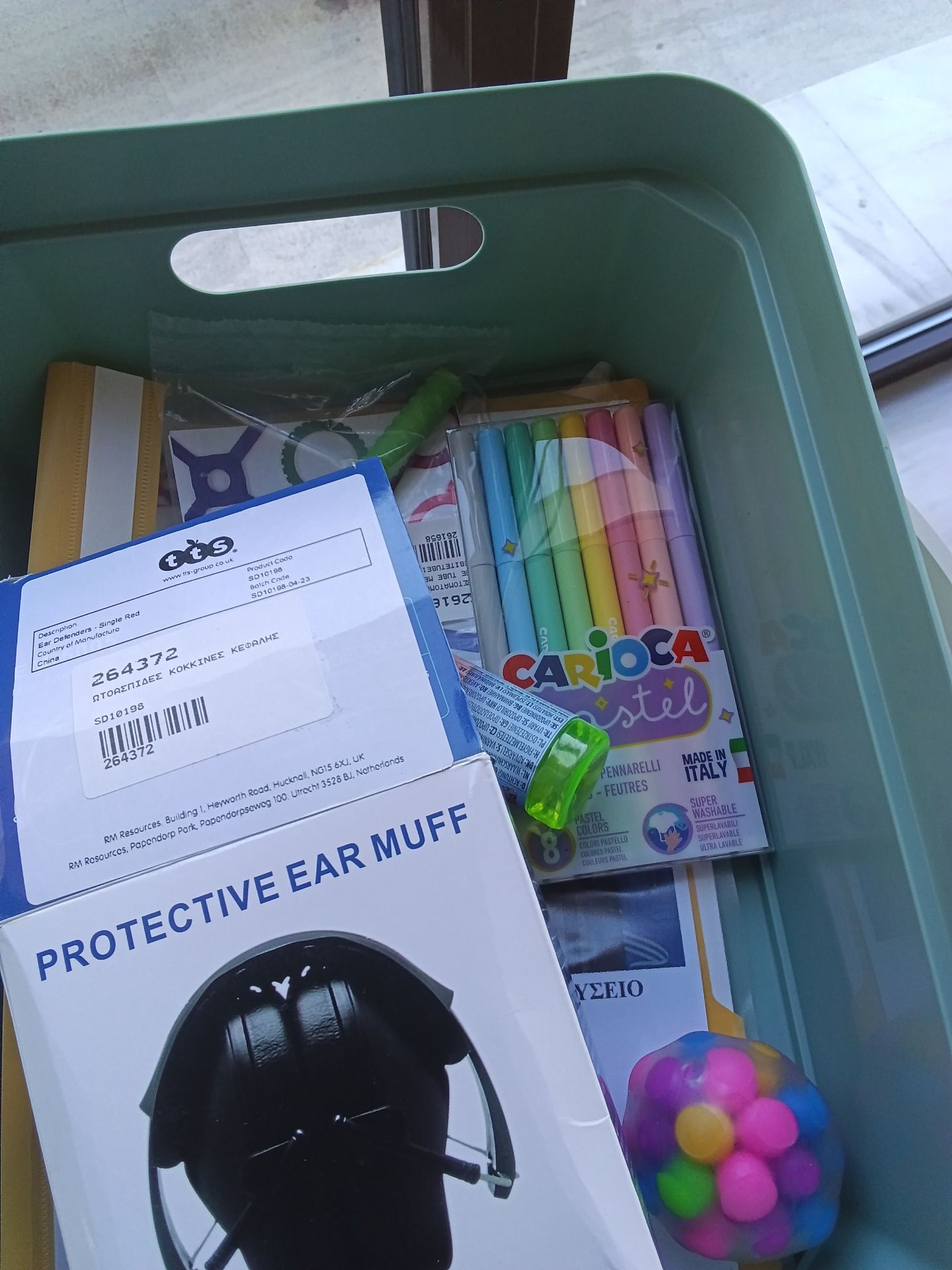
Materials for visiting children with autism
Beneficiaries
- People with intellectual
- cognitive or psychological disabilities
-
Visitors' guestbook
Beneficiaries
- Other (people with allergies, children, etc.)
Building
Museum building
-
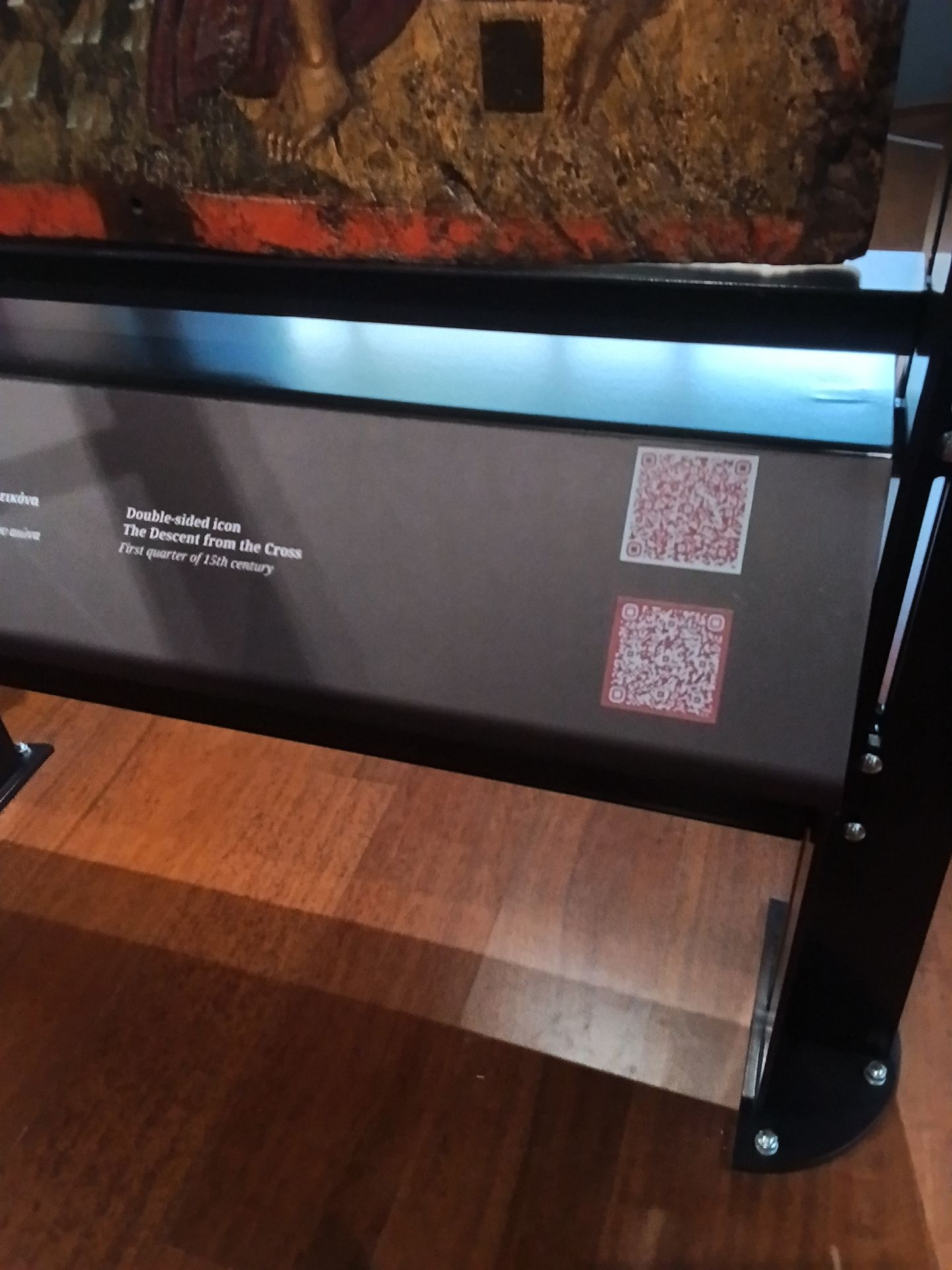
There are exhibits with QR codes. Audio description of the exhibit in Greek and English
Beneficiaries
- Blind people with a white cane
- People with low vision
- People with other visual disabilities
- Other (people with allergies, children, etc.)
What you should know
Barriers to be aware of (2)
Building
Museum building
-
Screenings without sign language or audio description
- Type / category of obstacle
- Other
-
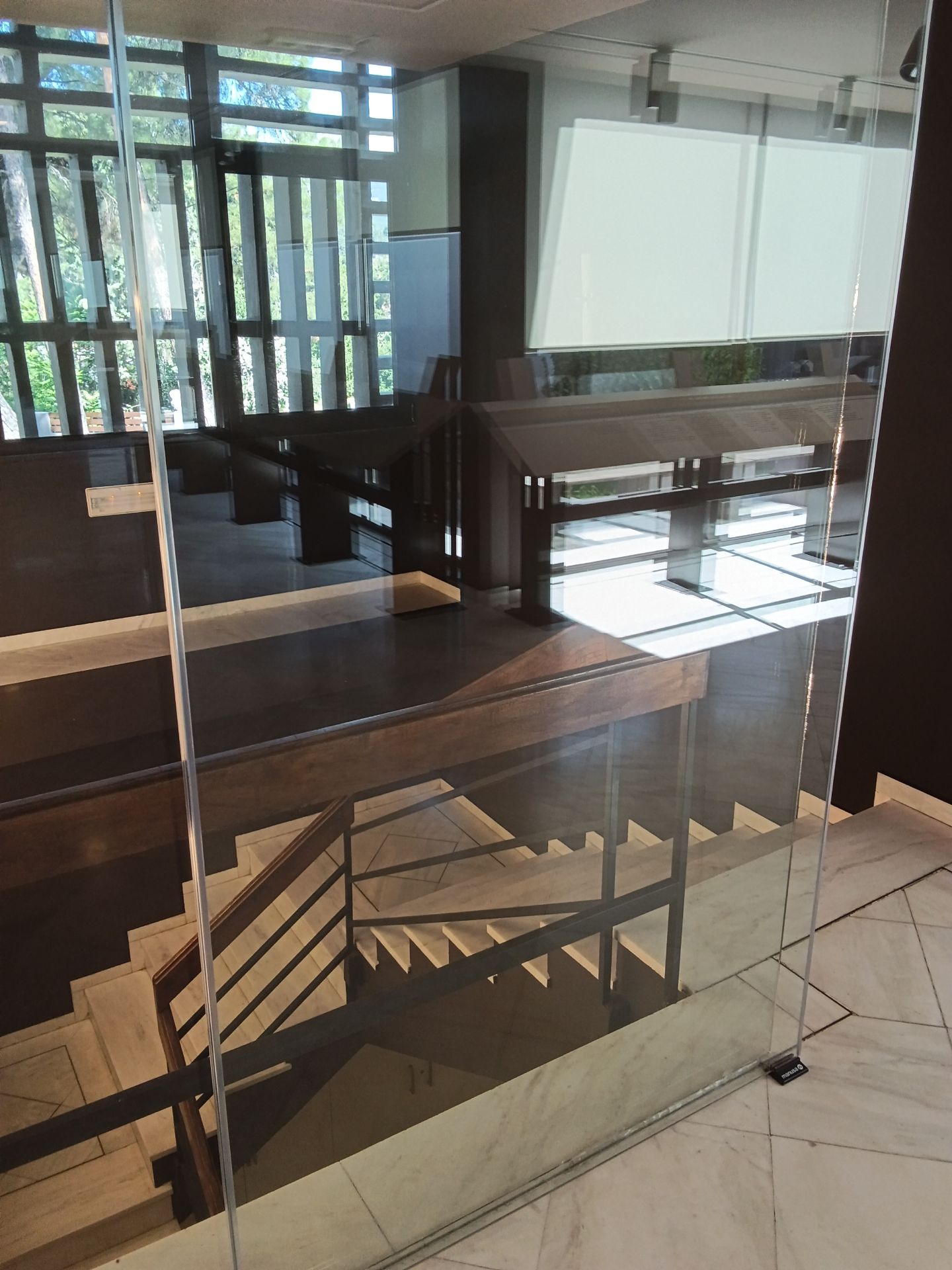
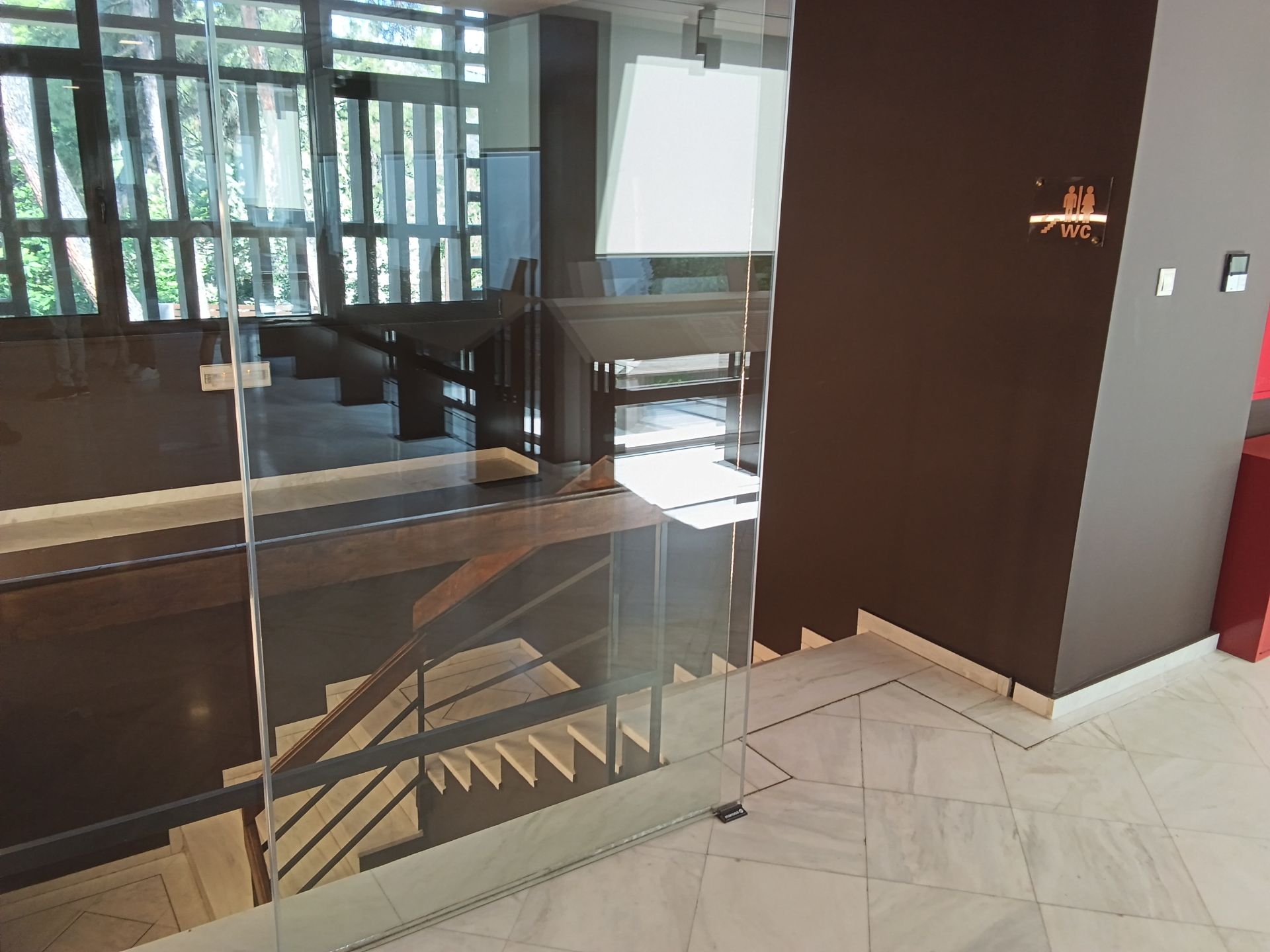
Glass surfaces without marking strips
- Type / category of obstacle
- Other
Detailed inspection data
- Accessible parking spaces: 1
- Accessible WC
- Ramp
- Lift / elevator
- Drop-off area
- Accessible parking
Outdoor areas
Accessible parking
Visitor parking spaces
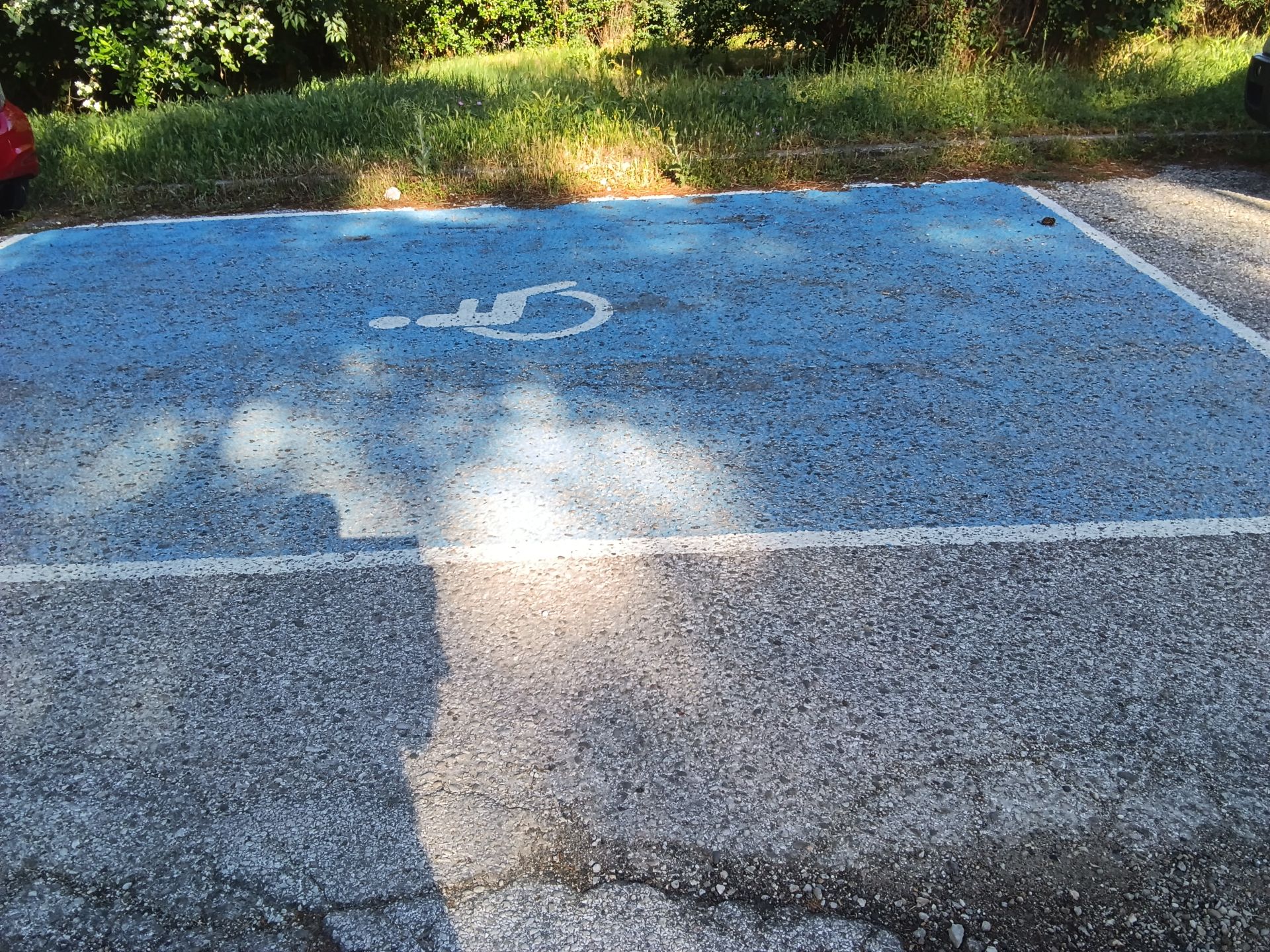
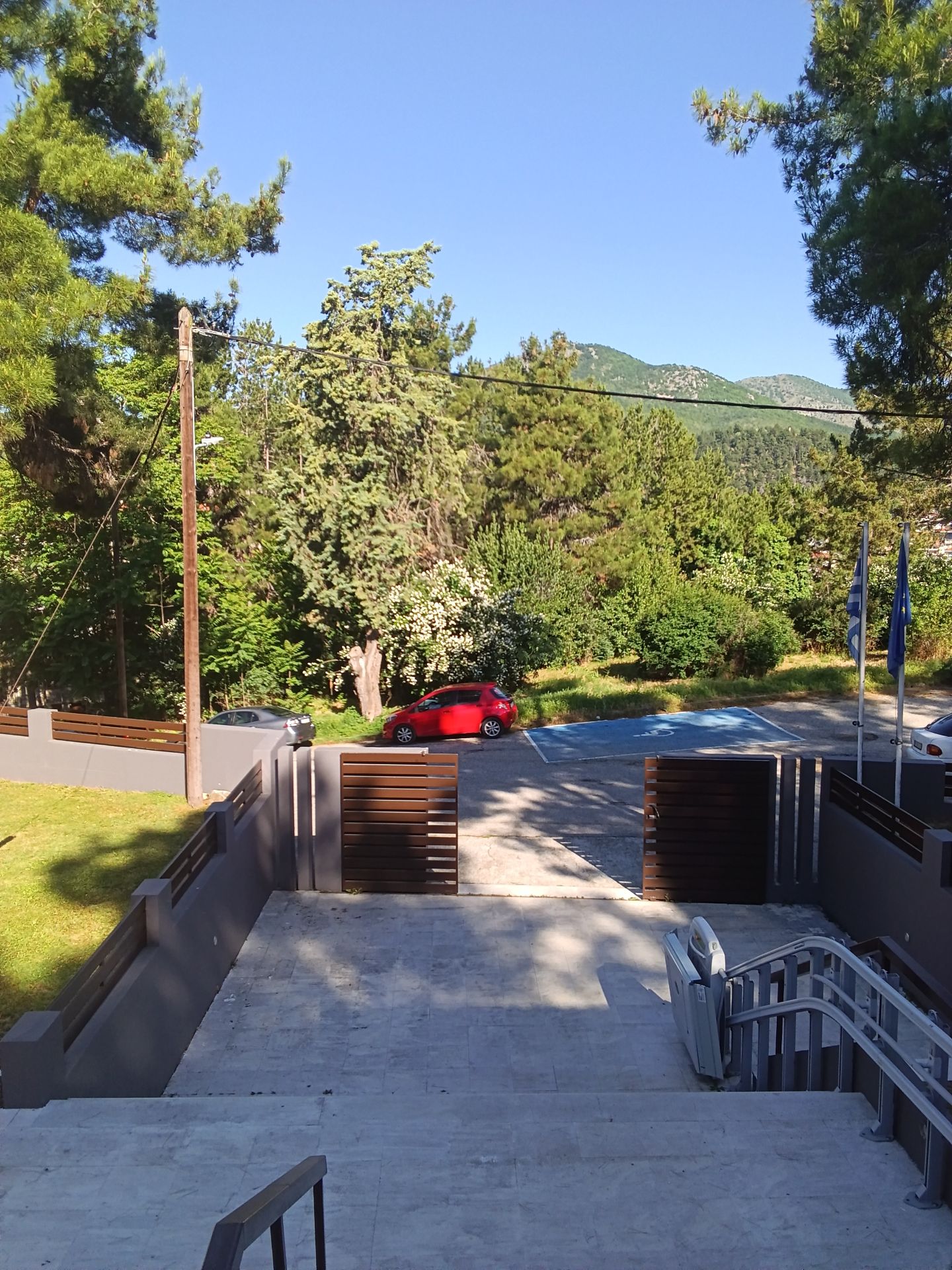
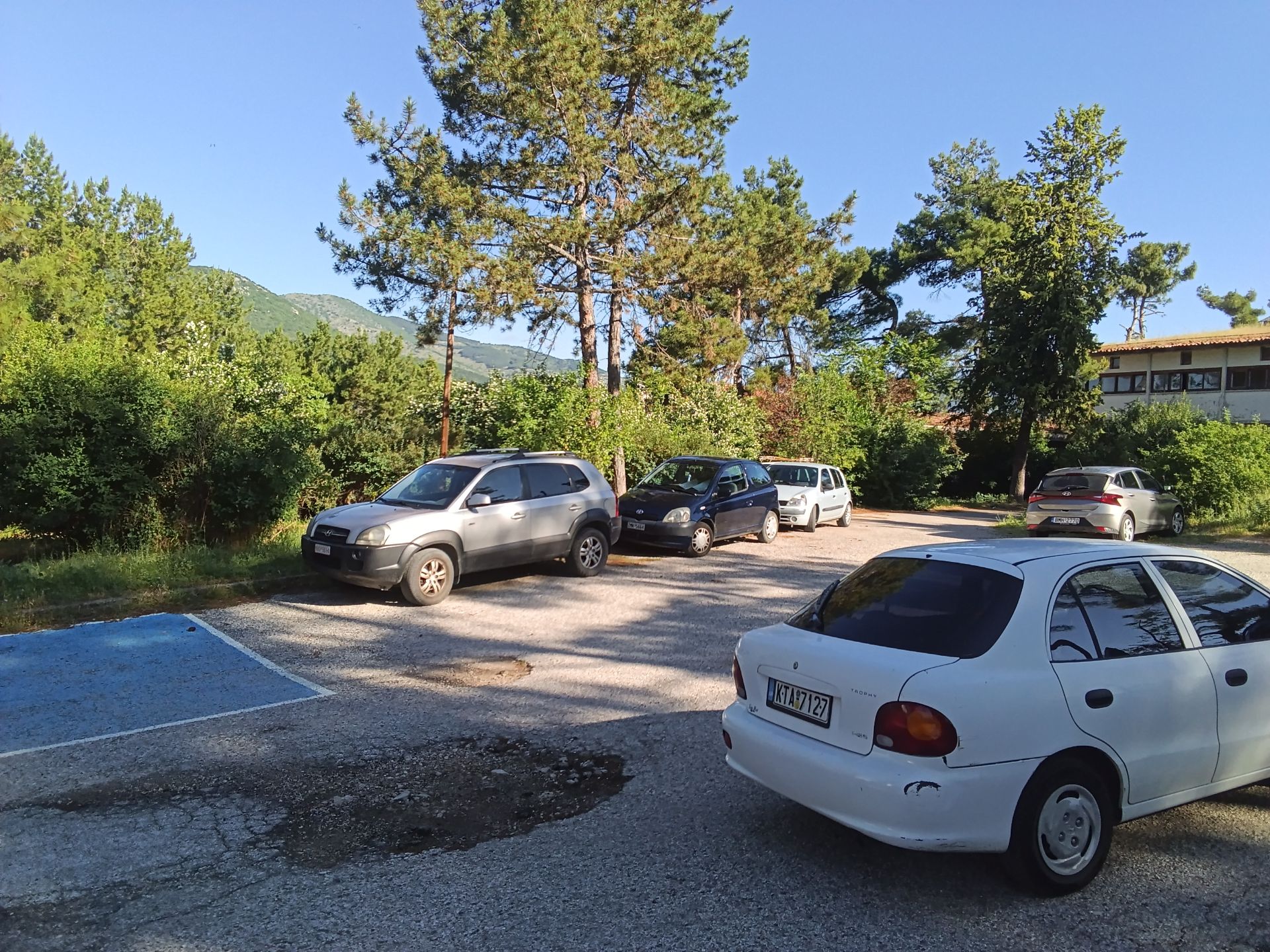
- There are dedicated parking spaces for vehicles of people with disabilities, but there is no additional large dedicated space for professional van-type vehicles with integrated lifts
- They do not have suitable dimensions (at least 4.50 x 6.60 m)
- How many visitor vehicle spaces are there in total?
- 15
- Average distance
- Less than 300m
- Routes from the parking spaces to other points
- for wheelchair movement (surfaces, clear widths, ramps, etc.)
- How many visitor parking spaces designated specifically for people with disabilities are there?
- 1
Infrastructure
Building
Museum building
- Overall, within the building there are accessible areas where staff are present and the public can communicate / interact with them
- Yes, and they are trained to assist people with disabilities
- Access to toilet facilities is not an issue?
- No
- The building has toilets for the public but no accessible toilet for people with disabilities according to national specifications/guidelines
- No
- The building has toilets for people with disabilities and they are sufficient as required by law for this case, because…
- There is at least one on each floor
- Generally, heating in the building is adequate at all hours of use/visit
- Yes
- Generally, the lighting within the building is suitable at all hours of use/visit
- Yes
- In general, air conditioning/ventilation inside the building is appropriate at all hours of use/visit
- Yes
- Is vertical access not an issue?
- No
- In general, inside the building there are sufficient/appropriate routes, emergency exits and/or other means
- Yes
- Is access to separated spaces/rooms not an issue?
- Yes
- How many separate floors/levels does it have?
- 1
- It is…
- Other (specify)
- The areas open to the public occupy the following floors / levels
- Ground floor
- How many separate entrances/exits does it have?
- 1
- Guide dogs are allowed entry
- Yes
- Overall, the corridors and circulation routes have clear widths
- Over 150 cm
- Overall, the corridors and circulation routes have suitable clear heights
- Yes
- There are bridges in the building
- No bridging needed / present
- There is furniture and/or equipment within the 90 cm clear width
- No
- On a level (e.g. floor) of the building that is otherwise accessible, there are points, spaces or areas that cannot be reached independently, comfortably and safely by wheelchair users (e.g. main spaces, reception, rest, toilet and service areas, areas with automatic machines, etc., balconies/terraces and other spaces open to the public)
- With unsuitable bridging and/or slopes > 5%, With ground irregularities
- Guide dogs are accepted and staff understand that they should not interact with the dog
- Yes
- An automatic guided-tour system is used and its design ensures accessibility for…
- None
- Audiovisual media are used and their design ensures accessibility for…
- Deaf people / sign-language users
- Is there posted and/or available informational material provided to the public?
- Yes
- All (small) exhibits and their labels are always placed at heights suitable also for wheelchair users (e.g., within a height zone of 75 to 135 cm)
- Yes
- There are exhibits or other objects hung on walls in a way that is dangerous for people with vision disabilities
- No
- There are areas/levels with exhibits that meet the appropriate specifications for wheelchair access
- Yes
- Exhibits are also available in tactile form for blind people
- None
- Digital stations are used
- None
- The signs, labels, exhibit captions, etc. are accompanied by equivalent alternative formats/solutions for people with visual disabilities
- Yes
- Educational/informational activities, screenings and/or live presentations are organized in spaces and with a design that ensures accessibility for…
- None
- (If available) The posted and/or available informational/informative material is also available in alternative/accessible formats
- In Braille print
Barriers to be aware of (2)
Obstacle
Screenings without sign language or audio description
- Type / category of obstacle
- Other
Obstacle
Glass surfaces without marking strips
- Type / category of obstacle
- Other
Special facilities (1)
Special facility
There are exhibits with QR codes. Audio description of the exhibit in Greek and English
Beneficiaries
- Blind people with a white cane
- People with low vision
- People with other visual disabilities
- Other (people with allergies, children, etc.)
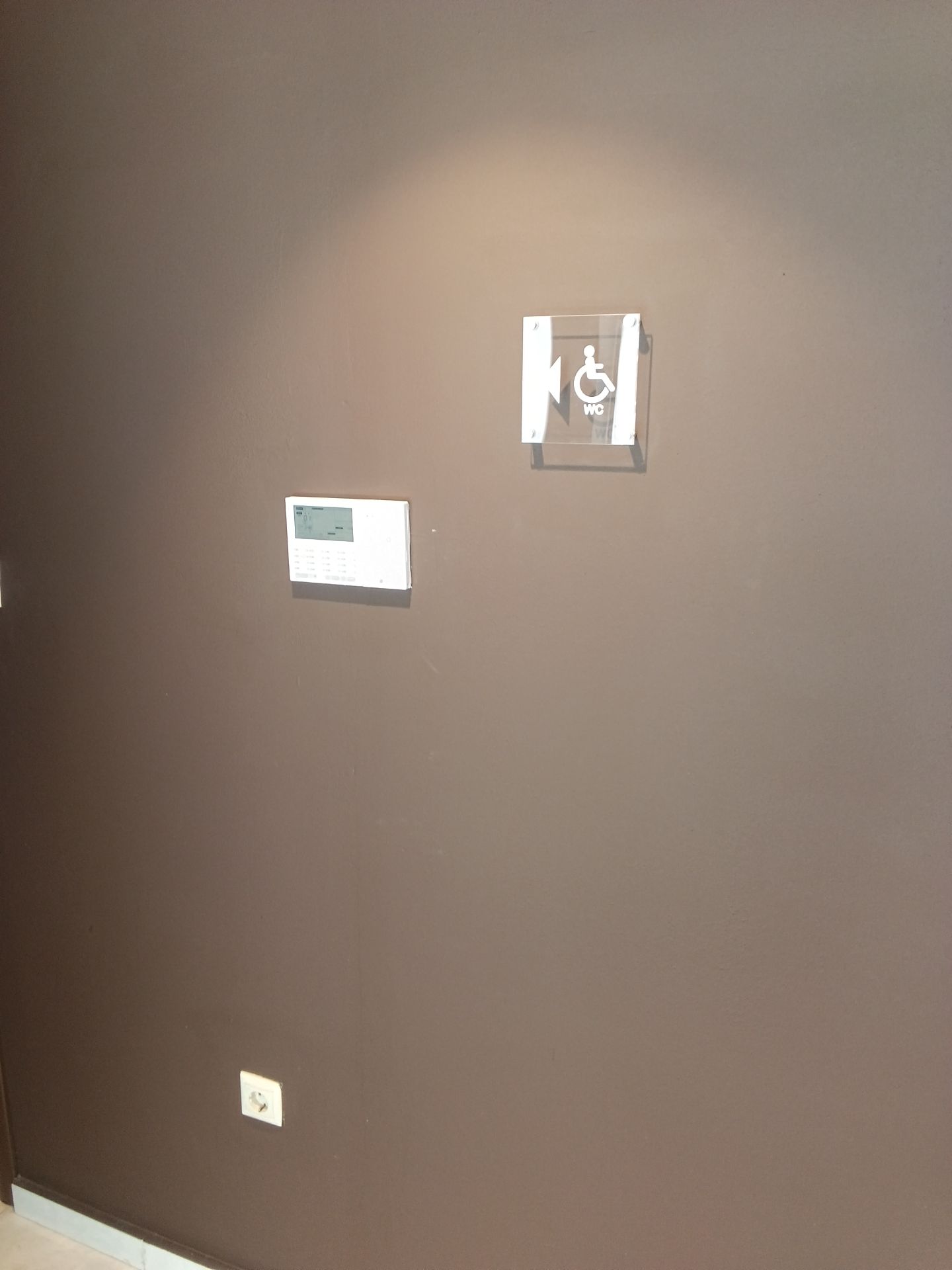
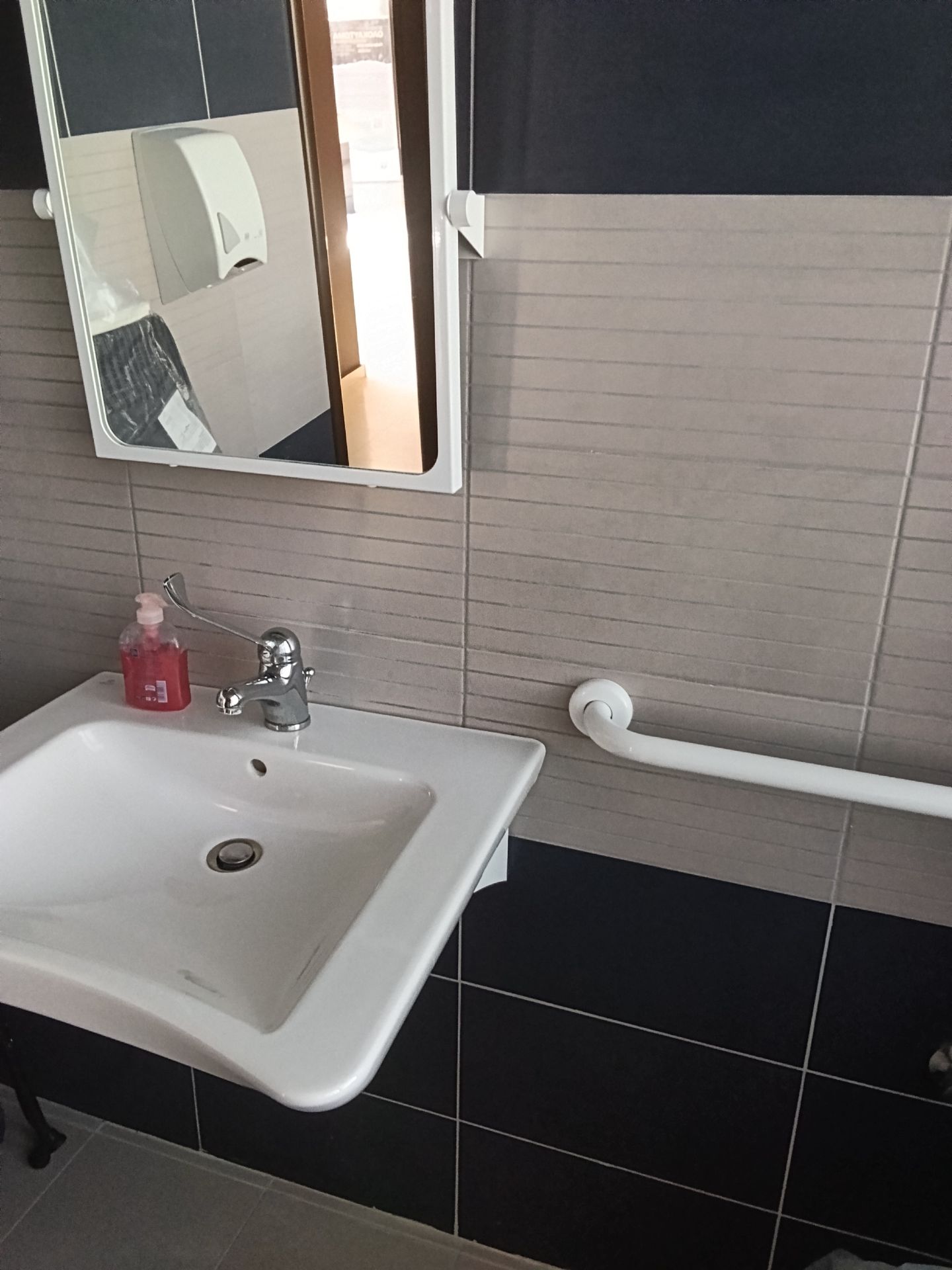
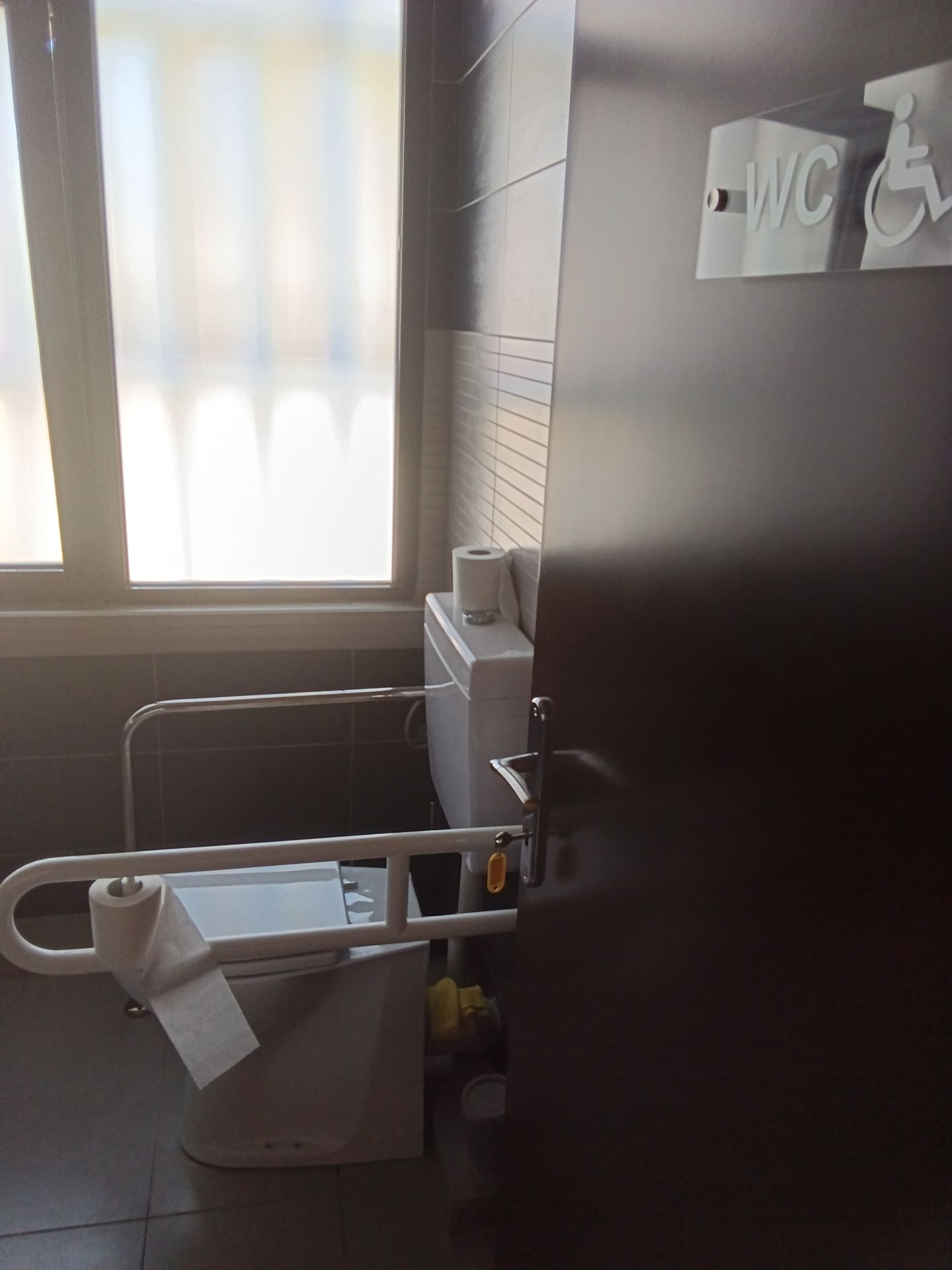
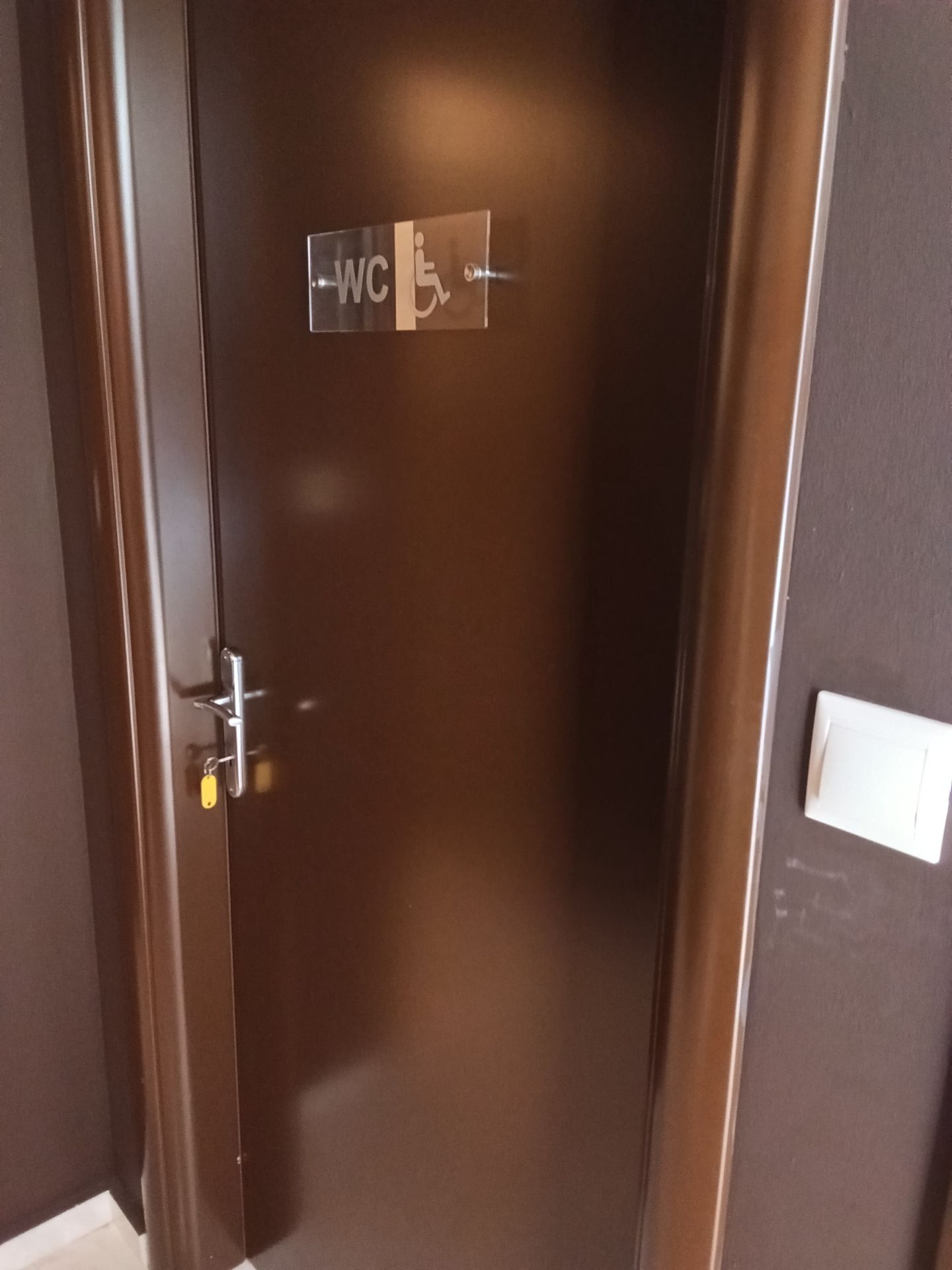
Restroom (WC)
Accessible toilet
- If there is a mirror, is it suitable for use by wheelchair users
- Yes
- Includes..
- Area with toilet bowl and washbasin, Baby care area
- The lighting is adequate
- Yes
- The door is of type…
- Opening inward
- What type of washbasin does the toilet have?
- For exclusive use
- Are the fire alarms perceptible in all areas of the sanitary space?
- Yes, audible
- Is it easily identifiable?
- Yes
- Is it a standards-compliant accessible toilet?
- Yes and it is signed accordingly (with the International Symbol of Access and the "WC" symbol, on a wall next to them and/or on the doors of the accessible toilets)
- All surfaces are of non-slip, homogeneous, stable, wear-resistant material
- Yes
- The clear width of the free interior space between the sanitary fixtures is
- 200
- Can it be used only at specific times?
- Yes (provide details)
- The clear interior length of the free space between the sanitary fixtures is
- 140
- Is it…
- Free
- Is the space kept clean and well ventilated?
- Yes
- Is there a telephone or other emergency notification system?
- No
- If there is a soap dish, towel holder or hand-drying system, are they easy to use and located at suitable positions and heights for wheelchair users
- Yes
- Are there grab bars on the toilet bowl?
- Yes
- The door opens easily from…
- people with mobility problems (e.g. opens outward, requires no particular force and has easy-to-use handles and opens/closes with a closed fist), wheelchair users (e.g. can be fixed in the open position, with handles at a suitable height < 90 cm)
- Is it…
- Interior
- Is wheelchair access ensured?
- Yes
- The clear opening of the door is
- 90
- Has suitable handles
- Yes, on more than one side
- Does it have an emergency lighting system?
- Yes
- Not used for other purposes
- Yes
- Is it a standards-compliant accessible toilet…
- Unisex
- Is it…
- Mixed (men-women)
- Is there a clear space under the washbasin to fit a wheelchair?
- Yes
- Is it a standards-compliant accessible toilet…
- With independent entrance
- Does it have a suitable clear opening for the intended use?
- Yes
- Outside the door there is clear level space for maneuvering a wheelchair
- Yes
- Is it…
- Entrance unobstructed
- There is free space on one side of the basin of width
- 120
Restroom (WC)
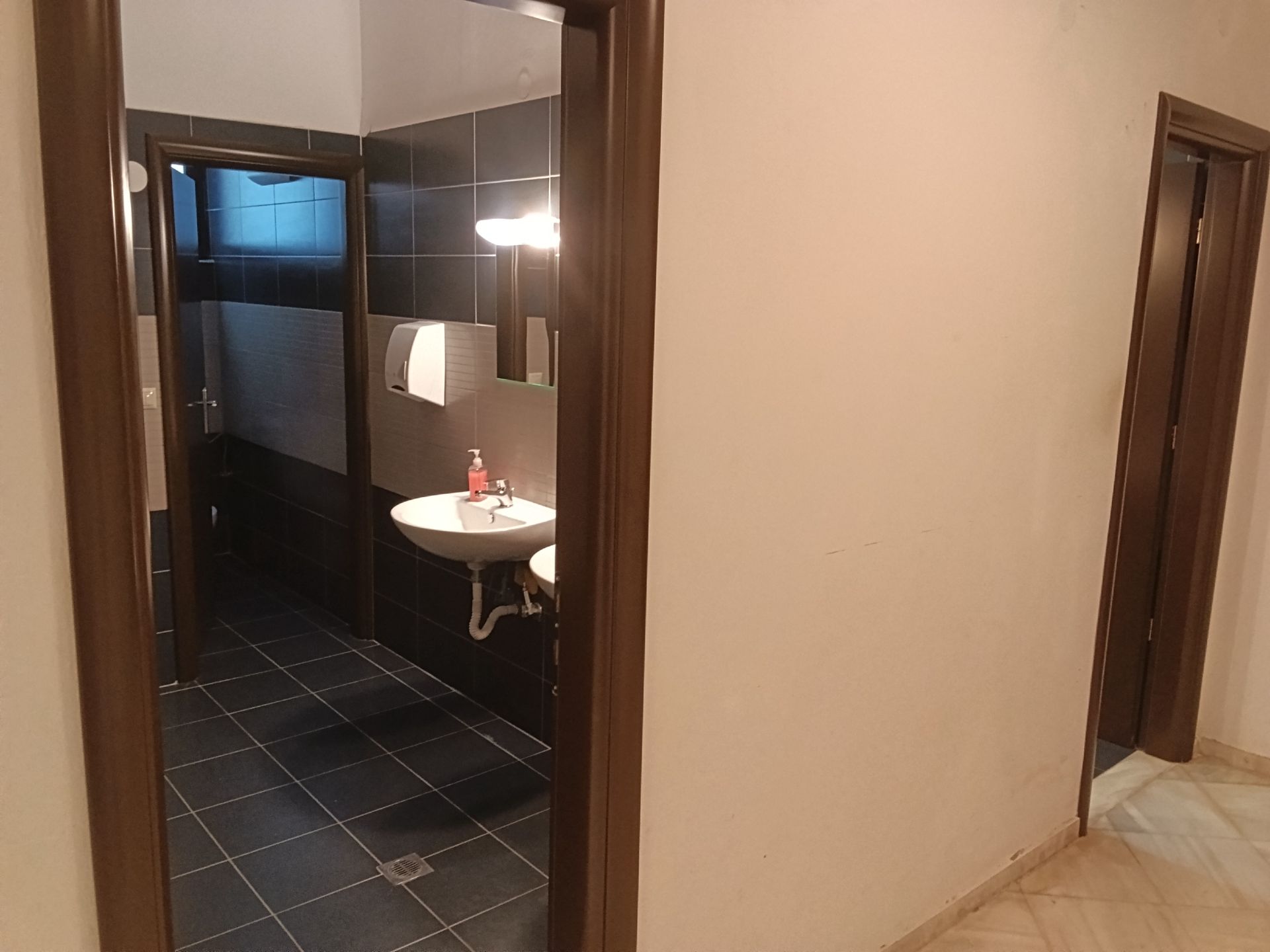
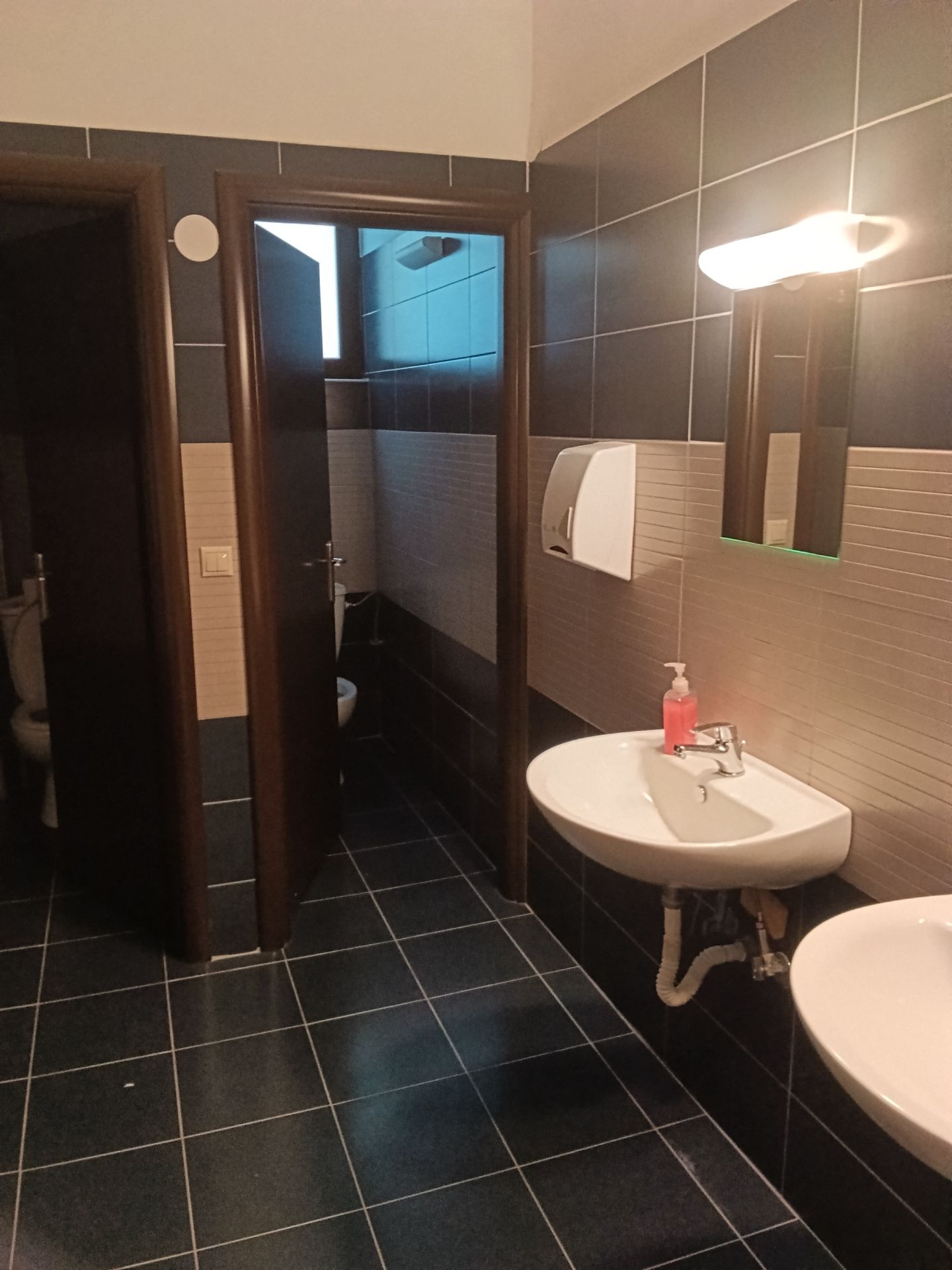
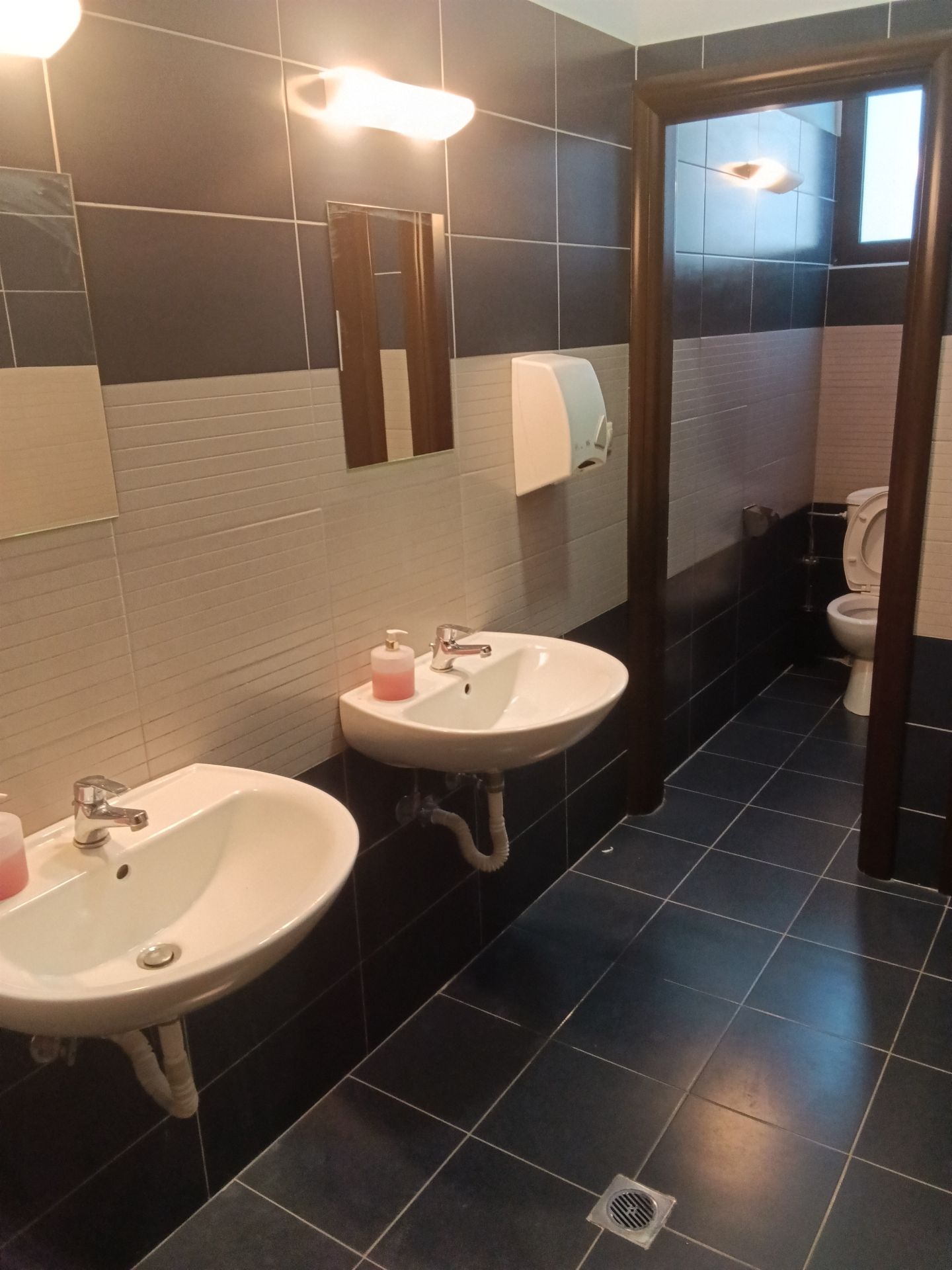
Public toilet
- Includes..
- Space with toilet bowl, Anteroom with washbasin(s)
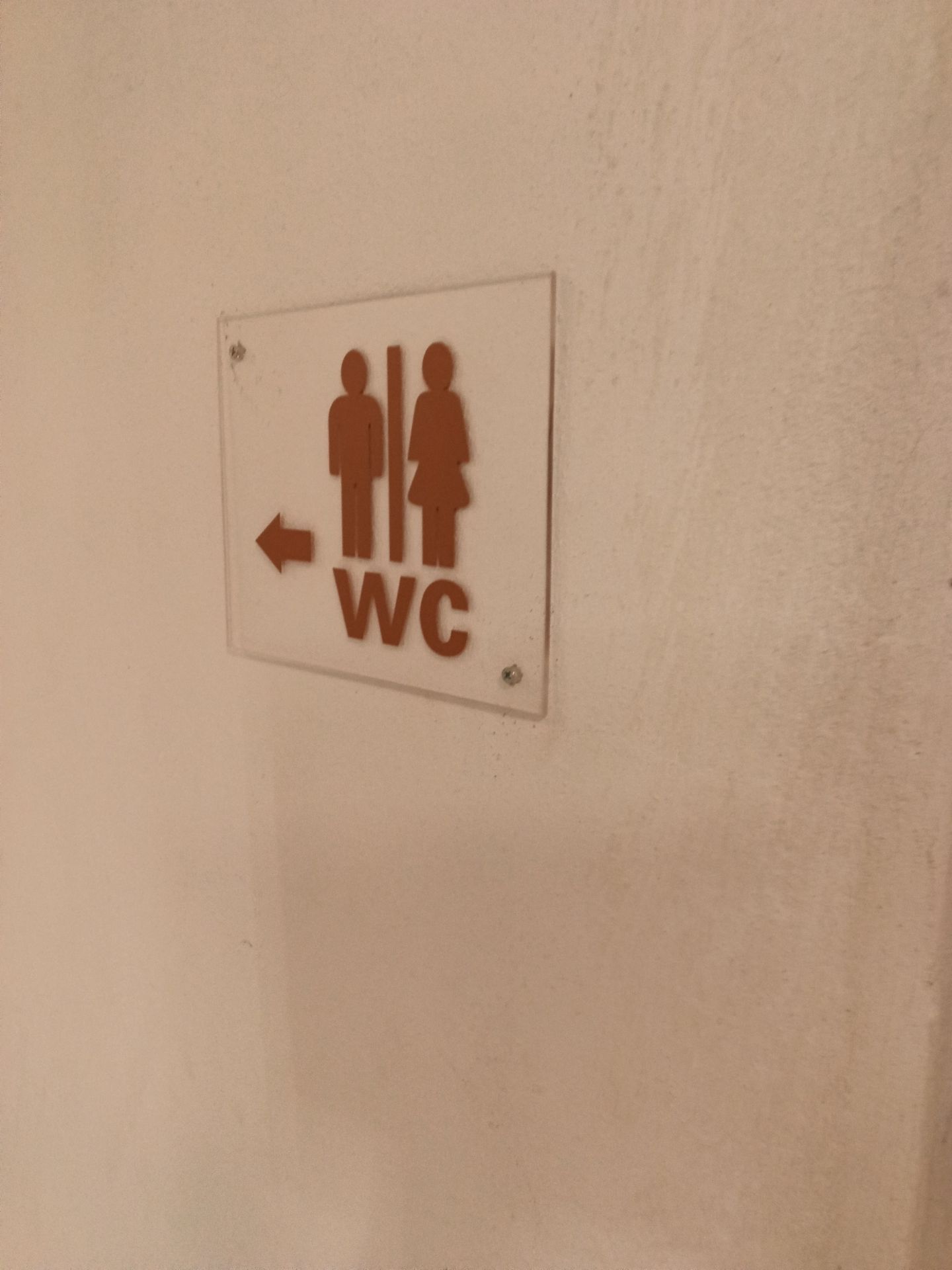
- Is it easily identifiable?
- Yes
- Can it be used only at specific times?
- Yes (provide details)
- Is it…
- Free
- Is it…
- Interior
- Is wheelchair access ensured?
- No
- Is it…
- Men and women separate
- Is it…
- Entrance unobstructed
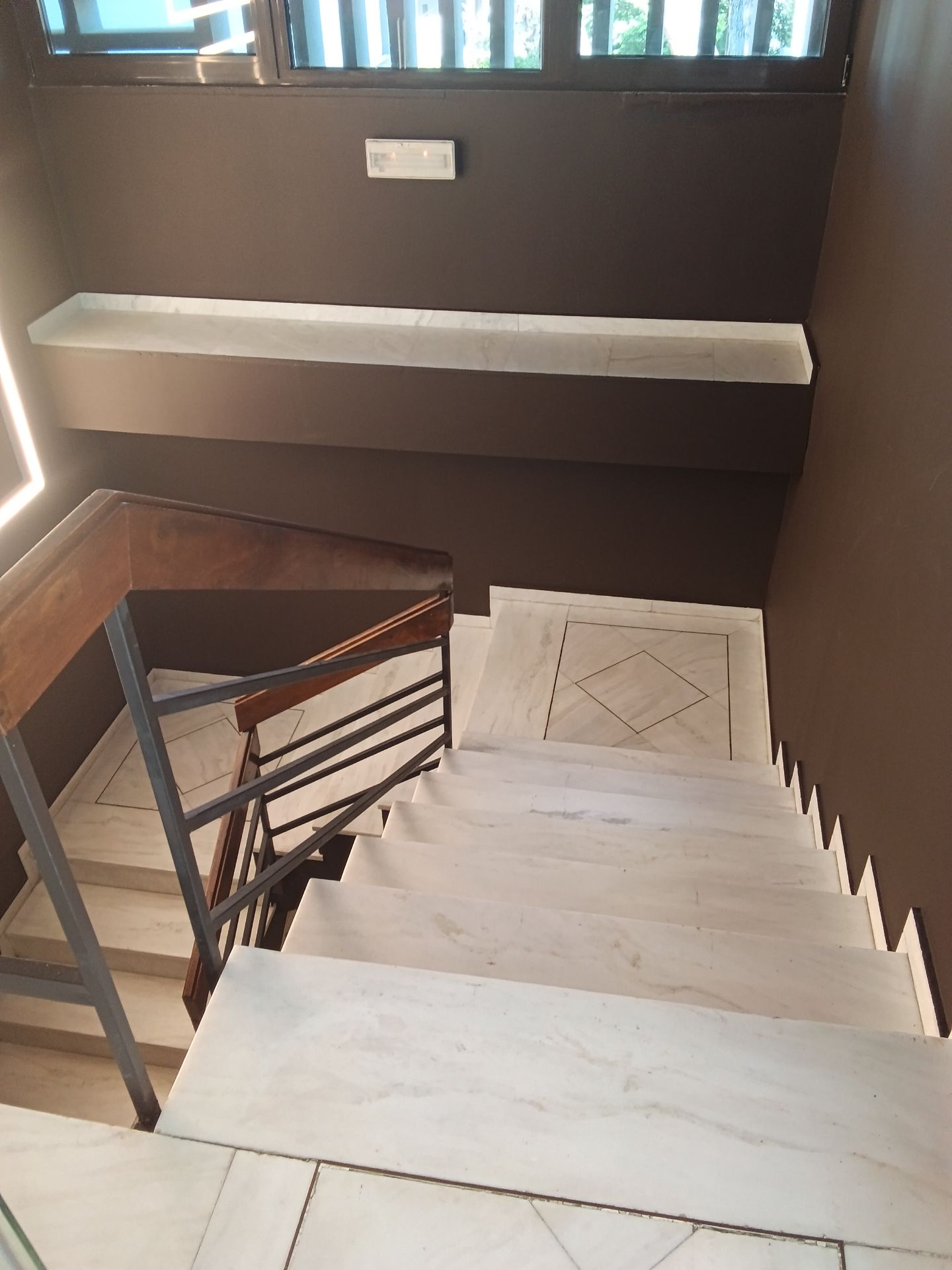
Stairs
Stairs to the basement (toilets), 7+4+4+4 steps)
- Does it have a riser (front face)?
- Vertical
- It is a staircase with a stairlift
- No
- Is it…
- Main
- Is it interior and…
- Fixed
- Is it…
- Interior
- The (minimum) opening of the stairs is (in cm)…
- 125
- They are clearly legible
- No
- The (minimum) depth of the steps is (in cm)…
- 31
- The (maximum) height of the steps is (in cm)…
- 18
- The width of the stairs
- Yes
- Are the surfaces
- No
- Is it easily identifiable?
- Yes
- At the stair landings, there is informational signage for visitors
- Yes, but it is not accessible for people with disabilities (e.g. without Braille or raised lettering)
- Is it standards-compliant?
- No
- The depth (tread) of the steps is constant from the start to the end of the stairs
- Yes
- The height of the steps is constant from the start to the end of the stairs
- Yes
- Is there a standards-compliant alternative for wheelchair access?
- None
- Includes conical and/or curved steps
- No
Entrance / exit
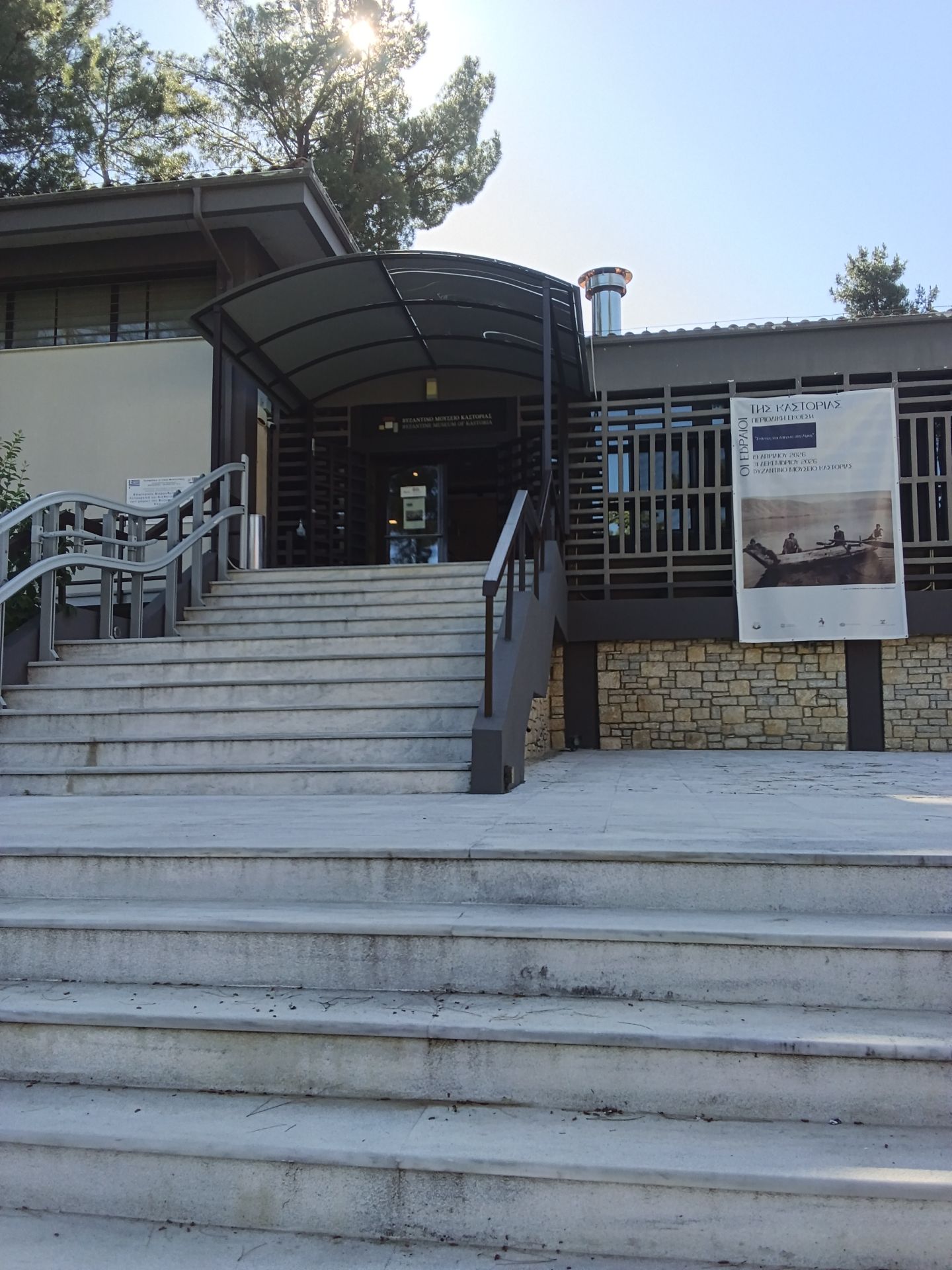
Main entrance to the building
- Is there a beveled edge before it?
- Suitable (up to 26 degrees for a length not exceeding 4 cm, or up to 45 degrees for a length not exceeding 2 cm, or 90 degrees for a length not exceeding 1 cm)
- Is there a door?
- Stays open during operating hours
- Adequately served by a dedicated boarding / alighting area suitable for people with disabilities
- Yes
- Does a tactile guide path lead to the building?
- No
- Is it preceded by an elevator, platform lift or other lifting device?
- Platform lift
- Is it preceded by a ramp?
- On the left side of the building there is an entrance ramp
- Preceded by a step
- Main staircase before the entrance to the building
- Cross slope
- Suitable
- At the entrance, are there obstacles preventing wheelchair passage?
- Carpet
- Longitudinal slope
- Suitable
- Offers adequate protection from the weather
- Covered
- Clear opening
- Suitable
- Is it easily identifiable?
- Yes
- Is it preceded by a sidewalk with an unsuitable road–sidewalk connection for wheelchair users?
- Yes (explain)
- Clear passage height
- Suitable
- Informational signage for visitors is provided outside
- Yes, but it is not accessible for people with disabilities (e.g. without Braille or raised lettering)
- Adequately served by a dedicated accessible parking space for private vehicles
- Yes
- Bears suitable informational signage regarding accessibility to the building's spaces
- No
- Adequately served by disability-friendly public transport
- No
Stairs
Step before the main entrance
- Does it have a riser (front face)?
- Vertical
- Handles / handrails
- Present and standards-compliant
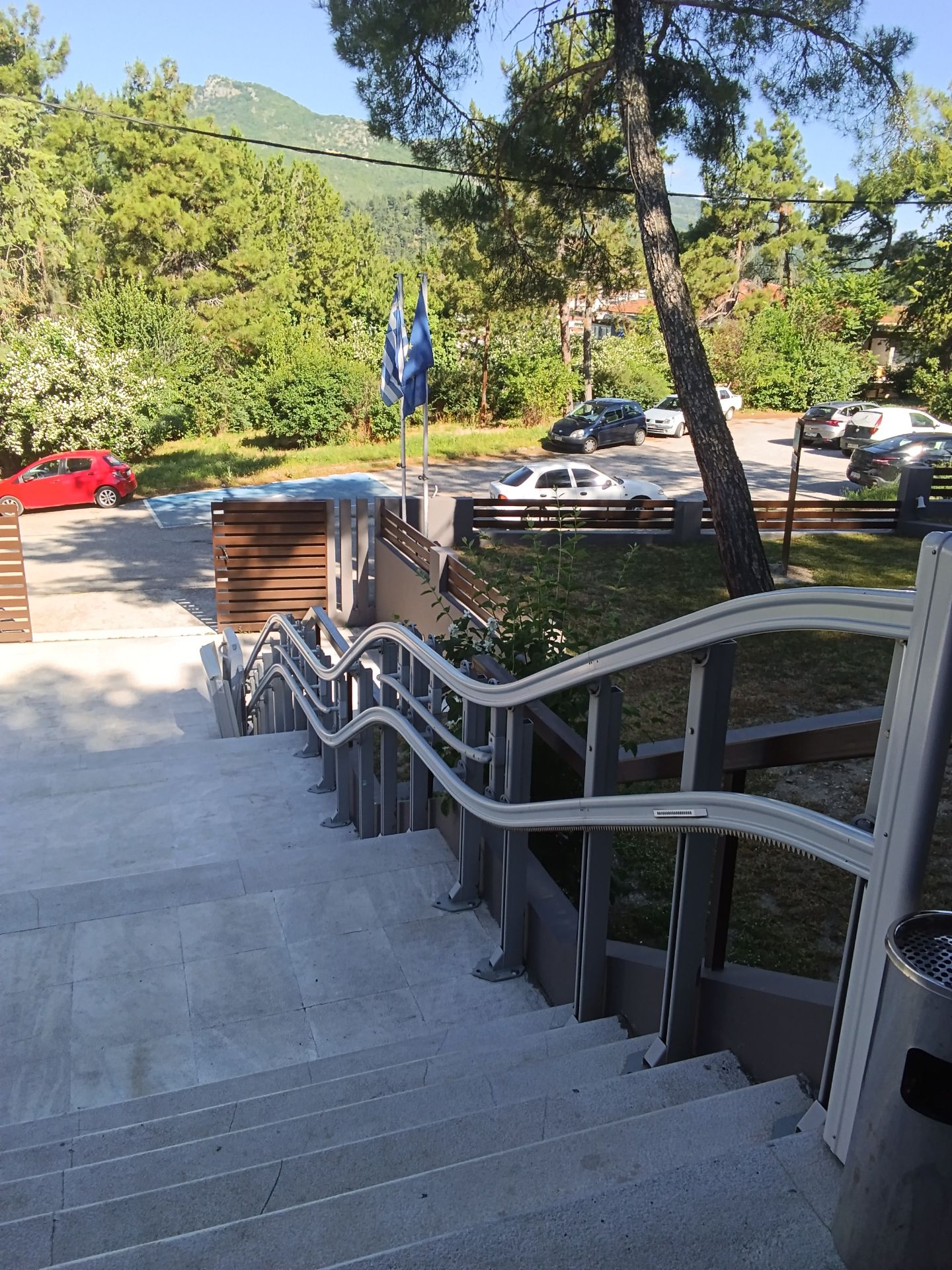
- It is a staircase with a stairlift
- Yes
- Is it…
- Main
- Parapets / railings
- Present and standards-compliant
- Is it interior and…
- Fixed
- Is it…
- Outdoor
- The (minimum) opening of the stairs is (in cm)…
- 300
- They are clearly legible
- No
- The (minimum) depth of the steps is (in cm)…
- 30
- The (maximum) height of the steps is (in cm)…
- 17
- The width of the stairs
- No
- In the case of stairways that are part of the existing network with tactile guidance paths for the blind, are there tactile warning surfaces at the start, end and changes of direction of the stairs?
- Not part of such a network
- Are the intermediate landings of adequate dimensions
- Yes
- The lighting is adequate
- No
- Are the surfaces
- Yes
- Is it easily identifiable?
- Yes
- At the stair landings, there is informational signage for visitors
- Yes, but it is not accessible for people with disabilities (e.g. without Braille or raised lettering)
- Is it standards-compliant?
- No
- The depth (tread) of the steps is constant from the start to the end of the stairs
- Yes
- In the case of exposed side/rear surfaces, are these always "covered" so as not to pose a risk to people with visual impairments and white cane users?
- Yes
- The height of the steps is constant from the start to the end of the stairs
- Yes
- Is there a standards-compliant alternative for wheelchair access?
- Present and standards-compliant
- (If available), the alternative wheelchair access is via…
- Side ramp
Ramp
Entrance ramp
- It has an appropriate handrail
- Yes, double at heights of 70 and 90 cm.
- Is it…
- Outdoor
- At all levels/stops…
- the ramp floor is exactly at the same level as the landing floor (difference <2 cm)
- Has standards-compliant slopes:
- 5% (2.9°) for a section up to 10 m.
- The lighting is adequate
- No
- All surfaces are of non-slip, homogeneous, stable, wear-resistant material
- Yes
- Is it easily identifiable?
- Yes
- Is wheelchair access ensured?
- Yes
- Is there a standards-compliant alternative?
- Present and standards-compliant
- Is it…
- Permanent
- Is it intended for emergency evacuation?
- Descending
- On all levels/stops, there is informational signage for visitors
- Yes, but it is not accessible for people with disabilities (e.g. without Braille or raised lettering)
- Has a width that allows two wheelchairs to pass each other
- No
- Is standards-compliant:
- Yes, but it lacks appropriate signage
- (If available), the alternative wheelchair access is via…
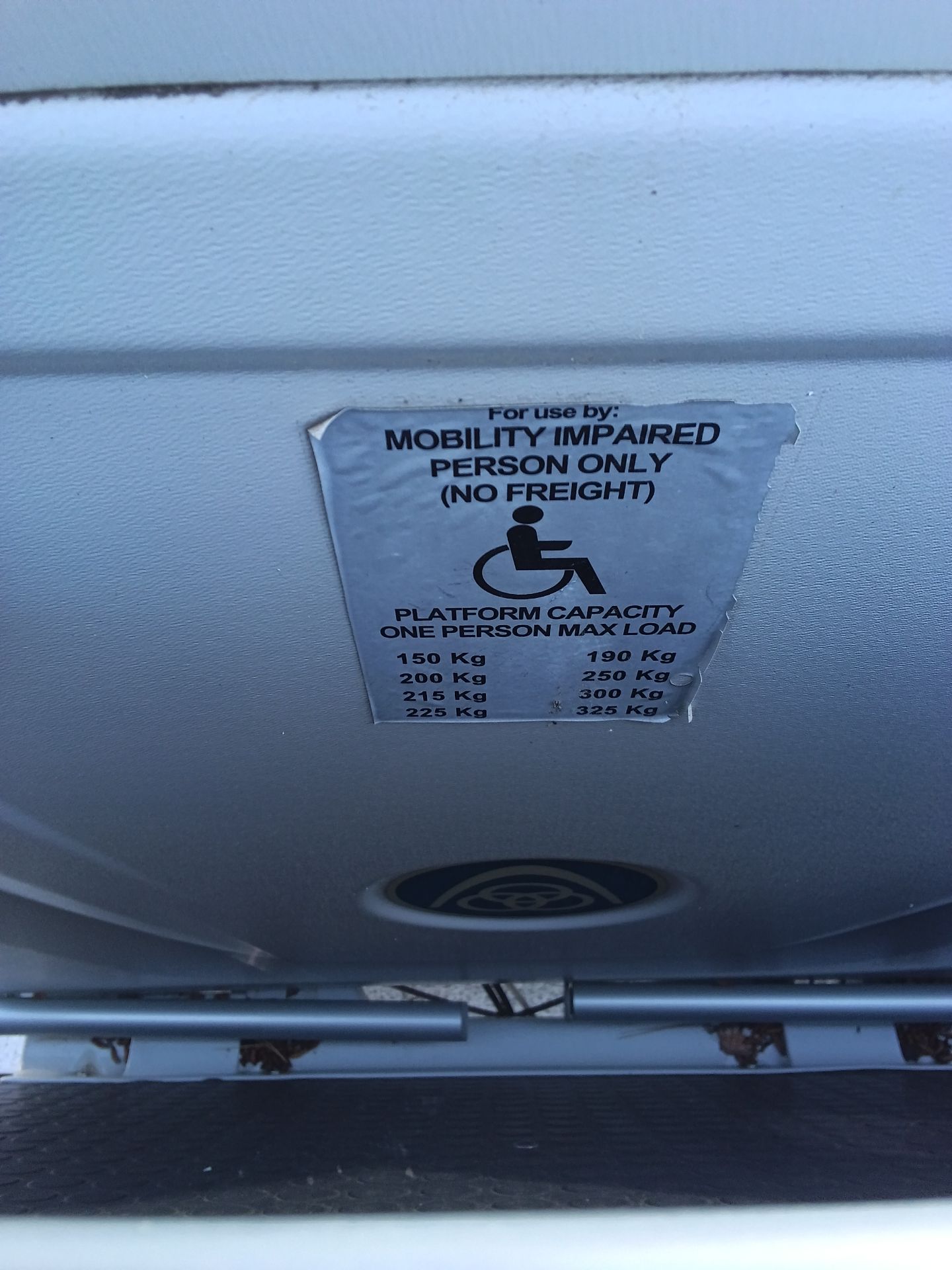
- Side platform lift for wheelchairs
- Has non-compliant cross slopes on the ramp and/or landings
- No
- In the case of exposed side/rear surfaces, are these always "covered" so as not to pose a risk to people with visual impairments and white cane users?
- No
- In the case of a ramp that is part of an existing network with tactile guide paths, are there tactile warning surfaces at all entry-exit points?
- Not part of such a network
Lift / elevator
Stair platform
- Is it…
- Outdoor area
- Is it…
- Outdoor
- Is it accessible and standards-compliant?
- Yes, but it lacks appropriate signage
- Is it easily identifiable?
- Yes
- Is there a standards-compliant alternative?
- Present and standards-compliant
- In case of a stair platform lift
- Yes
- Intended for emergency evacuation
- No
- (If available), the alternative wheelchair access is via…
- Side ramp
- In the case of a vertical lifting platform
- No
- In the case of a vertical lifting platform
- No
Services
Ticket office / Reception
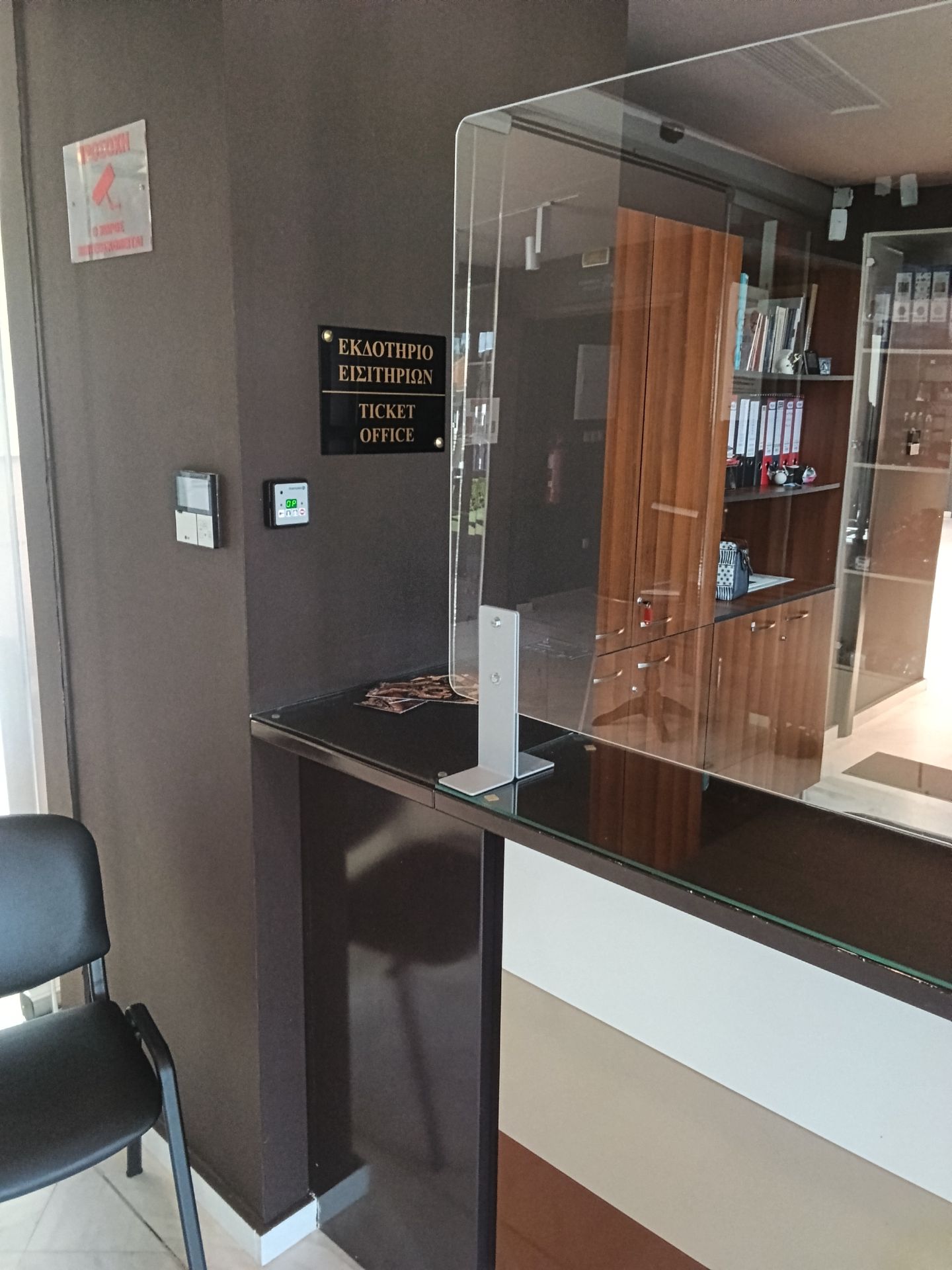
Tickets - Information
- Includes…
- Reception/information desk, Ticket offices / cashiers, Ticket check points, Other (specify…)
- The lighting is adequate
- Yes
- At all points with high desks/counters/service windows
- No
- Is there a dedicated quiet area nearby?
- No
- Any printed material provided to inform service users is also available in…
- Braille
- Is it…
- Inside the building
- Can the public be informed about the existence, content and accessibility of the service before visiting the site?
- No, no such information is provided
- Is the space kept clean and well ventilated?
- Yes
- Are the points where services are provided easy to locate?
- Yes
- At all points with desks/counters/service windows with transparent partitions, is a microphone/speaker system installed?
- No
- Is wheelchair access ensured?
- Yes
- Are alternative ways of service provided for people with disabilities?
- None, because they are not needed
- Sign language assistance is available
- No
- There are systems, devices or other equipment for the public, without suitable design for specific categories of users with disabilities
- No such systems / equipment
- There are dedicated points/staff to assist people with disabilities
- No
Special facilities (4)
Special facility
With an information leaflet in Greek and English in Braille
Beneficiaries
- Blind people with a white cane
- People with other visual impairments
- People with a guide dog
Special facility
Wheelchair available for visitors
Beneficiaries
- People with disabilities/absence of upper limbs
- people with difficulty walking / prolonged standing
- wheelchair users
- other (people with allergies, children, etc.)
Special facility
Materials for visiting children with autism
Beneficiaries
- People with intellectual
- cognitive or psychological disabilities
Special facility
Visitors' guestbook
Beneficiaries
- Other (people with allergies, children, etc.)
Gift shop
Shop